Water damage ceiling stains: reading them, and finding the source
A stain tells you three things if you know how to read it: whether it is still leaking, roughly how long it has been there, and which trade you actually need.
Water damage ceiling stains appear where water finally drops, which is rarely where it got in. Repair runs $1.50 to $3 per square foot for the drywall and $3 to $4 per square foot for the drying, and the source repair is a separate trade entirely.
Is it sagging? Clear the area first
A loaded ceiling comes down all at once
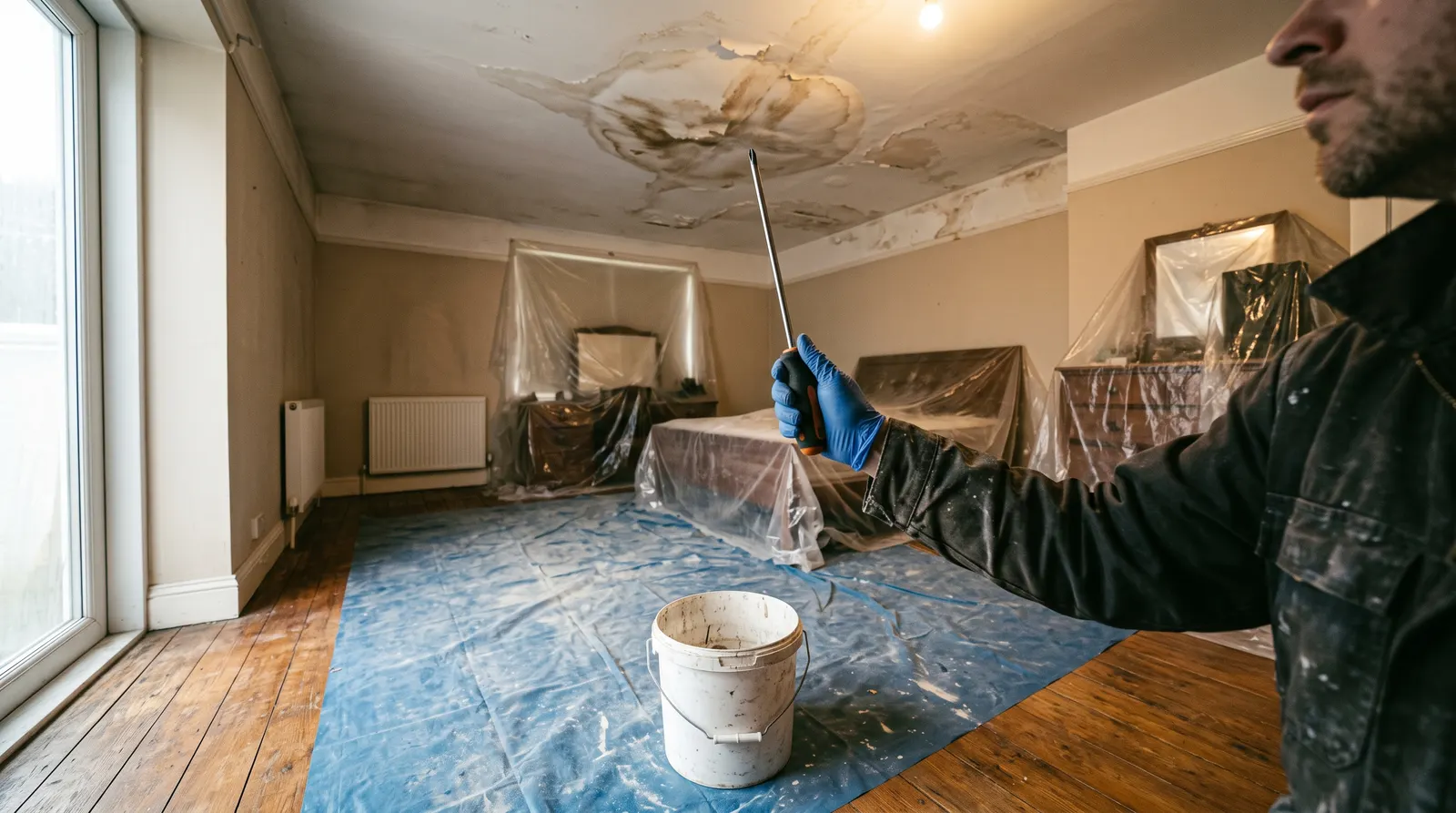
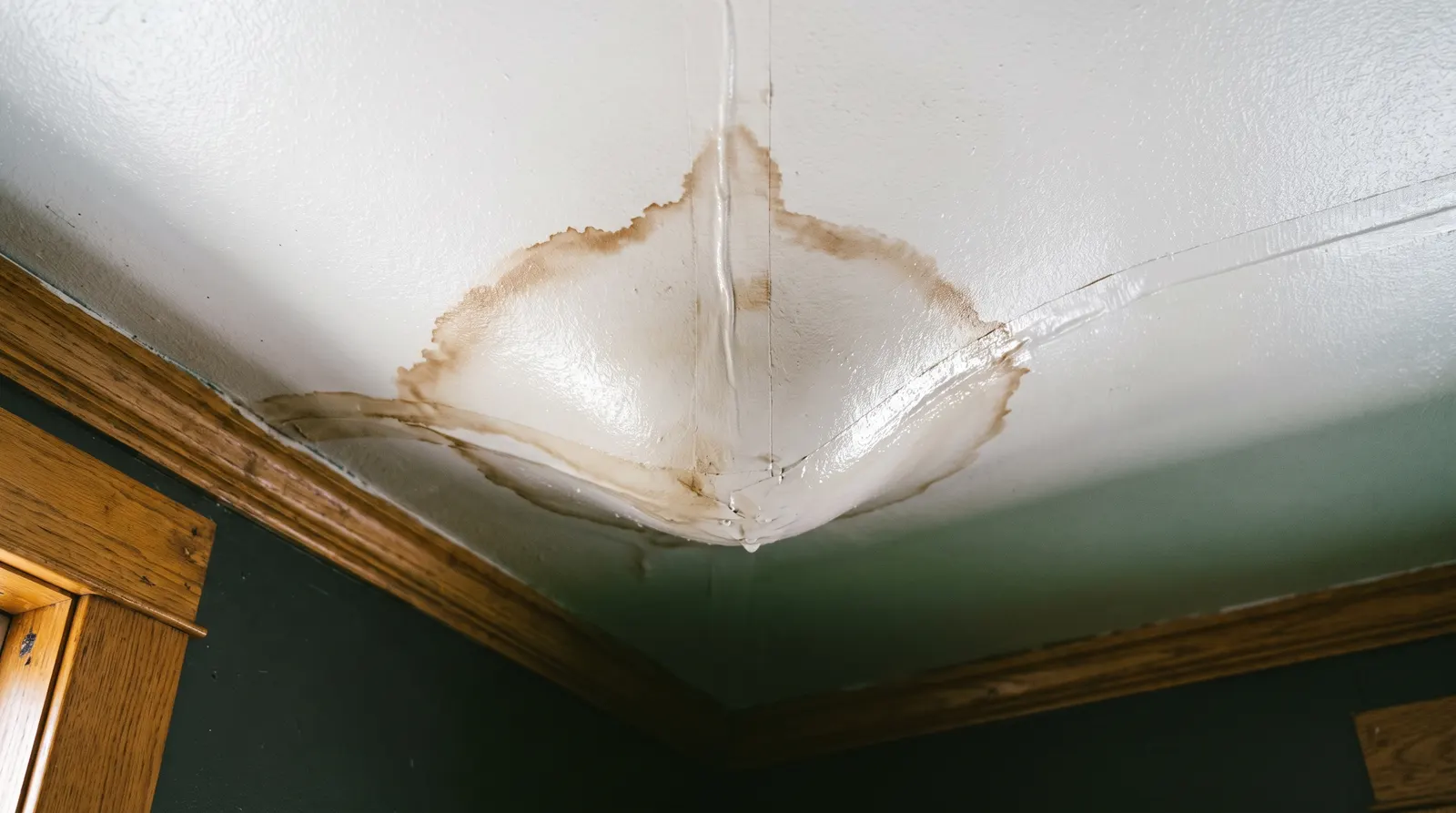
Drywall absorbs water and gains weight quickly, and a bulge means a pocket is holding it. When it fails it does so suddenly, bringing insulation and anything stored above with it. Move people, pets and furniture out from under it before you do anything else. Restoration crews frequently relieve the load deliberately with a small controlled hole and a bucket, which is far better than waiting.
If nothing is sagging, you have time to work through the rest of this properly.
Sixty-second diagnosis
Read the stain, then trace the source
01
Check for sag first
A bulging or drooping area is holding water and holding weight. Clear furniture and people from underneath before you investigate anything else.
02
Outline the stain in pencil
Draw around the edge and note the time. If the line has been overtaken within an hour or two, this is active rather than historic.
03
Trace uphill along the structure
Water runs along joists and pipe runs before it drops. Look up-slope and up-run from the stain rather than directly above it.
04
Correlate with weather or usage
Appears during rain and stops between storms means roof. Appears when a shower or toilet runs means plumbing. Seasonal and even means condensation.
Water damage ceiling stains: active or historic?
Is this stain still leaking?
Touch it and outline it. Cool and slightly soft means active. A crisp, dry, hard-edged ring that does not move over an hour or two is historic, and while it still needs the source identified, it is not tonight's problem.
No page ranking for this search makes that distinction, and it is the one that decides whether the reader needs to act now or book something.
A historic stain still matters, because it means water got in at least once and the cause may still be there. It just does not mean standing under a ceiling with a bucket at midnight.
The source is almost never directly above
This is the insight that saves people opening the wrong section of ceiling.
Water entering a floor cavity does not fall straight down. It runs along the top of a joist, along a pipe or a cable tray, until it reaches a low point or a penetration such as a light fitting, and it drops there.
In a level ceiling that can be several feet from the entry point. In a sloped roof it can be considerably more.
Trace uphill along the structure rather than upward through it. Where a light fitting is involved, treat that as a fixture penetration rather than as the source, and isolate the circuit before investigating.
Roof, plumbing or condensation?
Three causes with three distinct signatures, and the timing tells you which one you have.
Roof. Appears during or shortly after rain, stops between storms, and often correlates with wind direction. Top-floor ceilings only.
Plumbing. Appears when a fixture above is used: a shower, a bath, a toilet, a washing machine. Independent of weather.
Condensation. Seasonal, spreads evenly rather than forming a defined ring, and is worst in winter on uninsulated ceilings or in humid summers around ducts.
HVAC. A blocked condensate line from an attic air handler produces a stain that appears in cooling season and nowhere else.
When the water is coming from a neighbour
In apartments and condos this is the most common version of the problem, and the general advice does not fit it at all.
Notify the neighbour and the building management in writing the same day, even if you also knock. Document your side thoroughly before anything is repaired, because once their plumber has fixed the source your evidence of the cause disappears with it.
In most buildings the management company coordinates the repair and the liability question resolves afterwards between insurers. Your job is documentation and speed, not argument.
What to do before the repair
Three things, and they are all about limiting the damage rather than fixing it.
Contain the drip with a bucket and protect the floor beneath. Get air moving in the space above if it is accessible, because a ceiling dries from both sides and the cavity is the slow half. And do not paint over an active stain: primer over wet drywall traps moisture, and the stain returns through it within weeks.
The EPA drying window of 24 to 48 hours applies here as everywhere, and ceiling cavities are among the slowest spaces in a house to dry. Detail is on our page about how fast mold grows after water damage.
Where the cut line goes
How much ceiling has to come out?
Back to genuinely dry material rather than back to the visible stain. Drywall wicks moisture beyond the mark, and insulation above a ceiling holds water longer than the board itself, so the wet zone is usually larger than it looks.
Moisture readings rather than appearance should set that line. Where insulation above the ceiling got wet, it comes out too, because it will not dry in place and it will hold the moisture against the new board.
Stain-blocking primer goes on only after the material is genuinely dry, which is a meter reading rather than a judgement. Full material rules are on our page about wet drywall and carpet.
Know the line
Safe to handle yourself, or call a pro now?
Safe to check yourself
Clearing the area under a sagging section
Outlining the stain and timing whether it grows
Correlating the stain with rain or with fixture use
Containing a drip and protecting the floor
Getting air moving in an accessible space above
Call a pro now
Any sagging or bulging section holding water
A stain around or near a light fitting
Anything on a top-floor ceiling during a storm
Cutting out ceiling drywall or removing wet insulation
Water arriving from a neighbouring property
24/7 dispatch network
Get a licensed restoration contractor moving on this
Tell us whether the stain is growing and whether anything is sagging, plus your ZIP code. Licensed, insured restoration contractors covering your area will contact you directly. No obligation.
Fire, a gas smell, or an injury? Leave the building and call 911 first, then your gas
utility or power company. Use this form once you are safe.
A saturated plasterboard ceiling can hold a surprising weight of water before it goes, and it goes all at once. Clear the room beneath first.
What ceiling repair costs
Indicative US ranges. Always get a written quote.
Job
Typical range
Notes
Drywall replacement
$1.50–$3 / sq ft
Cut back to dry material
Category 1 restoration, drying
$3–$4 / sq ft
Clean water from a supply line
Category 2 restoration
$4–$6.50 / sq ft
Appliance or waste-side water
Mold remediation, if it started
~$2,200 average
A separate job from drying
The source repair
separate trade, separate bill
Roofer or plumber, not the restorer
Source: Bob Vila 2026 water damage restoration cost data (retrieved August 2026). Figures vary by region, severity and after-hours timing.
Figures last checked
The last row is the one people forget when they budget. A restoration contractor dries and rebuilds the ceiling; they do not fix the roof or the pipe that caused it. Those are separate trades with separate quotes, and the source repair has to come first or the whole thing repeats.
Emergency Services 24H is a referral service. We do not employ restoration technicians, roofers or plumbers, and we do not assess ceilings.
Your request routes by ZIP code to licensed, insured contractors covering your area, and they contact you directly. Say whether the stain is growing, because that decides whether this is a same-day visit or a scheduled one.
Straight answers
Frequently asked questions
The questions homeowners actually search for on this problem, answered in plain language.
How do I know if a ceiling stain is still leaking?
Touch it and outline it. An active stain feels cool and slightly soft, and if you draw round the edge in pencil it will have grown within an hour or two. A historic stain is dry, hard, and has a crisp defined ring that does not move. That test takes a minute and decides how urgent this is.
Is a sagging ceiling dangerous?
Yes. Drywall absorbs water and gets heavy quickly, and a bulging ceiling is holding a load it was never designed for. Clear furniture and people from underneath it first. Restoration contractors often relieve it deliberately with a small drain hole, which is far better than waiting for it to fail on its own.
Why is the leak not directly above the stain?
Because water runs along joists, pipe runs and cable trays before it drops, and it drops at the first low point or penetration it reaches. That can be several feet from the actual leak. Trace uphill along the structure rather than assuming the source is directly overhead.
Is it a roof leak or a plumbing leak?
Roof leaks track the weather: they appear during or shortly after rain and stop between storms. Plumbing leaks track usage: they appear when a shower runs or a toilet flushes. Condensation appears seasonally, spreads evenly rather than in a defined ring, and is worst in winter or in humid summers.
What if the water is coming from the flat above?
Notify the neighbour and building management in writing immediately, and document your side thoroughly before anything is repaired. In most buildings the management company coordinates the repair and the liability question follows afterwards. Photographs taken before the fix are what protect you.
How much does ceiling water damage repair cost?
Drywall replacement runs $1.50 to $3 per square foot, and Category 1 restoration around $3 to $4 per square foot for the drying work. If mold has established, remediation averages about $2,200 as a separate job. The source repair, whether roof or plumbing, is a separate trade and a separate bill.
Relieving the water deliberately
A ceiling holding water
Fixing the ceiling before fixing the source is the most common expensive mistake on this repair. Find the leak first.
Tell us what has failed and where you are. We route your request to licensed, insured contractors covering your ZIP code, and they contact you directly.
Fire, a gas smell, or an injury? Leave the building and call 911 first, then your gas
utility or power company. Use this form once you are safe.