Emergency HVAC
An HVAC emergency? Check for carbon monoxide first, then the thermostat
No heat, no cooling, or a furnace behaving strangely. One of those categories can kill you and the other two are usually solvable in ten minutes without paying anyone.
24/7 dispatch network
Request a licensed contractor now
Fire, a gas smell, or an injury? Leave the building and call 911 first, then your gas utility or power company. Use this form once you are safe.
The stakes, in real numbers
Why the first ten minutes matter
Every figure is sourced
- 0
- home electrical fires a year in the US
- 0h
- window before mold can start after water damage
- 0+
- US deaths a year from consumer-product carbon monoxide
- $0
- damage from just one inch of flood water
Source: ESFI
Source: EPA
Source: CPSC
Source: NFIP
An HVAC emergency is a heating or cooling failure that threatens health rather than comfort. CPSC records more than 200 US deaths a year from carbon monoxide produced by non-automotive consumer products, with heating systems among the largest contributors, which is why carbon monoxide comes before every other question on this page.
Everything else divides into two groups: failures that need someone tonight because of temperature or vulnerable occupants, and failures that feel urgent but will wait until morning at roughly a third of the labor cost.
Carbon monoxide comes before everything else
If a CO alarm is sounding, leave now
Do not try to find the source. CPSC guidance is to move everyone outside to fresh air immediately, call 911 or the fire department from outside, and do a head count. Carbon monoxide is colourless and odourless, its early symptoms are indistinguishable from flu, and the instinct to investigate is the one that gets people hurt.
The reason this outranks the thermostat is that you cannot detect it yourself. Natural gas is deliberately odourised so you can smell a leak. Carbon monoxide is not, and an alarm is the only reliable detector there is.
Full detail on what to do about carbon monoxide from a furnace covers the symptom pattern, where alarms go, and how a furnace comes to produce it.
What counts as an HVAC emergency
What is considered an HVAC emergency?
A carbon monoxide alarm or suspected leak, a gas smell near the furnace, no heat when indoor temperatures are heading below freezing, or no cooling during a heat advisory. Vulnerable occupants move all of those thresholds earlier.
- Carbon monoxide. An alarm, or several people with flu-like symptoms that improve outdoors. Leave and call 911.
- Gas smell. Sulphur or rotten egg near a furnace or boiler. Leave the building, then call the gas utility from outside.
- No heat in a freeze. Both a health risk and a burst-pipe risk once indoor temperatures drop toward freezing.
- No cooling in a heat event. Particularly overnight, and particularly with infants, elderly occupants or medical conditions in the house.
In this guide
Everything in the emergency HVAC guide
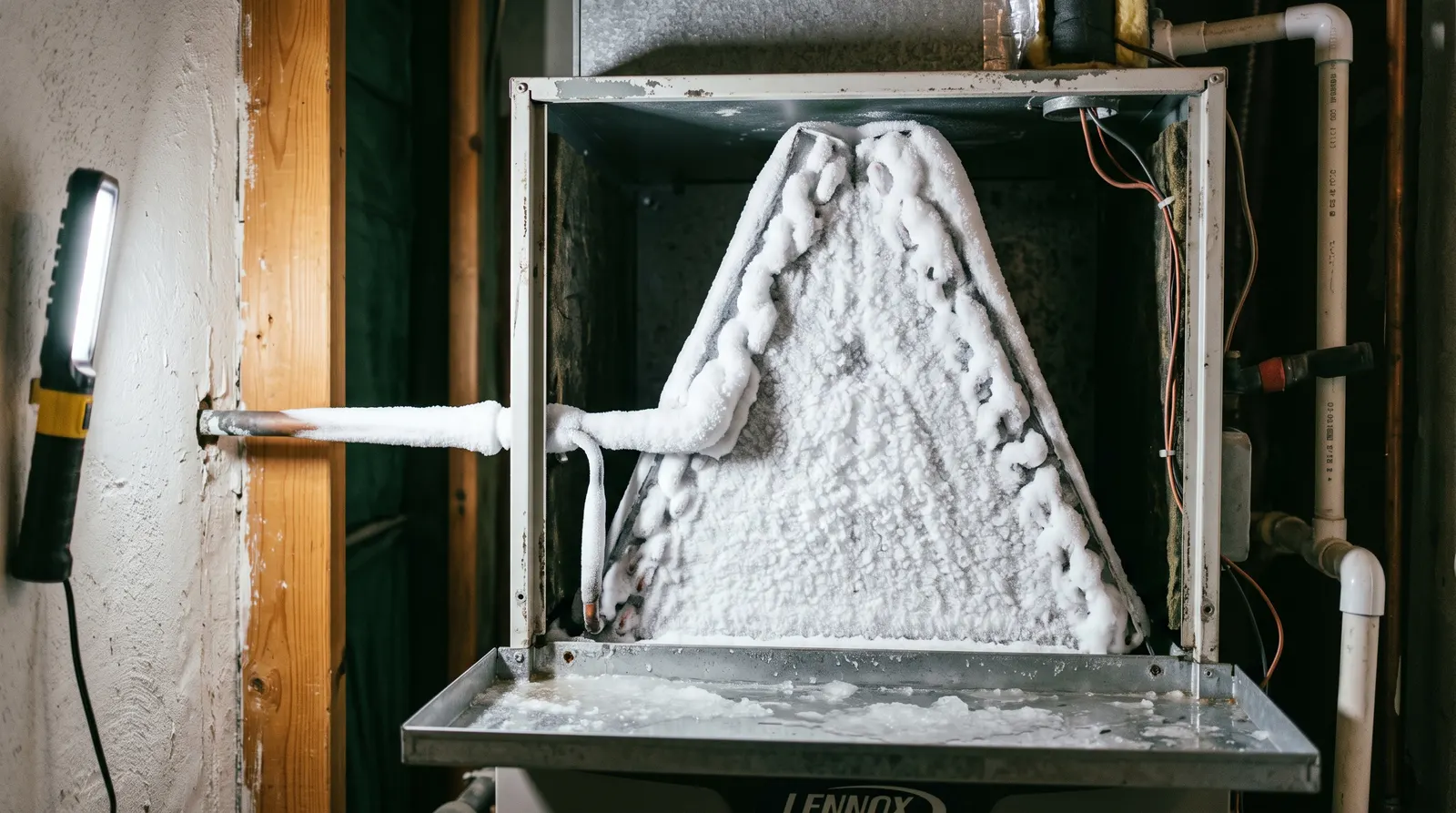
AC not cooling or not turning on
The first three checks, the reset sequence, and the three-minute rule that fools people.
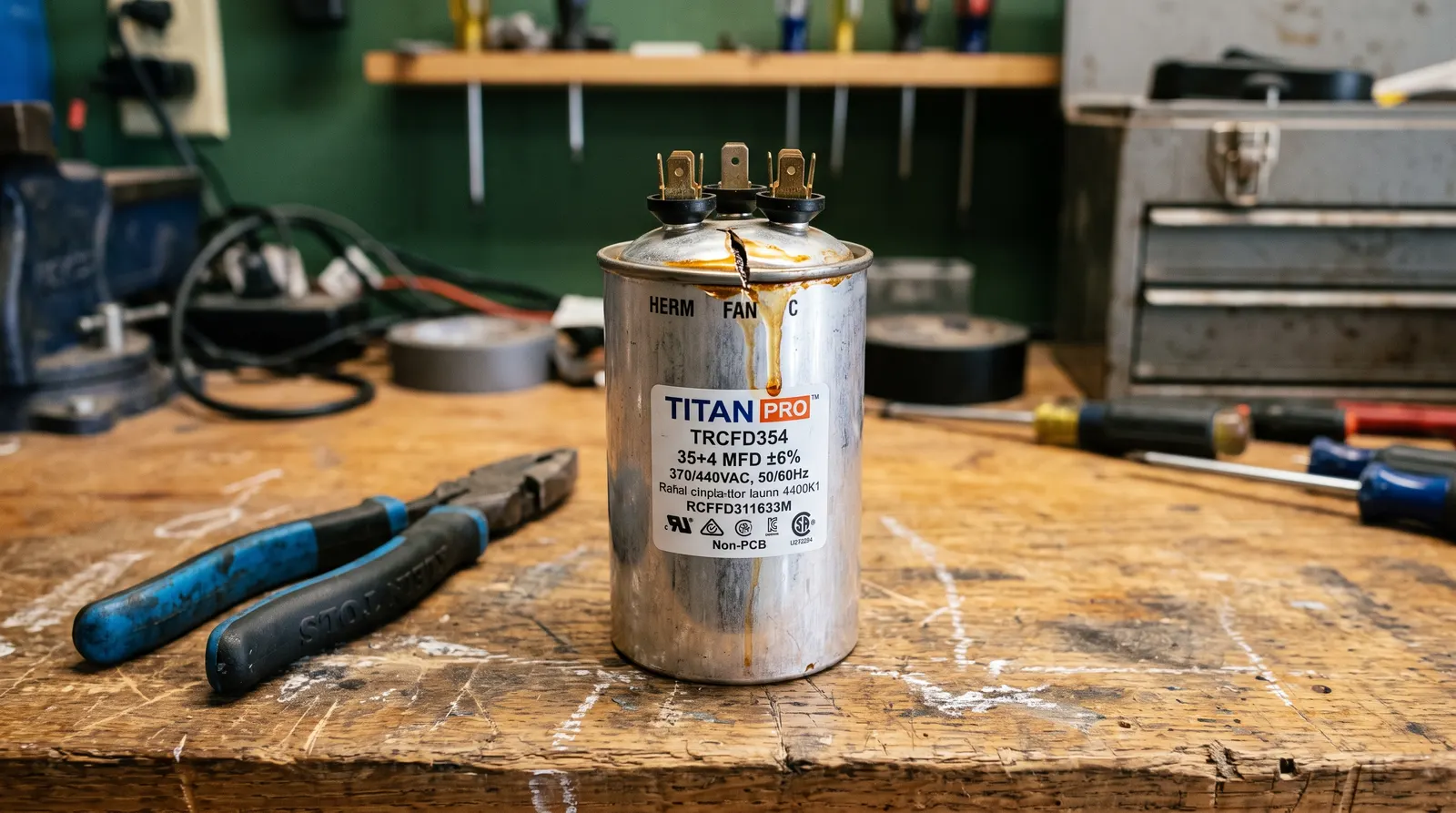
AC blowing warm air instead of cold
Iced coil, failed capacitor or low refrigerant. Each looks the same at the vent.
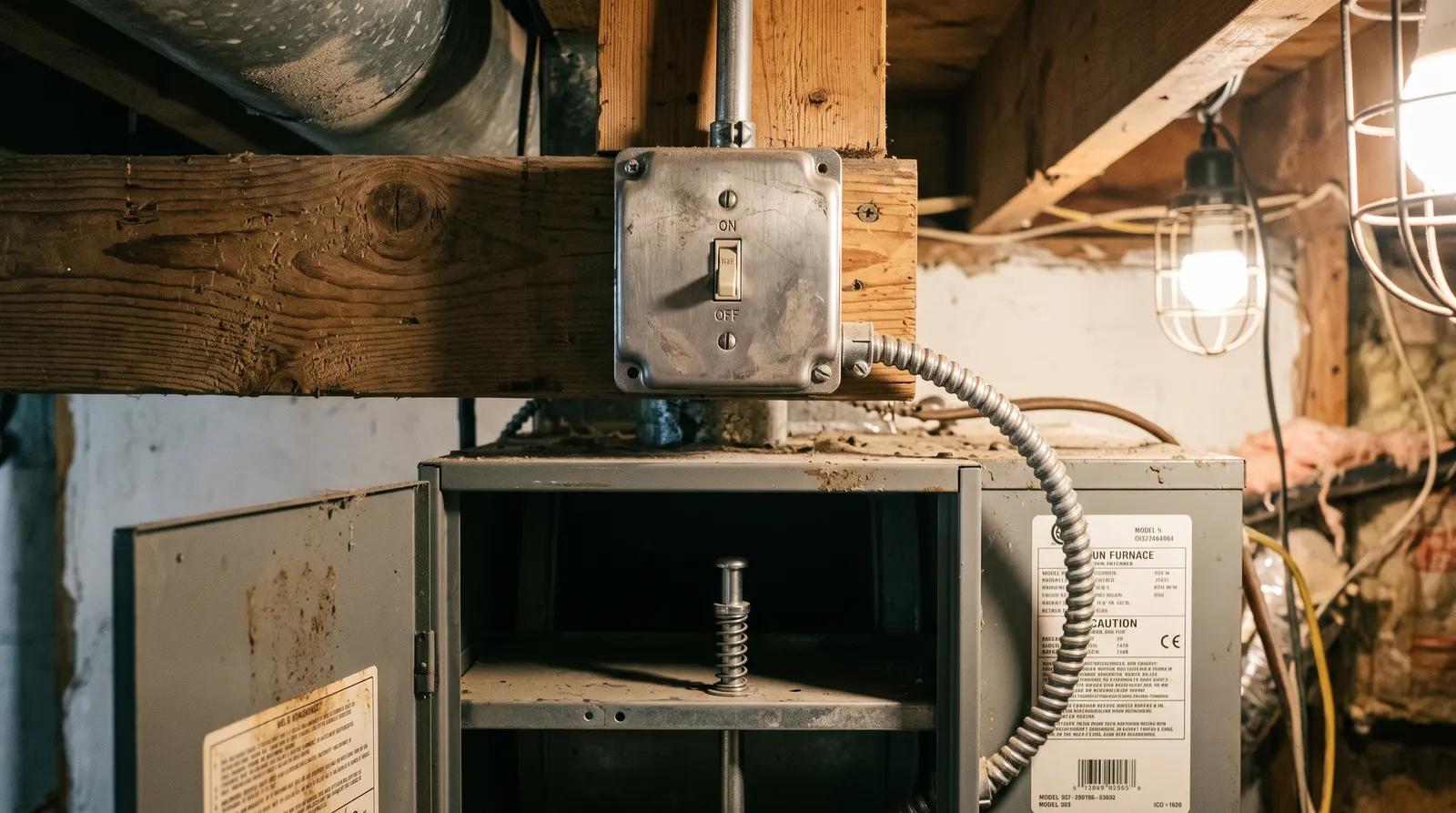
Furnace will not turn on
Door switch, power switch, thermostat, breaker. The four things that fix most no-heat calls.
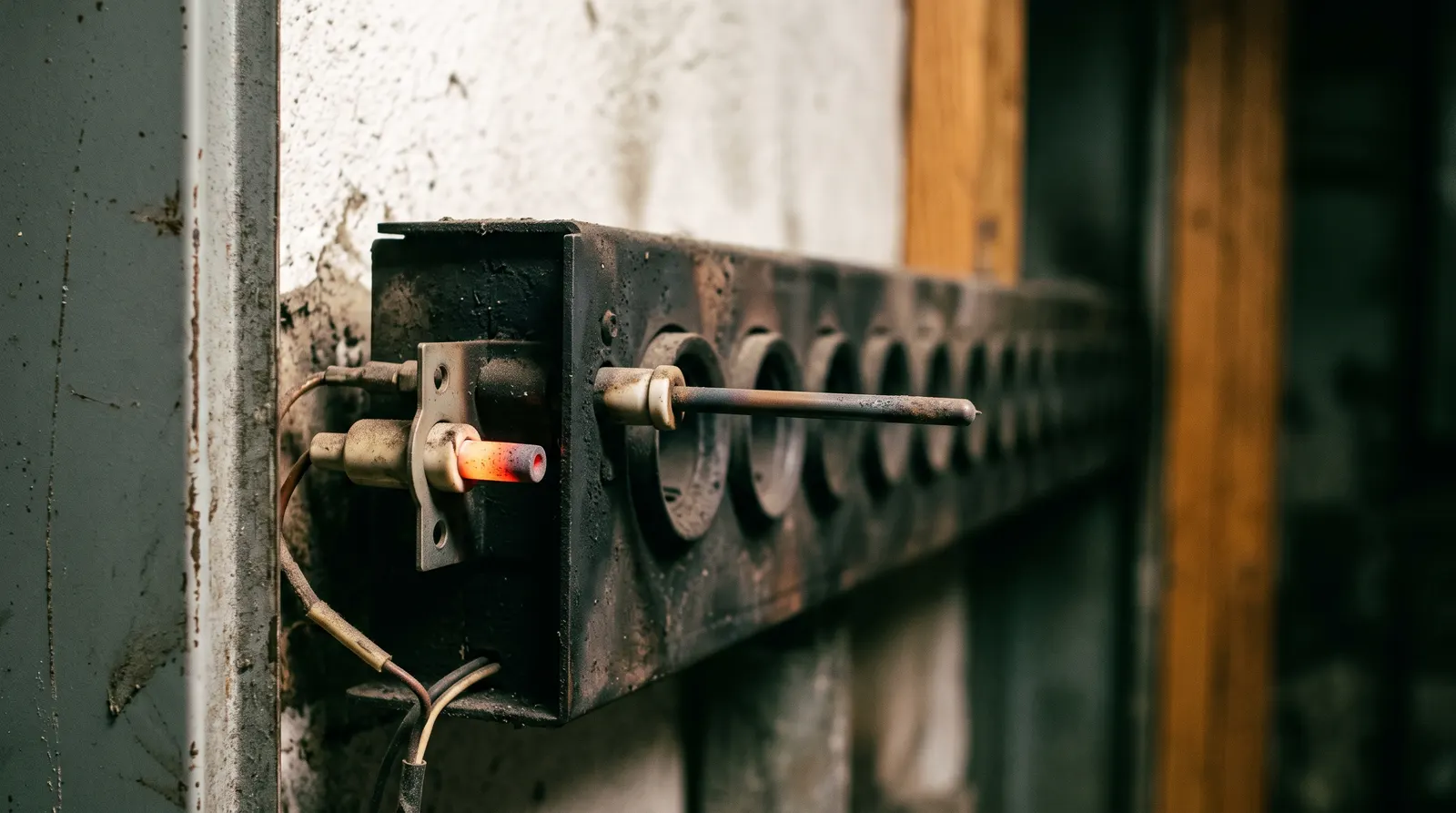
Furnace blowing cold air
Normal at the start of a cycle, and a lockout signal when it never gets warm.
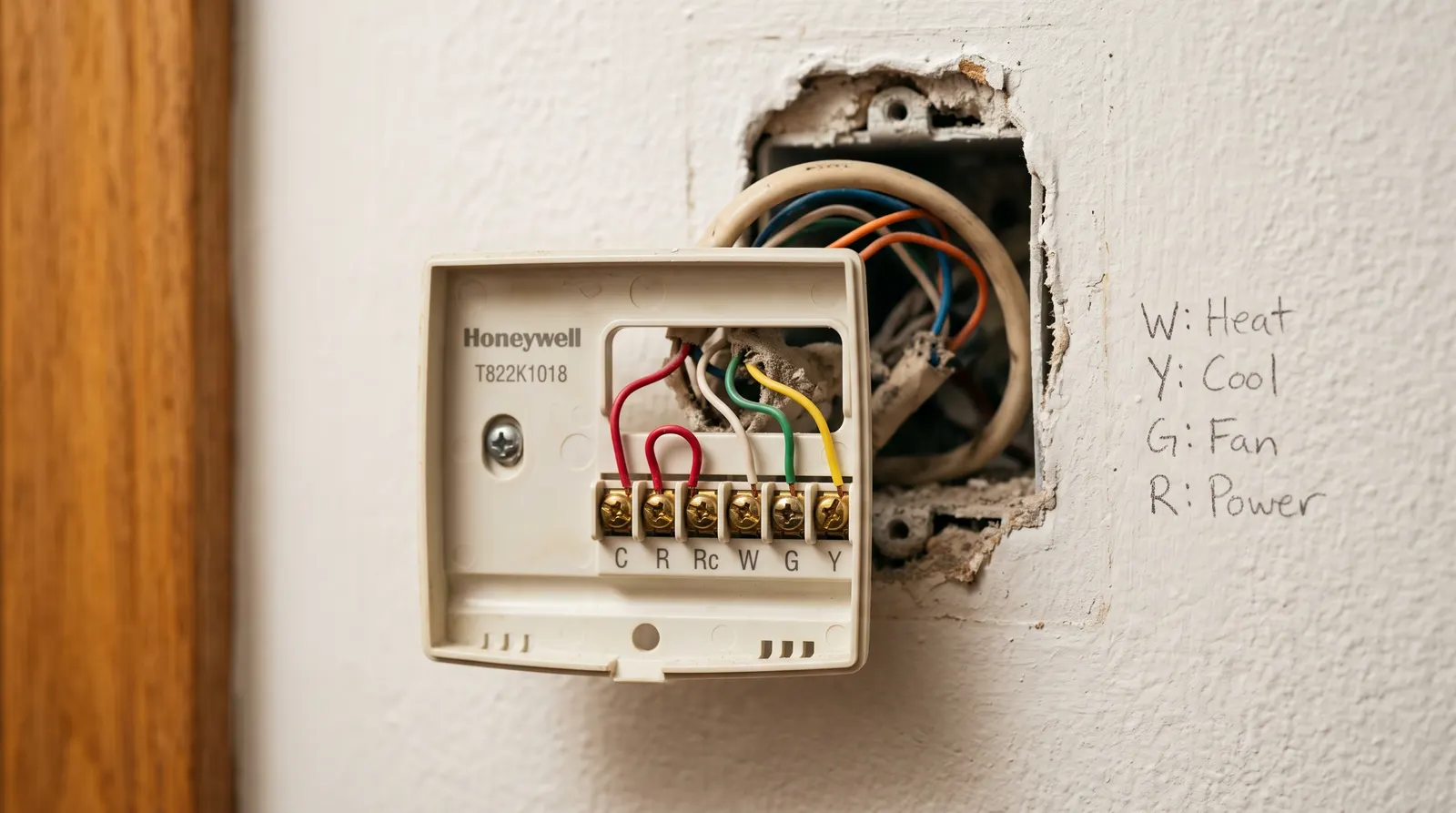
Thermostat not working
Batteries, mode, wiring and the C-wire problem behind most smart-thermostat failures.
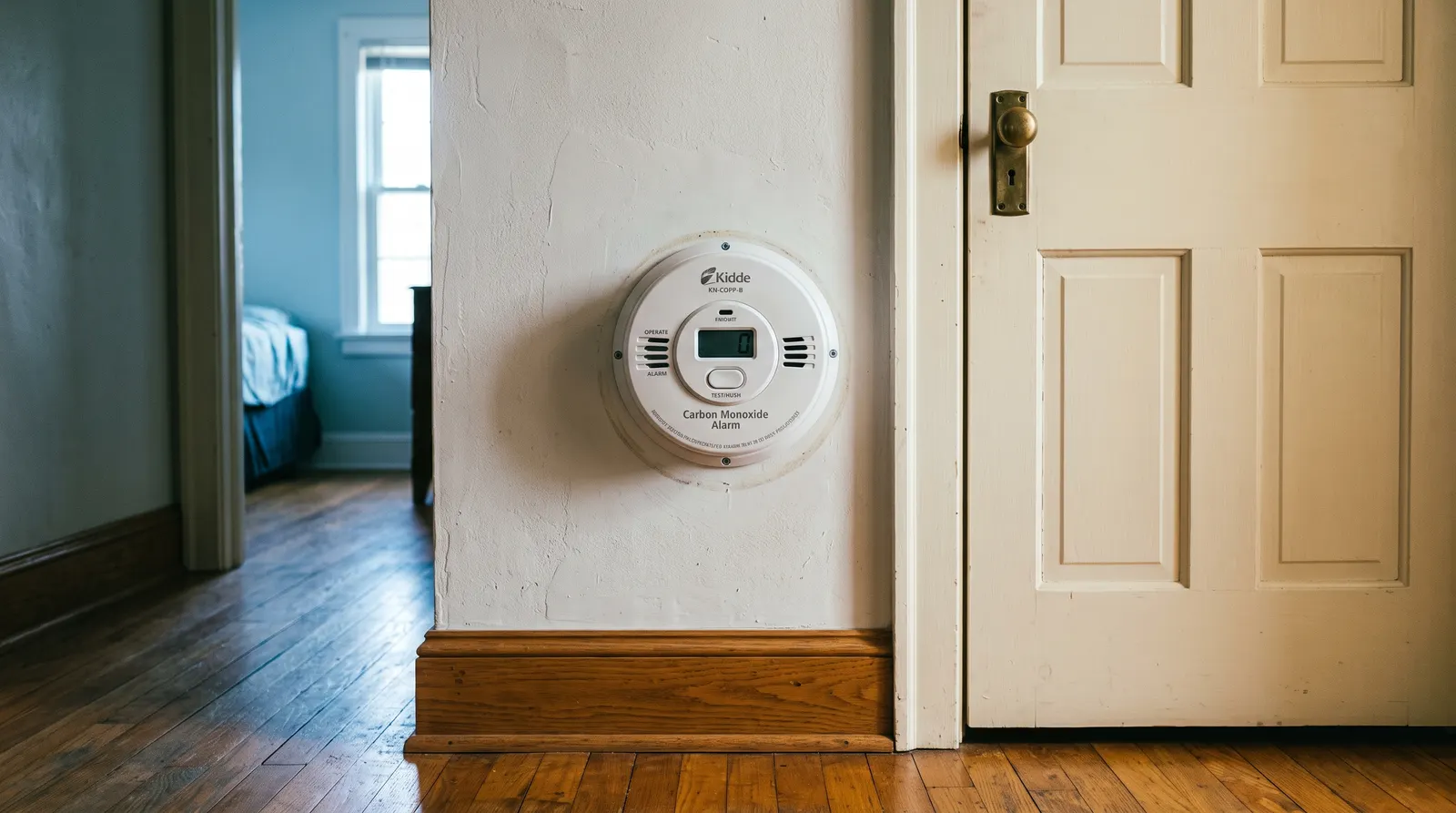
Carbon monoxide from a furnace
What you cannot detect, what CPSC says to do when an alarm sounds, and why.
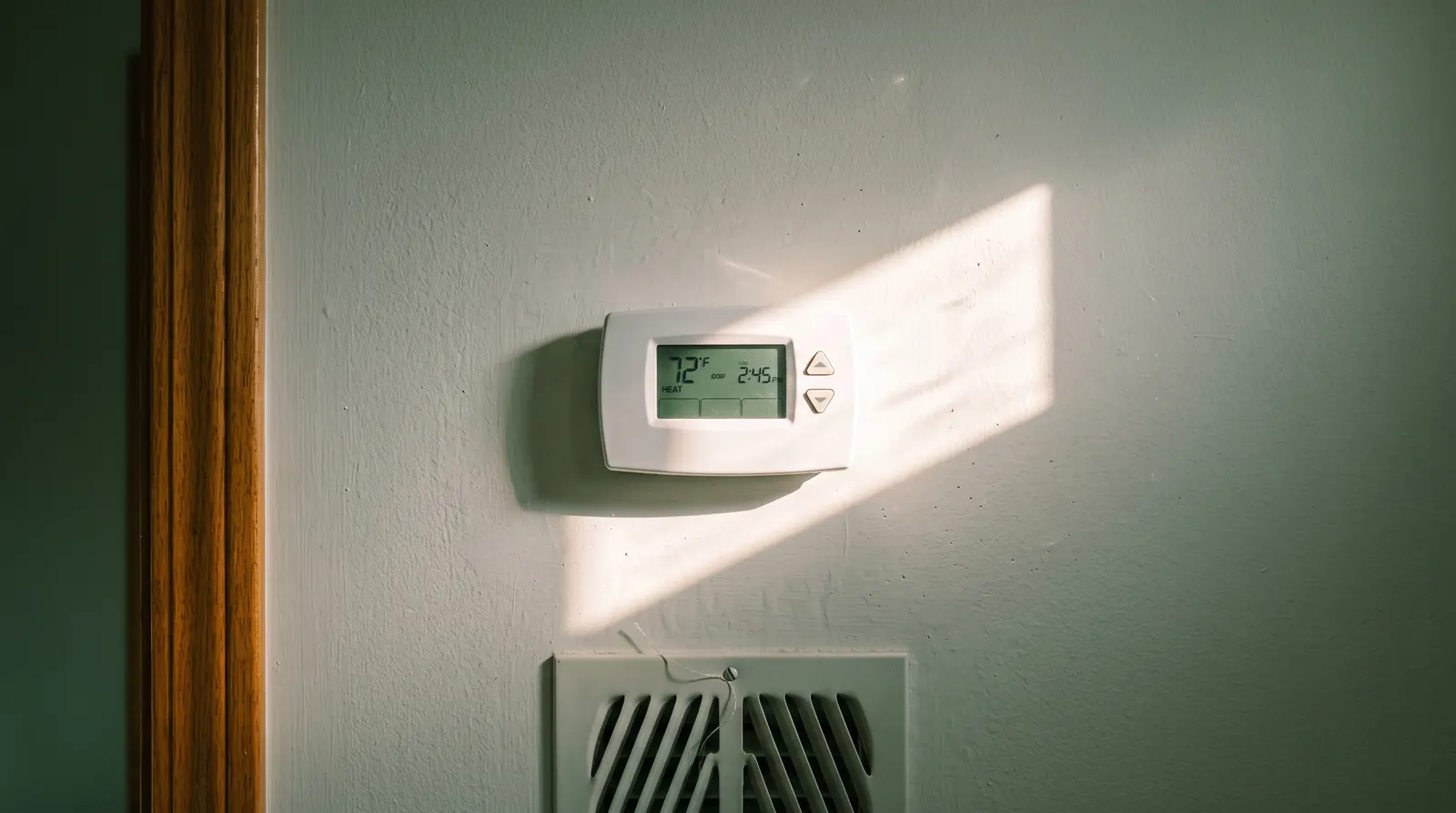
Furnace short cycling
Turning on and off every few minutes wears the system and points at four causes.
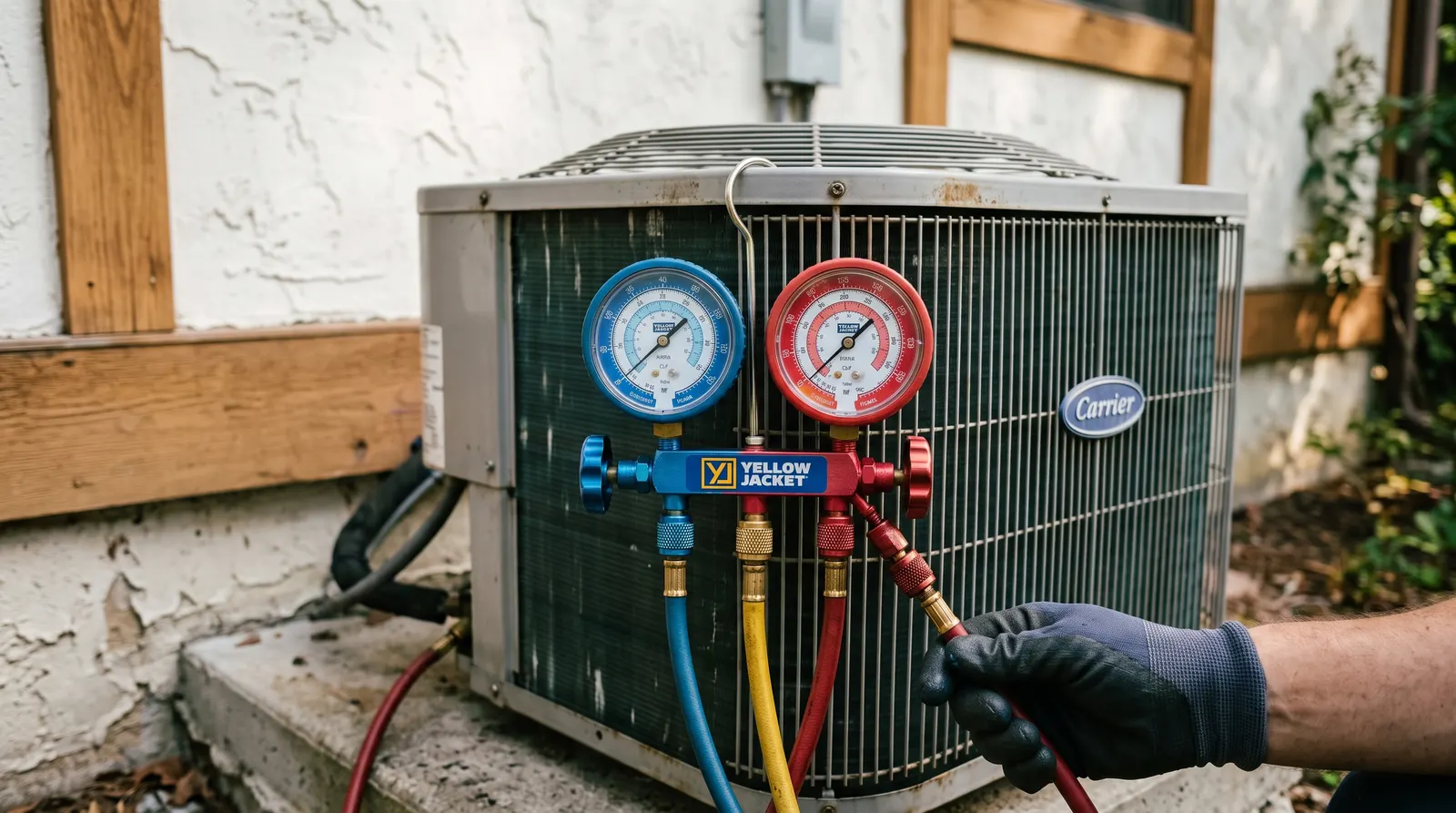
What emergency HVAC repair costs
After-hours diagnostic fees, the 1.5x to 3x labor multiplier, and prices by part.
Before you call anyone
Four resets that end most no-heat and no-cool calls
- 01
Thermostat first
Fresh batteries, correct mode, and a setpoint several degrees past the room temperature. A surprising share of no-heat and no-cool calls end here.
- 02
Power and breaker
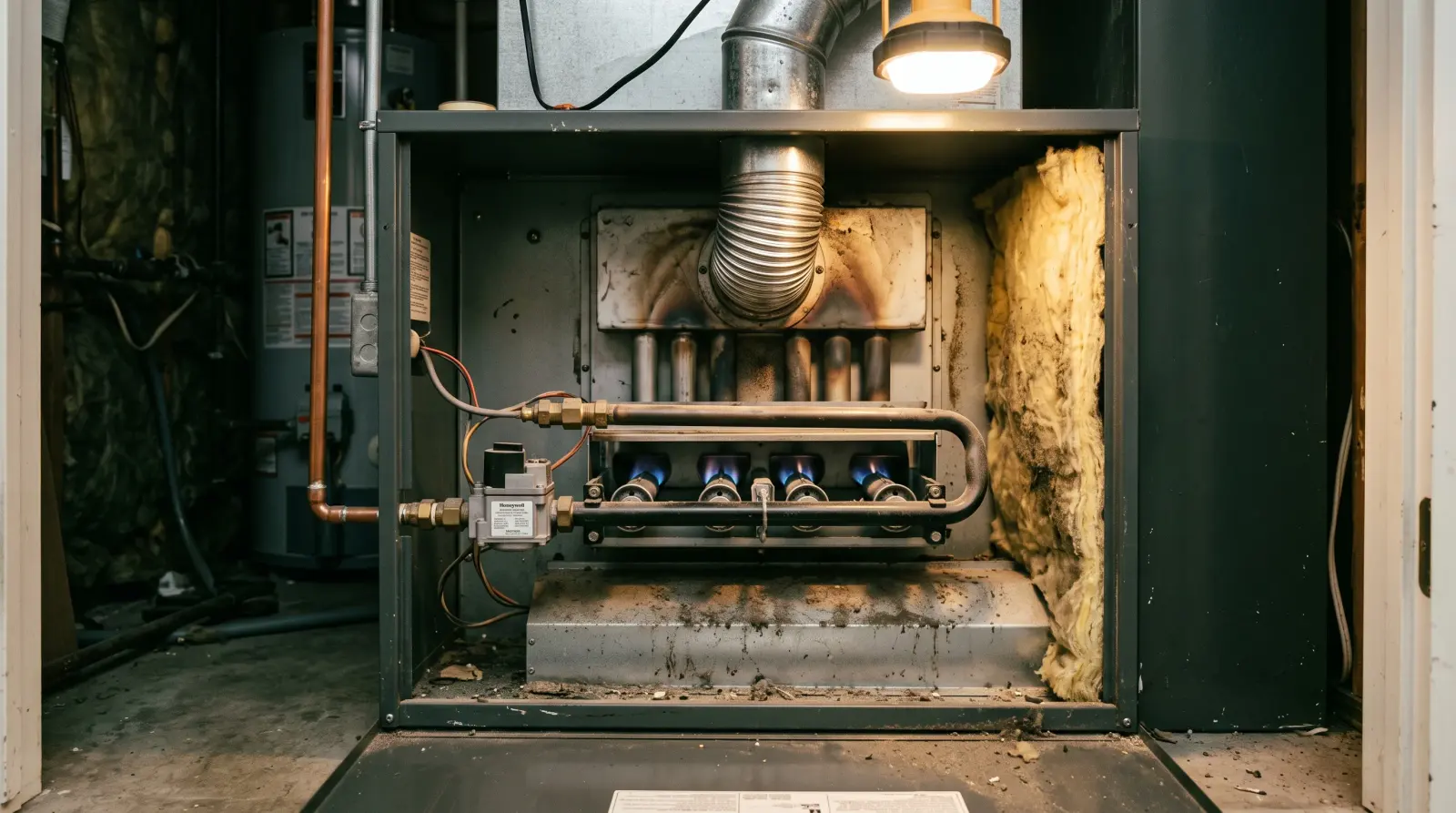
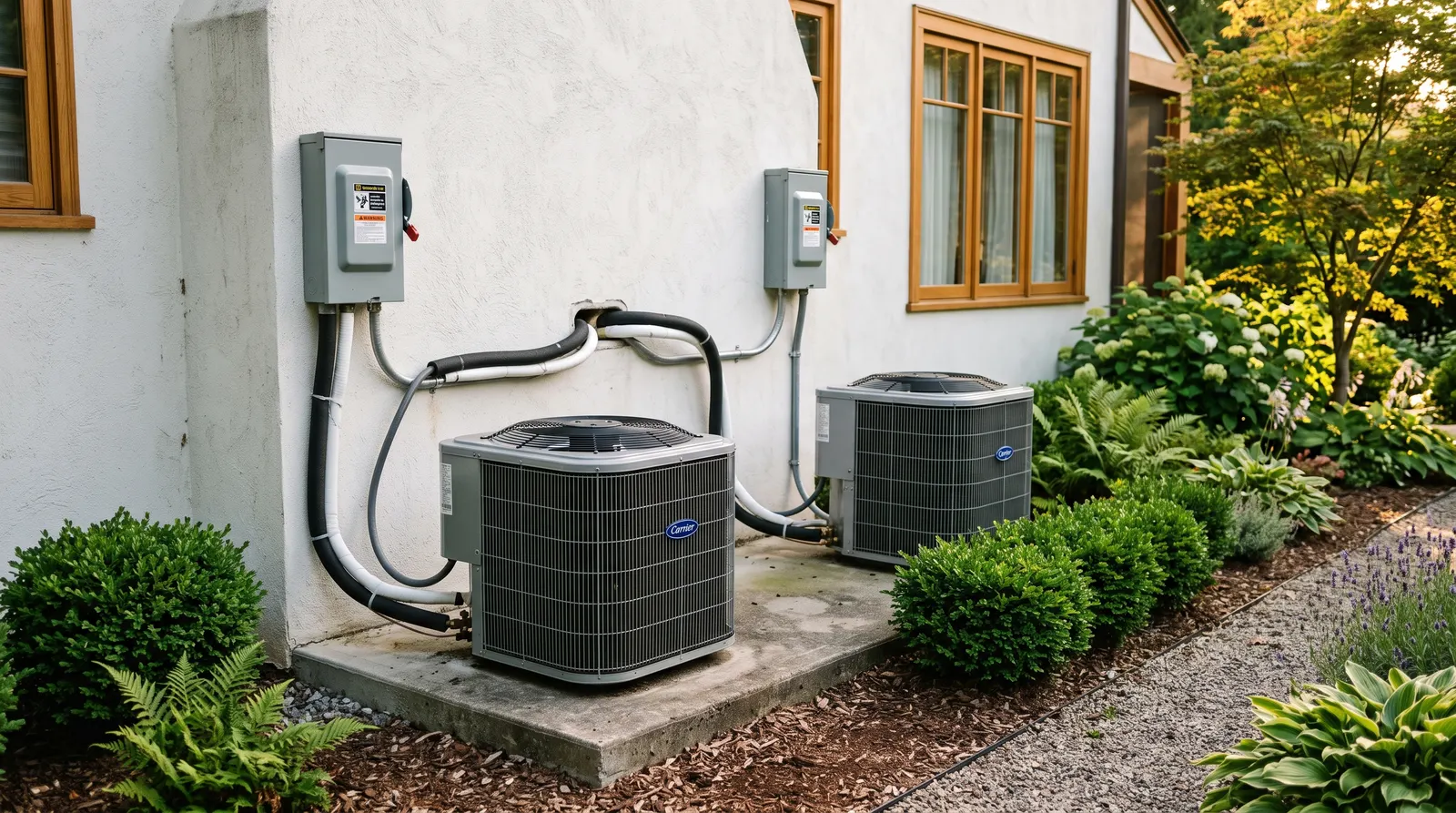
Furnaces have a switch that looks like a light switch near the unit, and an interlock in the door. Check the breaker for both the air handler and the outdoor condenser.
- 03
Filter and condensate
A blocked filter starves airflow and can freeze a coil or trip a furnace limit. A full condensate pan trips a float switch that shuts cooling down entirely.
- 04
Wait three minutes
Compressors will not restart immediately after stopping. Many systems enforce a three to five minute delay deliberately, and people read that pause as a dead unit.
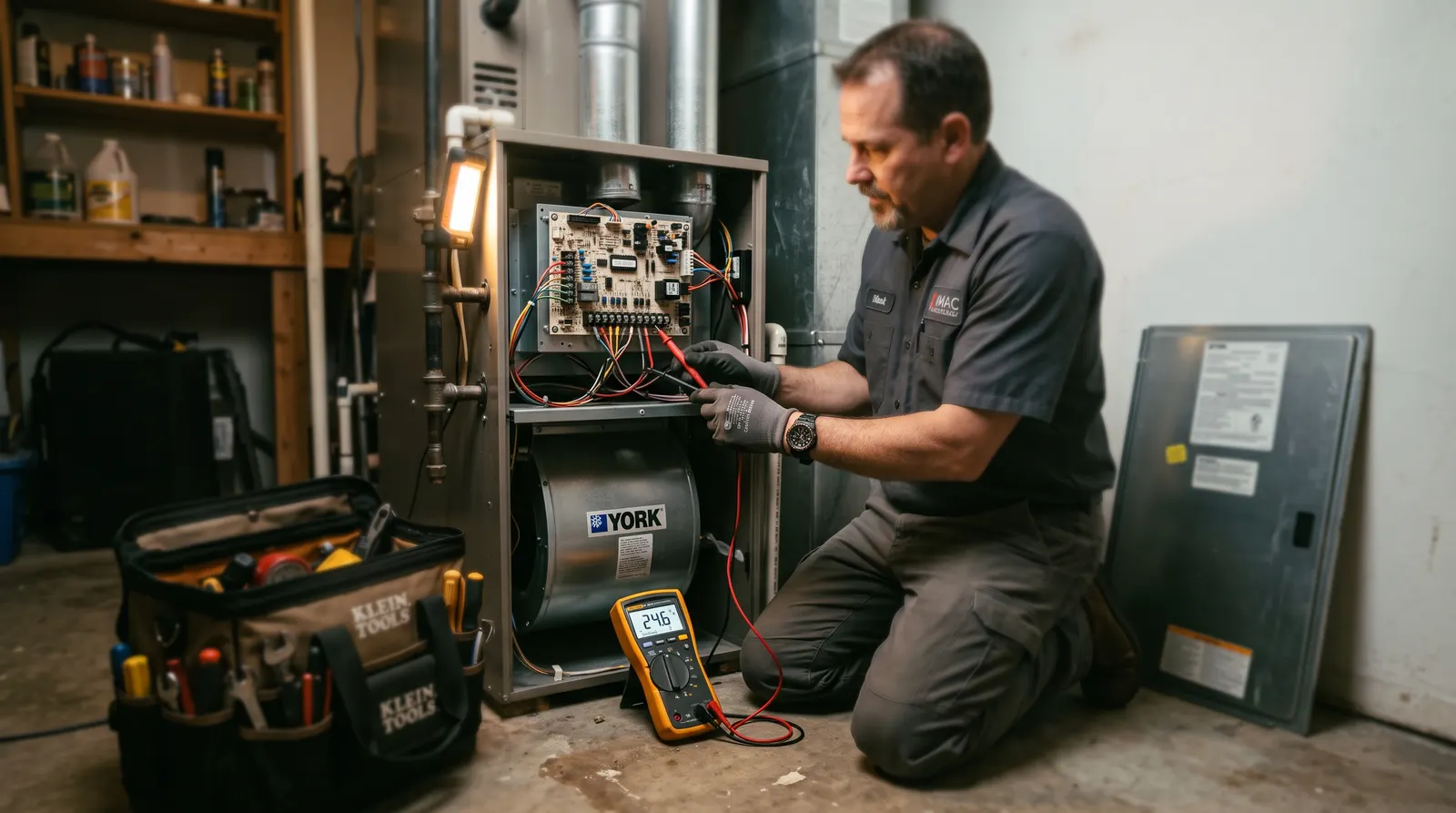
These are not tricks. They are the same first four checks a technician makes on arrival, and a meaningful share of after-hours call-outs end with one of them and a diagnostic fee.
The three-minute rule nobody explains
Why will my AC not restart straight away?
Because restarting a compressor against system pressure damages it. Most equipment enforces a three to five minute delay after a shutdown, and many thermostats add their own. The pause is a protection feature, not a fault.
This appears in the People Also Ask block on this search and is answered on none of the ranking pages. It matters because a homeowner who flips the breaker, waits twenty seconds, and hears nothing concludes the unit is dead.
Give it five minutes with the thermostat calling for cooling before you decide anything. If it starts, the system is fine and something interrupted it.
The temperature thresholds that actually matter
"Is no AC an emergency" is the second most asked question on this SERP and every ranking page dodges it. Here is a usable answer.
- Heat. Indoor temperatures sustained above the mid-80s Fahrenheit overnight, or any local heat advisory, is the point where cooling stops being comfort. Most US cities open cooling centres during advisories, and that is a legitimate option at 11pm.
- Cold. Indoor temperatures heading toward freezing put pipes at risk as well as people. The American Red Cross recommendation of keeping heat no lower than 55F for an empty property is a useful floor for an occupied one too.
- Occupants. Infants, anyone over about 65, and anyone with a heart, lung or circulatory condition moves both thresholds earlier by a wide margin.
If none of those apply and the house is merely uncomfortable, you will pay roughly a third less by calling at eight in the morning.
What an after-hours HVAC call actually costs
Indicative US ranges. Always get a written quote.
| Job | Typical range | Notes |
|---|---|---|
| After-hours diagnostic fee, weeknight | $150–$250 | Before any repair work |
| After-hours diagnostic fee, holiday | $225–$500 | Top of the band on major holidays |
| Labor multiplier, emergency | 1.5×–3× | Roughly $115–$600 / hr depending on region |
| Capacitor replacement | $200–$300 | Standard hours; the part itself is under $30 |
| Furnace igniter | $150–$350 std | $275–$600 after hours, $400–$900 holiday |
| Blower motor | $400–$900 | Standard hours |
| Refrigerant recharge | $250–$600 | A recharge without a leak repair is a temporary fix |
Source: 2026 emergency HVAC rate aggregator data; HomeGuide 2026 HVAC repair cost guide; homeowner-reported figures from public forum threads, marked as reported (retrieved August 2026). Figures vary by region, severity and after-hours timing.
Figures last checked
The multiplier is the part people underestimate. HVAC emergency labor runs 1.5 to 3 times standard, which is a wider spread than plumbing or electrical, and holidays sit at the top of it.
Ask for the diagnostic fee and the labor rate as two separate numbers, and ask whether the fee is credited against the repair. Full detail sits in our breakdown of what emergency HVAC repair costs.
24/7 dispatch network
Get a licensed HVAC technician moving on this
Tell us what has failed and your ZIP code. Licensed, insured HVAC contractors covering your area will contact you directly. Submitting costs nothing and there is no obligation to hire.
Fire, a gas smell, or an injury? Leave the building and call 911 first, then your gas utility or power company. Use this form once you are safe.
Know the line
Safe to check yourself, or call a pro now?
Safe to check yourself
- Thermostat batteries, mode and setpoint
- The furnace power switch and door interlock
- Breakers for the air handler and the outdoor unit
- Replacing a blocked air filter
- Emptying a full condensate pan and clearing the drain
Call a pro now
- Anything involving the gas valve, burners or heat exchanger
- Refrigerant, which is federally regulated and needs certification
- A CO alarm that has sounded, even once
- Repeated breaker trips on the air handler or condenser
- Any electrical work inside the unit
Gas smell versus carbon monoxide
These get conflated constantly and they are different hazards with different detection.
Natural gas and propane are odourised with a sulphur compound specifically so a leak is obvious. If you can smell rotten eggs near a furnace, that is unburnt gas, and the response is to leave the building without switching anything on or off and call the gas utility from outside.
Carbon monoxide is a combustion product. It has no smell at all, and the only warning you will get is an alarm or a pattern of symptoms. Both hazards share one instruction: get out first, diagnose later.
Where CO alarms go, and how often to service the furnace
CPSC recommends a carbon monoxide alarm on each level of the home and outside sleeping areas, and specifically not in attics or basements unless those include a sleeping area.
It also recommends that a qualified technician inspect the home heating system, including the furnace or boiler and its controls and safety switches, once a year. That inspection is the only routine check that finds a cracked heat exchanger before it matters.
Getting through the night without heat or cooling
- In a freeze, protect pipes first. Open cabinet doors under sinks on exterior walls, let cold taps drip, and keep interior doors open so what heat there is circulates.
- Consolidate. Close off unused rooms and heat or cool one space rather than the whole house. Electric heaters and window units are load-heavy, so spread them across circuits.
- In a heat event, go low and dark. Lowest floor, blinds closed, fans moving air across skin, and fluids. Public cooling centres are open during advisories in most US cities.
- Never bring combustion indoors. No generator, no charcoal or gas grill, no camping stove and no oven used as a heater. That is how the carbon monoxide section of this page becomes relevant to you.
What homeowners actually ask
What homeowners report paying for emergency HVAC
Drawn from real public forum threads and reported prices, summarised and attributed as patterns. These are not reviews of this site, and no names or ratings have been invented.
“Paid $316 to replace a capacitor and inspect the system”
“Techs add $100 to $150 for after-hours Sunday calls, turning a $10 part into over $500”
“AC not working, where to buy a capacitor in DC on a Sunday”
“Holiday furnace failure, around $1,180 all in”
1 / 4
The capacitor argument is the recurring one in this trade, and both sides of it are fair. The part is genuinely cheap and the replacement is genuinely quick, and the technician is also carrying a stocked van, a licence and an after-hours rota. Knowing the numbers lets you have that conversation rather than feel ambushed by it.
How the matching works, and what we do not do
Emergency Services 24H is a referral service. We do not employ HVAC technicians and we do not perform repairs.
Your request routes by ZIP code to licensed, insured contractors covering your area, and they contact you directly to quote and schedule. If a carbon monoxide alarm is sounding, call 911 first and use the form afterwards.
Straight answers
Frequently asked questions
The questions homeowners actually search for on this problem, answered in plain language.
Browse all guidesWhat counts as an HVAC emergency?
A carbon monoxide alarm or suspected leak, a gas smell near the furnace, no heat when indoor temperatures are heading below freezing, or no cooling during a heat advisory, particularly with infants, elderly occupants or anyone with a medical condition in the house. Discomfort alone is a next-morning appointment.
At what temperature is a broken AC an emergency?
There is no single number, but the practical threshold is a heat advisory or indoor temperatures above the mid-80s Fahrenheit sustained overnight, and it drops sharply if there is an infant, an elderly occupant or anyone with a heart or respiratory condition in the home. Cooling centres exist in most US cities for exactly this.
What is the 3 minute rule for AC?
Most central air conditioners will not restart the compressor for around three to five minutes after it stops, because restarting against system pressure damages it. Many thermostats and control boards enforce that delay deliberately. If your AC has just cut out, wait the delay before concluding anything is broken.
How can I tell if my furnace is leaking carbon monoxide?
You mostly cannot, which is the point. CO is colourless and odourless, and CPSC notes the early symptoms mimic flu: headache, fatigue, shortness of breath, nausea and dizziness. A working CO alarm is the only reliable detector. If one sounds, get everyone outside, call 911, and do not go looking for the source.
How much does an emergency HVAC call cost?
Expect an after-hours diagnostic fee of $150 to $250 on a weeknight and $225 to $500 on a holiday, with labor at 1.5 to 3 times the standard rate. A capacitor replacement runs $200 to $300 in normal hours, and a holiday furnace failure has been documented at around $1,180 all in.
Should I turn the system off while I wait?
Yes for a furnace that is behaving strangely, smells odd, or is short cycling, and yes for an AC that is blowing warm and may be icing up. Turning it off prevents further damage and, for a gas furnace, removes the combustion source while you wait. Leave the fan running if a coil is iced so it can thaw.
Sources for this page
- U.S. Consumer Product Safety Commission: Carbon Monoxide Information Center
- Electrical Safety Foundation International
- HomeGuide
- Angi
Checked . If a figure here no longer matches its source, that is a bug, so tell us and we will correct it.
24/7 dispatch network
Get help from a licensed local contractor
Tell us what has failed and where you are. We route your request to licensed, insured contractors covering your ZIP code, and they contact you directly.
Fire, a gas smell, or an injury? Leave the building and call 911 first, then your gas utility or power company. Use this form once you are safe.