Roof leaking in heavy rain: what to do from inside first
A leak that only appears when the rain is hard is not a hole. It is a volume or wind problem at a valley, a gutter or a flashing detail, and that changes the repair.
A roof leaking in heavy rain and staying dry the rest of the time is a volume or wind-driven failure at a valley, a gutter or a flashing detail rather than a hole in the roof. Containment comes first, tracing comes after the rain stops, and the entry point is almost never directly above the stain.
Roof leaking in heavy rain: contain it first
Nothing about diagnosis helps while water is actively coming in, so the order is fixed. A roof leaking in heavy rain is a containment problem for as long as the rain lasts.
Move valuables and electronics out of the room. Put buckets down on towels, because splash spreads water across flooring far more effectively than the drip itself. Photograph as you go, since this is the evidence a claim will rest on.
While it is still raining
Four steps from inside the house
01
Move things, then contain
Valuables and electronics first, then buckets on towels so splash does not spread the damage across the floor.
02
Relieve a bulging ceiling
A sagging ceiling is holding water and fails all at once. Clear the area beneath it, then make a small hole at the low point with a bucket underneath.
03
Photograph as you go
This is claim evidence and it disappears once things dry and get tidied. Wide shots, close shots, the ceiling and the attic.
04
Trace it after the rain stops
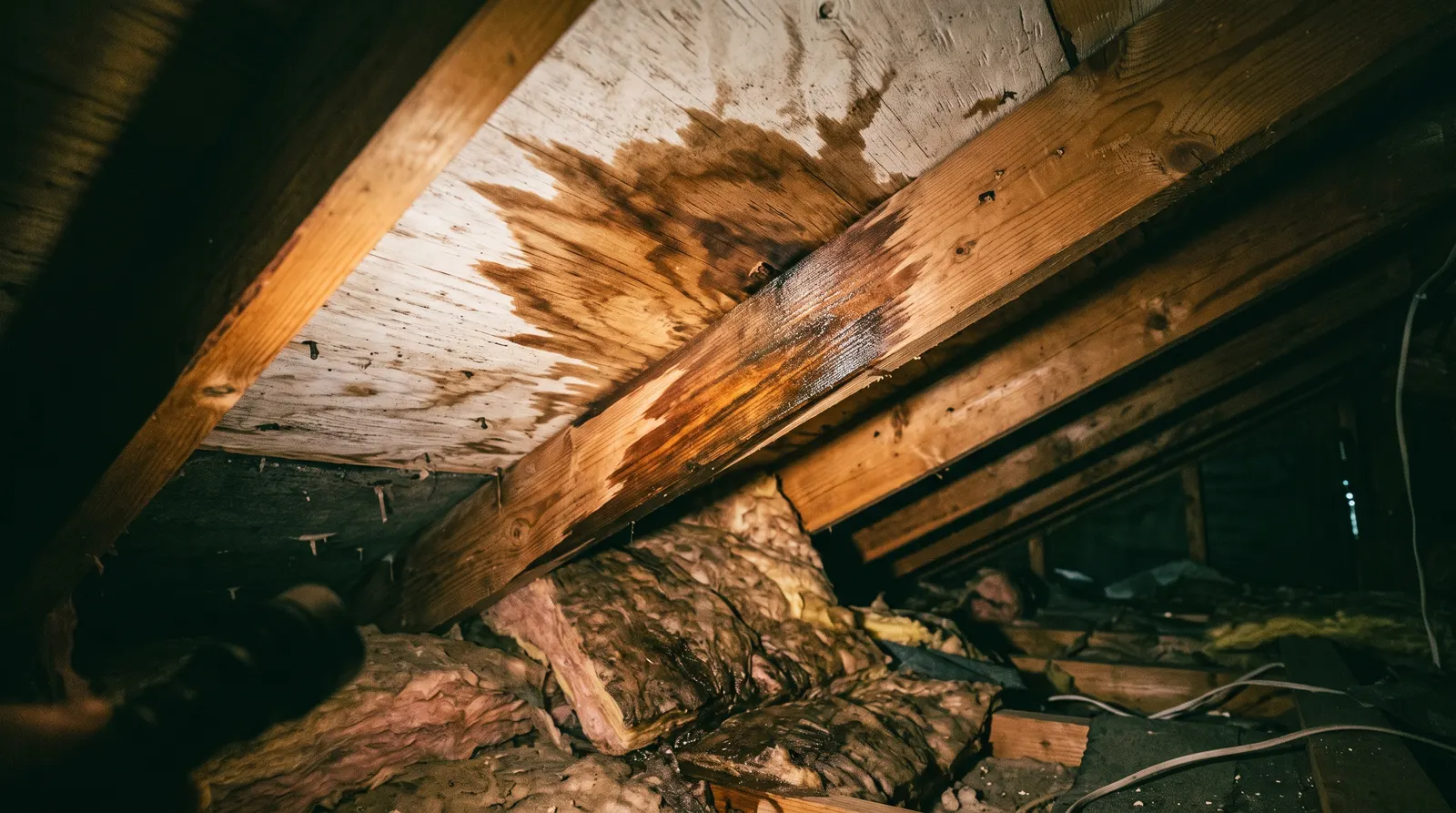
Water runs along decking and rafters before it drops, so the entry point is almost never directly above the stain. Trace uphill along the structure.
A bulging ceiling: relieve it deliberately
It fails all at once, not gradually
A sagging ceiling is holding a pool of water above a sheet of saturated plasterboard, and when it goes it goes completely. Clear furniture and people from underneath, then make a small hole at the lowest point with a bucket positioned below it. A controlled release beats a collapse in every respect.
Why it only leaks in heavy rain
What does a rain-only leak tell you?
That volume or wind direction is the trigger rather than an opening. Heavy rain overwhelms a valley, a blocked gutter or a small flashing gap that handles ordinary rain fine, and wind-driven rain reaches under laps designed to shed water falling vertically.
That is diagnostic rather than incidental. A roof with a hole leaks whenever it rains. A roof that only leaks in a downpour has a detail that is marginal, and the repair targets the detail.
The entry point is not above the stain
This is the single most useful thing to know before anyone starts opening ceilings.
Water entering the roof structure runs along the top of decking, down rafters and along pipe and cable runs until it reaches a low point or a penetration, and then it drops. In a level ceiling that can be several feet from the entry point, and in a sloped roof considerably more.
Trace uphill along the structure rather than assuming the hole is directly overhead.
The usual suspects, in order
Blocked gutters backing water up under the eaves, which is the cheapest cause and the most common.
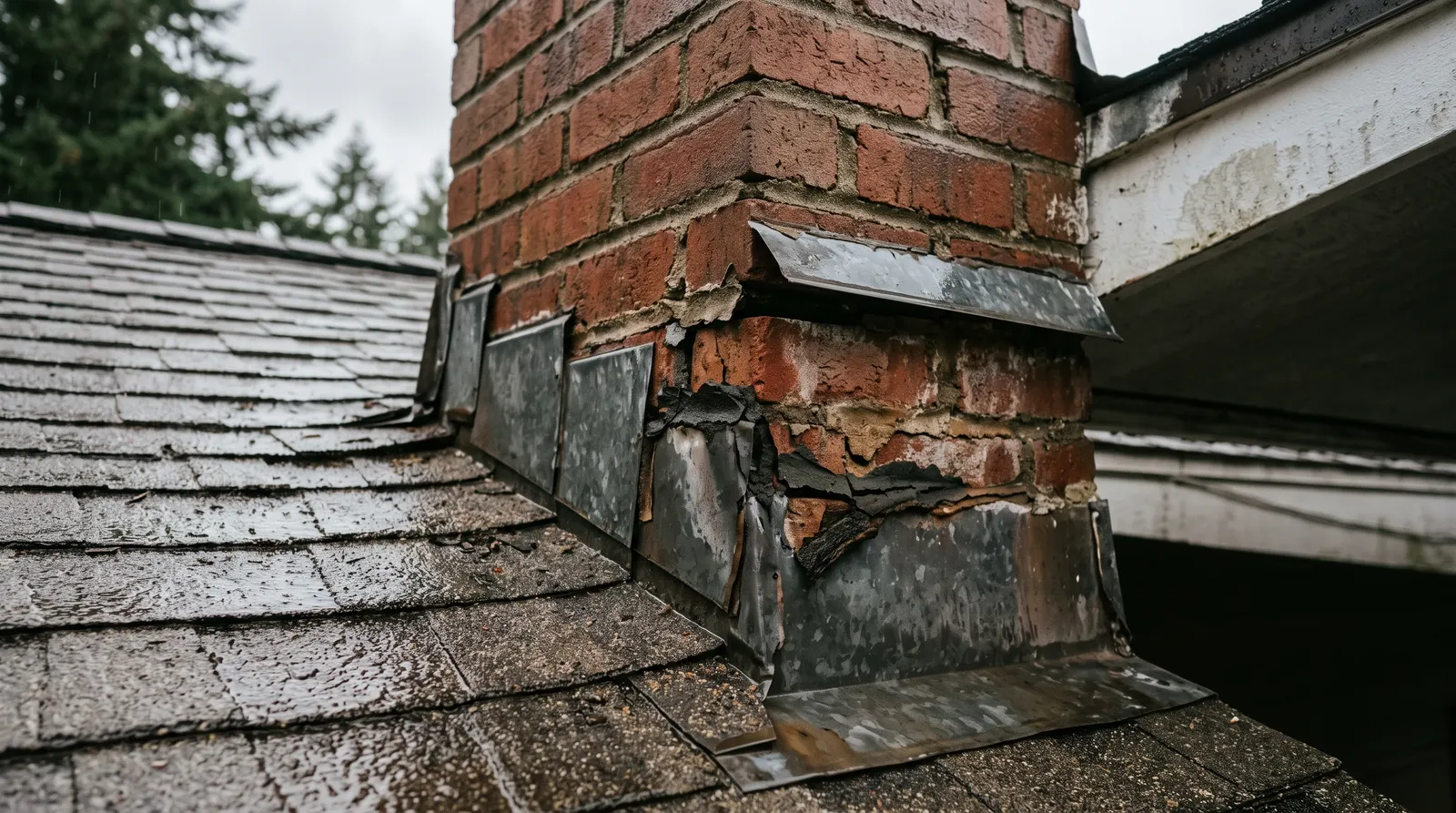
Flashing at chimneys, walls, skylights and valleys, where two planes meet.
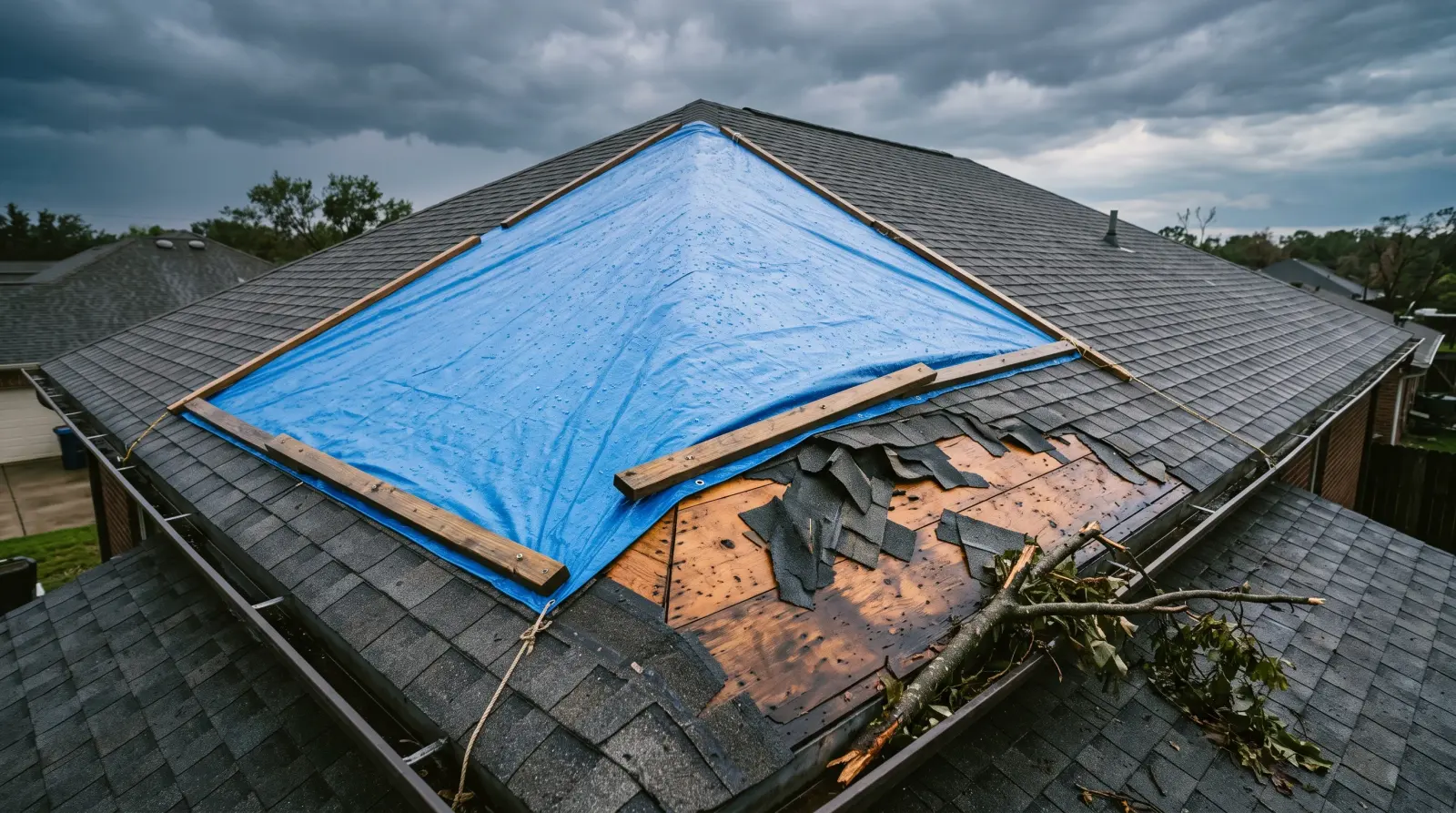
Missing or lifted shingles from a recent storm, which is the covered-event case.
Penetrations: vents, pipe boots and anything else cut through the surface.
Can you fix it while it is raining?
Not from the roof, and the reasons are both safety and physics.
A wet roof is slippery, wind makes ladders and sheet materials dangerous, and nothing bonds to a wet surface anyway. Interior containment is the correct work during a storm, and emergency tarping crews operate in conditions homeowners should not because they arrive equipped for it.
Faster than most people assume, and the threshold is not the ceiling.
Insulation loses thermal performance as soon as it is wet. EPA guidance puts mold growth on wet materials at 24 to 48 hours. The genuinely expensive threshold is decking and framing staying wet long enough to soften, which converts a targeted repair into a section replacement.
The rule is the same one that governs every roof claim: sudden against gradual.
A leak caused by a covered event such as wind or hail is claimable. A leak caused by wear, age or a detail that has been marginal for years is generally not, even though the rain is what made it visible. A dated letter from a roofer attributing the cause to a specific storm is what supports the first version.
Catch the water and relieve a bulging ceiling deliberately rather than letting it collapse. A controlled puncture over a bucket costs far less than a ceiling.
What the repair costs
Indicative US ranges. Always get a written quote.
Job
Typical range
Notes
Emergency tarping, after hours
$1.00–$2.80 / sq ft
Average job ~$450
Standard tarping, scheduled
$0.70–$2.00 / sq ft
When it can wait for daylight
After-hours call-out fee
$100–$200
Charged on top of the work
Flashing and valley repair
quoted after inspection
The common cause of rain-only leaks
Decking replacement
the expensive outcome
Where water ran long enough to soften it
Source: Angi 2026 cost to tarp a roof data, with permanent repair scope stated qualitatively because it depends on inspection (retrieved August 2026). Figures vary by region, severity and after-hours timing.
Figures last checked
The last row is why the timeline matters. Everything above it is a repair, and that row is a replacement, and the difference between them is usually how long the water ran.
How the matching works, and what we do not do
Emergency Services 24H is a referral service. We do not employ roofing contractors, we do not perform repairs, and we are not an insurance adviser.
Your request routes by ZIP code to licensed, insured contractors covering your area, and they contact you directly. Being able to say the leak only happens in heavy rain genuinely narrows their diagnosis before they arrive.
What homeowners actually ask
What people report and search for
Drawn from real public forum threads and reported prices, summarised and attributed as patterns.
These are not reviews of this site, and no names or ratings have been invented.
“Roof leak after heavy rain”
SourceThread title, r/HomeImprovement, surfaced in the discussions block for this query. The replies consistently push toward flashing and gutters rather than toward a hole in the field of the roof.
“Why does my roof leak only when it rains hard?”
SourceA People Also Ask question on this SERP. It is the diagnostic clue and none of the ranking pages treat it as one.
“Roof leaks in heavy rain cost”
SourceA related search with explicit cost intent, sitting above ten pages that carry no pricing at all.
1 / 3
The only-when-it-rains-hard question is the useful one in that set. It is a diagnostic clue that the search results treat as a phrasing variant.
Know the line
Safe to handle yourself, or call a contractor?
Safe to check yourself
Containing water with buckets and towels
Moving valuables out of the affected room
Relieving a bulging ceiling deliberately
Clearing accessible gutters once the weather has passed
Photographing everything for the claim
Call a pro now
Any roof access while it is raining or windy
Flashing, valley and chimney work
A leak that has been running for days
Wet insulation inside a closed ceiling void
Any suspicion the decking has softened
24/7 dispatch network
Get a licensed roofing contractor
Tell us when the leak appears and how much water is coming in, plus your ZIP code. Licensed, insured contractors covering your area will contact you directly. No obligation to hire.
Fire, a gas smell, or an injury? Leave the building and call 911 first, then your gas
utility or power company. Use this form once you are safe.
Straight answers
Frequently asked questions
The questions homeowners actually search for on this problem, answered in plain language.
What should I do if my roof is leaking during rain?
Contain it from inside. Move valuables, protect the floor, and put buckets on towels to stop splash spreading the water. If the ceiling is bulging, clear the area and relieve it deliberately with a small hole and a bucket underneath rather than waiting for it to fail.
Can you fix a leaking roof while it is raining?
Not from the roof, and not safely. Wet surfaces, wind and reduced visibility make roof access genuinely dangerous, and repairs do not bond to wet materials anyway. Interior containment is the correct work during the storm, with emergency tarping if the volume warrants it.
Why does my roof leak only when it rains hard?
Because volume or wind direction is the trigger rather than a hole. Heavy rain overwhelms a valley, a blocked gutter or a small flashing gap that copes with ordinary rain, and wind-driven rain reaches under laps that shed vertical rain perfectly well.
How long can a roof leak before damage?
Insulation starts losing performance immediately, and EPA guidance puts mold growth on wet materials at 24 to 48 hours. The expensive threshold is when decking and framing stay wet long enough to soften, which is what turns a targeted repair into a section replacement.
Does homeowners insurance cover roof leaks due to rain?
Only when the leak was caused by a covered event such as wind or hail damage. A leak caused by wear, age or neglect is generally excluded, even though the rain is what made it visible. A dated roofer letter attributing the cause to a storm supports the claim.
What does it cost to fix a roof leak?
Emergency after-hours tarping to stop it runs about $1.00 to $2.80 per square foot, with standard tarping at $0.70 to $2.00. The permanent repair depends on how much decking and underlayment is affected, which is why it is quoted after the roof has been opened up and dried.
Following the leak in the attic
Flashing at the usual failure point
Most roof leaks are flashing failures at penetrations rather than the field of the roof. That is the cheaper row to be on.
Sources for this page
Insurance Information Institute: What standard homeowners insurance covers, including storm perils and the ~$500 per-item cap on trees, shrubs and plants
Tell us what has failed and where you are. We route your request to licensed, insured contractors covering your ZIP code, and they contact you directly.
Fire, a gas smell, or an injury? Leave the building and call 911 first, then your gas
utility or power company. Use this form once you are safe.