Two variables decide almost every case: how porous the material is, and what was in the water. Everything else is detail.
Wet drywall costs roughly $1.50 to $3 per square foot to replace, which is why the honest answer to most save-or-toss questions is to cut it out. Two variables decide every case: how porous the material is, and what was in the water.
The rule: porosity and category
What actually decides whether a material can be saved?
Porosity and water category, in that order. Non-porous materials like tile, sealed concrete and metal clean up and survive almost anything. Porous materials hold water in their structure, and once the water was dirty they cannot be decontaminated, only replaced.
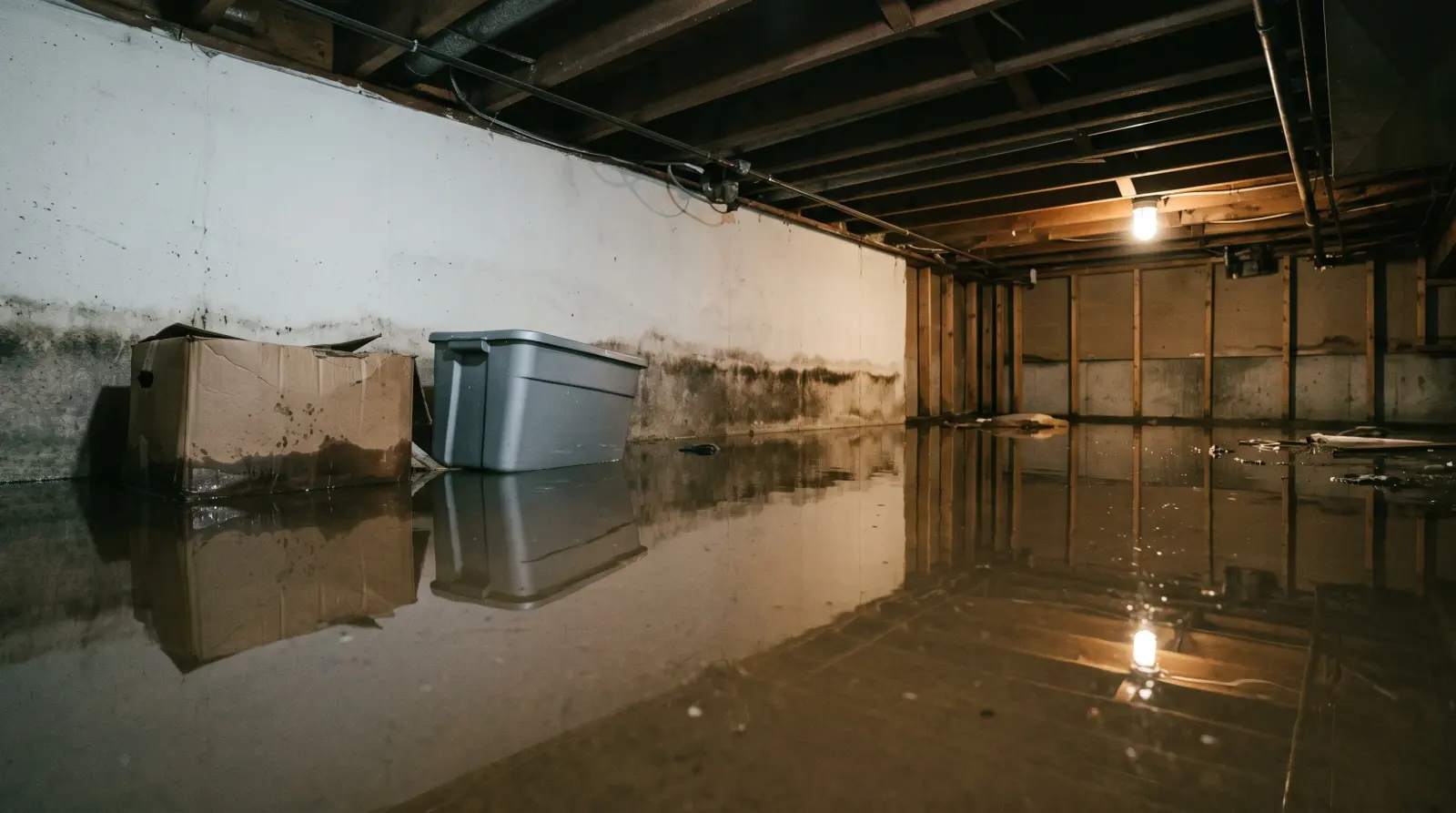
Category 1 is clean supply water from a burst pipe or an overflowing tap. Category 2 is greywater from a washing machine, dishwasher or shower. Category 3 is blackwater: sewage, or floodwater from outside.
The rule most restoration contractors work to is simple. Porous material plus Category 2 or 3 water equals removal, regardless of how quickly you got to it.
The order that gets it right
How professionals decide the cut line
01
Identify the category
Clean supply water, greywater from an appliance or washing machine, or blackwater from sewage. The category decides the answer before porosity does.
02
Find the wick line
Water climbs. Feel or meter the wall upward until you reach material that reads the same as an unaffected wall several rooms away.
03
Cut above it
Standard practice is to cut at least 12 to 24 inches above the highest wet reading, and to a clean horizontal line at a convenient height.
04
Verify with a meter
Dry means a moisture reading matching an unaffected baseline, not a surface that feels dry to the back of your hand.
Why wet drywall wicks upward
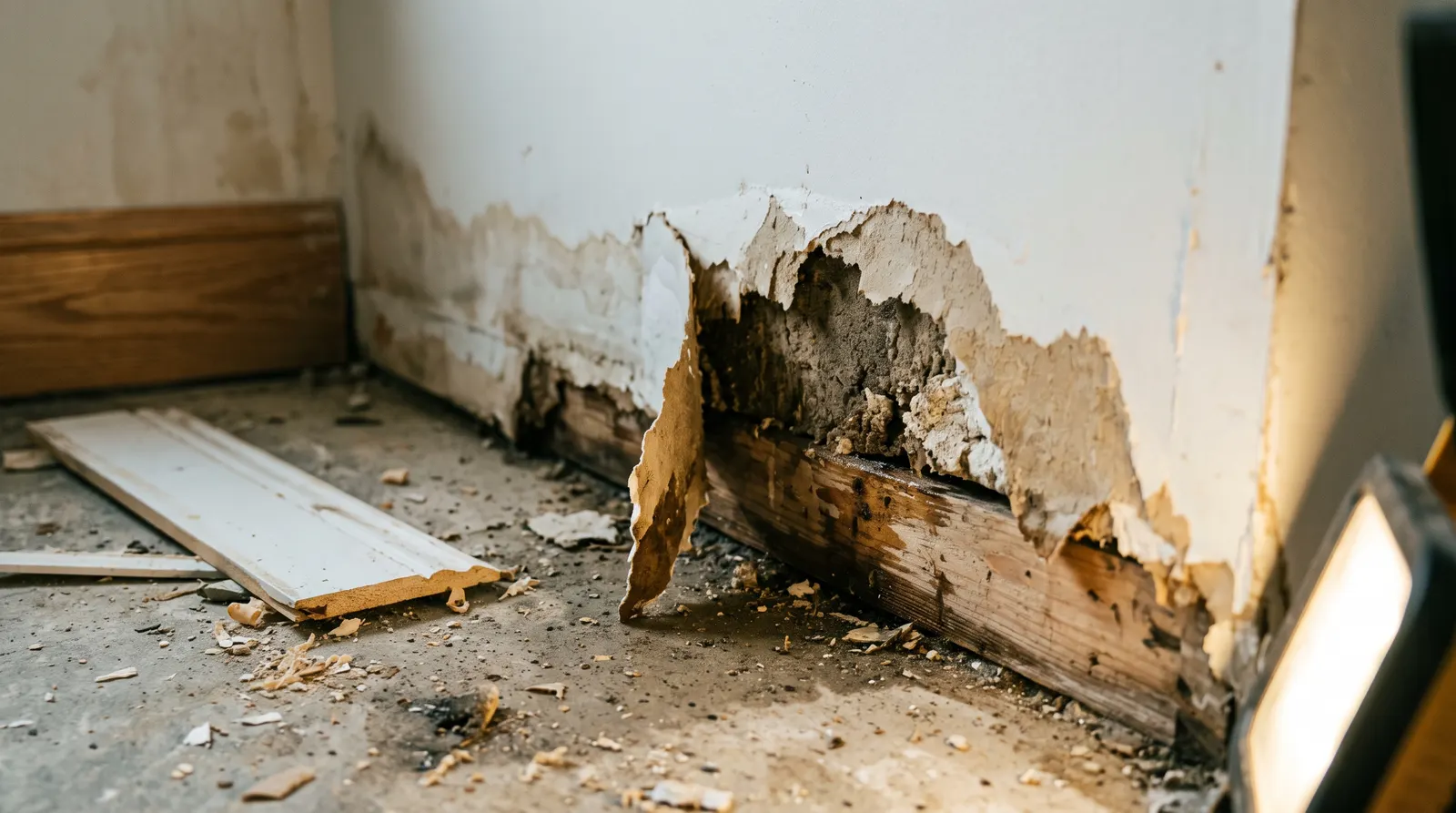
Gypsum board is a paper-faced core of compressed mineral, and it behaves like a very slow sponge. Water sitting at the base of a wall does not stay at the base.
Capillary action pulls it up through the core, often a foot or more above the visible waterline, and the paper facing hides it. That is the single most common mistake in DIY drying: people dry the height they can see.
Insulation behind the panel makes it worse. It holds water against the back of the drywall long after the surface has dried, which produces a wall that feels fine and is quietly growing mold in the cavity.
Where the cut line goes
How high should the cut be?
Twelve to twenty four inches above the highest wet meter reading, cut to a clean horizontal line. That is above the wick, not above the stain, and the extra height costs very little compared with reopening the wall later.
Cut to a convenient horizontal height rather than following the damage line, because a straight cut is faster to patch. Many contractors default to a two-foot or four-foot line so replacement panels need minimal trimming.
Pull the insulation out with it. Wet insulation in a closed cavity is the classic reason a repaired wall smells six weeks later.
Carpet and padding are two different decisions
These get treated as one item almost everywhere, and they are not.
Carpet, Category 1 water: often salvageable with extraction and drying if addressed within roughly 48 hours.
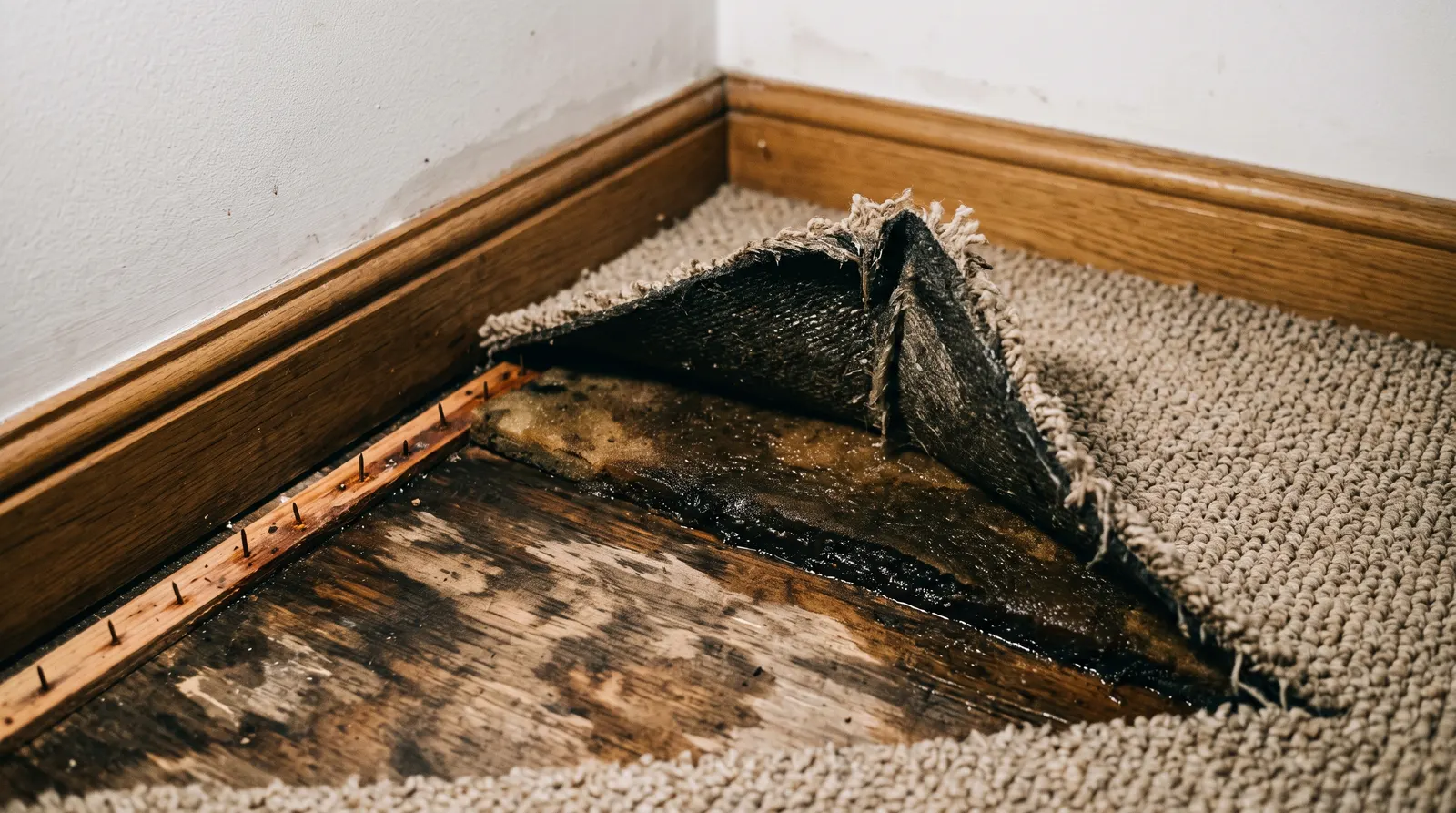
Padding, any category: normally pulled and replaced. It is an open-cell sponge, cheap to buy, and very hard to dry in place.
Carpet, Category 2 water: possible with professional cleaning and antimicrobial treatment, and often not worth the cost.
Anything, Category 3 water: both go. Sewage-contaminated porous material is not salvageable.
The economics matter here. Padding is the cheapest component in the assembly, so drying it in place to save money is a poor trade against the mold risk it carries.
What never survives
Some materials come off the list immediately, whatever the category and however fast you moved.
Carpet padding
Particleboard and MDF furniture
Most insulation types
Mattresses and upholstered foam
Ceiling tiles
Anything porous touched by sewage
Particleboard is the one that surprises people. It swells, delaminates and never recovers its structure, so a soaked flat-pack cabinet is finished even if it dries out looking passable.
Sewage changes the answer entirely
Category 3 water carries bacteria and viruses that survive drying. Porous materials it has touched cannot be decontaminated in place, and the cleanup needs protective equipment and containment. Our page on sewage backup cleanup covers what that involves.
How to know when it is actually dry
Touch is useless for this. A drywall surface dries within hours while the core and the framing behind it stay saturated for days.
Take a moisture meter reading on an unaffected wall in a dry part of the house, note it, then read the affected material. When the two match, the material is dry. Keep room humidity below about 60 percent while the drying runs.
The mold clock applies to materials, not rooms
EPA guidance puts mold growth on wet materials at 24 to 48 hours. That clock runs per material, which is why a room can look and smell fine while a saturated panel behind the baseboard is already colonised.
Our page on how fast mold grows after water damage covers the timing in detail. The practical version: material still wet at 48 hours is a removal decision, not a drying decision.
Carpet can often be saved; the pad underneath almost never is. Drywall wet above about half its height is replaced, not dried.
What replacement actually costs
Indicative US ranges. Always get a written quote.
Job
Typical range
Notes
Drywall replacement
$1.50–$3 / sq ft
Material and labour, per affected area
Category 1 drying, clean water
$3–$4 / sq ft
Structural drying with equipment
Category 2 cleanup, greywater
$4–$6.50 / sq ft
Cleaning plus drying
Mold remediation if it started
about $2,200 average
The cost of drying too slowly
Carpet padding
replace, do not dry
Cheap to replace, near impossible to dry in place
Source: Bob Vila 2026 water damage restoration cost data and published restoration industry per-square-foot ranges (retrieved August 2026). Figures vary by region, severity and after-hours timing.
Figures last checked
Read the first row against the last. Replacing a section of wet drywall is one of the cheapest repairs in the house, and it is a fraction of what remediation costs once mold has established in the cavity.
Emergency Services 24H is a referral service. We do not employ restoration technicians, we do not sell drying equipment, and we have no interest in whether a contractor cuts two feet of wall or four.
Your request routes by ZIP code to licensed, insured restoration contractors covering your area, and they contact you directly. Getting a meter on the wall early is what prevents the expensive version of this problem.
Know the line
Safe to handle yourself, or call a contractor now?
Safe to check yourself
Extracting clean water from carpet within the first day
Pulling and binning carpet padding
Running fans and a dehumidifier on a Category 1 loss
Cutting out a small section of clean-water drywall
Metering the wall against a dry baseline
Call a pro now
Any Category 3 or sewage contact
Water that has been sitting more than 48 hours
Wet insulation inside a closed wall cavity
Visible mold beyond a small surface patch
An insurance claim that needs documented drying logs
24/7 dispatch network
Tell us what has failed and where you are
Describe what got wet and how, and give us your ZIP code. Licensed, insured restoration contractors covering your area will contact you directly. No obligation to hire.
Fire, a gas smell, or an injury? Leave the building and call 911 first, then your gas
utility or power company. Use this form once you are safe.
Straight answers
Frequently asked questions
The questions homeowners actually search for on this problem, answered in plain language.
Sometimes, if the water was clean, the exposure was brief, and the panel was dried quickly and fully. Drywall that stayed wet for more than a couple of days, was soaked by greywater or sewage, or has gone soft or crumbly when pressed, gets cut out. Gypsum loses structural integrity once it has been saturated.
How high do I cut wet drywall?
Above the highest wet reading, not at the visible waterline. Water wicks upward through gypsum well past where the wall looks damp, so standard practice is to cut 12 to 24 inches above the highest point that still reads wet on a moisture meter, along a clean horizontal line.
Can wet carpet be saved?
Carpet and padding are two separate decisions. Carpet soaked by clean water can often be extracted, dried and re-laid within about 48 hours. The padding underneath is a sponge that is cheap to replace and very hard to dry in place, so it is normally pulled and binned regardless.
What never survives water damage?
Carpet padding, particleboard and MDF furniture, insulation of most types, mattresses, and anything porous touched by sewage. Those go regardless of category or drying speed, because they either disintegrate structurally or cannot be decontaminated.
How do I know when it is actually dry?
With a moisture meter compared against a baseline. Take a reading on an unaffected wall in a dry part of the house, then read the affected material. Matching readings mean dry. A surface that feels dry to the touch tells you almost nothing about the core of the panel or the framing behind it.
How much does drywall replacement cost?
Drywall replacement runs roughly $1.50 to $3 per square foot including labour, which makes cutting out a wet section far cheaper than most people assume. Structural drying of a Category 1 clean water loss runs $3 to $4 per square foot, and mold remediation averages around $2,200 if drying was too slow.
Carpet, pad and the tack strip beneath
Drywall that cannot be dried in place
Drying is cheaper than replacing right up until the material has been wet too long, at which point drying it just delays the replacement.
Tell us what has failed and where you are. We route your request to licensed, insured contractors covering your ZIP code, and they contact you directly.
Fire, a gas smell, or an injury? Leave the building and call 911 first, then your gas
utility or power company. Use this form once you are safe.