Water damage restoration cost, by category and by area
Every page ranking for this is a lead-generation asset. Here is the pricing axis the trade actually uses, and how to read the quote you are holding.
Water damage restoration cost is quoted per square foot and driven by contamination category: about $3 to $4 for clean water, $4 to $6.50 for grey water and $7 to $7.50 for sewage or flood water. The national average job is around $3,455.
The short answer on restoration cost
What does water damage restoration cost?
Roughly $3 to $4 per square foot for clean water and $7 to $7.50 for black water, with a national average job near $3,455 and a typical range of $1,305 to $5,707. Mold remediation is separate and averages about $2,200.
Knowing the category tells you which row you are in before anyone quotes, which is the single most useful thing you can carry into that conversation.
Insurers expect mitigation to begin promptly. Delay can reduce what they pay, which makes waiting for three quotes an expensive habit.
Water damage restoration cost by contamination category
Indicative US ranges. Always get a written quote.
Job
Typical range
Notes
Category 1, clean water
$3–$4 / sq ft
Supply-line water, no contamination
Category 2, grey water
$4–$6.50 / sq ft
Appliance discharge, groundwater
Category 3, black water
$7–$7.50 / sq ft
Sewage and flood water
National average job
~$3,455
Typical range $1,305–$5,707
Source: Bob Vila 2026 water damage restoration cost data (retrieved August 2026). Figures vary by region, severity and after-hours timing.
Figures last checked
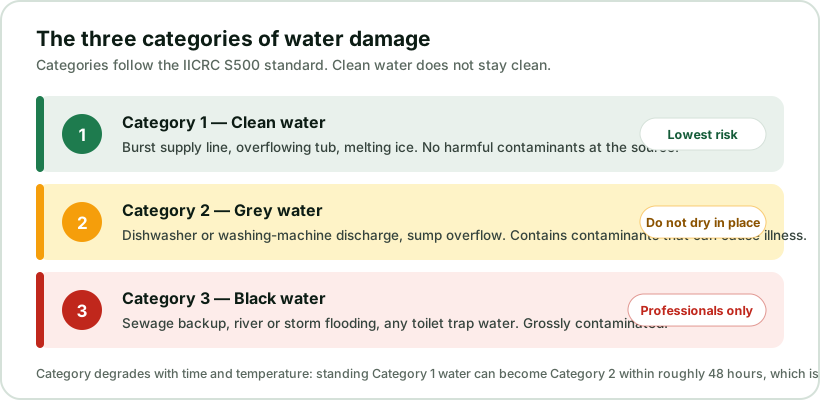
The jump from Category 1 to Category 3 is roughly a factor of two, and it is not a margin decision. Black water means protective equipment, more aggressive antimicrobial treatment, and considerably more material discarded rather than dried.
Category decides the equipment, what gets discarded and roughly double the price. It also degrades with time, so a Category 1 spill left for three days may be quoted as Category 2.Source: Emergency Services 24H original diagram, figures per Bob Vila 2026 cost data
That degradation is worth knowing before you delay. A clean-water spill left sitting in a warm room becomes grey water within days, and the quote moves with it.
Cost by area and by job type
Indicative US ranges. Always get a written quote.
Job
Typical range
Notes
Flooded basement cleanup
$2,000–$7,000
Average around $4,000; largest square footage
Mold remediation
~$2,200 average
A separate job from drying
Drywall replacement
$1.50–$3 / sq ft
Where cavities were wet
Reported homeowner spend, restoration
$1,361–$6,270
Consumer-reported range
Severe standing-water jobs
can exceed $100,000
Reported extreme cases
Source: Bob Vila 2026 water damage restoration cost data; consumer-reported spend from published cost aggregators, marked as reported (retrieved August 2026). Figures vary by region, severity and after-hours timing.
Figures last checked
How to read a restoration quote
Restoration quotes have a consistent structure once you know what you are looking at, and almost nobody explains it.
Extraction is usually a single line, priced by area or by volume of water removed.
Equipment is per unit per day: so many air movers and so many dehumidifiers, for so many days.
Antimicrobial application is separate, and is standard on Category 2 and 3 work.
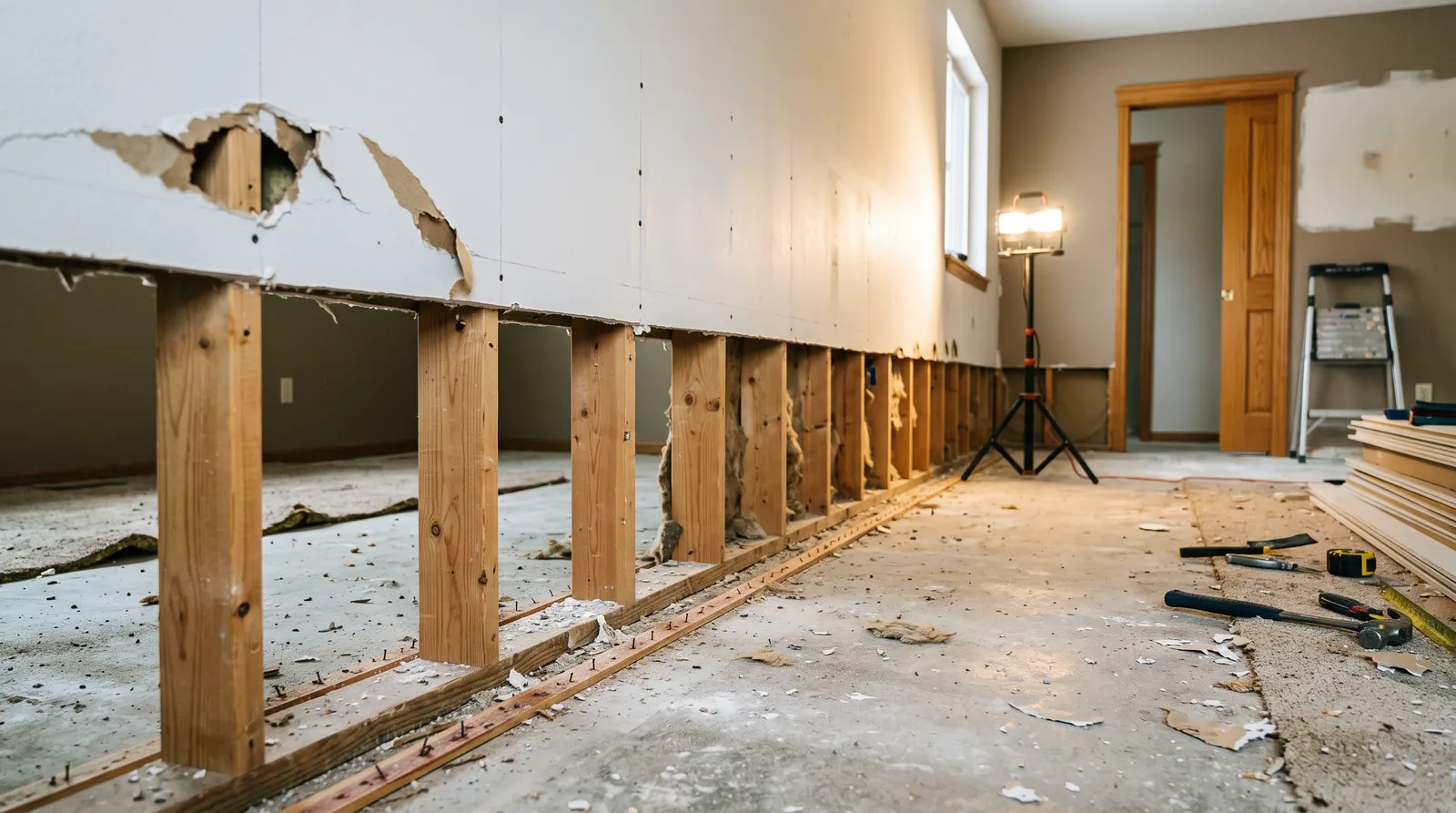
Demolition covers baseboard removal, drilled wall bases and any cut line, and is priced by linear or square foot.
Rebuild is a different phase entirely and frequently a different quote.
Why equipment is billed daily
Why am I paying per day for fans?
Because air movers and dehumidifiers are rented per unit per day, and the number of units is set by room volume and how wet the materials are. Daily moisture readings are what justify each additional day, so ask to see them.
This is the line item that surprises people on day four, and it is legitimate. What is not legitimate is equipment sitting in a dry room accruing days, which is exactly why moisture logs exist.
Ask for the readings at the start rather than the end. A contractor taking daily readings will produce them without hesitation.
Mold remediation is a separate job
Drying prevents mold. Remediation removes it once it has established. They are different scopes, different prices and frequently different crews.
Remediation averages around $2,200 as its own job, which is a meaningful addition to a $3,455 average restoration. It is also almost entirely avoidable by drying inside the EPA's 24 to 48 hour window.
Where mold has already started, the EPA guideline is that an area under about 10 square feet, roughly three feet by three feet, is in most cases a homeowner job. Larger areas warrant a professional, and the timeline detail is on our page about how fast mold grows after water damage.
What emergency mitigation costs separately
The first invoice usually arrives before the claim is settled, and it covers extraction and initial drying rather than the full repair.
That is normal, and it is frequently claimable in its own right even where the wider repair is disputed. Keep it as a separate document from anything to do with rebuild, because insurers treat the two differently.
Do not wait for a claim decision before drying
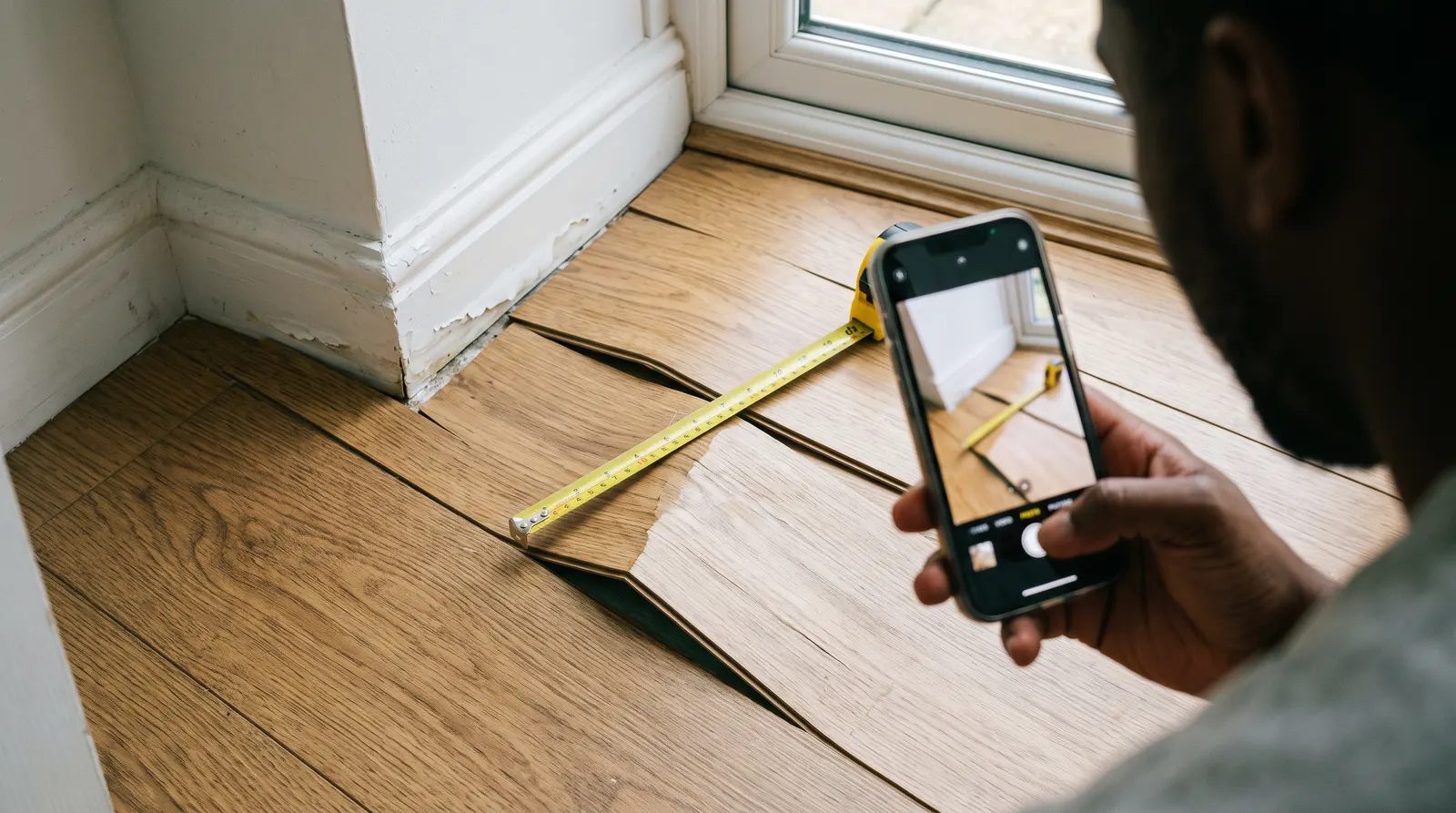
Every day of delay increases both the damage and the category. Policies generally expect prompt mitigation, and a homeowner who waited a week for an adjuster before starting has usually weakened their own position rather than protected it. Photograph thoroughly, then dry.
What is not in a drying quote
Rebuild and redecoration. Replacing drywall, flooring and paint is a separate phase at $1.50 to $3 per square foot for drywall alone.
Contents cleaning and storage. Furniture, belongings and any off-site storage while drying runs.
Mold remediation if growth has already started.
The repair that caused it. The plumbing, roof or appliance fault is a different trade and a different bill.
Why two quotes differ on the same room
Almost never because one contractor is dishonest. Four assumptions account for most of it.
Different category. One assessing Category 2 and one Category 3 produces roughly a two-fold difference on the same square footage.
Different demolition scope. A two-foot flood cut against drilling wall bases and drying in place.
Different drying duration. Three days assumed against six.
Rebuild included or not. The single largest source of apparent difference between two totals.
Compare the assumptions rather than the bottom line, and ask both contractors to state category and square footage explicitly.
Questions to ask before signing
Four questions, and they take a minute.
What category and what square footage is this priced at. What is the daily equipment rate and how many days are you expecting. What triggers additional demolition beyond what is quoted. Is rebuild included, or is that a separate quote.
How that total sits against your deductible is covered on our page about what insurance covers.
What homeowners actually ask
What homeowners report paying
Drawn from real public forum threads and reported prices, summarised and attributed as patterns.
These are not reviews of this site, and no names or ratings have been invented.
“Homeowners report paying roughly $1,361 to $6,270 for professional restoration”
SourceConsumer-reported spend collated from published cost aggregators. Quoted as a reported range rather than as a quote for any specific job.
“Flooded basement cleanup commonly $2,000 to $7,000, average around $4,000”
SourcePublished aggregator figures for basement-specific work, where square footage is usually the largest in the house.
“New homeowner here, please help, my basement is flooding”
SourceThread title, r/homeowners. The advice in threads like this centres on renting equipment versus calling a firm, which is the real cost decision.
“My basement has flooded a bit, what do I do?”
SourceThread title, Home Improvement Stack Exchange. The DIY-versus-professional line in these discussions lands almost exactly where the category table does.
1 / 4
24/7 dispatch network
Get a quote from a licensed restoration contractor
Send the affected area and your ZIP code and licensed, insured restoration contractors covering your area will contact you directly. Compare what you are quoted against the tables above. No obligation.
Fire, a gas smell, or an injury? Leave the building and call 911 first, then your gas
utility or power company. Use this form once you are safe.
Know the line
Worth doing yourself, or worth the contractor?
Safe to check yourself
A small clean-water spill caught within hours
A mold patch under about 10 square feet, per EPA guidance
Extracting standing water with a rented wet vacuum
Running rented fans and a dehumidifier on a hard-floor room
Call a pro now
Any Category 3 water, which is priced at roughly double for good reason
Water that reached wall cavities, insulation or subfloor
Anything a claim will be made on, where documentation matters
Mold over about 10 square feet
Any occupant with asthma, mold allergy or immune suppression
How the matching works, and what we do not do
Emergency Services 24H is a referral service. We do not employ restoration technicians, we do not perform drying work, and we never quote for the job itself.
Your request routes by ZIP code to licensed, insured contractors covering your area, and they contact you directly. The tables here exist so that conversation starts from an informed position rather than a blind one.
Straight answers
Frequently asked questions
The questions homeowners actually search for on this problem, answered in plain language.
Roughly $3 to $4 per square foot for Category 1 clean water, $4 to $6.50 for Category 2 grey water and $7 to $7.50 for Category 3 black water. The national average job is around $3,455 with a typical range of $1,305 to $5,707, and mold remediation averages about $2,200 on top.
Why is my quote priced per square foot?
Because that is how the trade estimates: square footage of affected area multiplied by a category rate, plus equipment per unit per day and any demolition. Asking for the square footage and the category on the quote is the fastest way to check whether two quotes are actually comparing the same job.
Why is drying equipment billed daily?
Air movers and dehumidifiers are rented per unit per day, and the number of units is set by the volume of the room and how wet the materials are. Daily moisture readings are what justify keeping them running, so ask to see the readings if the days start adding up.
Is mold remediation included in restoration?
Usually not. Drying is what prevents mold; remediation is what removes it once it has established, and it averages around $2,200 as a separate job. The EPA guideline is that an area under about 10 square feet can often be handled by a homeowner, and larger areas warrant a professional.
Why do two restoration quotes differ so much?
Almost always because they assume different things: a different contamination category, a different amount of demolition, a different number of drying days, or one including rebuild while the other stops at dry. Compare the assumptions rather than the totals.
Does insurance pay restoration directly?
Often, where the claim is accepted, and many restoration firms are set up to bill the carrier. That is convenient and it also means the scope is negotiated between the contractor and the adjuster rather than with you, so ask to see the agreed scope in writing either way.
What restoration crews actually remove
Documenting for the claim
Restoration is billed by scope and equipment days, not by a flat rate. An itemised scope of work is the document to insist on.
Tell us what has failed and where you are. We route your request to licensed, insured contractors covering your ZIP code, and they contact you directly.
Fire, a gas smell, or an injury? Leave the building and call 911 first, then your gas
utility or power company. Use this form once you are safe.