Furnace short cycling: the four causes and the one that matters
Three of these are wasteful. One of them fatigues the heat exchanger, which is the component that separates your combustion gases from the air you breathe.
Furnace short cycling is a heating system that starts and stops again within a few minutes without satisfying the thermostat. Four causes account for almost all of it, and only one of them carries a safety consequence rather than a cost one.
What furnace short cycling actually is
How long should a furnace run per cycle?
Ten to fifteen minutes is normal in steady cold weather, and longer in extreme cold. A burner that lights and cuts out within about three minutes, repeatedly, without the house reaching setpoint, is short cycling.
The threshold matters because a furnace cutting out after twelve minutes on a mild day is simply satisfying the thermostat, which is what it is meant to do.
Two-minute measurement
Measure the cycle before you call
01
Time the burner
From the moment the burner lights to the moment it cuts out. Under about three minutes of burner run without satisfying the thermostat is short cycling.
02
Watch the blower
Does it keep running after the burner stops? That is the overheating signature, and it separates the dangerous cause from the merely wasteful ones.
03
Check for repetition
Identical timing every cycle points at a component. Variable timing points at the thermostat or at sizing.
04
Report all three
Burner run time, blower behaviour, and whether it repeats identically. Those three facts point a technician straight at the cause.
Cause one: overheating and the limit switch
This is the one that matters, and every ranking page names the part without explaining the chain.
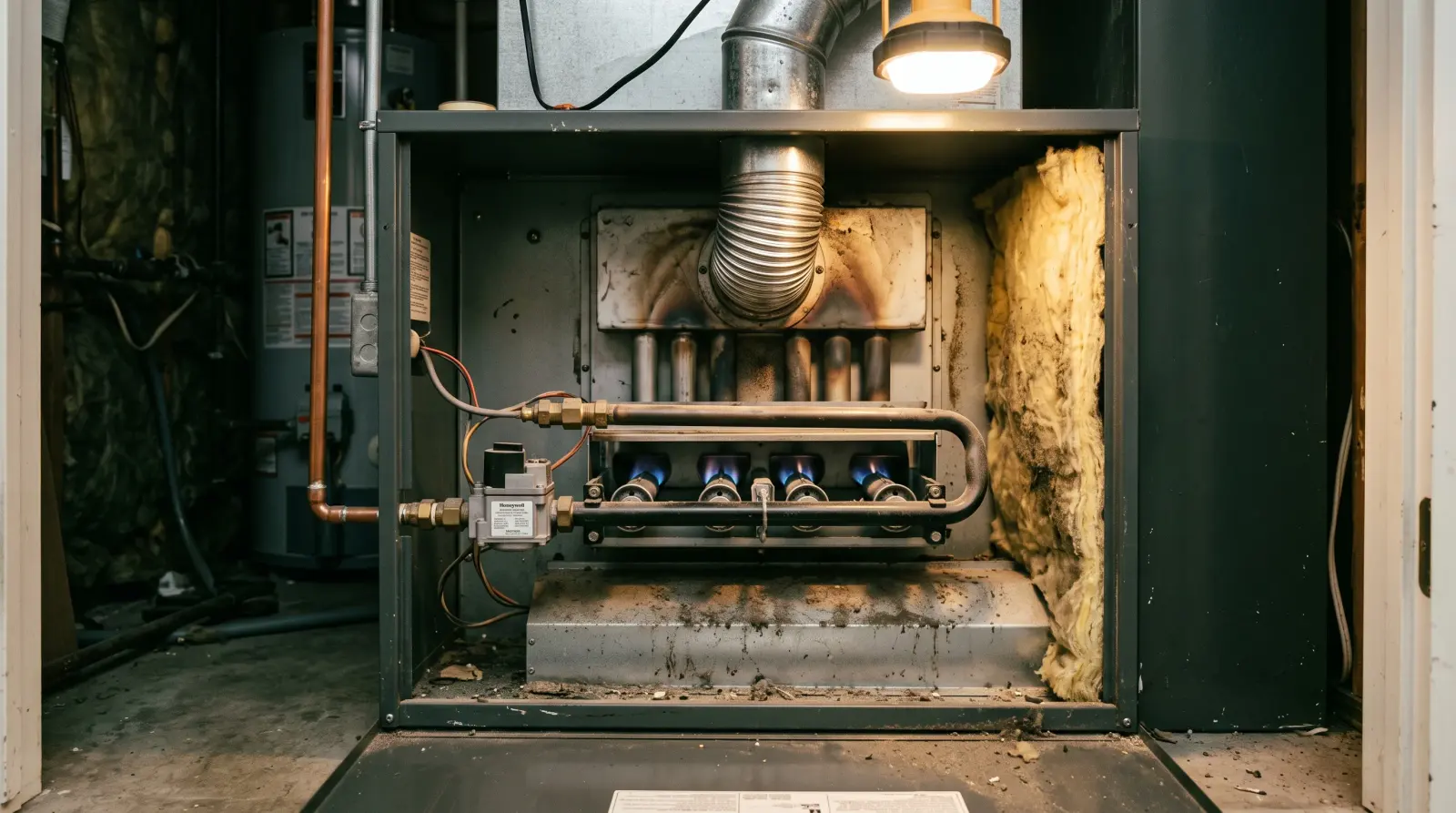
Airflow across the heat exchanger carries heat away into your rooms. When that airflow is restricted by a blocked filter, closed vents, crushed ductwork or a failing blower, the exchanger runs hotter than design.
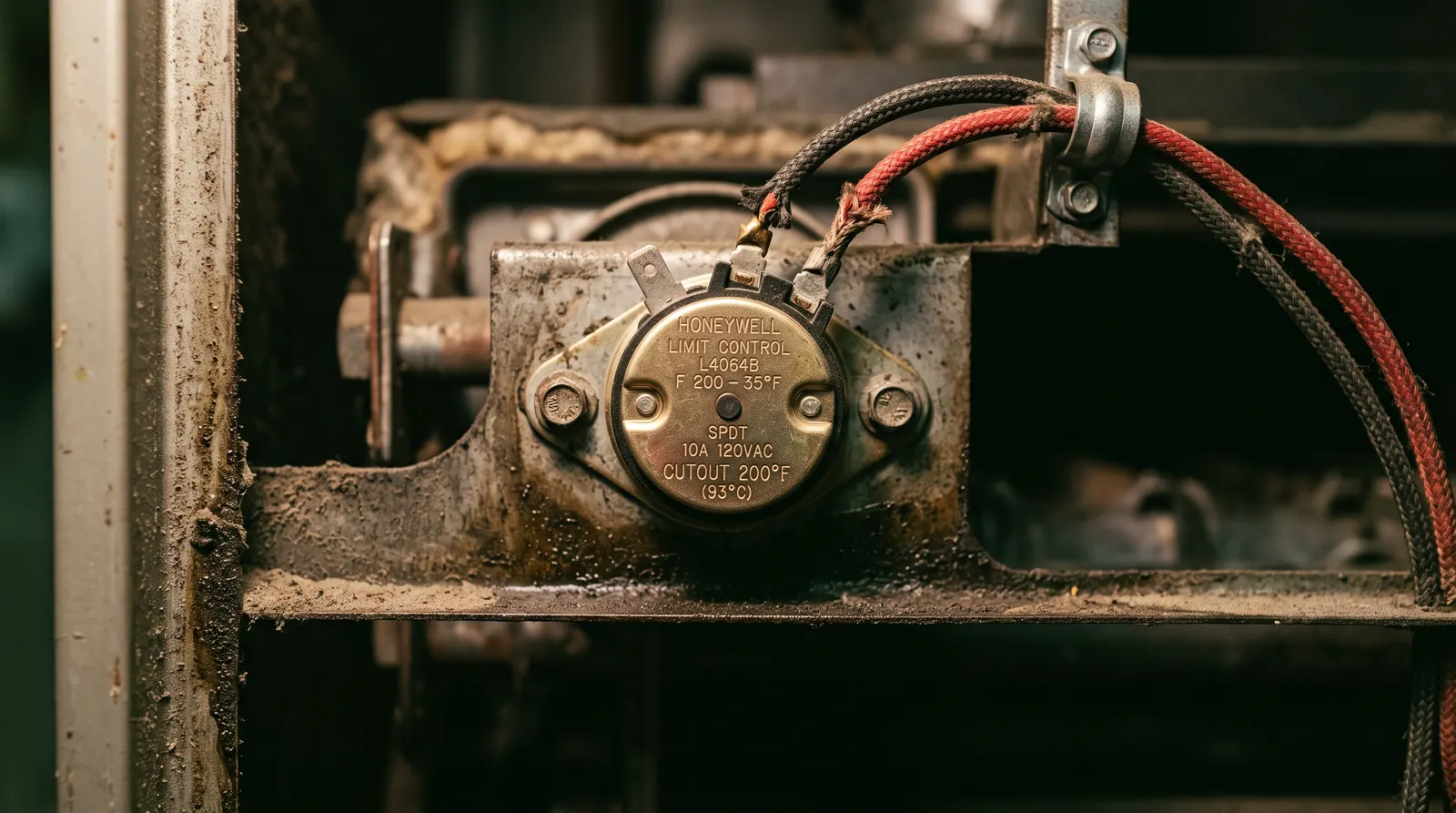
A high-limit switch then cuts the burner to protect it and leaves the blower running to remove the accumulated heat. Once things cool, the burner relights, and the loop repeats indefinitely. The signature is unmistakable once you know it: the blower keeps running after the burner stops.
Is furnace short cycling dangerous?
Can short cycling damage the furnace or the house?
Thermostat-driven cycling is wasteful and hard on components. Overheat cycling is different: repeatedly driving a heat exchanger past its design temperature and cooling it fatigues the metal, and a cracked exchanger is the pathway by which carbon monoxide enters a home.
This is the top related search for this query and no ranking page answers it, which is a notable omission on a topic connected to carbon monoxide.
The chain that makes this worth acting on
Restricted airflow leads to overheating, overheating leads to repeated thermal stress on the heat exchanger, and a fatigued exchanger eventually cracks. A crack lets combustion products, including carbon monoxide, mix with the air being blown through your ducts. CPSC recommends an annual inspection of the heating system by a qualified technician for exactly this class of failure, and a furnace that is short cycling on temperature should not wait for the next annual visit.
The benign cause, and the one worth ruling out first because it costs nothing.
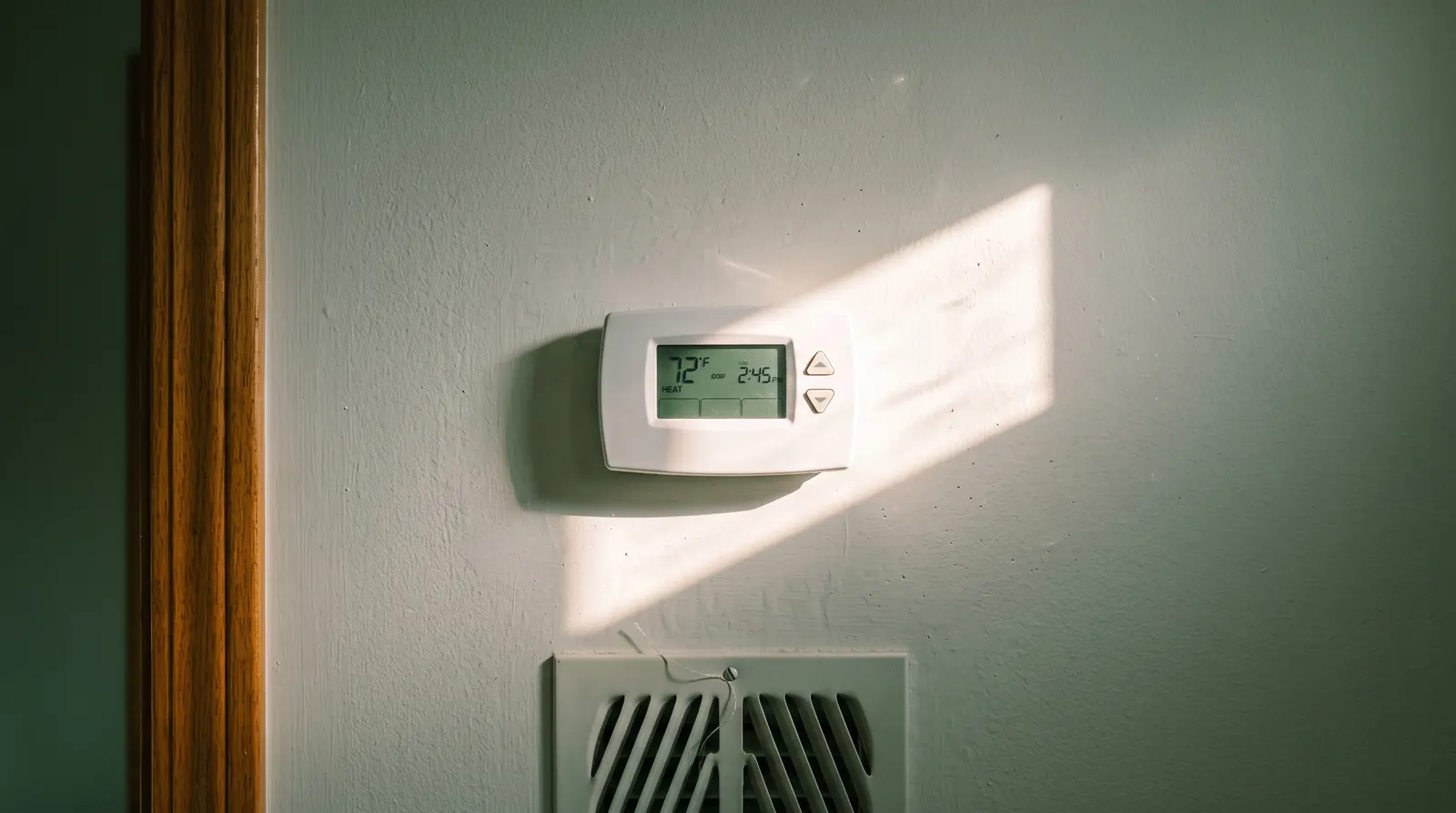
Placement. A thermostat in direct sunlight, above a supply register, or on an exterior wall reads a temperature the rest of the house is not experiencing.
Differential set too tight. Some thermostats let you set how far the temperature may drift before calling for heat. Too narrow a band produces frequent short cycles.
A smart thermostat browning out. Without a common wire it can pulse the heating circuit to charge itself, which reads as a very short unexplained cycle.
The burner lights, runs for perhaps thirty to ninety seconds, and shuts down. Then it tries again.
The flame sensor is a thin metal rod sitting in the flame that confirms combustion by conducting a very small current. Oxide builds up on it over years, the current falls below threshold, and the control board concludes the flame has gone out and closes the gas valve.
The distinguishing feature is precision: the timing is identical every cycle, because it is a measurement threshold rather than a temperature one. It is also frequently the cheapest fix on this page.
Cause four: the furnace is simply too big
This one has no repair, which is why it is rarely the answer anybody wants.
An oversized furnace delivers more heat than the space needs, satisfies the thermostat quickly, and shuts down before the system has reached steady state. It then cools and repeats. Nothing is broken.
It happens most often after a like-for-like replacement where nobody performed a heat-loss calculation, and in houses that have been insulated or had windows replaced since the original system was sized. Mitigation means two-stage or modulating equipment, zoning, or airflow adjustments that lengthen cycles, and the real fix is a load calculation before the next replacement.
Know the line
Safe to check yourself, or call a pro now?
Safe to check yourself
Timing the burner run and watching blower behaviour
Replacing the air filter and opening closed vents
Checking the thermostat is not in sun or above a register
Noting whether the cycle timing repeats identically
Switching the furnace off if the blower runs on after cut-out
Call a pro now
Anything involving the burner, gas valve or heat exchanger
Cleaning or replacing a flame sensor
Testing or replacing a high-limit switch
A combustion safety inspection after repeated overheating
Assessing whether the system is oversized for the house
24/7 dispatch network
Get a licensed HVAC technician moving on this
Tell us the burner run time, whether the blower runs on, and your ZIP code. Licensed, insured HVAC contractors covering your area will contact you directly. No obligation to hire.
Fire, a gas smell, or an injury? Leave the building and call 911 first, then your gas
utility or power company. Use this form once you are safe.
Short cycling on a high-limit means the furnace is overheating. Left alone it cracks heat exchangers, which is how a cheap repair becomes a replacement.
What the repair costs
Indicative US ranges. Always get a written quote.
Job
Typical range
Notes
After-hours diagnostic fee, weeknight
$150–$250
Before any repair work
After-hours diagnostic fee, holiday
$225–$500
Top of the band on major holidays
Emergency labor multiplier
1.5×–3×
Applied to the standard hourly rate
Flame sensor clean or replace
usually inside one labor hour
Often the cheapest fix on this page
Furnace igniter, standard hours
$150–$350
$275–$600 after hours
Combustion safety inspection
1 hour + diagnostic
The check that finds a cracked exchanger
Source: 2026 emergency HVAC rate aggregator data; HomeGuide 2026 HVAC repair cost guide (retrieved August 2026). Figures vary by region, severity and after-hours timing.
Figures last checked
The combustion safety inspection row is the one to weigh if the furnace has been overheating for a while. It is the check that finds a cracked exchanger, and it is far cheaper than the alternative way of finding out.
Emergency Services 24H is a referral service. We do not employ HVAC technicians and we do not perform gas work.
Your request routes by ZIP code to licensed, insured contractors covering your area, and they contact you directly. Include the burner run time and the blower behaviour, because those two facts separate a cheap sensor clean from a heat-exchanger inspection.
Straight answers
Frequently asked questions
The questions homeowners actually search for on this problem, answered in plain language.
Start with the filter, because restricted airflow is the most common cause and the only one you can fix yourself. Replace it, open every closed supply and return vent, and watch a few cycles. If it still cuts out within a few minutes, the cause is the limit switch, the flame sensor or the thermostat, and those need a technician.
Should I turn my furnace off if it is short cycling?
Yes if the blower keeps running after the burner cuts out, which is the overheating signature, and yes if it has been doing it for days. Repeated overheating fatigues the heat exchanger, and a cracked exchanger is the fault that puts combustion products into the house.
What is the most common cause of short cycling?
A restricted air filter. It reduces airflow across the heat exchanger, the exchanger overheats, a high-limit switch cuts the burner to protect it, and the whole cycle repeats once things cool. It is also the cheapest thing on the list to rule out.
Is furnace short cycling dangerous?
It depends which cause you have. Thermostat-driven cycling is wasteful and hard on components without being dangerous. Overheat cycling is different: repeatedly driving a heat exchanger past its design temperature fatigues the metal, and a cracked exchanger is the pathway by which carbon monoxide enters a home.
What are the signs of a dying furnace?
Rising run times with falling output, repeated lockouts or short cycles, a yellow rather than blue burner flame, rust or soot around the cabinet, escalating repair frequency, and age beyond about fifteen to twenty years. Any three of those together usually settle the repair-or-replace question.
Can an oversized furnace be fixed?
Not by a repair, because the equipment is doing exactly what it was built to do. It can sometimes be mitigated with a two-stage or modulating conversion, better zoning, or airflow adjustments that lengthen cycles. The real fix is a correctly sized unit chosen from a proper load calculation next time.
Where the thermostat is mounted matters
The limit switch
If the unit was oversized at installation, no repair fixes the cycling. That is worth knowing before you spend on parts.
Tell us what has failed and where you are. We route your request to licensed, insured contractors covering your ZIP code, and they contact you directly.
Fire, a gas smell, or an injury? Leave the building and call 911 first, then your gas
utility or power company. Use this form once you are safe.