AC not working: what to check before you call anyone
A meaningful share of after-hours cooling call-outs end with a filter, a breaker, a float switch or a three-minute wait, and a diagnostic fee. Work these first.
An AC not working has usually lost power, lost airflow, or lost the call for cooling rather than failed mechanically. The checks below take about ten minutes and resolve a large share of the calls that would otherwise cost a $150 to $250 after-hours diagnostic fee.
Everything here applies to an AC not working on a central home system. If you are searching about a car, that is a different trade and this page will not help you.
AC not working: the first thing to check
What should I check first when the AC stops?
The thermostat, then both breakers, then the filter and the condensate drain pan. A central system has two breakers, and a full drain pan trips a float switch that shuts cooling down completely while looking exactly like a dead unit.
Thermostat. Mode on cool, not auto or fan. Setpoint several degrees below room temperature. Fresh batteries if it takes them.
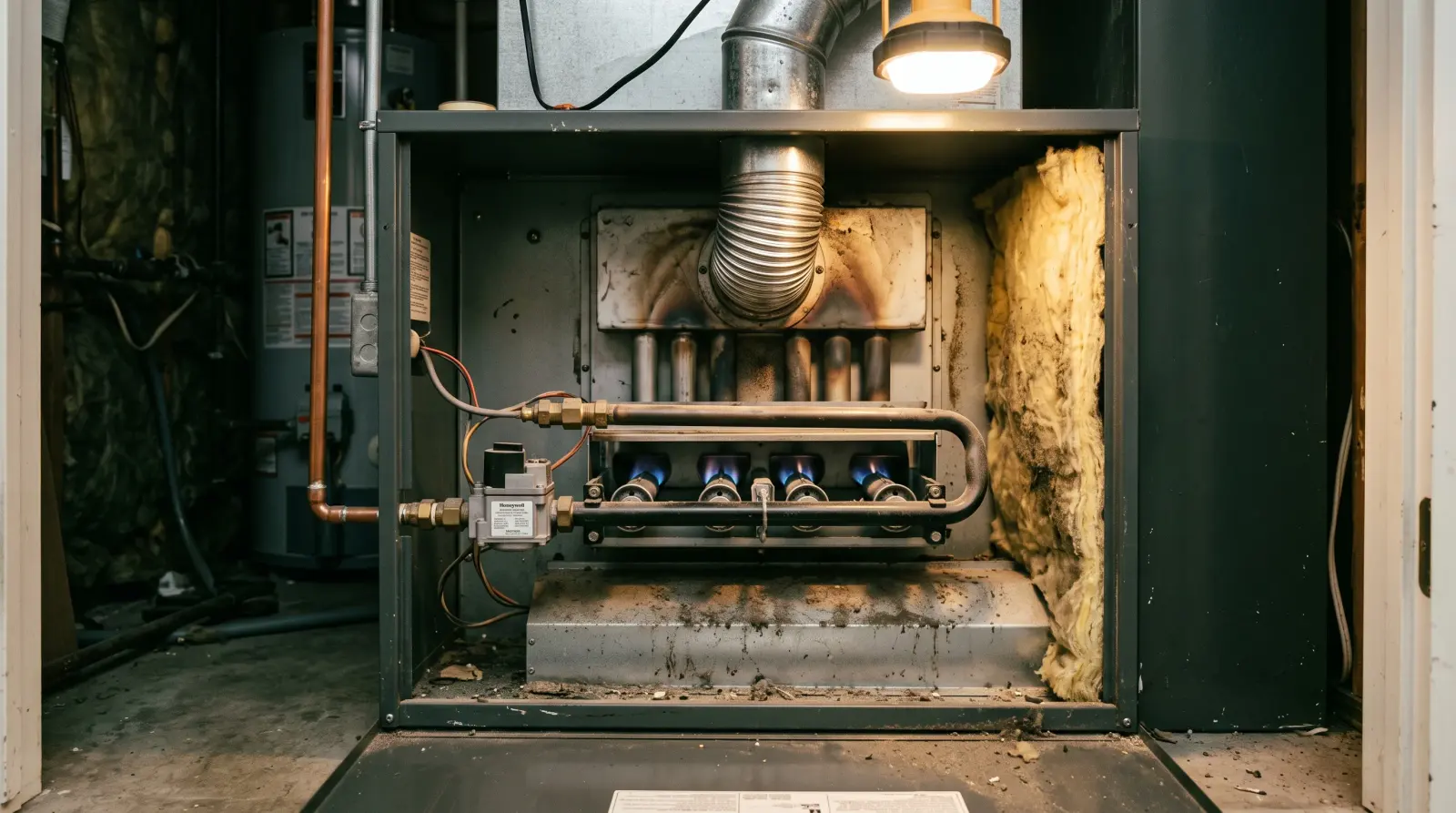
Both breakers. One for the indoor air handler, one for the outdoor condenser, often in different panels or a disconnect box beside the unit.
Filter. If you can barely see light through it, it is starving the system and can freeze the coil.
Condensate pan and drain. Standing water means the drain is blocked and the float switch has done its job.
Ten-minute reset
The reset sequence, in order
01
Thermostat off
Switch the thermostat to off rather than just raising the setpoint. That ends the call for cooling cleanly before you cut power.
02
Both breakers off
A central system usually has two: one for the indoor air handler and one for the outdoor condenser, often in different places. Turn off both.
03
Wait five minutes
This clears the control board and lets system pressures equalise. Twenty seconds is not enough and is the reason most home resets appear to fail.
04
Power up, then call for cooling
Breakers on first, then thermostat to cool with the setpoint several degrees low. Give it another five minutes before you conclude anything.
Order matters more than people expect. Cutting power with the thermostat still calling for cooling leaves the system in a mid-cycle state, and restoring it with the compressor still pressurised is exactly what the protection delay exists to prevent.
The condensate float switch nobody mentions
This is the single most under-documented cause of a completely dead-looking air conditioner, and it appears on none of the manufacturer pages ranking for this search.
Air conditioning removes humidity as well as heat, and that water drains away through a pipe that goes to a drain, a pump, or outside. When the pipe blocks with algae or debris, the pan fills, and a small float switch cuts the cooling call to stop water overflowing into your ceiling.
The symptom is cooling that stops completely while the thermostat looks fine. Clearing the drain line, often with a wet vacuum at the outdoor end, restores it. If you find standing water in the pan, that is your answer before you call anyone.
Why it will not restart immediately
What is the 3 minute rule for AC?
Most air conditioners will not restart the compressor for three to five minutes after it stops, because restarting against system pressure damages it. Many thermostats and control boards enforce that delay deliberately. The pause is protection, not failure.
People flip a breaker, count to twenty, hear nothing and conclude the AC not working means a dead unit. That reaction accounts for a real share of unnecessary call-outs.
Give it a full five minutes with the thermostat calling for cooling before you form any opinion. If it starts, something interrupted it rather than broke it, and the useful question becomes what.
Ice on the lines changes the order of everything
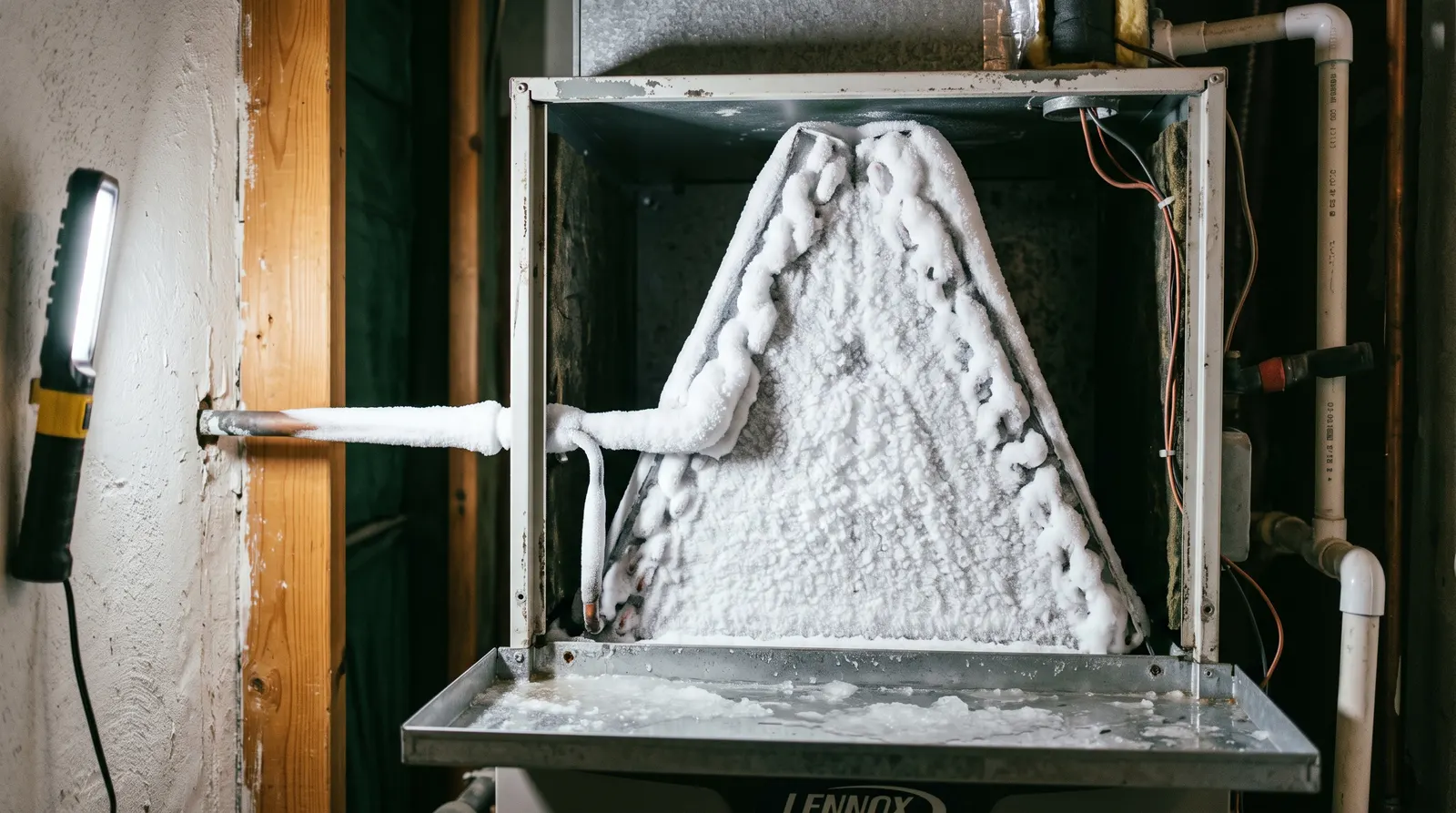
If there is frost or ice on the copper refrigerant lines or the indoor coil, do not keep running the system in cool mode. Switch the thermostat to fan only and leave the fan running until the ice has completely gone, which can take several hours. Running a compressor with a frozen coil can pull liquid refrigerant back into it, which turns a cheap airflow problem into a compressor replacement.
Fan runs but no cool air
This is the most common variant of the problem, and the outdoor unit answers it in about thirty seconds.
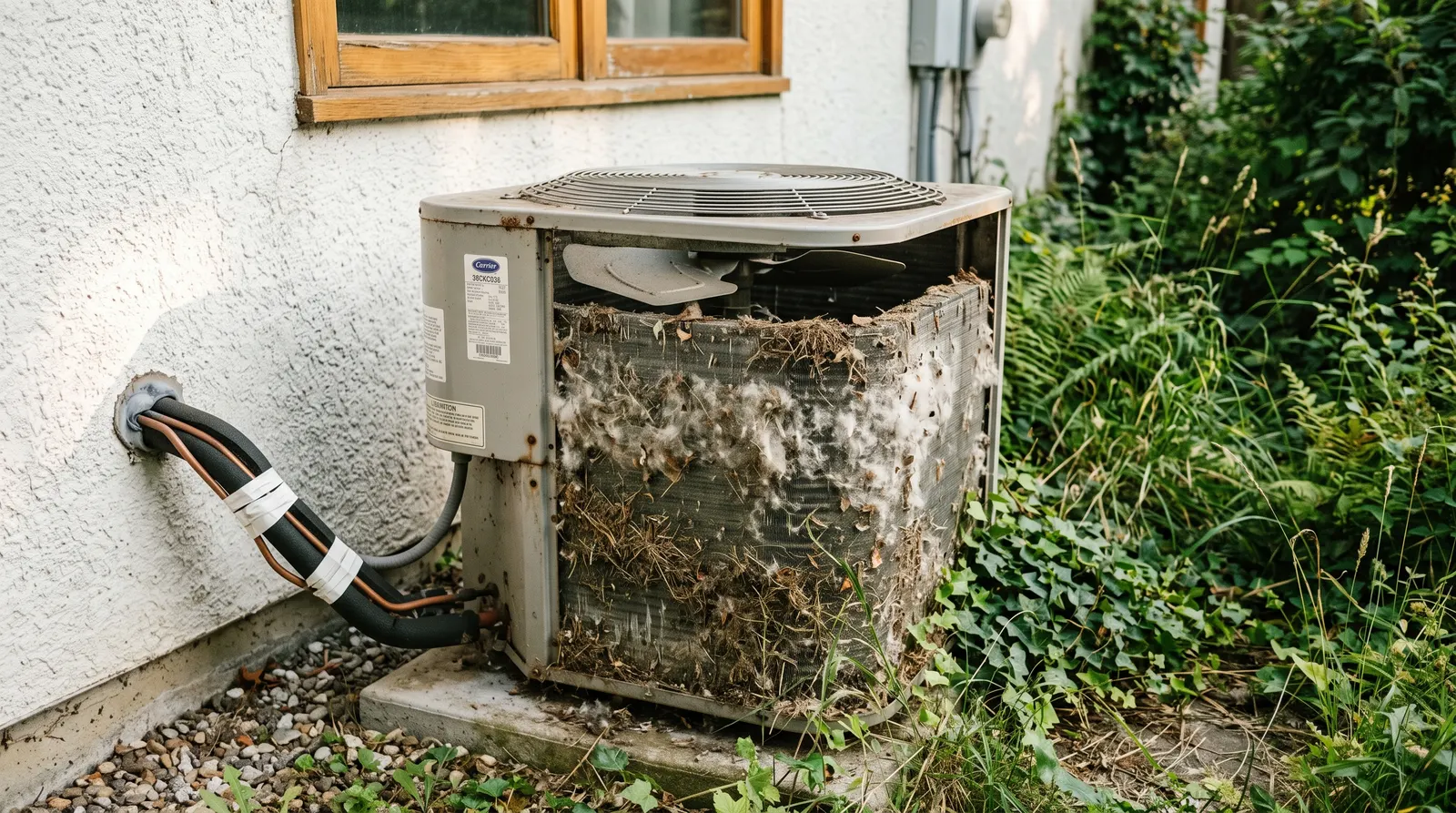
Outdoor unit silent and still. The compressor is not being asked to run or cannot run. A failed run capacitor is the most common single cause, followed by a contactor.
Outdoor fan spinning but a hum from the compressor. Classic failing capacitor signature: the motor is trying and cannot start.
Outdoor unit running normally. The system is trying and not achieving. That points at refrigerant charge, a frozen indoor coil, or airflow.
Our page on an AC blowing warm air takes each of those three branches further, including what each costs to fix.
Car AC is a different search
Roughly half the related searches for this query are about vehicles rather than houses. If your car is blowing warm, none of the above applies: different refrigerant, different components, and a mechanic rather than an HVAC contractor.
Window and portable units sit in between. The capacitor and frozen-coil logic on this page applies to them, but the reset sequence is simply unplugging the unit for five minutes.
Know the line
Safe to check yourself, or call a pro now?
Safe to check yourself
Thermostat mode, setpoint and batteries
Both breakers and the outdoor disconnect switch
Replacing the air filter and opening closed return vents
Clearing a blocked condensate drain line
Switching to fan only to thaw a frozen coil
Call a pro now
Anything involving refrigerant, which requires EPA certification
Replacing a capacitor, contactor or fan motor
A breaker that trips repeatedly on the condenser
Any burning smell from the air handler
A compressor that hums and will not start
24/7 dispatch network
Get a licensed HVAC technician moving on this
Checks done and still no cooling. Send the symptoms and your ZIP code and licensed, insured HVAC contractors covering your area will contact you directly. No obligation to hire.
Fire, a gas smell, or an injury? Leave the building and call 911 first, then your gas
utility or power company. Use this form once you are safe.
A frozen evaporator coil must be thawed before anyone can diagnose it. Switch to FAN only for a few hours and it usually clears.
What the repair usually costs
Indicative US ranges. Always get a written quote.
Job
Typical range
Notes
After-hours diagnostic fee, weeknight
$150–$250
Before any repair work
After-hours diagnostic fee, holiday
$225–$500
Top of the band on major holidays
Emergency labor multiplier
1.5×–3×
Roughly $115–$600 / hr depending on region
Run capacitor replacement
$200–$300
Standard hours; the part itself is under $30
Blower motor
$400–$900
Standard hours
Refrigerant recharge
$250–$600
A recharge without a leak repair is temporary
Source: 2026 emergency HVAC rate aggregator data; HomeGuide 2026 HVAC repair cost guide (retrieved August 2026). Figures vary by region, severity and after-hours timing.
Figures last checked
The capacitor line is the one worth knowing before the technician arrives. The part costs under $30 and the swap takes minutes, while the fitted price commonly runs $200 to $300 in normal hours and more after them.
Both facts are true at once, and knowing them lets you ask a reasonable question rather than feel ambushed by the invoice. Full detail sits in our breakdown of what emergency HVAC repair costs.
How the matching works, and what we do not do
Emergency Services 24H is a referral service. We do not employ HVAC technicians and we do not perform repairs.
Your request routes by ZIP code to licensed, insured contractors covering your area, and they contact you directly. Tell them what the outdoor unit is doing, because that one observation shapes what they bring on the van.
Straight answers
Frequently asked questions
The questions homeowners actually search for on this problem, answered in plain language.
In most cases it has lost power, lost airflow, or lost the call for cooling rather than failed mechanically. Check the thermostat mode and setpoint, both breakers, the air filter, and the condensate drain pan. A full pan trips a float switch that shuts cooling down completely and looks exactly like a dead system.
What is the first thing to check when the AC stops working?
The thermostat, then the breakers. Set the mode to cool and the setpoint several degrees below room temperature, and replace the batteries if it is battery powered. Then check both breakers, because a central system usually has one for the indoor air handler and a separate one for the outdoor condenser.
How do I reset my air conditioner?
Turn the thermostat off, switch off both breakers, wait five minutes, switch the breakers back on, then set the thermostat to cool. Give it another five minutes before you decide anything, because the compressor will not restart immediately after a shutdown.
Where is my AC reset button?
Many outdoor condensers have a small red reset button on or near the unit, and some air handlers have one too. Not every system has one. The more reliable reset is the breaker sequence, because it clears the control board as well as the safety circuit.
Should I turn off the AC if it is not cooling?
Yes, unless there is ice on the refrigerant lines, in which case switch the thermostat to fan only and leave it running so the coil can thaw. Running a system with a frozen coil or a failing compressor is how a repair becomes a replacement.
Why is there ice on my AC pipe?
Because the coil is running colder than it should, which is caused by restricted airflow or low refrigerant. A blocked filter, a closed return vent or a dirty evaporator coil all do it. Switch to fan only, let it thaw fully, replace the filter, and if it ices again the cause is refrigerant and needs a technician.
A frozen evaporator coil
The outdoor condenser
A recharge without a leak repair is money burned. Refrigerant is a closed loop, so if it is low, it is leaking somewhere.
Tell us what has failed and where you are. We route your request to licensed, insured contractors covering your ZIP code, and they contact you directly.
Fire, a gas smell, or an injury? Leave the building and call 911 first, then your gas
utility or power company. Use this form once you are safe.