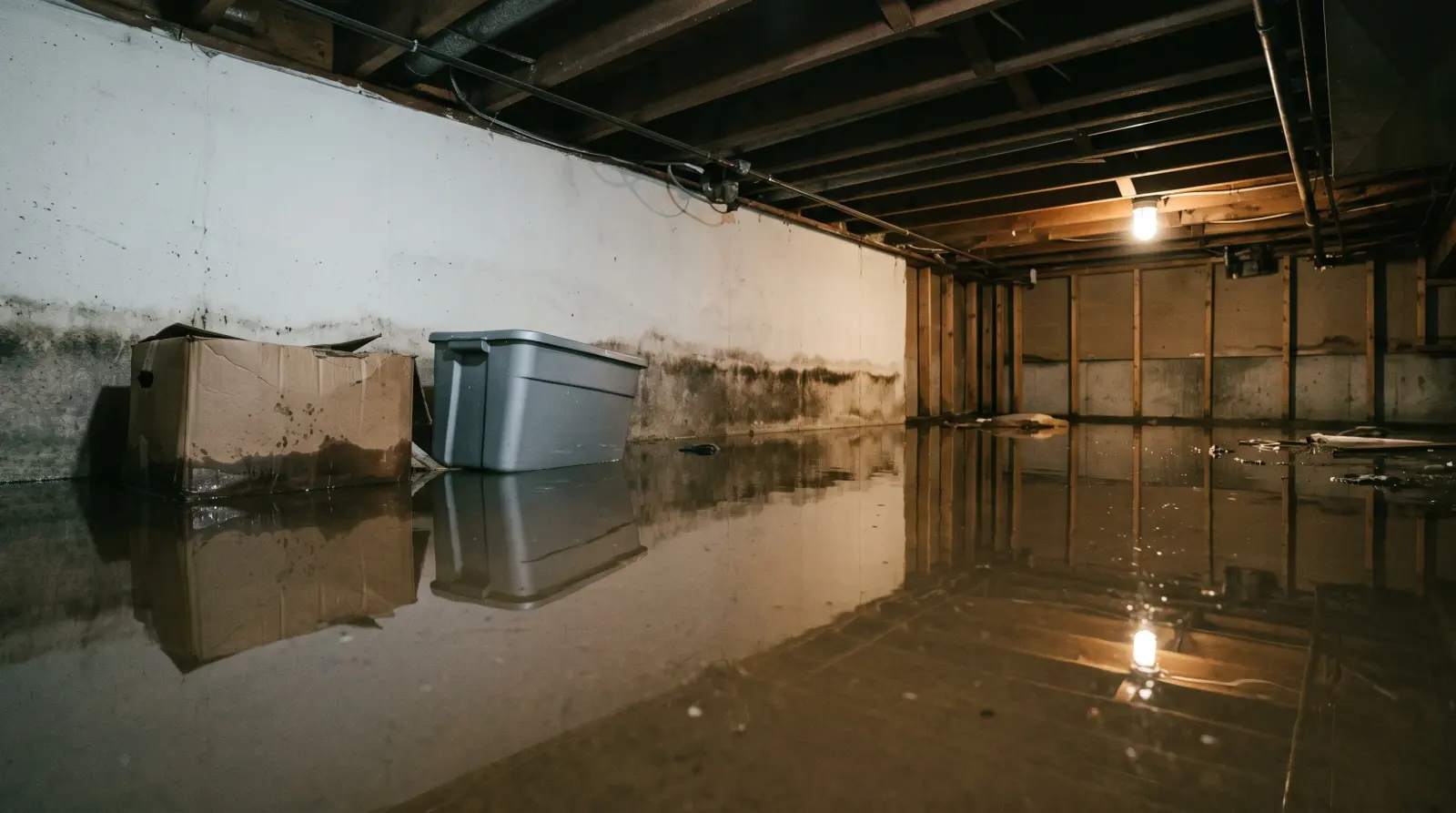
Flooded basement what to do, in the order that matters
The first decision is electrical rather than practical. Everything else on this page assumes you have made it, because standing water and a live circuit is the one combination that kills people.
Search flooded basement what to do and every list opens with the water. It should open with the electricity. Cleanup commonly runs $2,000 to $7,000 with an average near $4,000, and the EPA drying window before mold can establish is 24 to 48 hours from the moment materials get wet.
Do not step into the water yet
Standing water plus a live circuit is fatal
Basements hold outlets, appliances, boilers and frequently the panel itself. Isolate the circuits serving the affected area from a dry position with dry hands, or call your power company and ask them to cut supply at the meter. They do this routinely and do not charge for it in an emergency. Never wade through water to reach a breaker panel, and treat any tingle from a metal surface as confirmation that you were right to stop.
Everything below assumes the power question is settled. If it is not, nothing else on this page is urgent by comparison.
The first hour
Work these four in order
01
Power, from a dry position
Isolate the circuits serving the basement before anyone steps in. If the panel is down there and you cannot reach it dry, call the power company and ask them to cut supply at the meter.
02
Stop the source
A supply failure stops at the main valve. Groundwater and storm water stop when the weather does, so for those the priority moves straight to extraction.
03
Photograph before you move anything
Wide shots, then close shots, including the water line on the wall and any stored belongings. Ninety seconds now saves an argument with an adjuster later.
04
Extract, then move air
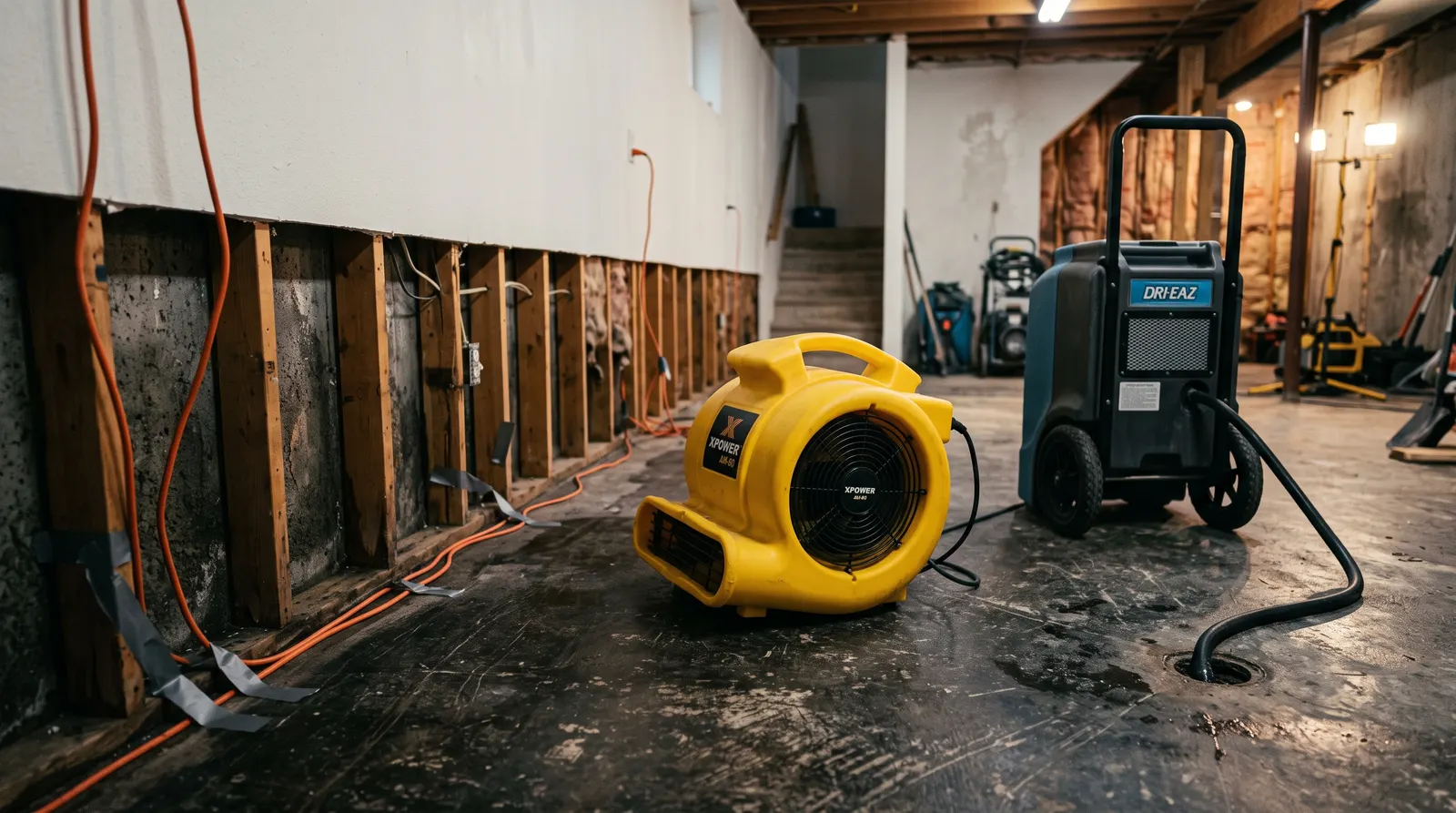
Pump or wet vacuum the standing water out first. Air movers across wet surfaces and a dehumidifier pulling moisture out of the room is what actually dries a basement.
Any flooded basement what to do sequence depends on order, because each step makes the next one possible. Extracting before you have photographed loses your evidence; drying before you have extracted just moves humid air around standing water.
Flooded basement what to do next: identify the water
Is basement flood water dangerous?
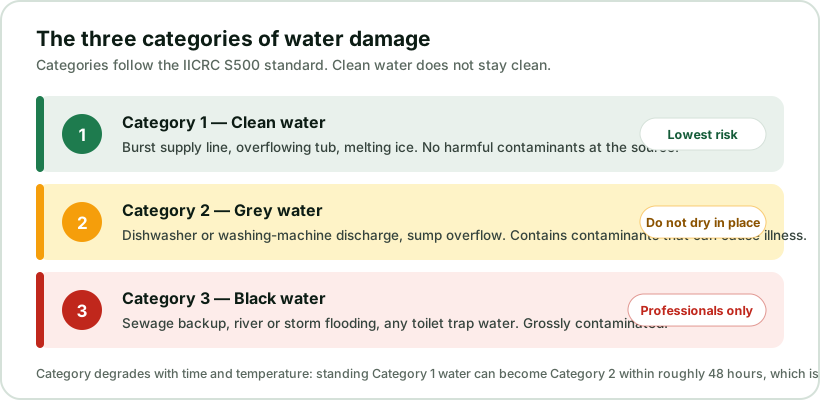
It depends where it came from. A burst supply pipe is Category 1, clean water. Groundwater through a wall or a failed appliance is Category 2. Sewer backup and storm flood water is Category 3, which carries a real health risk and should not be handled without protection.
This matters more in a basement than anywhere else in the house, because basements collect all three types and the source is often not obvious from looking at it.
Clear, odourless, arriving from a pipe or fitting: Category 1. Lowest risk and cheapest to restore.
Coming through a wall or floor joint after rain: groundwater, which is Category 2 at best and worse if it has crossed soil or a yard.
Any smell, any discolouration, or backing up through a floor drain: treat it as Category 3 and stay out.
Anything that has sat more than a couple of days: the category has already degraded, whatever it started as.
Category decides the protective equipment, what gets discarded, and roughly double the price between clean water and sewage.Source: Emergency Services 24H original diagram, figures per Bob Vila 2026 cost data
The sump pump problem
Here is the circular problem nobody writes about: the pump that would clear your basement runs on the circuit you just switched off.
There is no clean answer to that, and pretending otherwise is how people get hurt. The realistic options are a generator running outdoors and well away from any opening, a battery-backup pump if one is already installed, or a manual pump and a wet vacuum powered from a dry upstairs outlet on an unaffected circuit.
Never run a generator indoors or in an attached garage
Generators produce carbon monoxide, which is colourless and odourless, and a basement or garage will fill with it faster than people expect. Outdoors only, well away from doors, windows and vents, and never in a space you or anyone else will be working in.
How long a flooded basement takes to dry
How long until a flooded basement is dry?
Three to five days with commercial air movers and a dehumidifier running continuously. Behind panelling, under flooring and inside block walls it takes longer. The EPA window before mold can establish is 24 to 48 hours, which is why starting matters more than finishing fast.
Household fans and an open window are not the same equipment and will not produce the same result. Basements are the hardest space in a house to dry, because they are cool, poorly ventilated and often below the dew point of the outside air, which means opening a window in summer can actively add moisture.
Aim to hold humidity below 60 percent, ideally 30 to 50 percent, while drying is under way. A cheap hygrometer is worth having for exactly this.
What to save and what to throw out
The honest answer is that the decision is mostly made by material, not by sentiment.
Hard, non-porous items survive: metal, glass, sealed plastics, solid wood furniture that has not been standing in water for days.
Carpet padding rarely survives. The carpet itself sometimes does after professional cleaning; the padding underneath almost never does.
Particle board and MDF are finished. They swell, delaminate and never recover their strength.
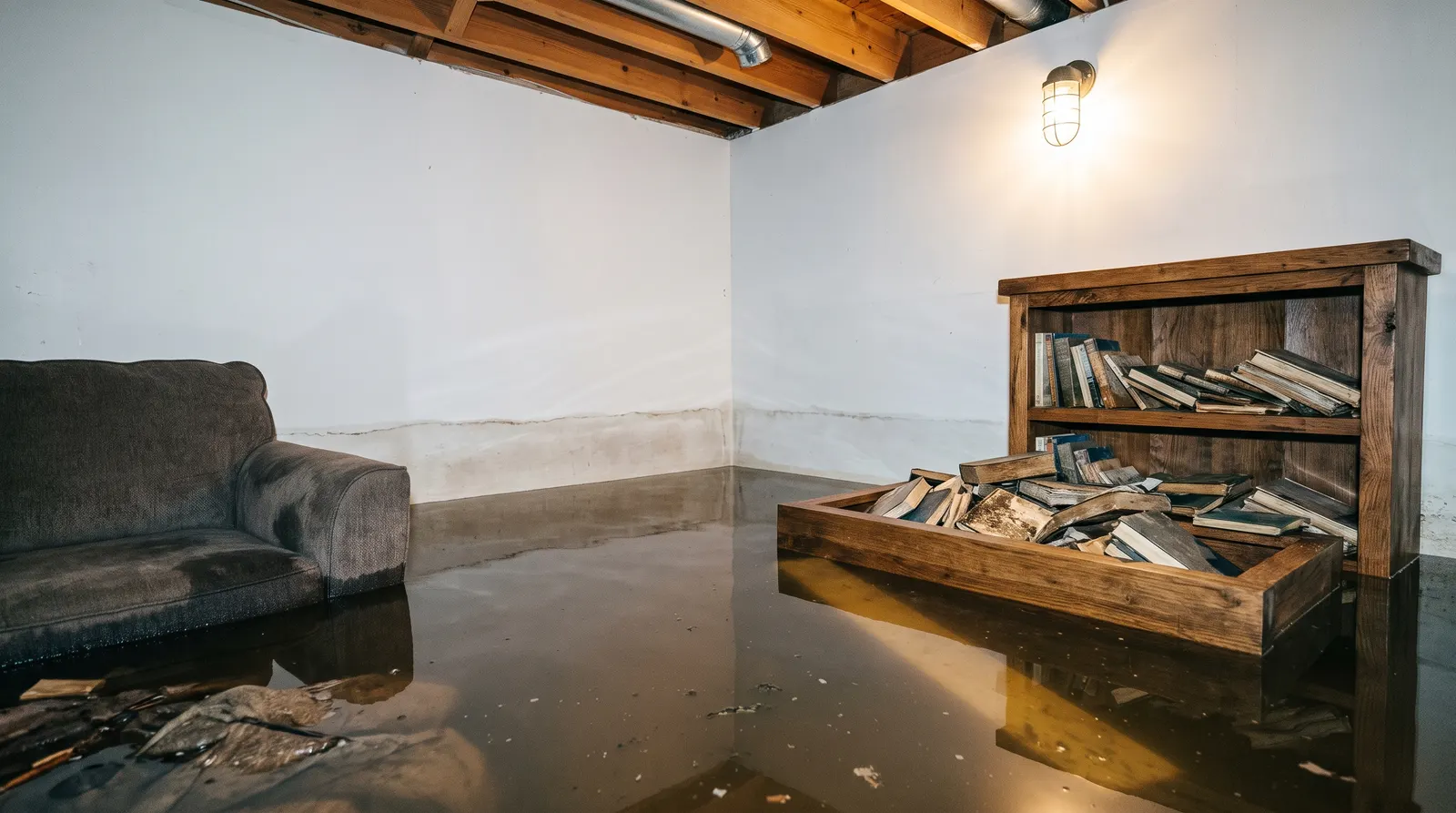
Anything soaked by Category 3 water goes. That includes upholstery, mattresses, and cardboard-stored belongings, per EPA cleanup guidance.
What survives a soaking in more detail, including where the drywall cut line goes, is on our page about wet drywall and carpet.
Know the line
Safe to handle yourself, or call a pro now?
Safe to check yourself
Isolating power from a dry position, or calling the utility
Photographing everything before it is moved
Extracting a small volume of clean water with a wet vacuum
Running fans and a dehumidifier on a small clean-water spill
Lifting stored belongings clear of the wet floor
Call a pro now
Any sewage or suspected Category 3 water
Water that has reached wall cavities, insulation or subfloor
A basement with the electrical panel in the flooded area
Anything still wet after 48 hours of your own drying
Any occupant with asthma, mold allergy or immune suppression
24/7 dispatch network
Get a licensed restoration contractor moving on this
Tell us where the water came from and your ZIP code. Licensed, insured restoration contractors covering your area will contact you directly. No obligation to hire.
Fire, a gas smell, or an injury? Leave the building and call 911 first, then your gas
utility or power company. Use this form once you are safe.
Will insurance cover a flooded basement?
Is a flooded basement covered?
It depends on the source. A burst pipe or a failed appliance is generally covered as sudden and accidental. Groundwater rising through a wall or floor is flooding, which standard policies exclude entirely. Sewer backup usually needs a specific endorsement.
This is the single most consequential distinction on the page, and it is decided by cause rather than by how much water there was.
If the source was a pipe, get a plumber to state in writing that the failure was sudden. That letter is frequently what separates a paid claim from a refused one, and it costs nothing to ask for while they are already on site. Full detail is on our page on what homeowners insurance covers.
If water comes in through the walls every time it rains, that is a different problem with a different answer, covered on our page about water in the basement after rain.
Never enter standing water in a basement until power to that level is confirmed off at the panel, from a dry position.
What cleanup costs
Indicative US ranges. Always get a written quote.
Job
Typical range
Notes
Flooded basement cleanup
$2,000–$7,000
Average around $4,000
Category 1, clean water
$3–$4 / sq ft
Supply-line water
Category 2, grey water
$4–$6.50 / sq ft
Appliance or groundwater
Category 3, black water
$7–$7.50 / sq ft
Sewage or flood water
Mold remediation, if it starts
~$2,200 average
Separate from drying
Severe standing-water jobs
can exceed $100,000
Reported extreme cases
Source: Bob Vila 2026 water damage restoration cost data; consumer-reported figures from published cost aggregators, marked as reported (retrieved August 2026). Figures vary by region, severity and after-hours timing.
Figures last checked
The category rows are the ones to look at rather than the headline range, because they tell you which multiple you are on. A 500 square foot basement of clean water and the same basement of sewage are roughly a factor of two apart before anything is discarded.
Ask any quote to state the category it is priced at and the square footage it covers. Full breakdown by area sits in our guide to restoration costs.
How the matching works, and what we do not do
Emergency Services 24H is a referral service. We do not employ restoration technicians, we do not pump basements, and we are not an insurance adviser.
Your request routes by ZIP code to licensed, insured contractors covering your area, and they contact you directly. Tell them the water source when you send it, because that decides both the equipment they bring and the category they price at.
Straight answers
Frequently asked questions
The questions homeowners actually search for on this problem, answered in plain language.
Isolate power to the basement from a dry position before anyone steps into the water, or call your power company to cut supply at the meter. Then stop the source if you can, photograph everything before you move it, extract the water, and get air moving. Drying is what beats the mold clock, not tidying.
How long does it take for a flooded basement to dry out?
Three to five days with commercial air movers and a dehumidifier running continuously, and considerably longer where water is behind panelling or under flooring. The EPA states that materials dried within 24 to 48 hours will in most cases not grow mold, so the start matters more than the finish.
Will insurance cover basement flooding?
It depends entirely on where the water came from. A burst supply pipe or a failed appliance is generally covered as sudden and accidental. Groundwater rising through a wall or floor is flooding, which standard policies exclude, and sewer backup usually needs a specific endorsement.
Who should I call for a flooded basement?
A restoration contractor for extraction and drying, a plumber if the source is a supply or drain line, and your power company if you cannot isolate the electricity safely yourself. Call the insurer early too, because emergency mitigation is normally claimable even where the wider damage is not.
Can I dry a flooded basement myself?
Small volumes of clean water, yes, with a wet vacuum, fans and a dehumidifier, provided you start within hours. Anything involving sewage, anything covering a large area, and anything that has soaked into wall cavities is a professional job with equipment that moves far more air than a household fan.
How much does flooded basement cleanup cost?
Commonly $2,000 to $7,000 with an average near $4,000, and severe standing-water jobs run far higher. Restoration is priced by contamination category, roughly $3 to $4 per square foot for clean water and $7 to $7.50 for black water, which is why sewage costs about double.
What a few inches actually costs
Extraction and drying equipment
One inch of floodwater is widely cited at around $25,000 of damage in a finished basement. Extraction on day one is the cheapest intervention available.
Tell us what has failed and where you are. We route your request to licensed, insured contractors covering your ZIP code, and they contact you directly.
Fire, a gas smell, or an injury? Leave the building and call 911 first, then your gas
utility or power company. Use this form once you are safe.