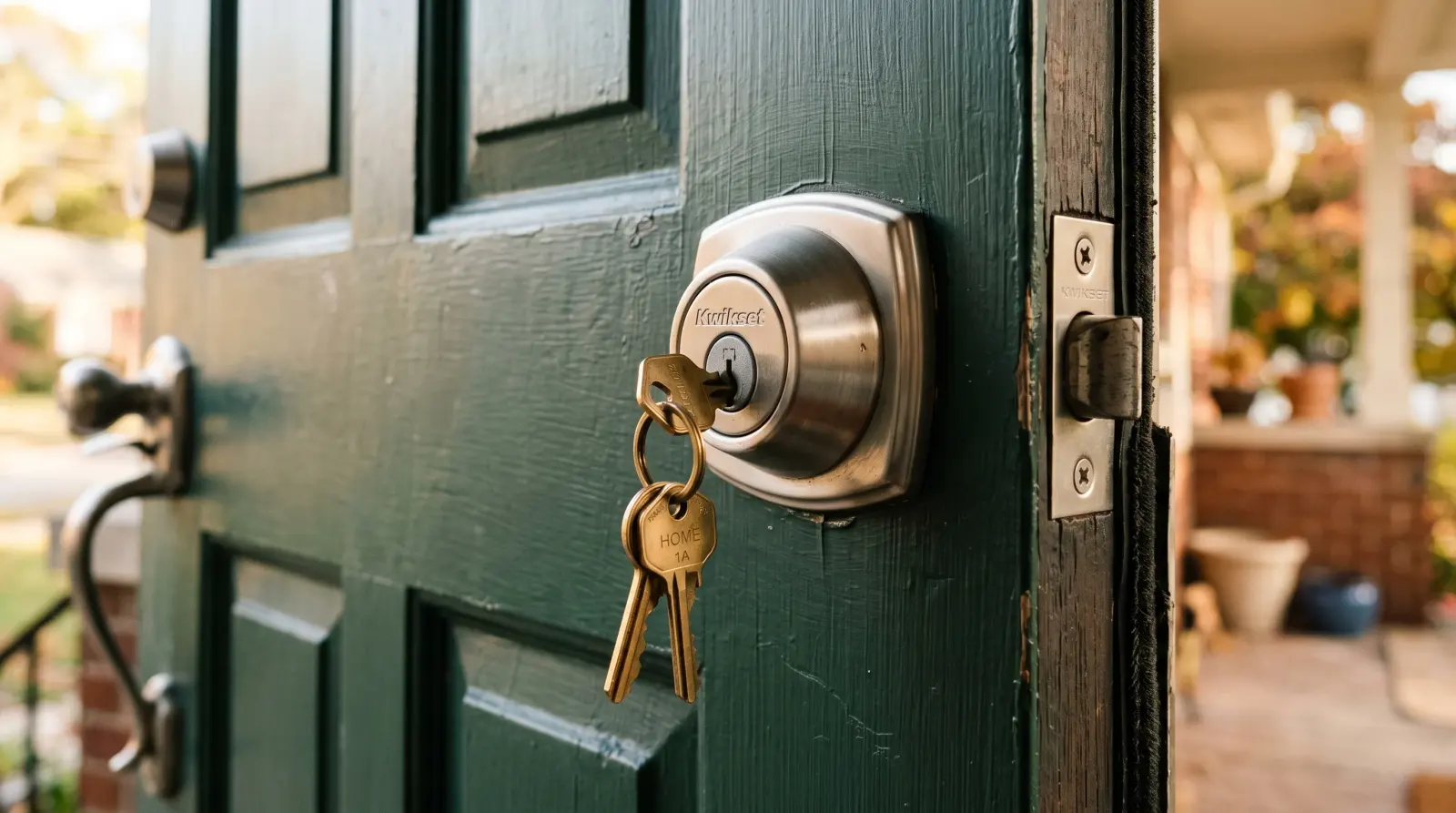
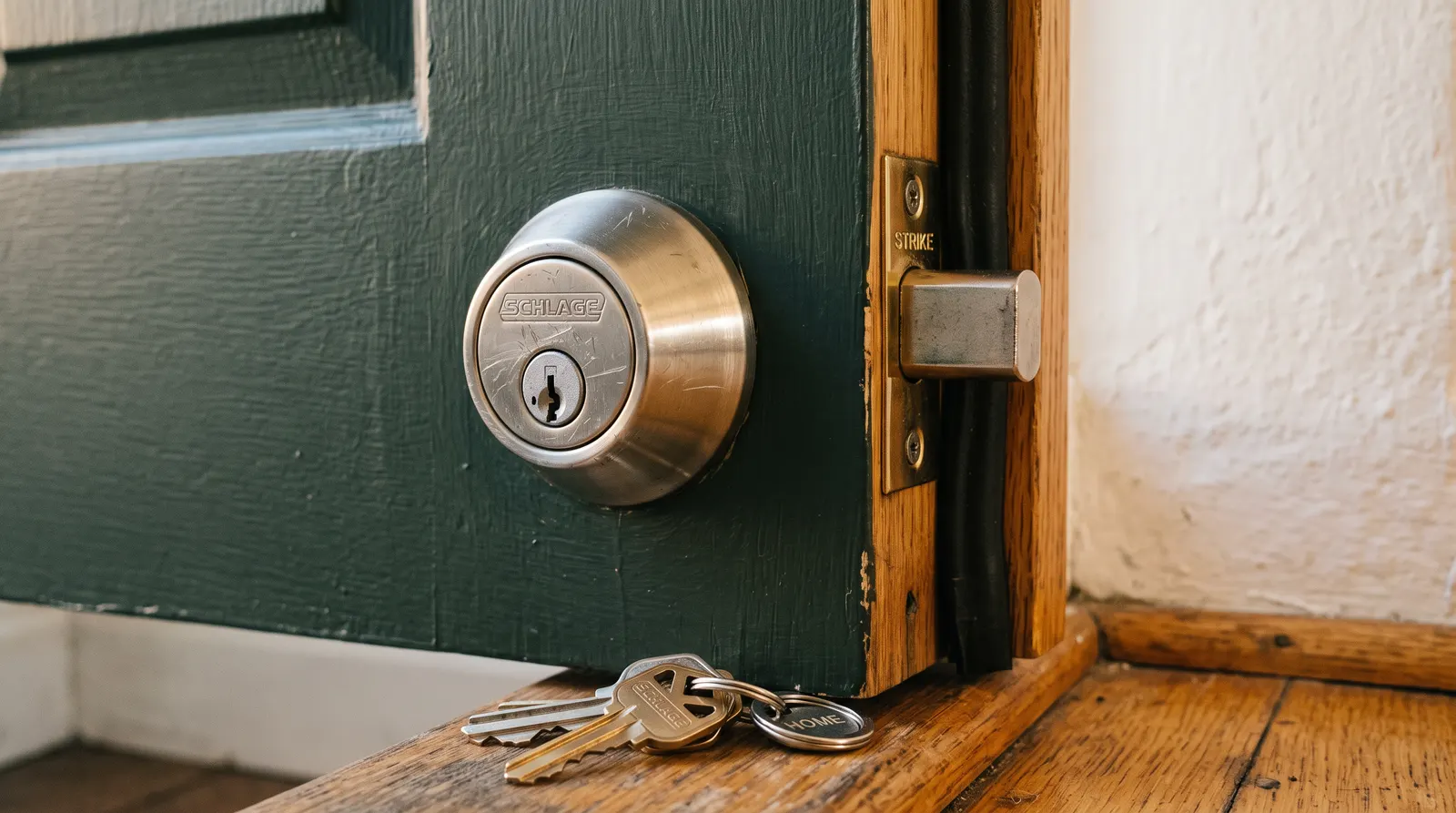
One look at the bolt tells you whether any of the popular tricks can possibly work on your door. Usually the answer is no, and knowing that saves an hour.
Being locked out of house doors costs $50 to $150 for the entry itself, plus a trip fee of $50 to $100 and an after-hours premium of up to $250. Before any of that, four free options resolve a large share of lockouts and almost nobody works through them properly.
What follows is ordered by cost, starting at nothing.
Before you pay anyone
Work the free options first
01
Every other door
Back, side, patio and the garage service door. An attached garage is the most commonly forgotten route back into an American house.
02
Ground-floor windows
Bathroom and kitchen windows are the ones left on the latch. Ground floor only, and stop if anything needs forcing.
03
Anyone with a spare
Partner, housemate, neighbour, letting agent, landlord, parent. A twenty-minute drive beats a call-out plus an after-hours premium.
04
Smart lock backups
Keypad codes and app unlocking survive a lost key entirely, and people forget they have them because they always use the key.
Spring latch or deadbolt? That decides everything
How do I tell which lock I have?
Look at the edge of the door. A bolt with an angled face that springs back when pushed is a spring latch. A flat, square-ended bolt that only moves with the key or thumbturn is a deadbolt. Improvised methods can sometimes defeat the first and never defeat the second.
This is the single most useful thing on this page and no ranking competitor makes the distinction. Every credit-card video you will find tonight is demonstrating on a spring latch.
Most American front doors have both: a latch in the handle and a deadbolt above it. If the deadbolt is thrown, you are not getting in without tools you do not own.
Locked out of house doors: what still works, and what is folklore
Credit card: spring latch only, no deadbolt, and it usually ruins the card. Useless on the majority of front doors.
Bobby-pin picking: effectively folklore on modern pin-tumbler locks. Real picking is a skill with proper tools, not a hairpin.
Removing the knob: works on some interior privacy locks and not on exterior deadbolts.
Smart lock backups: the genuinely modern answer. Keypad codes and app unlocking are routinely forgotten by people who always use a key.
Do not break a window
This is the expensive mistake people make at hour three. Replacement glazing regularly costs more than the locksmith call-out being avoided, tempered and laminated glass injures people who underestimate it, and a forced entry you caused yourself can complicate a contents claim afterwards. If you have reached the point of considering it, call a locksmith instead.
Do not break a window unless someone is genuinely at risk. Glazing plus board-up almost always exceeds the locksmith call-out.
What a locksmith charges to open a house door
Indicative US ranges. Always get a written quote.
Job
Typical range
Notes
House lockout, the entry itself
$50–$150
Before any fees
Service / trip fee
$50–$100
Separate from the job in many markets
After-hours premium
+$100–$250
Nights, weekends and holidays
National average locksmith job
$187–$226
Low end around $160–$169
Reported residential lockout, trade forum
$160–$220
Locksmiths describing their own pricing
Source: Thumbtack 2026 national locksmith price data; published 2026 locksmith cost guides; locksmith-reported figures from public trade-forum threads, marked as reported (retrieved August 2026). Figures vary by region, severity and after-hours timing.
Figures last checked
The trip fee is the line that surprises people, because it is charged for attending rather than for opening. Ask whether it is separate and whether it is credited against the work. Our breakdown of what a locksmith charges by job takes each line apart.
Ask for non-destructive entry
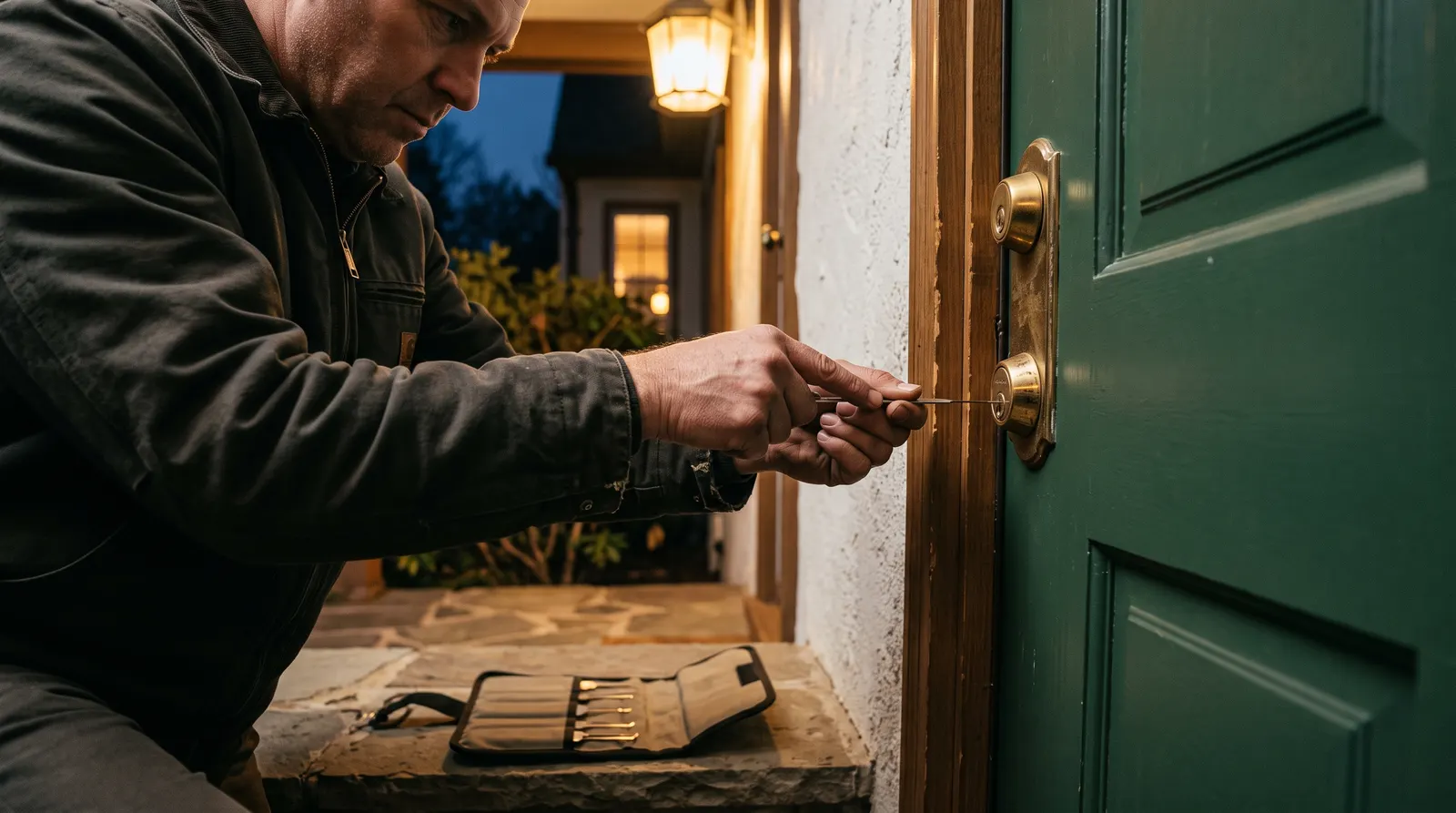
Say those three words when you call. A competent locksmith opens a standard residential lock by picking or bypass, and your cylinder and key still work afterwards.
Drilling destroys the cylinder. It is quick, it needs little skill, and it guarantees a lock sale on top of the call-out, which is exactly why the FTC associates immediate insistence on drilling with the locksmith bait-and-switch pattern. The full pattern is on our page on the locksmith scam.
Locked out of house: can the police help?
Will the police open my door?
Not for a routine lockout. They attend when someone is at risk: a child or a pet inside, a stove left on, or a vulnerable person needing help. Even then they are not equipped for non-destructive entry, so the door may not survive.
If that is your situation, call 911 and lead with the risk rather than with the lockout. The two descriptions produce entirely different responses.
Stopping it happening again
The FTC's most practical advice on this whole topic is to research a locksmith before you need one, and it is worth acting on tonight while the annoyance is fresh.
An outdoor-rated key safe, mounted where it cannot be levered. Not a fake rock, which every burglar recognises.
A local locksmith saved in your phone, chosen calmly rather than at midnight.
A keypad deadbolt with a backup code, which removes this category of problem entirely.
A spare with somebody genuinely reachable, which is a different test from somebody who has one.
Know the line
Safe to try yourself, or call a pro now?
Safe to check yourself
Checking every other door, window and the garage
Using a smart lock keypad code or app
Contacting anyone who holds a spare key
A card on your own spring latch with no deadbolt thrown
Asking for the all-in price and street address before dispatch
Call a pro now
Any thrown deadbolt, which defeats every improvised method
A key snapped inside the cylinder
Multi-point patio and uPVC doors
Anything that would otherwise involve breaking glass
A lock that has failed rather than a key that is missing
24/7 dispatch network
Get a licensed locksmith moving on this
Tell us the door type and your ZIP code. Licensed, insured locksmiths covering your area will contact you directly. Submitting costs nothing and there is no obligation to hire.
Fire, a gas smell, or an injury? Leave the building and call 911 first, then your gas
utility or power company. Use this form once you are safe.
How the matching works, and what we do not do
Emergency Services 24H is a referral service. We do not employ locksmiths and we do not open doors.
Your request routes by ZIP code to licensed, insured contractors covering your area, and they contact you directly. Ask them the same questions this page recommends, whoever they are and however they found you.
Straight answers
Frequently asked questions
The questions homeowners actually search for on this problem, answered in plain language.
How do I get back into my house if I locked myself out?
Work the free options first: every other exterior door, the garage service door, ground-floor windows, and anyone holding a spare. If the door has a thrown deadbolt, no improvised method will open it, and a licensed locksmith doing non-destructive entry at $50 to $150 plus fees is the realistic answer.
Does the credit card trick actually work?
Only on a spring latch with no deadbolt thrown, and it damages the card. You can tell which you have by looking at the bolt: an angled face that retracts when pushed is a spring latch, while a flat square bolt is a deadbolt. Most American front doors have the second one.
Can police help you get into your house if you are locked out?
Generally not for a routine lockout. They will attend where there is genuine risk: a child or pet locked inside, a stove left on, or a vulnerable person needing help. Even then they are not equipped for non-destructive entry, so the outcome may be a forced door rather than a neat one.
Should I break a window to get in?
No. Glazing usually costs more than the locksmith call-out you were trying to avoid, tempered and laminated glass injures people who underestimate it, and a forced entry you caused yourself can complicate a contents claim later. It is the most expensive twenty minutes of impatience available.
Will the locksmith have to drill my lock?
Usually not. A competent locksmith opens a standard residential lock by picking or bypass, leaving the cylinder working and your key usable. Say the words non-destructive entry when you call. Immediate insistence on drilling a standard lock is one of the FTC-listed red flags for the locksmith bait-and-switch.
How long will a locksmith take to arrive?
In a metro area, commonly thirty to sixty minutes; in rural areas considerably longer. Ask for an estimated arrival window and a call-ahead when you book, and ask for the all-in price at the same time, because both questions get harder to ask once someone is standing at your door.
Non-destructive entry
The deadbolt you are locked out of
A competent locksmith picks or bypasses most residential locks without damage. Insist on non-destructive entry before agreeing to drilling.
Tell us what has failed and where you are. We route your request to licensed, insured contractors covering your ZIP code, and they contact you directly.
Fire, a gas smell, or an injury? Leave the building and call 911 first, then your gas
utility or power company. Use this form once you are safe.