How to get out broken key in lock without making it worse
There is one rule that decides whether this is a five-minute job or a new cylinder, and almost none of the videos you will find mention it.
Knowing how to get out broken key in lock cylinders comes down to one thing: the plug must be in the neutral position, the same position it was in when the key snapped. Professional extraction runs $50 to $200, and the difference between the ends of that range is usually whether somebody made it worse first.
Stop before you turn anything
Why does the plug position matter?
Because the fragment can only come out through the keyway, and the keyway only lines up with the opening in the housing when the plug is in the neutral position. Turn it, and the blade is trapped behind solid metal no matter what tool you use.
This is the rule the video results skip, and it is the reason so many of these end at a locksmith. If the key snapped mid-turn and the plug is sitting at an angle, gently return it to neutral if it moves freely, and do not force it if it does not.
If part of the key is sticking out
The extraction that usually works
01
Leave the plug where it is
Do not turn anything. The plug has to sit in the neutral position for the fragment to come out through the keyway, and turning it traps the blade behind the housing.
02
Lubricate properly
A graphite or PTFE lock lubricant, applied sparingly. Not a penetrating oil, which attracts grit and gums the pin chambers over the following months.
03
Grip and pull straight
Needle-nose pliers on the protruding blade, pulling directly out along the keyway axis. No twisting, no rocking, no levering against the faceplate.
04
Two attempts, then stop
Each failed attempt risks pushing the fragment deeper or burring the blade. Two is the sensible limit before this becomes a job for someone with an extractor.
How to get out broken key in lock when nothing protrudes
This is the harder case and the one the search results are thinnest on. Learning how to get out broken key in lock keyways with no stub showing needs a tool that hooks the blade groove.
A broken key extractor is the right tool: a thin barbed or spiral shaft that slides alongside the blade, catches the groove, and draws it out.
Two thin jigsaw blades used as a pair, teeth facing inward, do the same job with tools people already own. Slide them either side of the blade, engage, and pull together.
Work outward only. Every tool goes in alongside the fragment and pulls, never pushes.
Keep the plug still. The temptation to wiggle it while pulling is exactly what jams the blade against the housing.
The paperclip and magnet questions, answered
Both appear in the People Also Ask block for this query, and neither is answered credibly anywhere on the first page.
A magnet does almost nothing. Most key blanks are brass or nickel silver, which are not magnetic at all, and even on a steel key the fragment is held by spring-loaded pin pressure inside the plug rather than resting loose in a tube.
A paperclip is too soft and usually too thick. It cannot hook a blade groove with any force, it bends the moment you pull, and the most common outcome is that it pushes the fragment further into the keyway.
Superglue is how this becomes permanent
The popular trick of gluing a matchstick or a screwdriver to the fragment fails in a specific and expensive way: the glue wicks into the pin chambers around the blade and bonds the fragment to the plug rather than to your handle. At that point no extractor will move it, and the cylinder is replaced rather than serviced. Hot glue has the same problem with the added risk of heat distortion.
The wrong lubricant damages the lock
What should I spray into the lock?
A dry graphite or PTFE lock lubricant. Not a penetrating oil or general-purpose spray: those are designed to creep and dissolve, they attract dust into the pin chambers, and a lock treated with them tends to seize progressively over the following months.
Use it sparingly. The aim is to reduce friction between the blade and the pins for the thirty seconds you are pulling, not to flood the mechanism.
Door lock, padlock or ignition?
Three different situations that the search results treat as one problem.
Door cylinders are usually removable, which means a locksmith can take the cylinder to a bench, push the fragment out from the rear, and refit it. That is why door extractions are frequently at the low end of the price range.
Padlocks are often not worth extracting from. If the padlock cost less than the call-out, cutting it off and replacing it is the rational choice.
Ignitions are automotive work and a different trade. Do not attempt extraction on a steering-lock ignition, because the consequences of damaging it extend well beyond a key.
If the key snapped because the lock was stiff rather than because the key was worn, the underlying problem is still there after the extraction, and rekeying or servicing the cylinder is worth doing at the same visit.
Know the line
Safe to try yourself, or call a pro now?
Safe to check yourself
Applying a graphite or PTFE lock lubricant
Pulling a protruding blade straight out with needle-nose pliers
Trying a proper broken key extractor if you have one
Two attempts with jigsaw blades, working outward only
Photographing the cylinder face before anyone else touches it
Call a pro now
A fragment that has gone below the keyway face
A plug that has already been turned out of neutral
Anything where superglue has already been used
An ignition or any vehicle lock
A cylinder that was stiff or failing before the key broke
24/7 dispatch network
Get a licensed locksmith moving on this
Tell us whether any of the key protrudes and whether the plug has been turned, plus your ZIP code. Licensed, insured locksmiths covering your area will contact you directly. No obligation to hire.
Fire, a gas smell, or an injury? Leave the building and call 911 first, then your gas
utility or power company. Use this form once you are safe.
Stop trying once the fragment moves deeper. Pushing it further in turns a five-minute extraction into a cylinder replacement.
What extraction costs
Indicative US ranges. Always get a written quote.
Job
Typical range
Notes
Broken-key extraction
$50–$200
Depends whether the cylinder survives
Service / trip fee
$50–$100
Separate in many markets
After-hours premium
+$100–$250
Nights, weekends and holidays
Replacement cylinder, if the plug is damaged
hardware + labor
Plus rekeying to your remaining keys
National average locksmith job
$187–$226
Across all job types
Source: Thumbtack 2026 national locksmith price data; published 2026 locksmith cost guides (retrieved August 2026). Figures vary by region, severity and after-hours timing.
Figures last checked
The spread on that first line is almost entirely about the cylinder. A clean extraction with the plug intact sits at the low end; a plug that has been forced, glued or drilled means a replacement cylinder plus rekeying it to match your other doors. Full rate detail sits in our breakdown of what a locksmith charges by job.
Worth asking while they are there: whether the remaining key is worn enough to snap next, because a key that broke once was usually already fatigued.
How the matching works, and what we do not do
Emergency Services 24H is a referral service. We do not employ locksmiths and we do not carry out extraction work.
Your request routes by ZIP code to licensed, insured contractors covering your area, and they contact you directly. Tell them whether anything protrudes and whether the plug has been turned, because those two facts decide how long the job takes.
Straight answers
Frequently asked questions
The questions homeowners actually search for on this problem, answered in plain language.
Often, if part of the blade protrudes and the plug is still in the neutral position. Lubricate with a graphite or PTFE lock lubricant, grip the protruding part with needle-nose pliers, and pull straight out without twisting. If nothing protrudes, or two attempts fail, stop before you push it deeper.
How do I get a snapped key out of a lock?
With a broken key extractor, which is a thin barbed tool that hooks into the blade groove and draws the fragment out. Two thin jigsaw blades used as a pair achieve the same thing. Work only outward, never inward, and keep the plug in the position it was in when the key broke.
Can you get a broken key out of a lock with a magnet?
Almost never. Most key blanks are brass or nickel silver, which are not magnetic, so a magnet has nothing to grip. Even on a steel key, the fragment is held by pin pressure inside the plug rather than by gravity, so magnetic pull is not the force that matters.
How do you get a broken key out with a paperclip?
Realistically you do not. A paperclip is too soft to hook the blade groove and too thick for many keyways, and the usual outcome is pushing the fragment further in. If you are improvising, a pair of thin jigsaw blades is a far better bet than wire.
Should I use superglue on the broken key?
No. Glue wicks into the pin chambers and frequently bonds the fragment to the plug rather than to your improvised handle, which turns a five-minute extraction into a cylinder replacement. It is the single most reliable way to make this problem permanent.
How much does broken key extraction cost?
Typically $50 to $200, plus a trip fee of $50 to $100 in many markets. The spread depends on whether the cylinder survives: a clean extraction is at the low end, while a damaged plug means a replacement cylinder and the cost of rekeying it to your remaining keys.
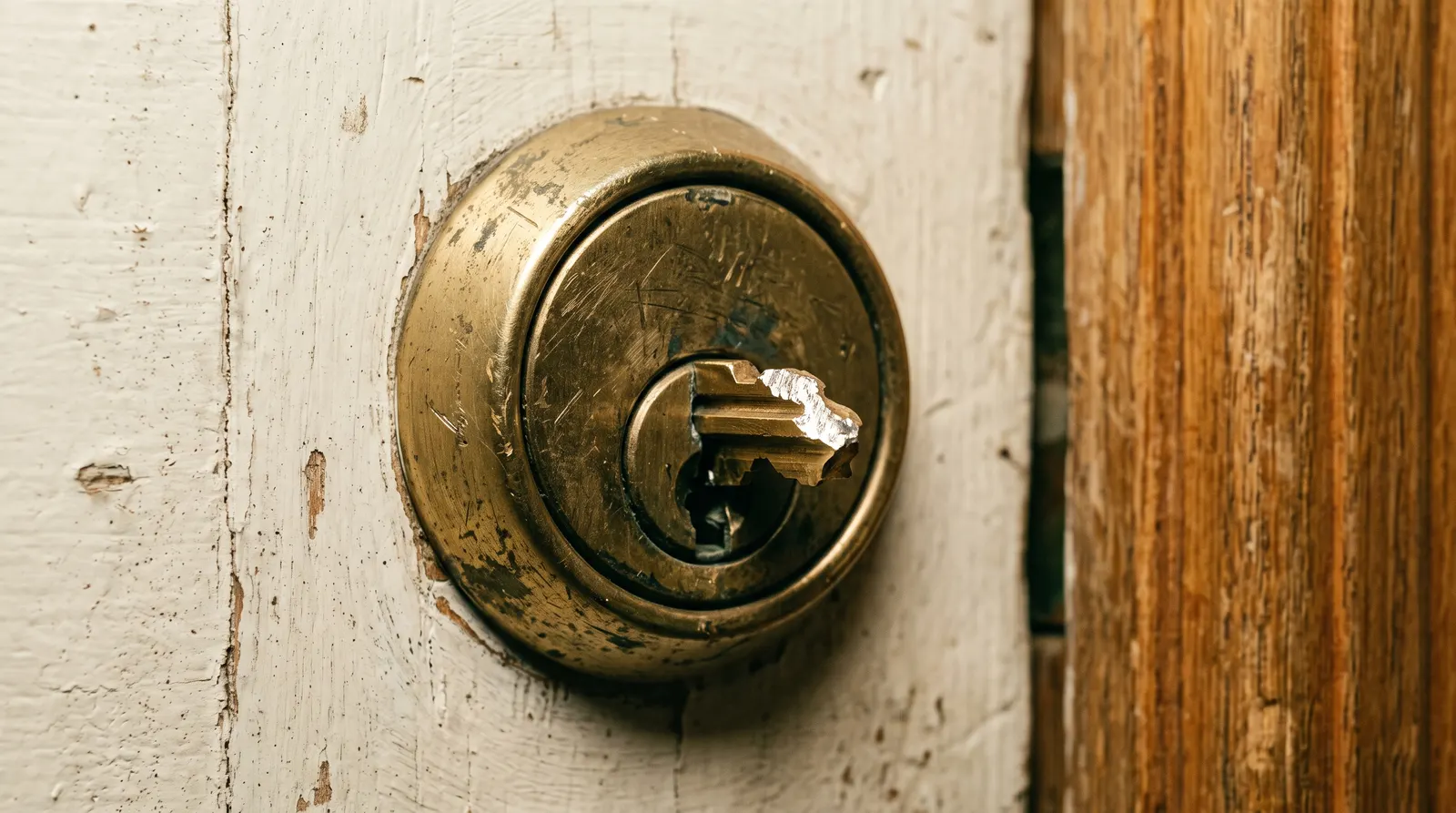
A key snapped in the keyway
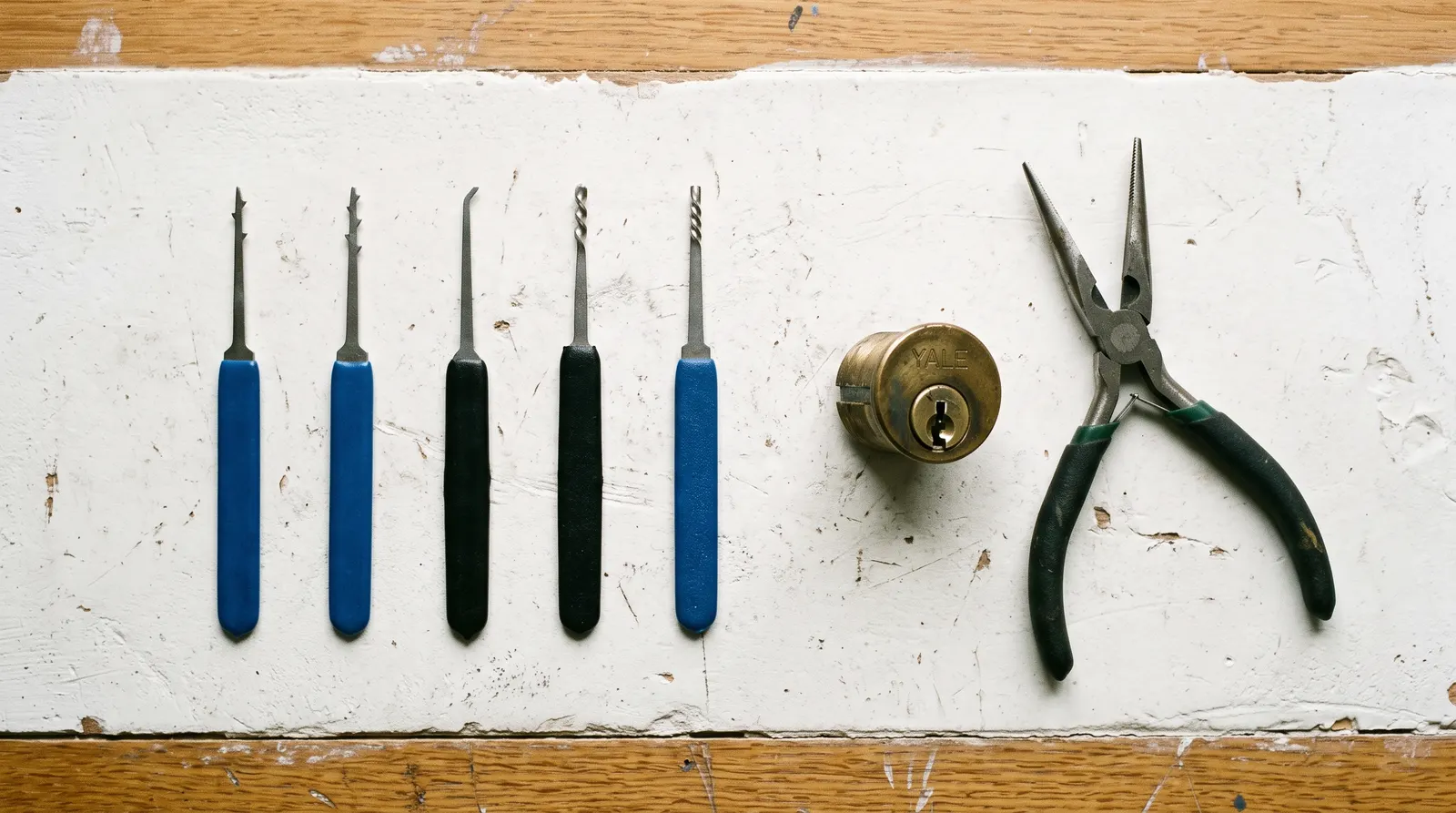
Key extractor tools
A key that bends or sticks is warning you. Cutting a fresh one from the original costs a fraction of an emergency extraction.
Tell us what has failed and where you are. We route your request to licensed, insured contractors covering your ZIP code, and they contact you directly.
Fire, a gas smell, or an injury? Leave the building and call 911 first, then your gas
utility or power company. Use this form once you are safe.