Locksmith scams: the bait and switch, and how to spot it
The decision point is on the phone, not at the door. By the time an unmarked van is drilling your cylinder, the expensive part has already been decided.
Locksmith scams follow one documented pattern: an advertised call-out of $15 to $29, an out-of-state call centre posing as a local business, an unlicensed technician in an unmarked vehicle, a standard lock declared high security and drilled, and a cash demand of $150 to $500 or more.
The FTC classifies bait-and-switch as an unfair or deceptive practice that violates the FTC Act, and it warns specifically that some locksmiths advertising in local listings are not local at all.
How locksmith scams actually work
What is the locksmith bait and switch?
A low advertised price that has no relationship to what you will be charged. The call centre books the job, a subcontractor arrives, the lock is declared high security, it gets drilled rather than picked, and the final number is set once you have no working door.
Each stage of locksmith scams exists for a reason, and understanding the reasons is what makes the red flags memorable rather than a list to skim.
The classic pattern is a $29 phone quote that becomes several hundred at the door, justified by unnecessary drilling. Get the total in writing before anyone starts.
The bait price against the real one
Indicative US ranges. Always get a written quote.
Job
Typical range
Notes
Advertised bait price
$15–$29
The documented opening move, not a real quote
Actual doorstep demand reported
$150–$500+
Often cash, after an unnecessary drilling
What a house lockout genuinely costs
$50–$150
Before fees
Service / trip fee
$50–$100
Separate in many markets
National average locksmith job
$187–$226
Low end around $160–$169
Source: FTC bait-and-switch enforcement guidance and FTC locksmith consumer advice; Thumbtack 2026 national locksmith price data (retrieved August 2026). Figures vary by region, severity and after-hours timing.
Figures last checked
Six red flags, before anyone is dispatched
A quote far below every other quote. A house lockout is genuinely $50 to $150. A $19 call-out is not a discount on that.
No verifiable local street address. Generic near-me branding and a mapped address that turns out to be a parking lot.
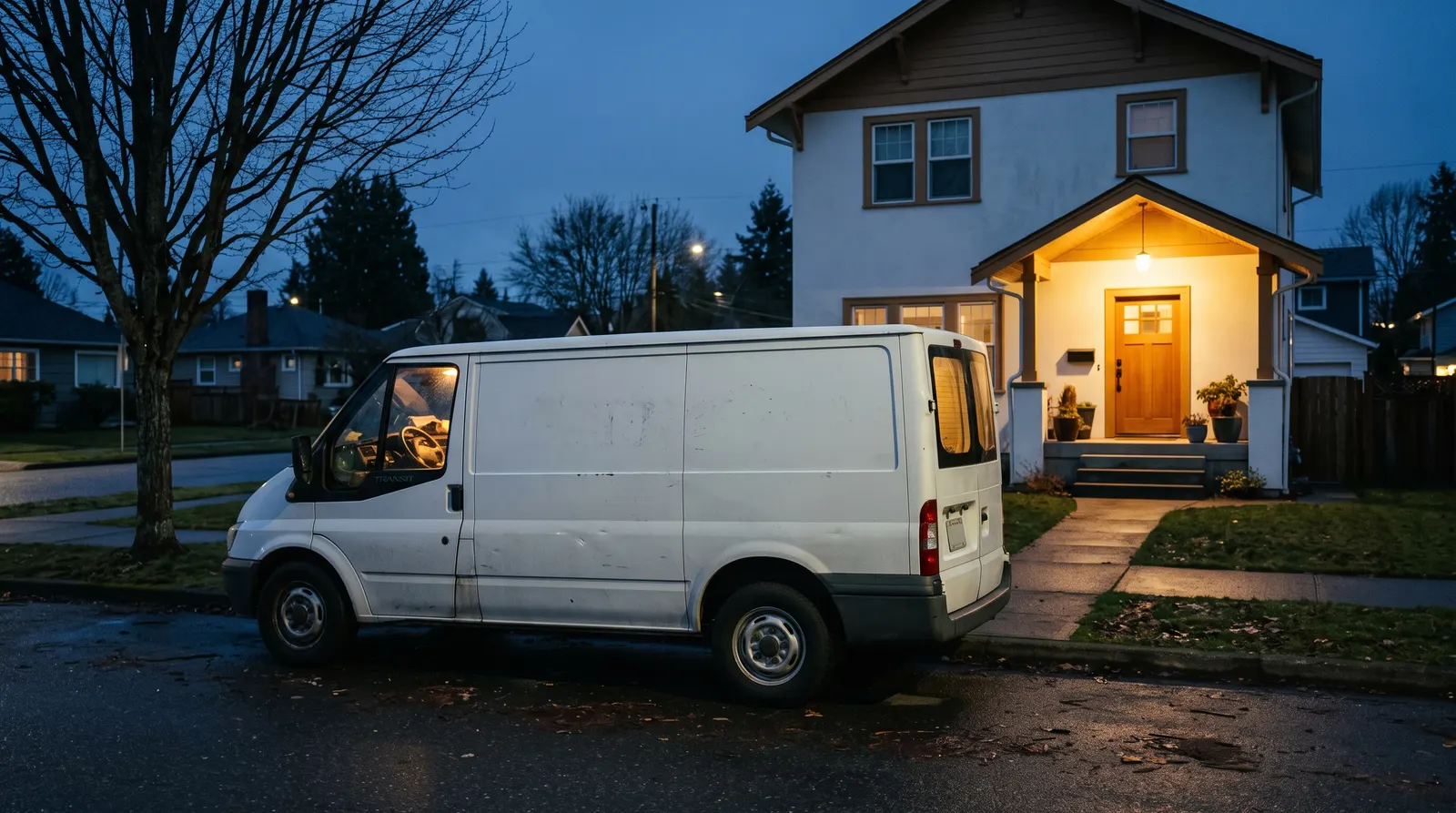
An unmarked vehicle, no company uniform and no identification offered on arrival.
Cash only, or payment by gift card, wire transfer or a payment app.
Immediate talk of drilling a standard residential lock, before anything has been attempted.
No written estimate before work starts, and no licence shown where the state requires one.
Why the price band matters more than the red flags
Red-flag lists are everywhere and they are hard to apply at midnight. A number is easier.
A house lockout genuinely costs $50 to $150 for the entry, with a trip fee of $50 to $100 in many markets, and Thumbtack 2026 data puts the national average locksmith job at $187 to $226. Locksmiths discussing their own pricing on trade forums quote $160 to $220 for a standard residential door.
Against those figures, a $19 advertised call-out is not competitive pricing. It is a different business model, and the difference gets recovered on your doorstep. Our breakdown of what a locksmith should actually cost sets out every line.
Why drilling is the profitable move
This is the mechanic that makes the whole scam work, and almost no page explains it.
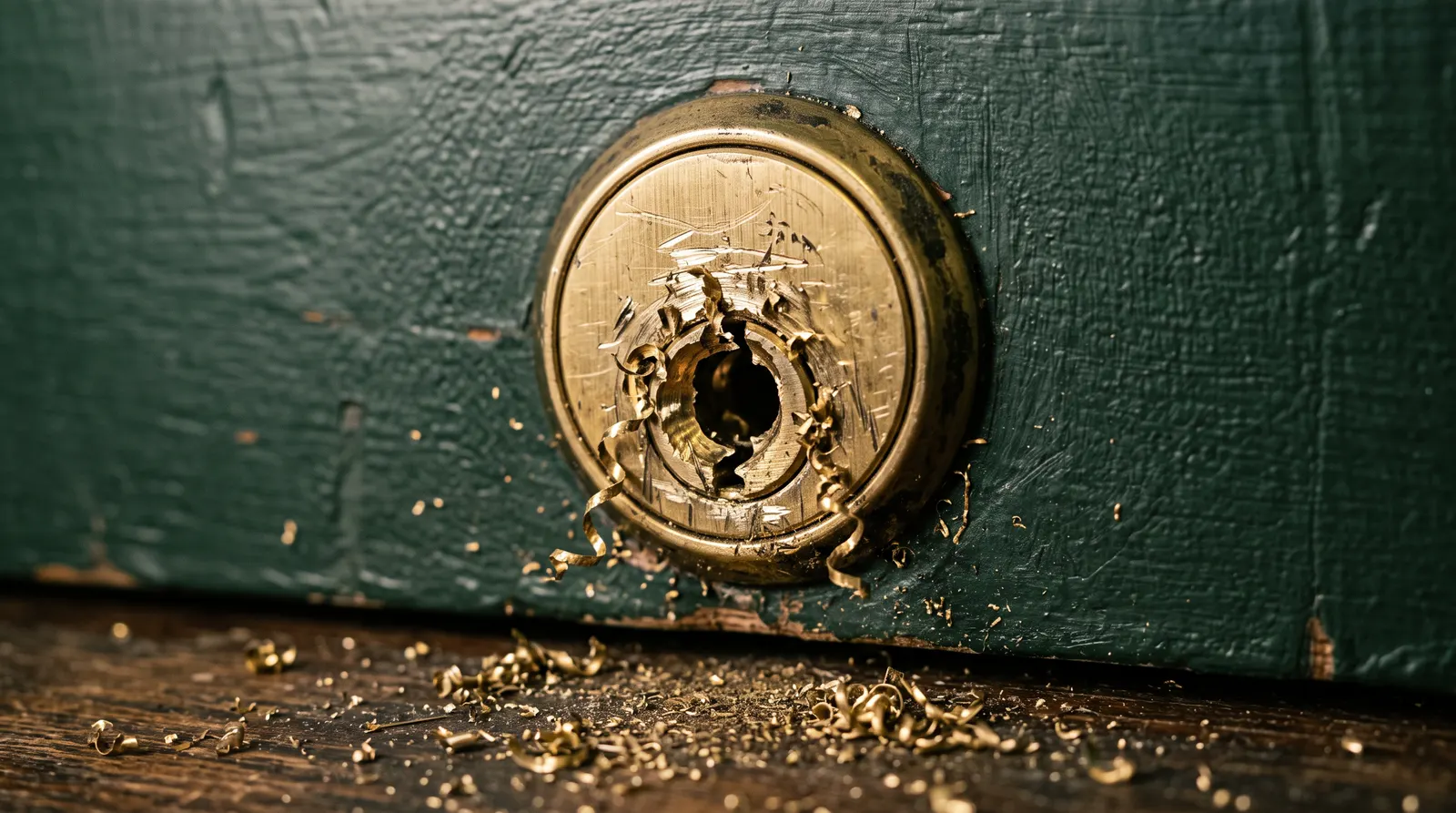
Picking a lock takes skill, practice and sometimes patience. Drilling takes a cordless drill and about ninety seconds, requires no training, and produces a guaranteed outcome. It also destroys the cylinder.
That destruction is the point. A drilled lock means you now need a replacement, fitted immediately, at whatever price is quoted while your front door does not lock. A single opening job becomes an opening plus hardware plus fitting, and none of it was necessary.
How a fake local listing works
The FTC warns that locksmiths advertising in local listings may not be local, and the mechanic behind that warning is worth knowing.
An operator creates many listings with generic names and addresses that map to real streets but not to real premises. Calls route to a national call centre, which quotes the bait price and dispatches whichever subcontractor is nearest. Nobody in that chain has a reputation attached to your job.
The practical defence is a street address you can look at, and a legal business name you can search. Both take thirty seconds and both are questions a real business answers without hesitation.
If someone is already at your door
What to do in the moment
01
Ask for the written total first
Before any tool comes out of the van. A legitimate locksmith will give you a figure; a scam operator will start work and produce a number afterwards.
02
Do not consent to drilling
On a standard residential lock, drilling is a choice rather than a necessity. Say you want non-destructive entry and that you have not authorised drilling.
03
Refuse cash-only
Pay by card if you pay at all. A card payment is reversible, cash is not, and card acceptance is itself a legitimacy signal.
04
Photograph everything
The vehicle, the plate, any ID and the invoice. If this goes wrong, that evidence is what a chargeback and a complaint are built on.
You are allowed to stop the job
A quoted price that changes on arrival is not a contract you are bound to. You can decline the work, decline drilling, and ask them to leave. If you are being pressured for cash on your own doorstep and you feel unsafe, call the police. The lock can wait an hour; a payment made under pressure is much harder to undo.
What homeowners actually ask
What people report after the fact
Drawn from real public forum threads and reported prices, summarised and attributed as patterns.
These are not reviews of this site, and no names or ratings have been invented.
“Beware of locksmith scams: a common trap to avoid”
SourceThread title from the discussions block on this SERP. The pattern is described repeatedly by people who only recognised it afterwards.
“Locksmith scams and how to avoid them”
SourceCommunity post title surfacing in the Perspectives block for this query, which is a signal that consumers are warning each other where publishers are not.
“It may range between $160 and $220, because it depends on difficulty”
SourceLicensed locksmith describing honest residential lockout pricing on r/Locksmith. The contrast with a $19 advertised call-out is the whole point.
“A drill with a 3/16 inch bit and a flathead screwdriver will get it open quickly. But you will be replacing the whole thing afterwards.”
SourceTop-voted DIY comment in a house-lockout thread. It also explains, precisely, why drilling is the profitable move for a dishonest operator.
1 / 4
If it already happened: the reporting route
This is the section the ranking pages leave out entirely, and it is the one a victim actually needs.
Card chargeback first, if you paid by card. Contact your issuer, describe the service as misrepresented, and provide the invoice and any photographs. This is the fastest realistic route to your money.
File a consumer report with the FTC. Bait-and-switch is enforced federally, and reports are what build the case against a call-centre operator running many listings.
Contact your state attorney general, and any state locksmith licensing board where your state licenses the trade. Requirements vary, and unlicensed operation is separately actionable where they apply.
File a police report where a lock was destroyed or you were pressured into payment. It creates a record even where no immediate action follows.
Keep everything: the invoice, photographs of the vehicle and the damaged lock, call logs and any text messages. Complaints without evidence rarely move.
Finding a real locksmith before you need one
The FTC's most useful advice on this topic is also the least followed: research and save a locksmith's number before an emergency, when you can think clearly.
A street address you can actually look at, ideally a premises rather than a mailbox.
A legal business name you can search, with a trading history attached to it.
Card payment accepted as a matter of course.
Saved in your phone now, because the entire scam depends on you searching in a hurry.
Know the line
Legitimate locksmith, or the pattern?
Safe to check yourself
Quotes an all-in total before dispatch and stands by it
Gives a legal business name and a real street address
Arrives in a marked vehicle with identification
Opens a standard lock non-destructively
Takes card and issues an itemised invoice
Call a pro now
A call-out price far below the market band
Generic near-me branding with no verifiable address
Unmarked vehicle, no uniform, no ID
Immediate insistence on drilling a standard lock
Cash only, or payment by app, wire or gift card
24/7 dispatch network
Get a licensed locksmith moving on this
Send the job and your ZIP code and licensed, insured locksmiths covering your area will contact you directly. Ask them every question on this page, and there is no obligation to hire any of them.
Fire, a gas smell, or an injury? Leave the building and call 911 first, then your gas
utility or power company. Use this form once you are safe.
How the matching works, and what we do not do
Emergency Services 24H is a referral service. We do not employ locksmiths and we do not open doors.
Your request routes by ZIP code to licensed, insured contractors covering your area, and they contact you directly. We would rather you applied this page's vetting questions to whoever contacts you, including anyone who reaches you through us.
Straight answers
Frequently asked questions
The questions homeowners actually search for on this problem, answered in plain language.
Ask for the legal business name and a street address you can look up, get the all-in total before dispatch, and confirm they take card. Expect a marked vehicle and identification on arrival, and expect non-destructive entry on a standard lock. The FTC warns that some locksmiths advertising locally are not local at all.
What is the locksmith bait and switch?
An advertised call-out of around $15 to $29 that becomes a $150 to $500 cash demand on site. The operator is usually an out-of-state call centre using a generic name and a fake local address, and the escalation is justified by declaring a standard lock high security and drilling it unnecessarily.
What do I do if I have been scammed by a locksmith?
If you paid by card, contact your issuer about a chargeback, because that is the fastest route to your money. File a consumer report with the FTC, contact your state attorney general and any state locksmith licensing board, and file a police report where a lock was destroyed. Keep the invoice, photographs and any texts.
Why do scam locksmiths always want to drill?
Because drilling requires almost no skill, takes minutes, and destroys the cylinder, which converts a small opening job into a mandatory lock sale at a price they set once you have no working door. A competent locksmith opens a standard residential lock without drilling it.
Is a very cheap locksmith quote a bargain?
Rarely. A house lockout genuinely costs $50 to $150 plus fees, and the national average locksmith job is $187 to $226. A $19 quote is not a cheaper version of that work; it is the documented opening move of a bait-and-switch, and the FTC treats bait-and-switch as a violation of the FTC Act.
Should I pay if I feel pressured at the door?
Pay by card rather than cash if you pay at all, because a card payment is reversible and cash is not. Ask for an itemised invoice with the business name and address before handing anything over. If you feel unsafe, that is a reason to call the police rather than a reason to pay faster.
The unmarked van
Drilling a lock that did not need it
The gap between the top row and the bottom row is the scam. Anything far outside these bands deserves a second call.
Tell us what has failed and where you are. We route your request to licensed, insured contractors covering your ZIP code, and they contact you directly.
Fire, a gas smell, or an injury? Leave the building and call 911 first, then your gas
utility or power company. Use this form once you are safe.