How to rekey locks, and when replacing is the better call
Rekeying costs a fraction of replacement and keeps the hardware you already have. The one detail that stops most DIY attempts is on the box, and nobody reads it.
Learning how to rekey locks is worth an afternoon, because rekeying costs $50 to $130 plus $10 to $25 per cylinder professionally and keeps your existing hardware, finish and door prep. Replacement adds the price of a lock set for every door on top of that.
What rekeying actually changes
What does rekeying a lock do?
It changes the pin stack inside the existing cylinder so a new key operates it and every old key stops working. The lock body, the handle, the finish and the holes in your door all stay exactly as they are.
That is the entire appeal. You get the security outcome of a new lock, which is that nobody holding an old key can get in, without paying for new hardware or living with a mismatched handle.
Rekey kits only fit one keyway
This is the single most common reason a DIY rekey fails, and no page on the first page of results states it plainly.
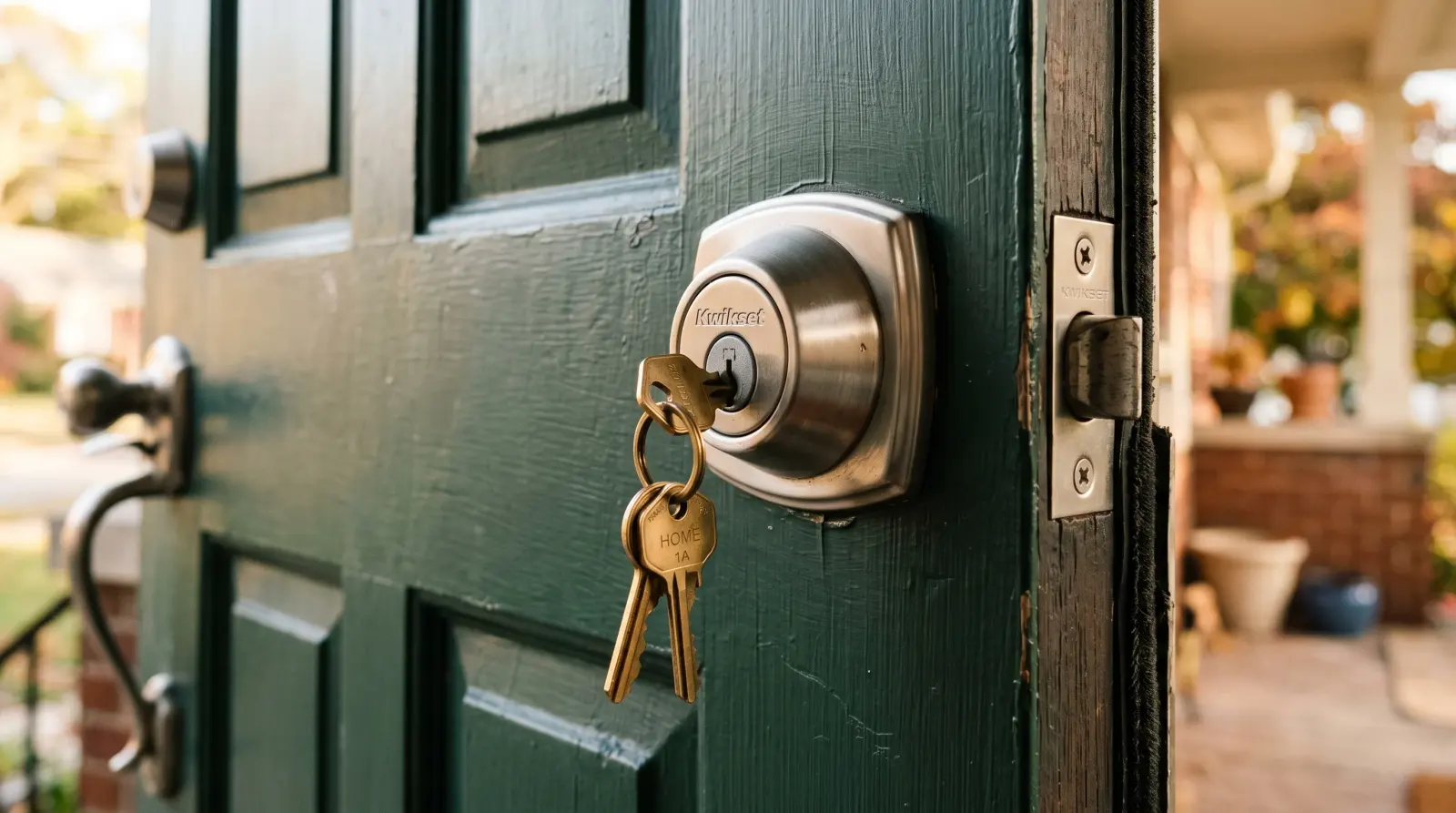
A rekey kit is manufacturer-specific. Kwikset pins do not fit a Schlage plug, Schlage pins do not fit a Baldwin, and the follower supplied with one brand's kit is the wrong diameter for another. If your house has a mix of brands, which most do after a few years of replacements, one kit will not do the whole house.
Read the brand off the face of the cylinder before you buy anything. It is usually cast into the metal around the keyway.
The DIY procedure
How to rekey locks, step by step
01
Identify the keyway first
Read the brand off the face of the cylinder. Rekey kits are specific to one manufacturer keyway, and buying the wrong one is why most DIY attempts stop at step one.
02
Remove the cylinder
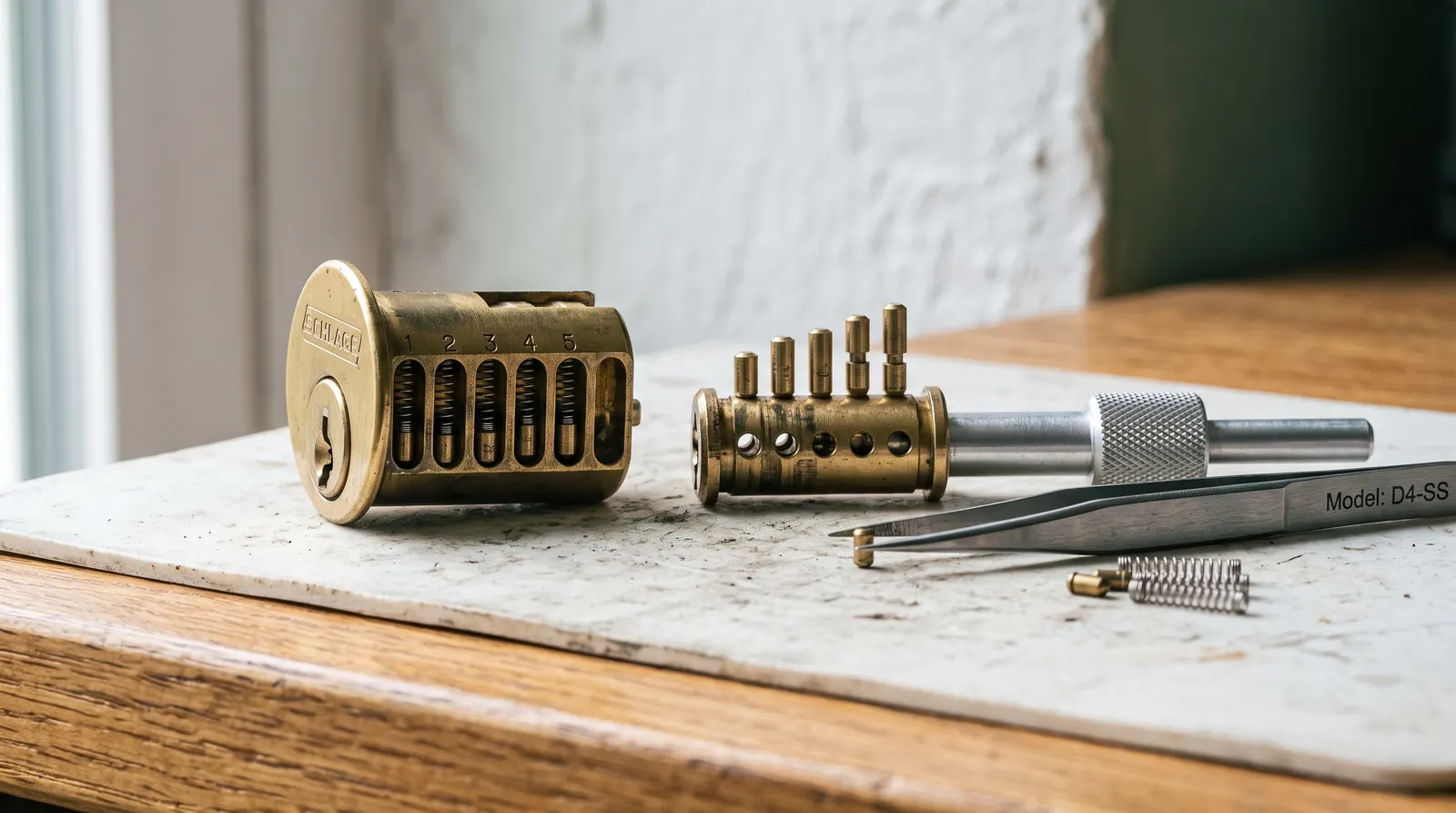
Take the lock off the door, then release the retaining clip and slide the plug out of the housing using the follower supplied with the kit.
03
Keep the springs seated
The follower is the whole trick. It holds the top pins and springs in the housing while the plug is out, and losing them across the floor is how this job goes wrong.
04
Swap pins, test before refitting
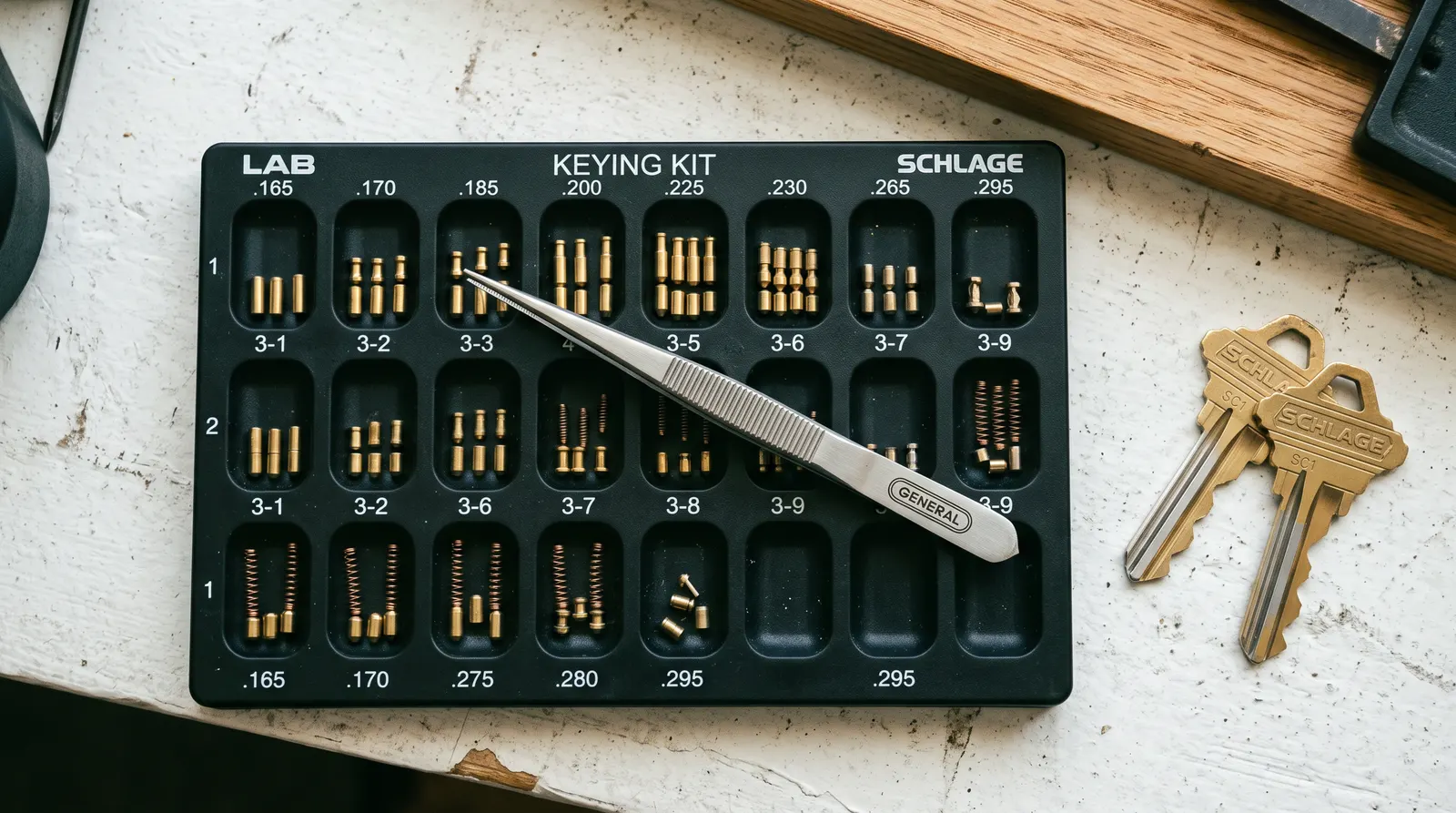
Fit the pin stack that matches the new key, slide the plug back through the follower, and turn it with the new key several times before the lock goes anywhere near the door.
The follower is the part people underestimate. It is a plain cylinder of plastic or brass that occupies the housing while the plug slides out, holding the top pins and their springs in place. Push the plug out without one and you will spend the evening finding springs under the furniture.
Do not rekey a damaged cylinder
If the lock was forced, drilled, or has been stiff and grinding for months, rekeying it is money spent on a component that is already failing. A bent plug or a worn housing will turn smoothly on the bench and jam in the door under load. Replace the cylinder and rekey the replacement to match your other doors.
Which locks cannot be rekeyed
The People Also Ask block asks this directly and the ranking pages answer it vaguely. Here is a real list.
Budget cylinders with staked plugs. Some inexpensive locks are assembled to be disposable and are not designed to come apart at all.
Restricted and high-security systems. Brands with patented keyways control the supply of blanks and pins, so rekeying requires an authorised dealer and proof of ownership.
Electronic locks with no mechanical override. There is no pin stack to change; access is managed in software instead.
Damaged plugs. Anything forced, drilled or seized is replaced rather than serviced.
Keying alike, which is what most people want
Can I have one key for every door?
Yes, and the term for it is keyed alike. Every cylinder is rekeyed to the same key, so one key opens the front, back and garage doors. It requires all the cylinders to share a keyway, and it is priced per cylinder rather than per visit.
Most people searching for how to rekey locks are actually describing this outcome without knowing the term, which matters because asking a locksmith to rekey your locks and asking them to key them alike can produce different quotes.
If your doors currently use two or three different brands, keying alike means bringing them onto one keyway, which usually means replacing some cylinders. That is worth pricing as part of the same visit rather than discovering afterwards.
SmartKey and self-rekeying locks
A different mechanism entirely, and the search results conflate the two constantly.
Self-rekeying systems such as SmartKey use a sliding wafer arrangement rather than pin stacks. You insert the current key, turn it, insert a learn tool, then insert the new key, and the lock reconfigures itself in about fifteen seconds with no disassembly.
The trade-off is that they have their own failure modes and their own security debate, and a general rekey kit will not touch them. If your lock has a small slot beside the keyway, that is what you have.
Rekeying changes the pins so old keys stop working. It costs a fraction of replacing hardware and achieves the same security outcome.
Rekey or replace, priced
Indicative US ranges. Always get a written quote.
Job
Typical range
Notes
Rekeying, professional
$50–$130
Plus $10–$25 per cylinder
Service / trip fee
$50–$100
Separate in many markets
After-hours premium
+$100–$250
Rarely necessary for planned rekeying
Rekey kit, homeowner
one keyway only
Covers a single manufacturer, not mixed brands
Replacement lock set
hardware + labor per door
Only worth it if the hardware is worn or being upgraded
Source: Thumbtack 2026 national locksmith price data; published 2026 locksmith cost guides (retrieved August 2026). Figures vary by region, severity and after-hours timing.
Figures last checked
The arithmetic is one-sided for a house move or a lost key: rekeying four cylinders professionally sits comfortably below the cost of four new lock sets plus fitting, and the doors end up with the hardware they already had.
Replacement earns its place when the hardware is worn, when a handle is failing mechanically, or when you are upgrading to a keypad or smart lock anyway. Full rate detail sits in our breakdown of what a locksmith charges by job.
When to rekey rather than wait
Four trigger events account for almost every rekey, and three of them are predictable enough to plan for.
Moving into any property. You have no idea how many keys exist or who holds them, and neither does the seller or the agent.
A lost or stolen key. Particularly one on a fob with an address attached to it.
A tenant, contractor or relationship change. Anyone who legitimately held a key and no longer should.
After a break-in. Covered separately in our guide to changing locks after a break-in, because the order of operations matters there.
Know the line
DIY, or call a locksmith?
Safe to check yourself
Rekeying a standard pin-tumbler cylinder with the matching brand kit
Self-rekeying a SmartKey-style lock with the learn tool
Rekeying several locks of the same brand to one key
Reading the brand off a cylinder before buying anything
Call a pro now
Any restricted or high-security keyway
Bringing mixed brands onto one key
Any cylinder that was forced, drilled or is grinding
Multi-point patio and uPVC door mechanisms
A whole property where you want it done in one visit
24/7 dispatch network
Get a licensed locksmith moving on this
Tell us how many cylinders and whether you want them keyed alike, plus your ZIP code. Licensed, insured locksmiths covering your area will contact you directly. No obligation to hire.
Fire, a gas smell, or an injury? Leave the building and call 911 first, then your gas
utility or power company. Use this form once you are safe.
How the matching works, and what we do not do
Emergency Services 24H is a referral service. We do not employ locksmiths and we do not rekey locks.
Your request routes by ZIP code to licensed, insured contractors covering your area, and they contact you directly. Tell them the brands on your cylinders and whether you want one key for everything, because both change the quote.
Straight answers
Frequently asked questions
The questions homeowners actually search for on this problem, answered in plain language.
Yes, with the correct kit and a little patience. The critical detail is that rekey kits are specific to one manufacturer keyway, so a Kwikset kit will not rekey a Schlage cylinder. Check what brand your locks are before buying anything, because the wrong kit is the usual reason a DIY rekey fails.
Is it cheaper to rekey or replace a lock?
Rekeying, in almost every case. Professional rekeying runs $50 to $130 plus $10 to $25 per cylinder and keeps your existing hardware, finish and door prep. Replacement adds the cost of a lock set for every door on top of the labor, and only makes sense if the hardware is worn, damaged or being upgraded.
Can all door locks be rekeyed?
No. Some budget cylinders have staked plugs that are not designed to come apart, certain high-security systems require dealer authorisation to obtain keys and pins, electronic locks with no mechanical override have nothing to rekey, and a plug damaged in a break-in or a drilling is usually replaced rather than serviced.
What does keyed alike mean?
It means every cylinder is rekeyed to the same key, so one key opens the front, back and garage doors. It is what most people actually want when they say rekey, and it requires all the cylinders to share a keyway. Professionally it is priced per cylinder rather than per visit.
Will a retailer rekey locks for free?
Some home improvement retailers rekey locks bought from them at the same visit, and terms vary by store and by region. It is worth asking rather than assuming, and it only applies to compatible cylinders. Existing locks already on your doors are normally a locksmith job.
How long does it take to rekey a lock?
A locksmith rekeys a standard residential cylinder in ten to fifteen minutes once the door is accessible, so a whole house of four to six cylinders is comfortably inside a single visit. A first-time DIY rekey on one lock takes most people around half an hour.
Inside the cylinder
A rekeying pin kit
Rekeying every cylinder in a typical house usually costs less than replacing two locks, and gets you one key for everything.
Tell us what has failed and where you are. We route your request to licensed, insured contractors covering your ZIP code, and they contact you directly.
Fire, a gas smell, or an injury? Leave the building and call 911 first, then your gas
utility or power company. Use this form once you are safe.