Skip to content
Emergency Services 24H

Emergency Electrical → Panel

Buzzing electrical panel: normal hum, or a warning?

There is a sound a healthy panel makes, and there are three sounds that mean something is wrong. Telling them apart does not require opening anything, which is fortunate, because you should not.

A buzzing electrical panel is not automatically a fault. A faint hum audible only within a foot or two can be entirely normal. Loud buzzing, crackling or sizzling, or any noise accompanied by heat or a burning smell, indicates a loose termination or active arcing, and ESFI attributes more than 28,000 home fires a year to arcing faults.

The commercial pages ranking for this question average under 900 words on a genuine safety topic. This one goes further, because the difference between the two cases is worth understanding rather than memorising.

Is a buzzing electrical panel normal?

Should my breaker box make noise?

A quiet, steady, unchanging hum audible only close up can be normal. Anything you can hear across the room, anything intermittent, and anything that crackles or sizzles is not. Heat or a burning smell removes the question entirely.

Diagnose without touching

How to locate the sound safely

  1. 01

    Listen without touching

    Stand near the panel with the room quiet. Note whether the sound is constant, intermittent, or tied to something switching on elsewhere in the house.

  2. 02

    Note what is running

    Heating, air conditioning, a dryer or a well pump. A buzz that appears with one appliance narrows the fault to that breaker or its termination.

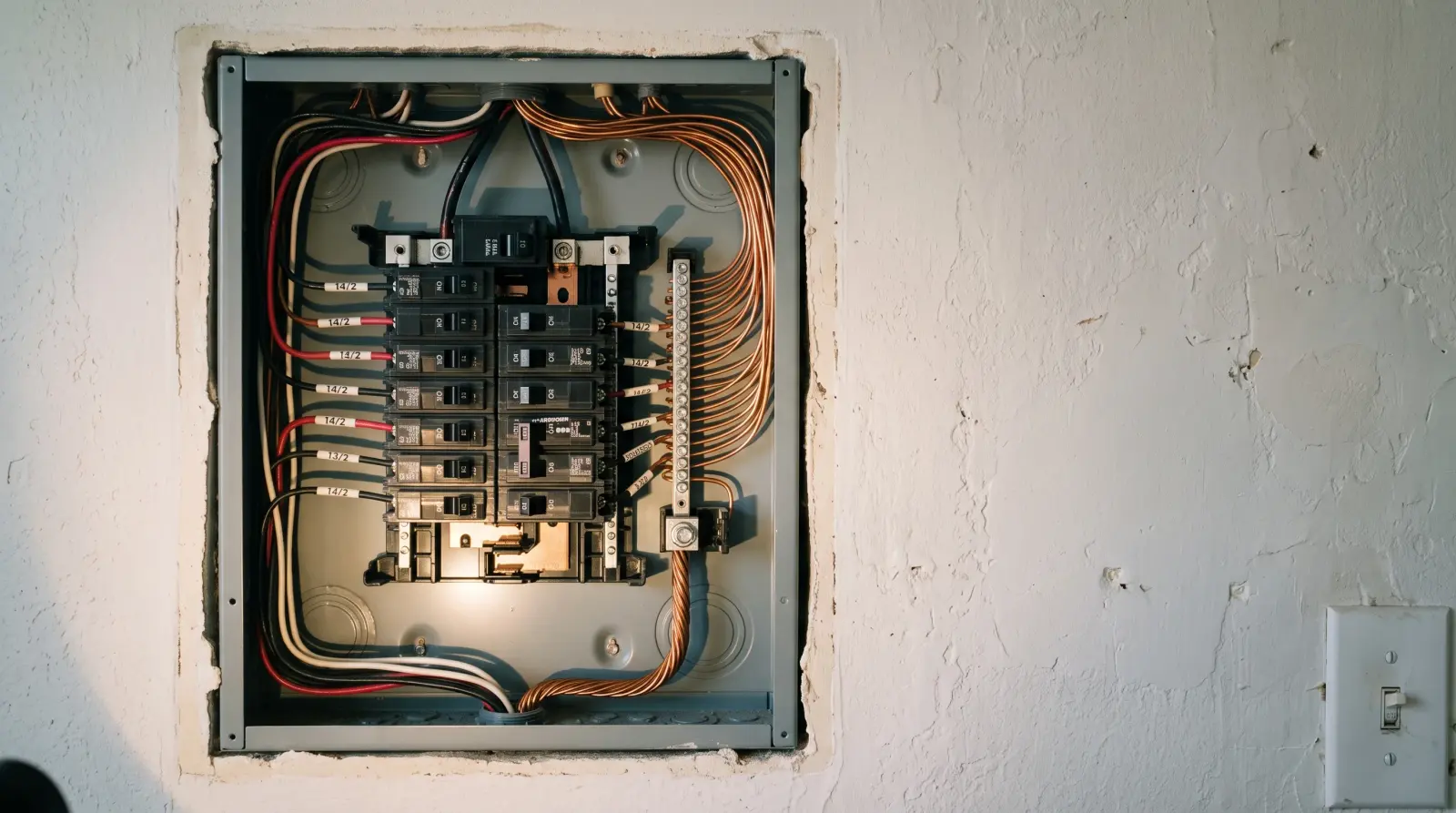
Closed residential electrical panel cover with breakers visible through the door
  1. 03

    Check for heat and smell, from a distance

    Back of a hand near the cover, not on it. Any warmth, any burning-plastic smell, or any discolouration around the panel changes this to a same-night call.

  2. 04

    Do not open the cover

    Removing the panel cover exposes busbars that stay live with every breaker off, and main lugs that stay live even with the main off. There is nothing you can safely see in there.

Why a normal hum exists at all

Alternating current reverses direction sixty times a second in the US, and the magnetic field it produces makes laminated steel physically flex at that frequency. That is magnetostriction, and it is the same effect that makes a utility transformer hum on a pole outside.

Inside a panel, breakers and any transformer-based device do it on a much smaller scale. The result is a low, even, unchanging tone that does not vary with what is running.

The useful part of understanding this is that a buzzing electrical panel making a normal hum has no reason to change. If yours has become louder, or started recently, or now varies through the day, it is no longer the sound this section describes.

Buzzing, crackling and sizzling are three different sounds

The search results treat panel noise as one phenomenon. It is three, and they carry different levels of urgency.

  • A steady buzz. Mechanical vibration, a loose panel cover or mounting screw, or a breaker that is not fully seated on the busbar. Worth a call this week.
  • Crackling. Intermittent arcing across a gap that opens and closes as things heat and cool. This one has a fault behind it. Same-week at minimum, same-night if anything is warm.
  • Sizzling or frying. Sustained arcing, usually with heat already present. Switch off the main from a dry position and call tonight.

If you also have a breaker that keeps tripping on the panel making the noise, treat the two symptoms as one fault rather than a coincidence.

Do not open the panel cover

This is the instruction no ranking page gives, and it matters more than anything else here.

Removing the cover exposes the busbars, which remain live with every breaker switched off, and the main lugs, which remain live even with the main breaker off because they sit on the utility side of it. There is nothing a homeowner can usefully see or do in there, and the fatal-accident statistics for panel work exist for exactly this reason.

Buzzing only when something is running

Why does the panel buzz only when the heat is on?

Because the noise is load-dependent, which narrows it to the breaker carrying that load or the termination behind it. A connection that is marginal makes no noise at rest and buzzes as soon as current flows through it.

Heating, air conditioning, electric dryers and well pumps are the usual triggers, because they draw hard and run for extended periods.

Write down which appliance is running when the sound starts. That single observation can turn a two-hour diagnostic into a twenty-minute one, because the electrician can apply that exact load and thermal-image the panel while it is present.

When to switch the main off

Isolating the whole house is disruptive, so it is worth being clear about when it is the right call.

  1. Switch the main off tonight if there is heat at the panel, any burning smell, visible scorching, or a sizzling sound.
  2. Isolate the affected circuit only if the noise is load-dependent and you can identify the breaker, and there is no heat or smell.
  3. Leave everything on and book a daytime call if the hum is faint, constant, unchanged for years, and nothing is warm.

Do all of it from a dry position with dry hands. If the panel is in a wet basement or you cannot reach it without standing in water, call your power company and ask them to cut supply at the meter instead. They do this routinely and do not charge for it in an emergency.

Can I sleep with the panel buzzing?

A buzzing electrical panel with a faint, unchanging hum, nothing warm and no smell: yes, and book a daytime appointment.

Crackling, sizzling, heat, scorching or any burning smell: no. Switch off the main and call tonight. A panel fault sits inside a metal enclosure full of conductors, and it has no early warning beyond the one you are already hearing.

Test your smoke alarms before bed either way. ESFI reports that 65 percent of home fire deaths occur in homes where no smoke alarm was working, which makes a tested alarm the most valuable thing in the building on a night like this. If a smell is present, read what a burning electrical smell means before deciding to stay.
Know the line

Safe to check yourself, or call a pro now?

Safe to check yourself

  • Listening and characterising the sound from a step back
  • Noting which appliance is running when it starts
  • Checking for heat and smell without touching the cover
  • Switching off an individual breaker from a dry position
  • Switching off the main, from a dry position, if there is heat or smell

Call a pro now

  • Removing the panel cover, under any circumstances
  • Tightening any termination inside the panel
  • Replacing a breaker, a busbar or the panel itself
  • Any crackling, sizzling, heat, scorching or burning smell
  • Panel noise in an apartment, which is usually the building owner responsibility

24/7 dispatch network

Get a licensed electrician moving on this

Panel noise with heat, a smell or crackling. Send the details and your ZIP code and licensed, insured electricians covering your area will contact you directly. No obligation to hire.

Fire, a gas smell, or an injury? Leave the building and call 911 first, then your gas utility or power company. Use this form once you are safe.

By submitting this request you agree that Emergency Services 24H and the licensed contractors in its network may contact you at the phone number and email you provided, including by automated dialing system, prerecorded message, or text. Consent is not a condition of purchase. Message and data rates may apply. You can opt out at any time. See our privacy policy and terms.

Free to submit. No obligation to hire.

A buzzing or humming panel Stop. Call 911 first: Buzzing with a burning smell; Crackling, popping or visible arcing; A panel hot to the touch; Scorch marks on the enclosure or breakers. Contractor tonight: A persistent buzz from one breaker; Buzzing that changes with load; A breaker that will not seat properly; Any buzzing on an older or recalled panel. Can wait for an appointment: A faint transformer hum from a doorbell or dimmer; Fluorescent ballast noise away from the panel A buzzing or humming panel Stop. Call 911 first Leave the building Buzzing with a burning smell Crackling, popping or visiblearcing A panel hot to the touch Scorch marks on the enclosure orbreakers Contractor tonight Damage is compounding A persistent buzz from one breaker Buzzing that changes with load A breaker that will not seatproperly Any buzzing on an older orrecalled panel Can wait for an appointment Book in normal hours A faint transformer hum from adoorbell or dimmer Fluorescent ballast noise awayfrom the panel When in doubt, treat it as the more serious lane. A false alarm costs nothing.
A panel is meant to be silent. Buzzing usually means a loose connection arcing under load, which is the exact mechanism behind panel fires.

What a panel inspection costs

Indicative US ranges. Always get a written quote.

Job Typical range
Service-call fee $100–$200
Standard labor $50–$130 / hr
Emergency / after-hours labor $100–$250 / hr
Breaker replacement one hour + parts
Panel inspection with thermal imaging often 1–2 hours

Source: HomeGuide 2026 electrician cost per hour; Angi 2026 electrician cost data; licensed-electrician reported figures from public trade-forum threads, marked as reported (retrieved August 2026). Figures vary by region, severity and after-hours timing.

Figures last checked

What the electrician will do

Knowing the sequence makes the bill readable and explains why this is not a five-minute job.

They apply load first, because a marginal termination makes no heat at rest. Then they thermal-image the panel with the cover off, looking for a hot spot warmer than its neighbours.

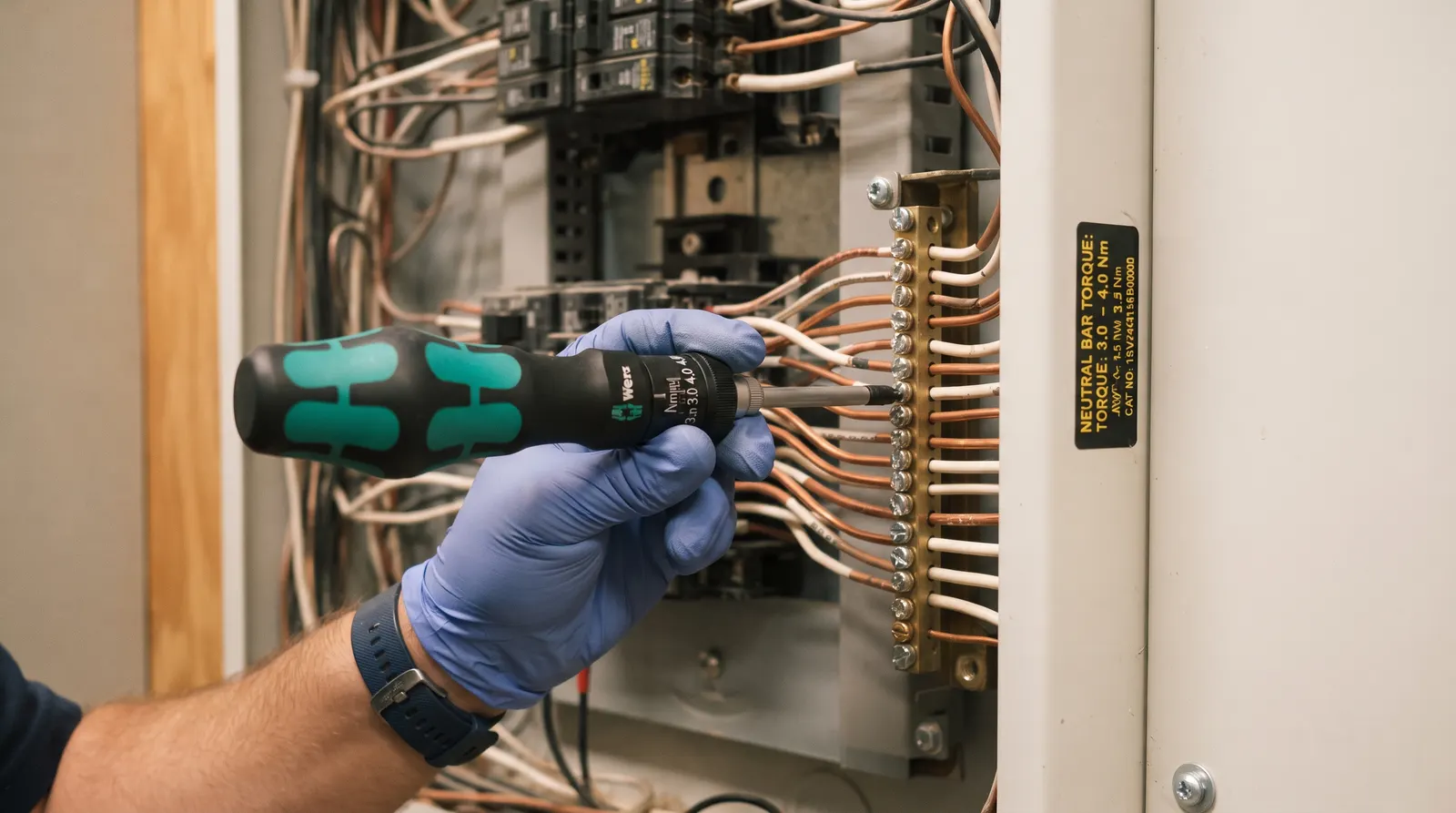
From there it is a torque check on every termination.

Then replacement of whatever is failing: a breaker, a busbar stab, or the conductor termination itself. On older panels, particularly certain discontinued brands with known busbar problems, the recommendation is sometimes replacement of the whole panel, and that is a quote rather than a repair. Full rate detail sits in our guide to what an emergency electrician charges.

How the matching works, and what we do not do

Emergency Services 24H is a referral service. We do not employ electricians and we do not carry out panel work.

Your request routes by ZIP code to licensed, insured contractors covering your area, and they contact you directly. Tell them whether the noise is load-dependent, because that determines whether they need to arrive while the load is on.

Straight answers

Frequently asked questions

The questions homeowners actually search for on this problem, answered in plain language.

Browse all guides
Are breaker boxes supposed to hum?

A faint hum you can only hear with your ear close to the panel can be normal. Alternating current vibrates the laminated steel inside breakers and transformers sixty times a second, and that produces a low, consistent, unchanging sound. Anything audible from across the room is not that.

Is electrical buzzing normal?

Quiet, steady and unchanging is normal. Loud, intermittent, crackling or sizzling is not, and neither is any sound accompanied by heat, discolouration or a burning smell. The distinction that matters is not really the volume, it is whether the sound is constant or irregular.

What does a blown breaker sound like?

A failing breaker often buzzes or chatters under load rather than producing a single dramatic noise, and it may feel warm. A breaker that trips with a solid mechanical clack is working correctly. One that hums, sizzles or feels hot to the back of a finger is the one to be concerned about.

How do you fix a buzzing breaker?

Not as a homeowner. Diagnosing panel noise means removing the cover, which exposes live busbars that remain energised with every breaker off and even with the main off. An electrician thermal-images the panel under load, checks termination torque, and replaces the failing breaker or repairs the connection.

Is a buzzing fuse box dangerous?

It can be. Loose terminations, failing breakers and arcing all produce audible noise, and arcing in particular generates heat inside an enclosure with nowhere for it to go. ESFI attributes more than 28,000 home fires a year to arcing faults, which makes panel noise worth a same-week call and heat a same-night one.

Why does my breaker box buzz when the heat is on?

Because the noise is load-dependent, which usually narrows it to the breaker carrying that load or its termination. Heating and air conditioning circuits draw hard and are the most common culprits. Note which appliance is running when the sound starts, because that tells the electrician exactly where to look.

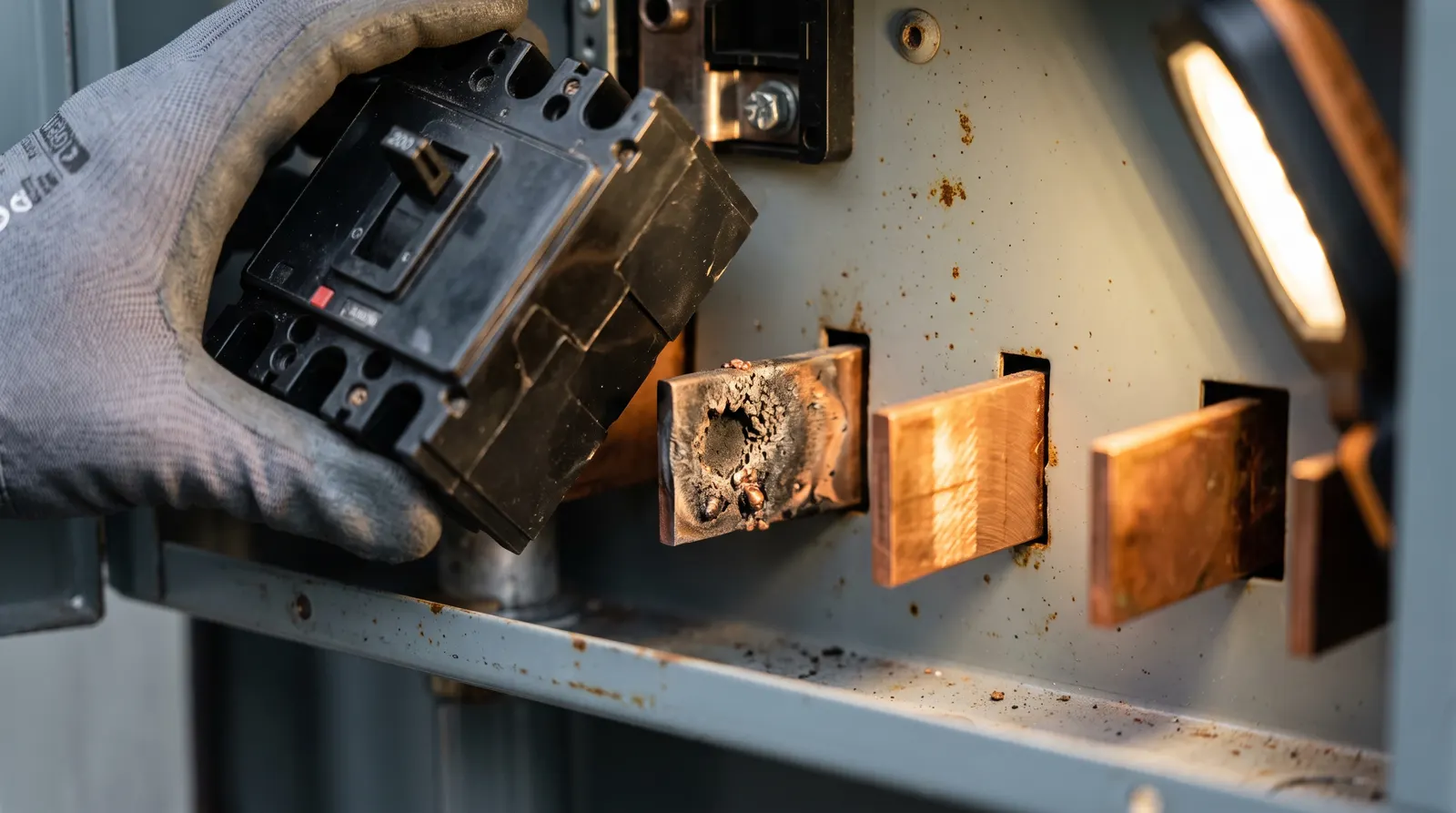
Breaker stab and bus bar in a panel showing arc pitting on the contact
A loose bus connection
Torque screwdriver set against a panel lug during a service inspection
Torque, not tightness
Panel inspection and repair Panel inspection and torque check: $150 to $450, most often around $275. Breaker replacement: $150 to $400, most often around $250. Bus bar or lug repair: $300 to $1,200, most often around $650. Panel replacement: $1,200 to $4,500, most often around $2,500. Service upgrade to 200A: $2,000 to $6,000, most often around $3,500. Source: Aggregated 2026 US cost guides (HomeGuide, Angi, This Old House), cross-checked against UGC-reported prices. Panel inspection and repair $0 $1k $2k $3k $4k $5k $6k Panel inspection and torque check $150–$450 Breaker replacement $150–$400 Bus bar or lug repair $300–$1,200 Panel replacement $1,200–$4,500 Service upgrade to 200A $2,000–$6,000 Most commonly reported figure Source: Aggregated 2026 US cost guides (HomeGuide, Angi, This Old House), cross-checked against UGC-reported prices
Certain legacy panel brands cannot be safely repaired and are replaced as a matter of policy. Ask the electrician to identify the panel before quoting parts.

Sources for this page

Checked . If a figure here no longer matches its source, that is a bug, so tell us and we will correct it.

24/7 dispatch network

Get help from a licensed local contractor

Tell us what has failed and where you are. We route your request to licensed, insured contractors covering your ZIP code, and they contact you directly.

Fire, a gas smell, or an injury? Leave the building and call 911 first, then your gas utility or power company. Use this form once you are safe.

By submitting this request you agree that Emergency Services 24H and the licensed contractors in its network may contact you at the phone number and email you provided, including by automated dialing system, prerecorded message, or text. Consent is not a condition of purchase. Message and data rates may apply. You can opt out at any time. See our privacy policy and terms.

Free to submit. No obligation to hire.