Wasp nest removal: the three questions that decide it
Location, allergy and season. Answer those three honestly and the decision makes itself, including the case where the right answer is to do nothing at all.
Wasp nest removal averages about $385 nationally with most homeowners paying $212 to $875, and whether it is a job worth paying for comes down to three questions. Where the nest is, whether anyone in the household has a sting allergy, and what month it is.
Three questions before you touch anything
How do you decide whether to DIY a wasp nest?
Location, allergy, season. Exposed and reachable from the ground is a possible DIY job. A known allergy in the household is an automatic no. And a nest found in autumn will die naturally within weeks, which makes doing nothing a legitimate answer.
Every ranking page for this term answers either the cost or the method. None of them give you a decision.
Decide before you buy anything
The three questions, then the method
01
Where exactly is the nest?
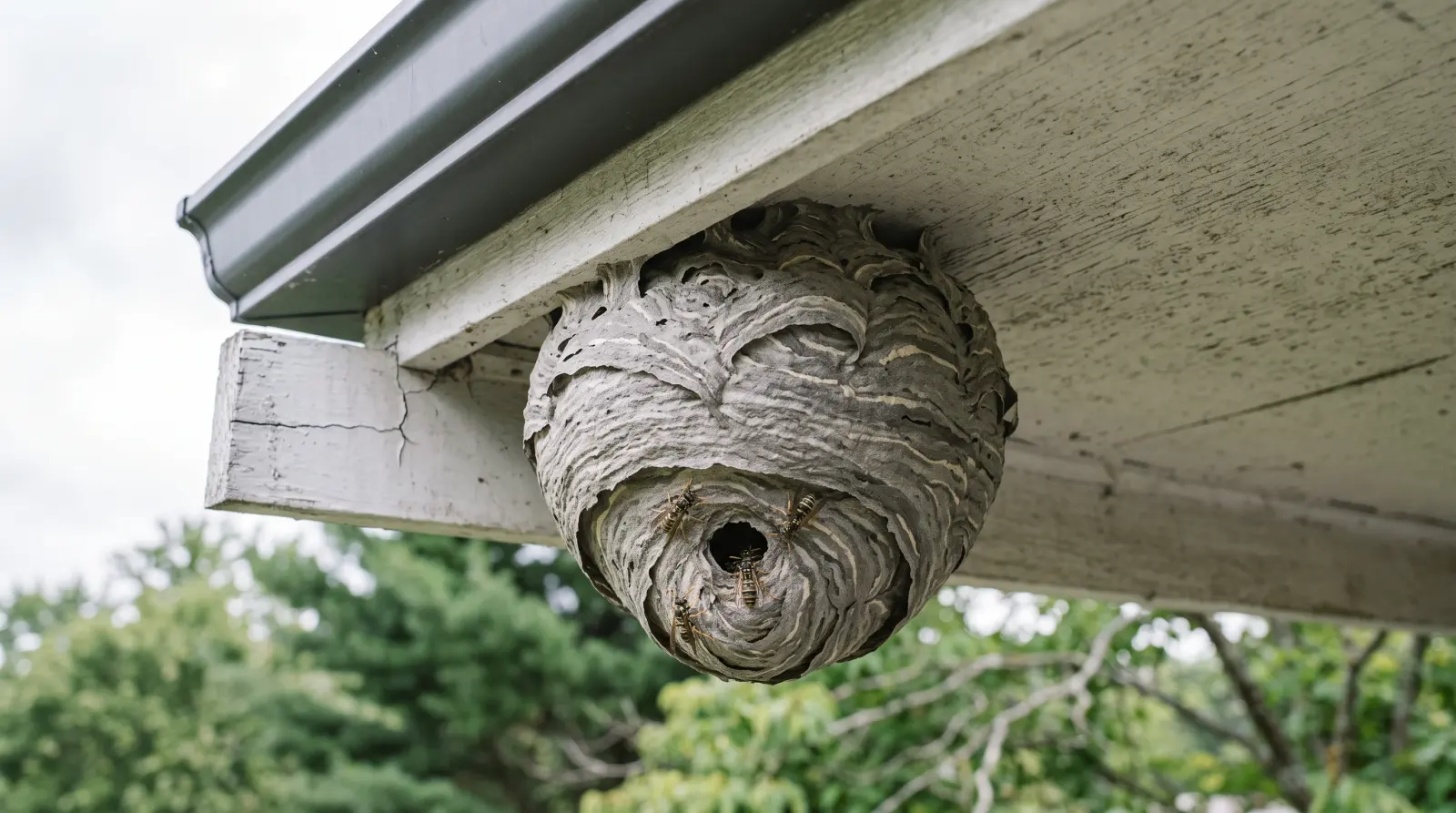
Exposed and reachable standing on the ground is one situation. Inside a wall, in the ground, or needing a ladder is a completely different one.
02
Does anyone here have a sting allergy?
A known allergy in the household takes DIY off the table entirely. There is no version of this job that is worth that risk.
03
What time of year is it?
Annual colonies die off with the first hard frosts and the nest is not reused. A late season nest in a quiet corner can often be left alone.
04
Then decide, and treat at dusk
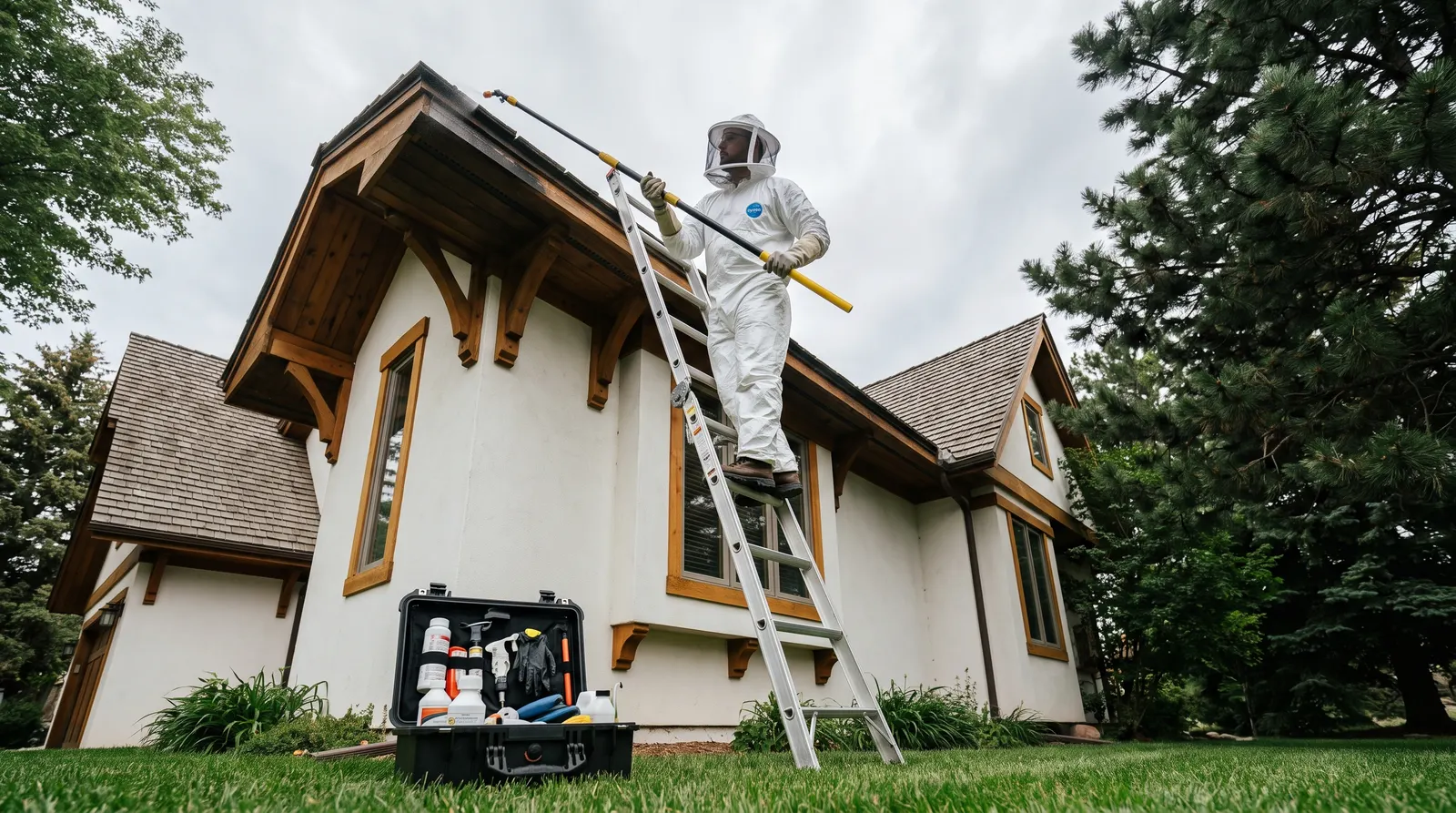
If it is a homeowner job, treat at dusk with a jet spray from a distance, in covering clothing, with a clear exit route behind you.
If someone is stung: the signs that mean 911
This belongs on a removal page because removal is when people get stung.
Call 911 for any of these
Difficulty breathing or wheezing. Swelling of the face, lips or tongue. Dizziness or fainting. A rash spreading well beyond the sting site. If the person has a known allergy and carries an epinephrine auto-injector, use it first and then call. A painful swelling that stays at the sting site is a normal local reaction, not anaphylaxis.
Our page on wasp and bee sting reactions covers the difference between a large local reaction and a systemic one in more detail.
Never plug the entrance of an interior nest
This is the single most useful instruction on the topic and it appears almost exclusively on university extension pages.
When wasps are entering a gap in siding, a soffit or a wall cavity, the instinct is to seal the hole. That drives the colony inward. Wasps will chew through plasterboard looking for another exit, which puts them inside the room rather than outside the wall.
Treat the nest first, confirm activity has stopped over a day or two, and seal the gap afterwards.
Which wasp nests a homeowner can treat
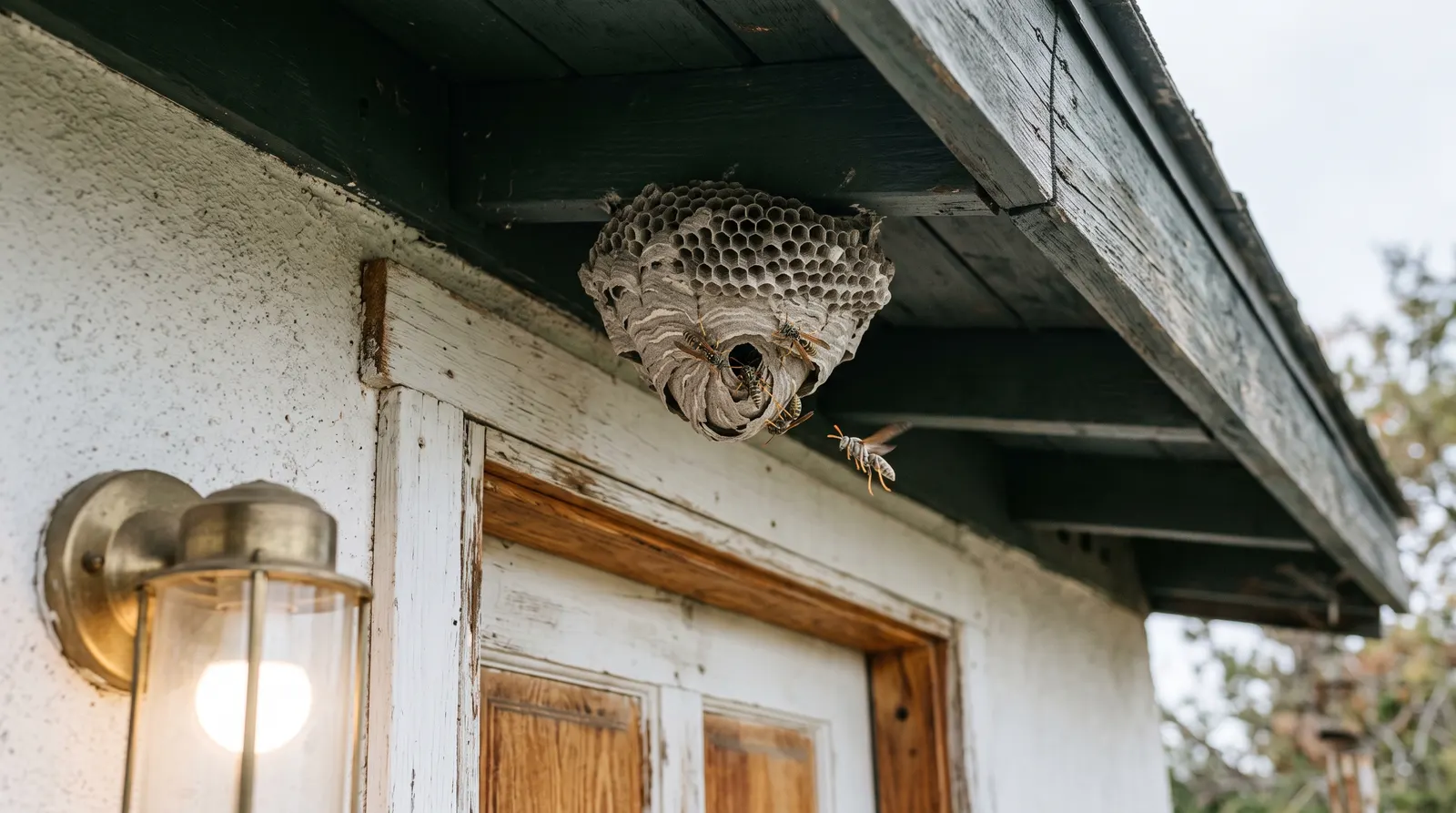
Reasonable: a small exposed nest under an eave, reachable standing on the ground, no allergy in the household.
Not reasonable: anything requiring a ladder, because a defensive colony and a ladder is a bad combination.
Not reasonable: ground nests, which produce a mass response with no easy retreat.
Not reasonable: nests inside a wall, soffit or roof void, where you cannot see what you are treating.
How professionals do it, and why at dusk
Timing is the part of the method that actually matters.
At dusk the colony is back in the nest and considerably less active, which means treating the whole population rather than the few that happened to be home. A jet spray delivers from several feet away rather than misting at close range, and the operator keeps a clear retreat behind them.
The nest is then left in place until activity has stopped, usually the following day, before it is removed.
Late season: the case for doing nothing
Will a wasp nest go away on its own?
Yes, at the end of the season. Annual colonies die off with the first hard frosts and the nest is never reused. A nest discovered in autumn in a low traffic corner can reasonably be left to die out on its own.
Nobody selling removal has a reason to tell you that, which is precisely why it belongs here. The nest becomes an empty paper structure that can be knocked down in winter with no risk at all.
Will they come back?
Not to that nest. Wasps do not reuse an old nest the following year.
What does happen is that a site which suited one queen suits another. A sheltered eave, a soffit gap or a quiet corner of a shed will attract a new colony next spring unless the access is closed. Removing the old nest and sealing gaps is what changes that.
Do not knock down a nest yourself or spray it at dusk without protection. Disturbed colonies sting en masse, and stings compound quickly.
DIY cost against professional cost
Indicative US ranges. Always get a written quote.
Job
Typical range
Notes
Professional removal, average
~$385
Most homeowners pay $212–$875
DIY equipment total
$57–$227
Suit is the bulk of it
Jet spray wasp killer
$3–$20
Distance matters more than brand
Wasp killer can
$4–$7
Consumer product, follow the label
Protective bee suit
$50–$200
The single largest DIY line
Source: Lawn Love 2026 wasp nest removal cost data, including DIY equipment costs (retrieved August 2026). Figures vary by region, severity and after-hours timing.
Figures last checked
The suit is the honest line in that table. Without it the DIY route looks very cheap, and with it the gap against a professional visit narrows considerably for a one-off job.
Emergency Services 24H is a referral service. We do not employ pest control technicians and we do not sell products.
Your request routes by ZIP code to licensed, insured technicians covering your area, and they contact you directly. If the honest answer for your nest is to leave it until the frosts, that is a fine outcome and it costs you nothing.
What homeowners actually ask
What people are asking
Drawn from real public forum threads and reported prices, summarised and attributed as patterns.
These are not reviews of this site, and no names or ratings have been invented.
“Can I remove a wasp nest myself?”
SourceA People Also Ask question on this SERP, sitting above ten pages that answer either the cost or the method but never both together.
“Will a wasp nest eventually go away?”
SourceAnother People Also Ask question, and the one with the most useful answer. Annual colonies die with the frosts and the nest is not reused the following year.
“Do not plug the interior opening of a nest inside a wall”
SourceGuidance carried by university extension services and almost no commercial page. Sealing the entrance drives wasps inward through plasterboard rather than out of the building.
1 / 3
The do-not-plug guidance is the clearest example of the gap between extension services and commercial pages. It is free, it prevents a genuinely bad outcome, and it is almost invisible on the first page of results.
Know the line
Safe to treat yourself, or call a professional?
Safe to check yourself
A small exposed nest reachable from the ground
No sting allergy anywhere in the household
Treating at dusk with a jet spray and covering clothing
Leaving a late season nest to die naturally
Sealing entry gaps after activity has stopped
Call a pro now
Any household with a known sting allergy
Ground nests and nests inside walls or soffits
Anything requiring a ladder
Large nests or repeated colonies in one location
Honey bee colonies, which need a beekeeper rather than a killer
24/7 dispatch network
Get a licensed pest control technician
Tell us where the nest is and whether anyone has a sting allergy, plus your ZIP code. Licensed, insured technicians covering your area will contact you directly. No obligation to hire.
Fire, a gas smell, or an injury? Leave the building and call 911 first, then your gas
utility or power company. Use this form once you are safe.
Straight answers
Frequently asked questions
The questions homeowners actually search for on this problem, answered in plain language.
Sometimes. A small exposed nest you can reach standing on the ground, in a household with no sting allergy, is a reasonable DIY job with a jet spray and protective clothing. Ground nests, cavity nests, anything needing a ladder, and any household with an allergy are professional work.
What kills wasp nests instantly?
Nothing genuinely kills a nest instantly. A jet spray wasp killer applied at dusk from a distance knocks down the colony over minutes to hours, which is why the nest is left in place and checked the following day rather than removed straight away.
Will wasps come back if you destroy their nest?
Not to the same nest, because annual colonies do not reuse one. A site that suited one queen frequently suits another the following spring, so removing the old nest and sealing gaps in soffits and siding reduces the chance of a repeat.
What should I do if I am stung and feel unwell?
Difficulty breathing, swelling of the face or throat, dizziness or a rash spreading beyond the sting site means call 911. If you have a known allergy and an epinephrine auto-injector, use it first and then call. A local reaction that stays local is not anaphylaxis.
Should I plug the hole where wasps are getting into my wall?
No. Sealing the entrance of a nest inside a wall or soffit drives the colony inward, and wasps will chew through plasterboard looking for another way out. Treat the nest first, confirm activity has stopped, and seal the gap afterwards.
How much does wasp nest removal cost?
Professional removal averages about $385 nationally, with most homeowners paying between $212 and $875 depending on nest location and access. DIY equipment including a protective suit totals roughly $57 to $227, and the suit is the bulk of that.
What professional removal looks like
Nest siting and traffic
Removing the nest without sealing the entry point invites a new colony next season. Ask for the exclusion work in the same quote.
Tell us what has failed and where you are. We route your request to licensed, insured contractors covering your ZIP code, and they contact you directly.
Fire, a gas smell, or an injury? Leave the building and call 911 first, then your gas
utility or power company. Use this form once you are safe.