Wasp sting: telling a normal reaction from an emergency
Almost every sting produces pain, redness and swelling where it happened. The question that matters is whether anything is happening anywhere else.
A wasp sting normally produces immediate pain, redness and swelling at the site, and that resolves within a day or two. The line that decides everything else is whether symptoms appear away from the sting: breathing difficulty, facial or throat swelling, dizziness or a spreading rash mean a 911 call.
The signs that mean call 911 now
Systemic reaction: emergency care
Difficulty breathing or wheezing. Swelling of the face, lips or tongue. Dizziness, light-headedness or fainting. A rash or hives spreading across the body. Nausea or vomiting alongside any of the above. Any one of these means call 911 rather than watching to see whether it settles.
Speed matters because anaphylaxis progresses. The decision is made on the symptoms present now, not on how the person felt after the last sting.
In the first sixty seconds
Four steps in the right order
01
Check for symptoms away from the sting
Breathing difficulty, facial or throat swelling, dizziness or a spreading rash. Those are systemic signs and they mean emergency care rather than an ice pack.
02
Known allergy? Auto-injector first
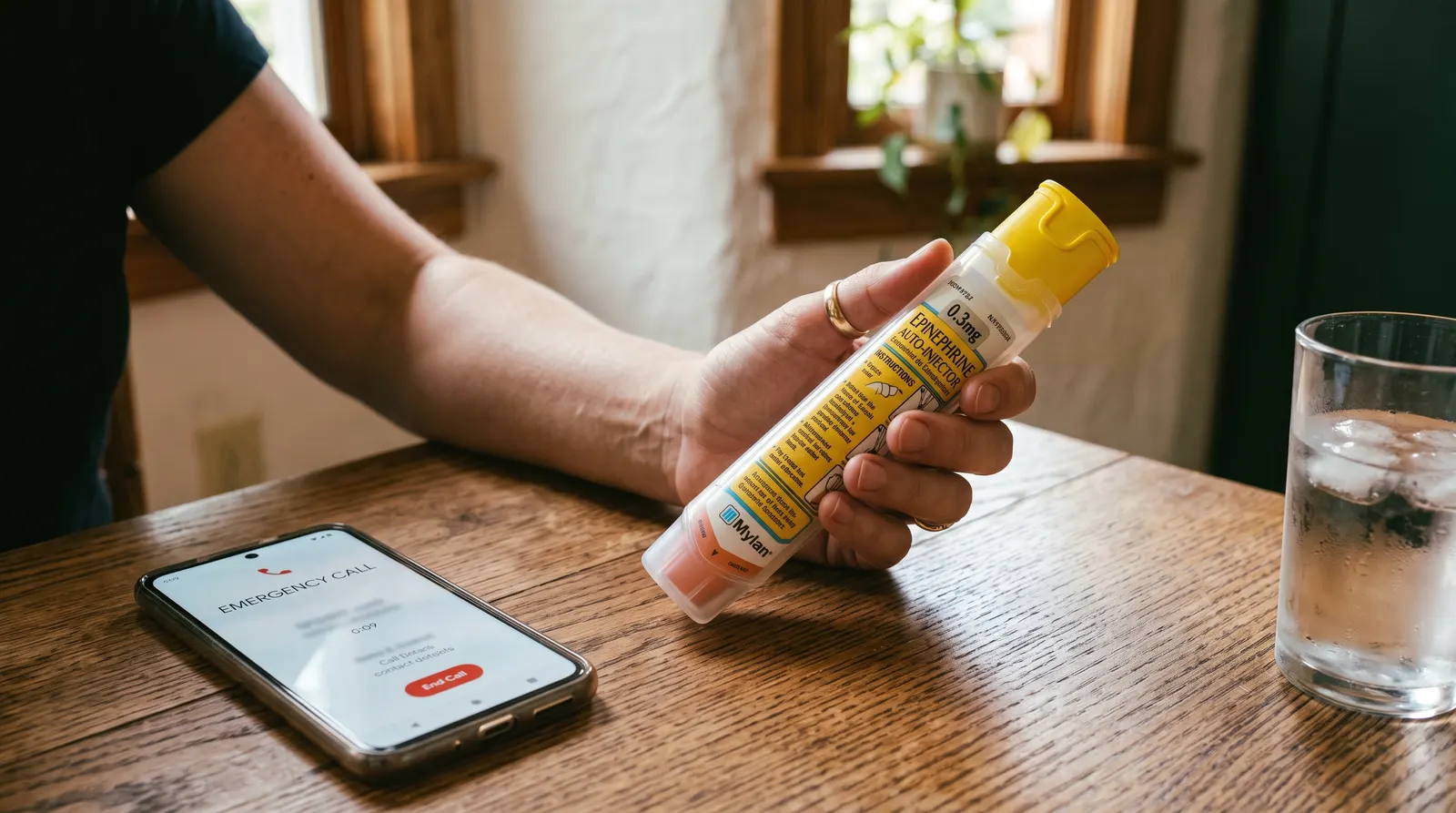
Use the epinephrine auto-injector immediately, then call 911. Do not wait to see whether the reaction progresses, because progression is the risk.
03
Otherwise, treat it locally
Wash with soap and water, cold compress for pain and swelling, and an oral antihistamine for itching if that is appropriate for you.
04
Then deal with the nest
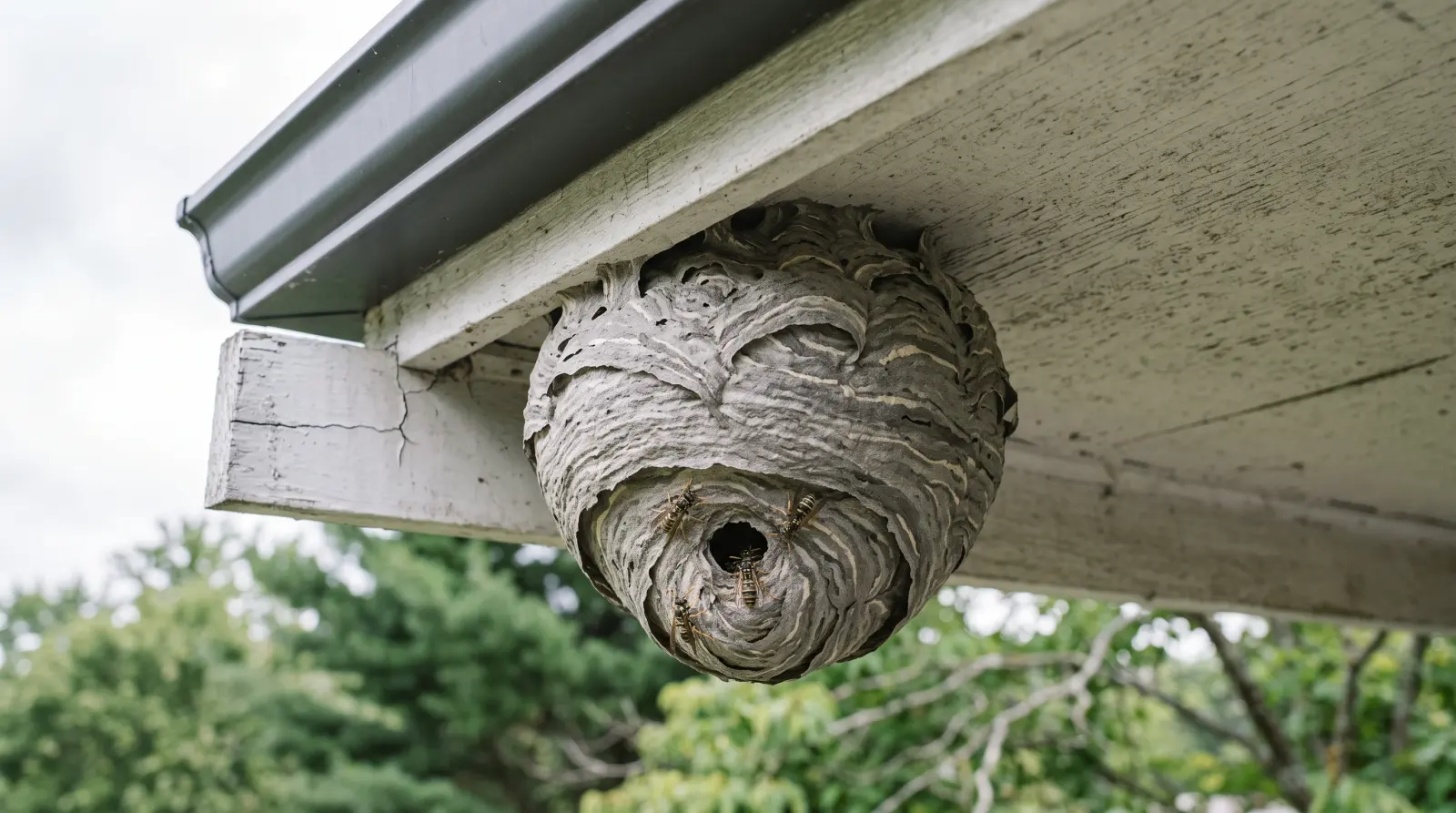
A sting means an active nest nearby. If anyone in the household has an allergy, that is a professional job rather than a weekend one.
If you have a known allergy
What comes first, the auto-injector or the phone?
The auto-injector. Use it immediately, then call 911. Waiting to see whether symptoms progress is the mistake the device exists to prevent, and a second dose is sometimes needed before help arrives.
Tell someone nearby what has happened, so they can act if you become unable to. Anyone who has been prescribed an auto-injector has been prescribed it for this exact moment.
Local, large local, or systemic?
Most confusion about stings comes from these three being described as one thing.
Local: pain, redness and swelling at the sting site, peaking within hours and settling in a day or two.
Large local: swelling spreading several inches over a day or two, uncomfortable and alarming, and still not anaphylaxis.
Systemic: symptoms away from the sting site, which is the emergency and the only category that changes what you do.
Location of symptoms is the test rather than severity of pain. A very painful sting on a finger is still local.
Treating a normal wasp sting at home
The majority case is straightforward and does not need much.
Wash the area with soap and water. Apply a cold compress to reduce pain and swelling. An oral antihistamine can help with itching if that is appropriate for you. Keep an eye on it over the next hour, mainly to confirm nothing is developing elsewhere.
Wasps do not usually leave a stinger
Generic sting advice starts with removing the stinger, which is bee advice applied to everything.
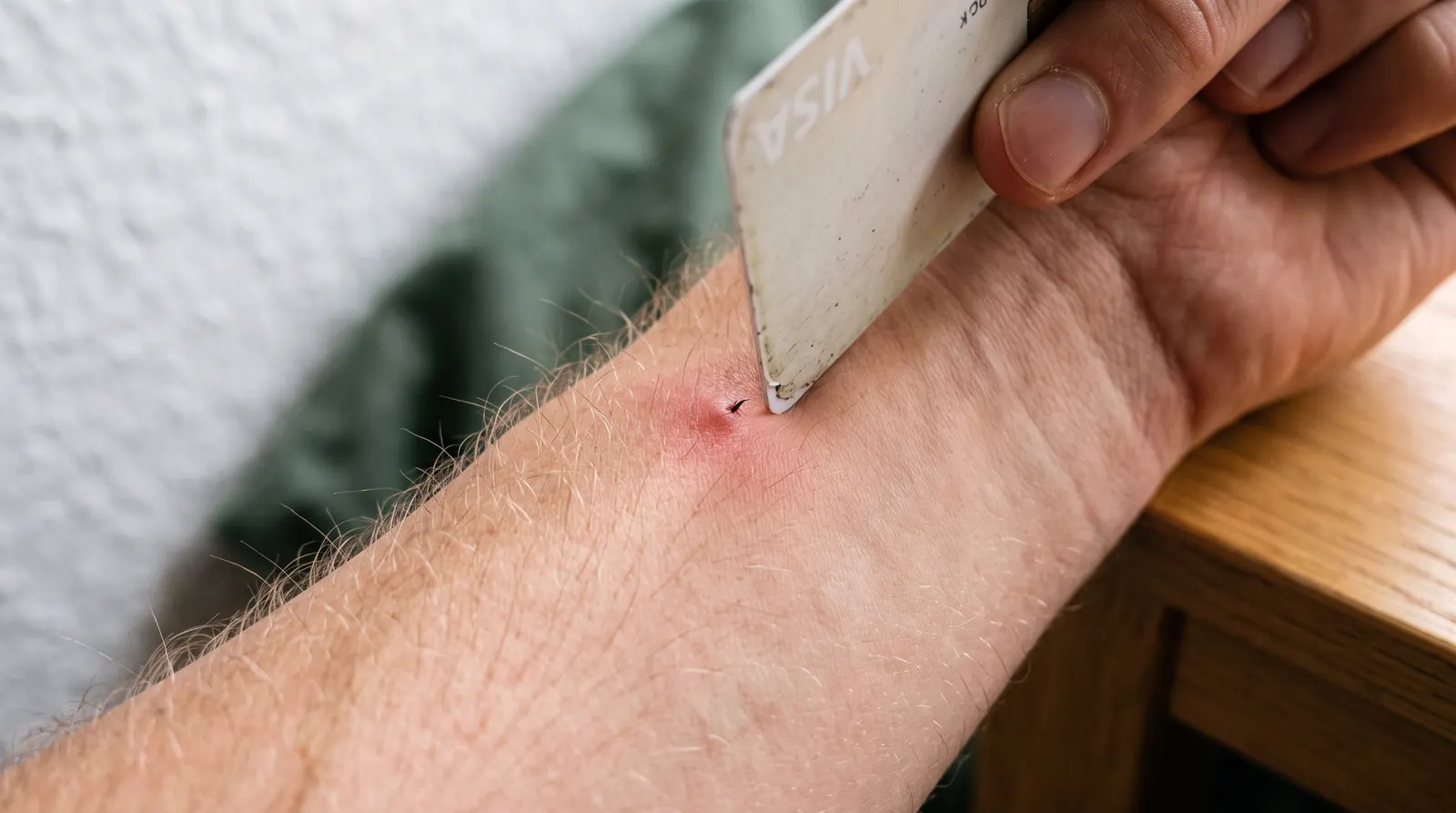
Honey bees have a barbed stinger that detaches and stays in the skin. Wasps and hornets do not, which is also why they can sting repeatedly. If a stinger is present, scrape it out sideways with a card edge rather than pinching it, which can compress the venom sac.
Multiple stings in one incident
Venom load matters on its own
A disturbed nest can deliver dozens of stings within seconds, and that is a different situation from a single sting regardless of whether anyone is allergic. Seek medical advice after a multiple sting incident even if the person feels well, particularly for children and older adults.
Am I allergic now?
This is the question people carry away from the incident, and the honest answer is that a web page cannot tell you.
A mild reaction previously does not guarantee a mild reaction next time. Allergy testing and an action plan come from a clinician, and that conversation is worth having after any reaction that worried you rather than after the one that lands you in hospital.
Now deal with the nest
A sting incident means an active colony within a short distance, and leaving it improves nothing.
If anyone in the household has a sting allergy, DIY removal is off the table entirely. Otherwise our page on wasp nest removal covers the three questions that decide whether it is a homeowner job.
Anaphylaxis is a 911 call and an auto-injector, immediately, in that order. Do not wait to see whether symptoms progress; they progress fast.
What dealing with the nest costs
Indicative US ranges. Always get a written quote.
Job
Typical range
Notes
Professional nest removal, average
~$385
Most homeowners pay $212–$875
DIY equipment total
$57–$227
Not an option with an allergy present
Protective bee suit
$50–$200
The largest DIY line item
Jet spray wasp killer
$3–$20
Distance matters more than brand
Source: Lawn Love 2026 wasp nest removal cost data, including DIY equipment costs (retrieved August 2026). Figures vary by region, severity and after-hours timing.
Figures last checked
The second row disappears entirely if there is an allergy in the household. That is not a cost decision, it is a safety one.
How the matching works, and what we do not do
Emergency Services 24H is a referral service. We do not employ pest control technicians, we do not treat properties, and nothing on this page is medical advice.
Your request routes by ZIP code to licensed, insured technicians covering your area, and they contact you directly. For the sting itself, emergency services and your own clinician are the authority.
What homeowners actually ask
What the SERP covers and what it does not
Drawn from real public forum threads and reported prices, summarised and attributed as patterns.
These are not reviews of this site, and no names or ratings have been invented.
“What is the best thing to do for a wasp sting?”
SourceA People Also Ask question on this SERP. The ranking answers cover home treatment thoroughly and the emergency threshold barely at all.
“Wasp stings can be fatal”
SourceA phrase that appears across the health publishers ranking for this term, generally without the protocol that would follow from it. That gap is what this page fills.
“A sting incident usually means an active nest within a short distance”
SourceThe practical follow-on that health pages do not make and pest pages do not connect to symptoms. Both halves belong in the same place.
1 / 3
Health publishers cover the sting and never the nest. Pest companies cover the nest and never the sting. A person who has just been stung needs both in one place.
Know the line
Treat at home, or seek care?
Safe to check yourself
Pain, redness and swelling at the sting site only
Swelling that peaks within hours and starts settling
Itching that responds to a cold compress
A single sting in a person with no known allergy
Normal breathing and no symptoms elsewhere
Call a pro now
Any difficulty breathing or throat tightness
Swelling of the face, lips or tongue
Dizziness, fainting or a spreading rash
Multiple stings in one incident
Any sting inside the mouth or throat
24/7 dispatch network
Get the nest dealt with properly
Tell us where the nest is and whether anyone in the household has a sting allergy, plus your ZIP code. Licensed, insured technicians covering your area will contact you directly. No obligation to hire.
Fire, a gas smell, or an injury? Leave the building and call 911 first, then your gas
utility or power company. Use this form once you are safe.
Straight answers
Frequently asked questions
The questions homeowners actually search for on this problem, answered in plain language.
When symptoms appear away from the sting site. Difficulty breathing, wheezing, swelling of the face, lips or tongue, dizziness, fainting, or a rash spreading across the body all indicate a systemic reaction and require a 911 call rather than a wait-and-see approach.
What should I do if I know I am allergic?
Use your epinephrine auto-injector immediately and then call 911, rather than waiting to see whether the reaction progresses. Tell someone what has happened so they can act if you cannot. A second dose is sometimes needed before help arrives.
How long does normal swelling last?
A typical local reaction peaks within a few hours and settles over a day or two. A large local reaction can spread several inches and take up to a week, which is uncomfortable but is not the same as anaphylaxis. Symptoms away from the sting site are the dividing line.
Do I need to remove a stinger after a wasp sting?
Usually not. Wasps and hornets can sting repeatedly and rarely leave a stinger behind. Honey bees do leave a barbed stinger, and if one is present it should be scraped out sideways rather than pinched, which can squeeze more venom in.
I was stung several times. Should I see someone?
Yes, seek medical advice after a multiple sting incident even if you feel fine. Venom load matters independently of allergy, and a disturbed nest can deliver dozens of stings in seconds. That is a different situation from a single sting on an arm.
What should I do about the nest?
Deal with it, because a sting incident means an active nest close by. If anyone in the household has a sting allergy, that takes DIY removal off the table entirely. Professional removal averages about $385, with most homeowners paying $212 to $875.
Removing a stinger correctly
When it is anaphylaxis
Removing the source is the only durable fix once someone in the household has had a significant reaction.
Tell us what has failed and where you are. We route your request to licensed, insured contractors covering your ZIP code, and they contact you directly.
Fire, a gas smell, or an injury? Leave the building and call 911 first, then your gas
utility or power company. Use this form once you are safe.