Garage door off track: what to do before anyone touches it
The instruction that matters is not how to push it back. It is to stop the opener driving it, because that is what turns a small repair into a large one.
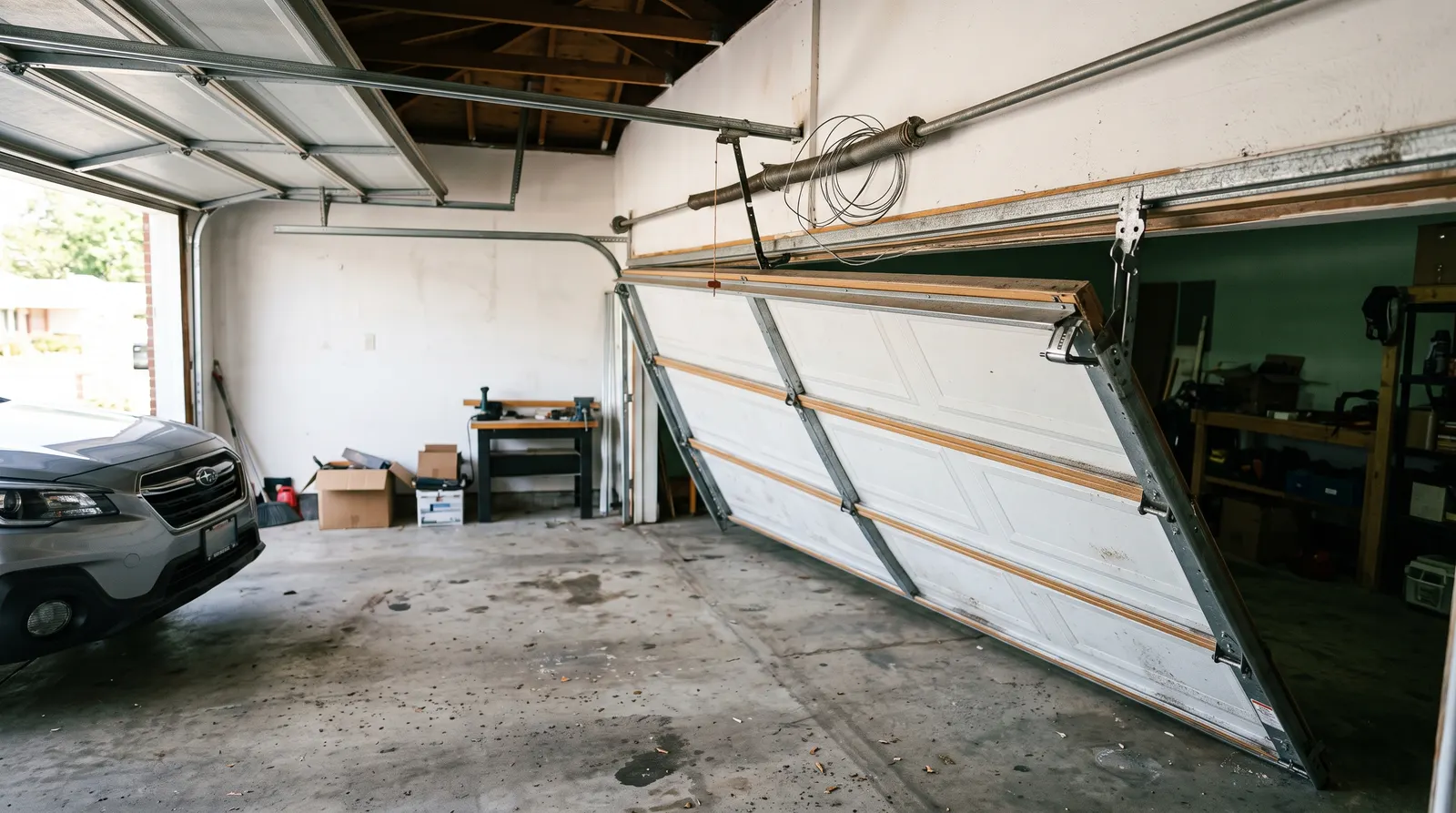
A garage door off track has one or more rollers out of the rail, leaving its weight on the remaining rollers and cables under uneven load. The first action is disconnecting the opener, because a motor driving a jammed door bends track and tears brackets within seconds.
Disconnect the opener first
Every ranking page for this query opens with a list of causes. The causes matter in ten minutes. The opener matters now.
Pull the red emergency release cord so the motor is physically disconnected from the door. If the opener has already been running against the jam, unplug it as well, because the wall button is easy to press by reflex.
Four steps, in this order
What to do in the first five minutes
01
Disconnect the opener
Pull the red emergency release so the motor cannot drive the door. Running an opener against a jammed door bends track sections and tears brackets off the panels.
02
Stand clear and stop
The weight is now carried by fewer rollers and cables than the system was designed around, and the load is uneven. A door hanging at an angle is not stable.
03
Work out what caused it
A vehicle impact, a worn roller, a bent track, or a snapped lift cable. The cable case is the one that gets misdiagnosed as a roller problem.
04
Judge honestly whether to touch it
A single roller out on a light door is sometimes recoverable. A skewed door, a bent rail or a broken cable is a technician job and not a close call.
Why a garage door off track can fall
What makes this different from a door that simply will not open?
The load path has changed. A door running true spreads its weight across rollers on both sides and two lift cables. Off track, that weight concentrates on whatever is still engaged, which is why one section coming out often pulls the next one with it.
That is the mechanical reason to stand to the side rather than underneath, and to resist the instinct to grab the panel and heave.
What caused it, in order of likelihood
Vehicle impact. Obvious once admitted, and frequently admitted late. Look for a dented panel at bumper height.
Worn or broken rollers. The stem wears, the wheel wobbles, and eventually it jumps the rail.
A snapped lift cable. One side drops and the door skews, which looks like a roller problem and is not.
A bent track section. Often the result of an earlier impact that nobody dealt with.
An opener forcing the door against an obstruction, which the force settings are supposed to prevent.
The cable case, which is different
This is the distinction the SERP merges and it changes both the risk and the repair.
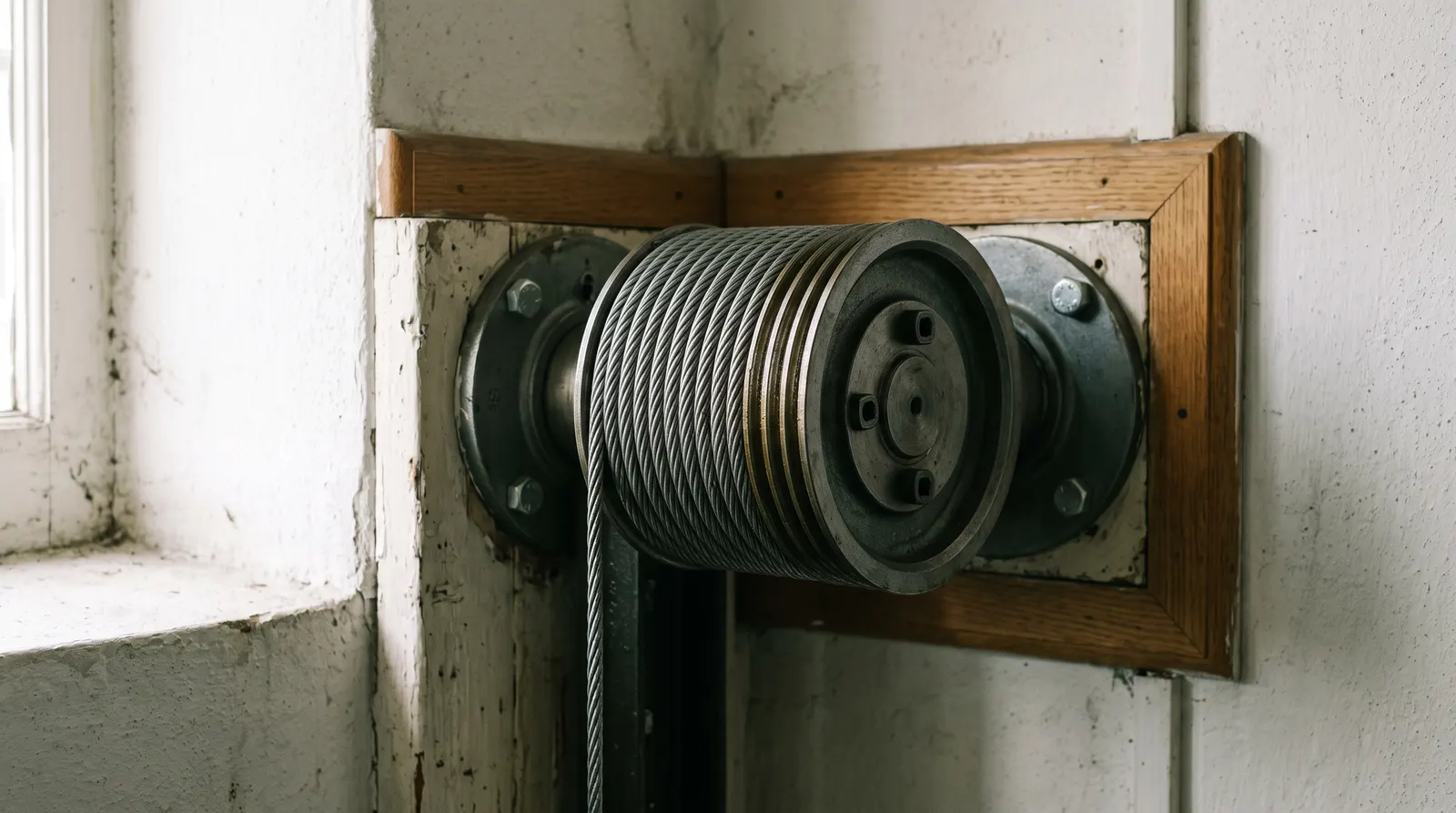
A lift cable running from the bottom bracket to the drum carries one side of the door. When one snaps, that side drops and the door skews across the opening. Rollers come out of the track as a consequence rather than as the cause.
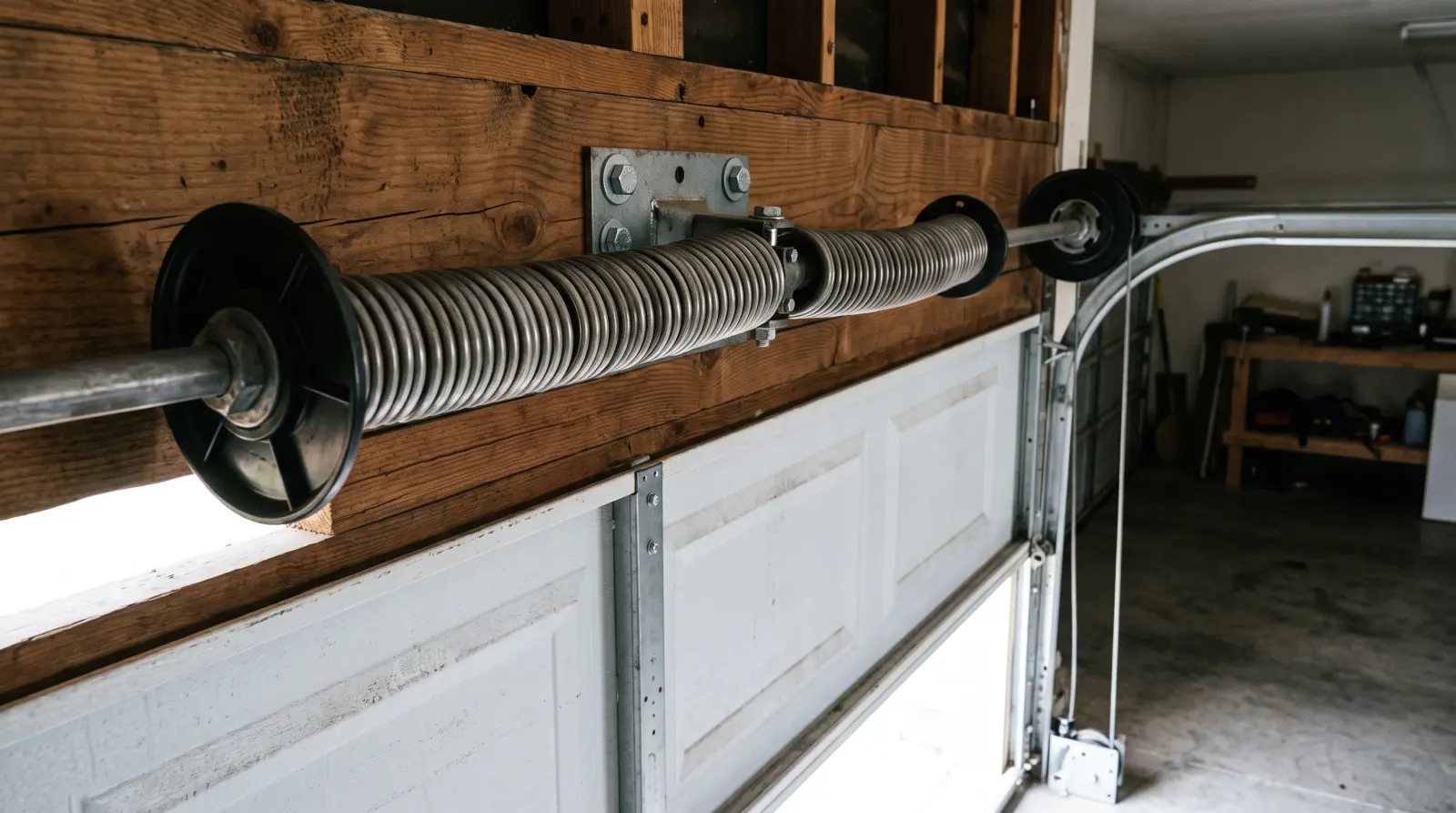
Crucially, the spring system is still under tension. That makes it a cable and balance job rather than a re-track, and it is firmly professional work. Our page on a broken garage door spring covers the related failure.
Can you push it back yourself?
Sometimes, and the honest answer depends on what you are looking at.
A single roller out of the rail on a light single door, with everything else intact and the door sitting square, is occasionally recoverable by easing the roller back in with the door supported. If it goes back with light pressure and the door then runs true, that is a genuine fix.
Stop if any of these apply
The door is sitting crooked. A cable has come off its drum or snapped. A track section is visibly bent. The door will not move evenly when pushed by hand. Any of those means the load is uneven and getting under it to correct the alignment is how people are injured.
Why running the opener makes it worse
Opener force settings are calibrated to a door running true in its track, which is also what the federal safety standard assumes.
With the door jammed, the opener pulls against a fixed obstruction until the force limit trips, and repeated attempts bend the rail, deform track sections and tear the top bracket out of the panel. Every one of those is a line on the invoice that did not need to be there.
What the repair visit involves
Knowing the sequence makes the quote readable and the visit shorter.
The technician supports the door, guides the rollers back into the track, and straightens or replaces any bent sections. Then cables and drums are checked, worn rollers replaced while access is easy, and the door rebalanced before the opener is reconnected and its force settings tested.
Stop using the opener immediately. Running a derailed door tears panels, bends track and turns a repair into a replacement.
What this repair costs
Indicative US ranges. Always get a written quote.
Job
Typical range
Notes
Re-tracking a single roller
lower end of garage door repair
Where nothing else is bent or broken
Roller replacement set
inexpensive parts, quick labour
Worth doing while the door is already down
Track section replacement
moderate parts and labour
Where a section is bent beyond straightening
Lift cable replacement
moves toward spring pricing
Spring system involvement raises the job
Torsion spring replacement, for comparison
$300–$540 installed
If the cause was a spring failure
Source: This Old House 2026 garage door spring cost data and HomeGuide garage door repair benchmarks, with track and roller costs stated qualitatively where no published figure exists (retrieved August 2026). Figures vary by region, severity and after-hours timing.
Figures last checked
The jump between the second and fourth rows is the whole reason to identify the cause before booking. A roller job and a cable job are different repairs with different prices.
How the matching works, and what we do not do
Emergency Services 24H is a referral service. We do not employ garage door technicians and we do not sell parts.
Your request routes by ZIP code to licensed, insured technicians covering your area, and they contact you directly. A photograph of how the door is sitting helps them arrive with the right parts.
What homeowners actually ask
What people are asking
Drawn from real public forum threads and reported prices, summarised and attributed as patterns.
These are not reviews of this site, and no names or ratings have been invented.
“How much does it cost to fix a garage door that is off track?”
SourceA People Also Ask question that appears twice on this SERP, above ten ranking pages that are almost entirely installer sites with no pricing at all.
“Garage door off track and crooked”
SourceA related search that describes the cable failure case precisely. A door sitting crooked is a different diagnosis from one where a single roller has jumped the rail.
“What would cause a garage door to come off track?”
SourceA People Also Ask question on the same SERP. The ranking answers list causes without separating the ones that are safe to correct from the ones that are not.
1 / 3
The crooked-door search is the useful signal here. People can see the difference between a door that has slipped and a door that is hanging wrong, and the second one is the cable case.
Know the line
Safe to attempt, or call a technician?
Safe to check yourself
Pulling the emergency release and unplugging the opener
Photographing how the door is sitting
Clearing whatever obstructed the track
Easing a single roller back on a light, square door
Checking the other rollers for wear while you are there
Call a pro now
A door sitting crooked or skewed
Any snapped or slipped lift cable
A visibly bent track section
Panels damaged by a vehicle impact
Anything involving the springs or the shaft
24/7 dispatch network
Get a licensed garage door technician
Tell us how the door is sitting and whether a cable has come off, plus your ZIP code. Licensed, insured technicians covering your area will contact you directly. No obligation to hire.
Fire, a gas smell, or an injury? Leave the building and call 911 first, then your gas
utility or power company. Use this form once you are safe.
Straight answers
Frequently asked questions
The questions homeowners actually search for on this problem, answered in plain language.
What should I do first if my garage door is off track?
Pull the emergency release so the opener cannot drive the door, then leave it alone. Running the opener against a door that is off track bends track sections and tears brackets, which turns a straightforward re-track into a much larger repair.
What causes a garage door to come off track?
Vehicle impact, worn or broken rollers, a bent track section, a snapped lift cable, or an opener forcing the door against an obstruction. The cable case is the one that most often gets misdiagnosed, because it looks like a roller problem and is not.
Can I put a garage door back on track myself?
Sometimes, if a single roller has jumped out on a light door and everything else is intact. If the door is skewed, the track is bent, or a cable has snapped, stop. The door is under uneven load and it can drop further as you move it.
Is a door off track dangerous?
Yes. The weight is being carried by fewer rollers and cables than the system was designed around, and the load is uneven. That is why doors off track can pull further out of the rail while someone is trying to correct them. Stand clear rather than underneath.
How much does it cost to fix a garage door off track?
Roller and track work sits at the lower end of garage door repair pricing. Once cables or springs are involved, expect the figure to move toward spring replacement territory, which runs roughly $300 to $540 installed for torsion springs.
Will the door need replacing?
Usually not. Panels dented by an impact may need replacing individually, and badly bent track sections get swapped out, but a door that came off track because of a worn roller is normally back in service the same visit.
A panel jumped out of the track
Cable drum and lift cable
If the door came off track because a cable snapped, fixing the track alone leaves the cause in place.
Sources for this page
U.S. Federal Register: Safety Standard for Automatic Residential Garage Door Operators, 16 CFR 1211 (UL 325, 7th ed.)
Tell us what has failed and where you are. We route your request to licensed, insured contractors covering your ZIP code, and they contact you directly.
Fire, a gas smell, or an injury? Leave the building and call 911 first, then your gas
utility or power company. Use this form once you are safe.