How to open garage door manually, without hurting yourself
The red cord disconnects the door from the opener. Whether that is helpful or dangerous depends entirely on one thing: where the door is when you pull it.
How to open a garage door manually comes down to one cord and one rule. The red emergency release disconnects the door from the opener so it moves by hand, and it should only ever be pulled with the door fully closed, because a door with a failed spring is held up by nothing else.
Before you pull anything: is the door fully down?
This is the rule that most guides mention in passing and some omit entirely.
When the springs are working, the door is balanced and stays where you leave it. When a spring has failed, the door weighs its full weight and the opener carriage is the only thing holding it in a raised position. Disconnecting at that moment is how people get hurt.
Close it first if the opener still runs
If the opener works but you want manual control, run the door down first and then pull the cord. If the opener has already failed with the door part way up, do not pull the release. Call a technician and leave it where it is.
Four steps, in this order
Using the emergency release safely
01
Get the door fully closed first
If the opener still works, close it before you pull anything. Releasing a partly open door removes the only thing holding its weight when a spring has failed.
02
Find the red cord
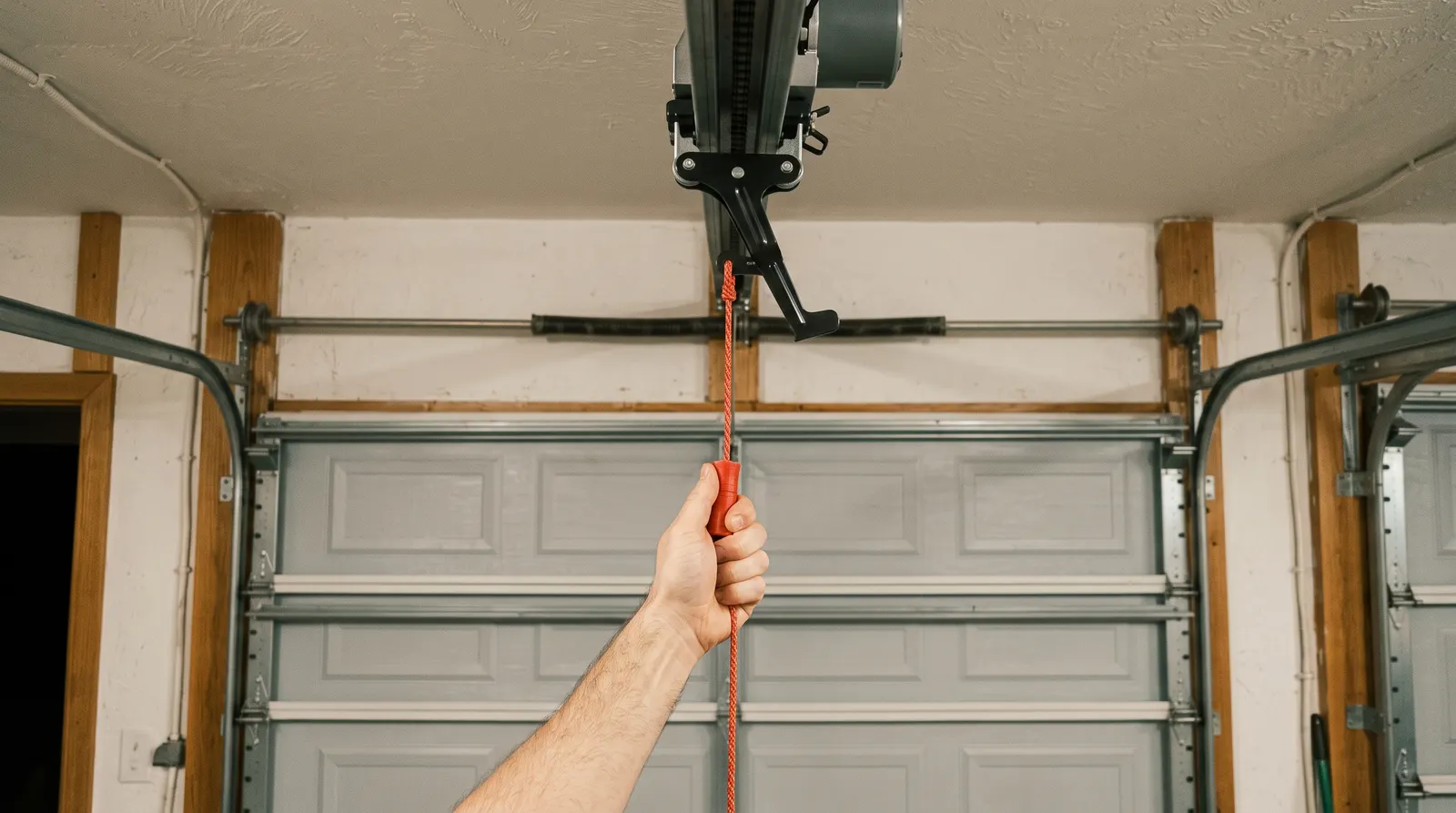
It hangs from the trolley on the opener rail, usually a red handle on a short cord roughly in the middle of the garage.
03
Pull down and toward the door
That disconnects the trolley from the carriage. The door is now free to move by hand, which is helpful or alarming depending on the spring.
04
Lift evenly, and stop if it is heavy
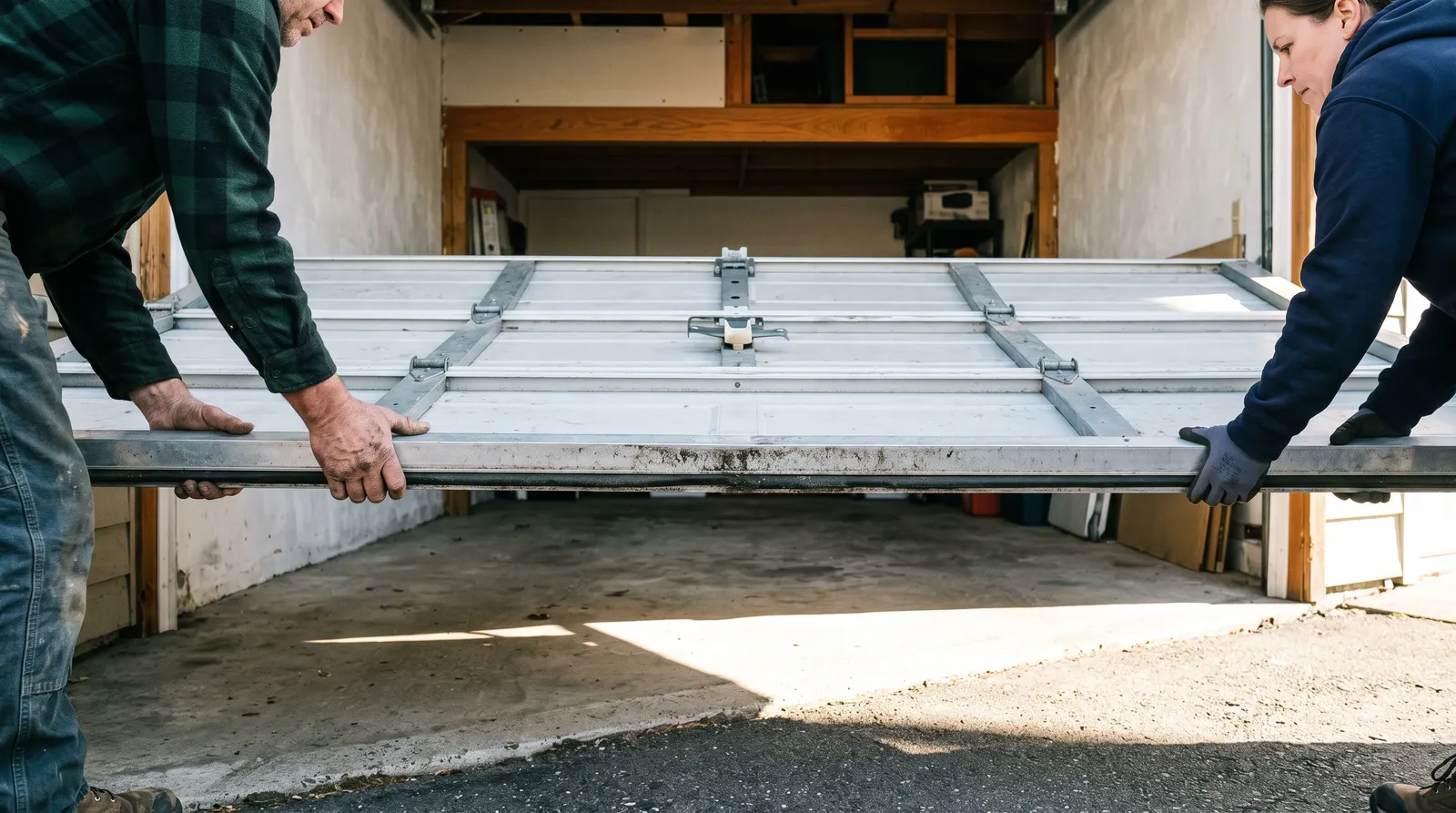
Both hands at the bottom, lifting straight up. If it feels heavy, rises crooked or slides back down, lower it fully and leave it.
Where the emergency release is and what it does
What does the red cord actually do?
It disconnects the trolley from the opener carriage, which separates the door from the motor. The door then moves freely by hand. It does not unlock the door, it does not disable the opener, and it does not affect the springs.
You will find it hanging from the rail roughly in the middle of the garage, usually a red plastic handle on a short cord. Every residential opener has one, because being able to move the door in a power cut is a design requirement.
That cord is the whole answer to how to open garage door manually, and the rest of this page is about doing it without getting hurt.
How to open garage door manually from inside
Pull the cord down and toward the door until the trolley clicks free.
Lift from the bottom with both hands, evenly, standing to one side rather than directly underneath.
Watch how it moves. A balanced door rises easily and stays where you leave it.
Stop immediately if it is heavy, rises crooked, or slides back down when released.
How heavy is it really?
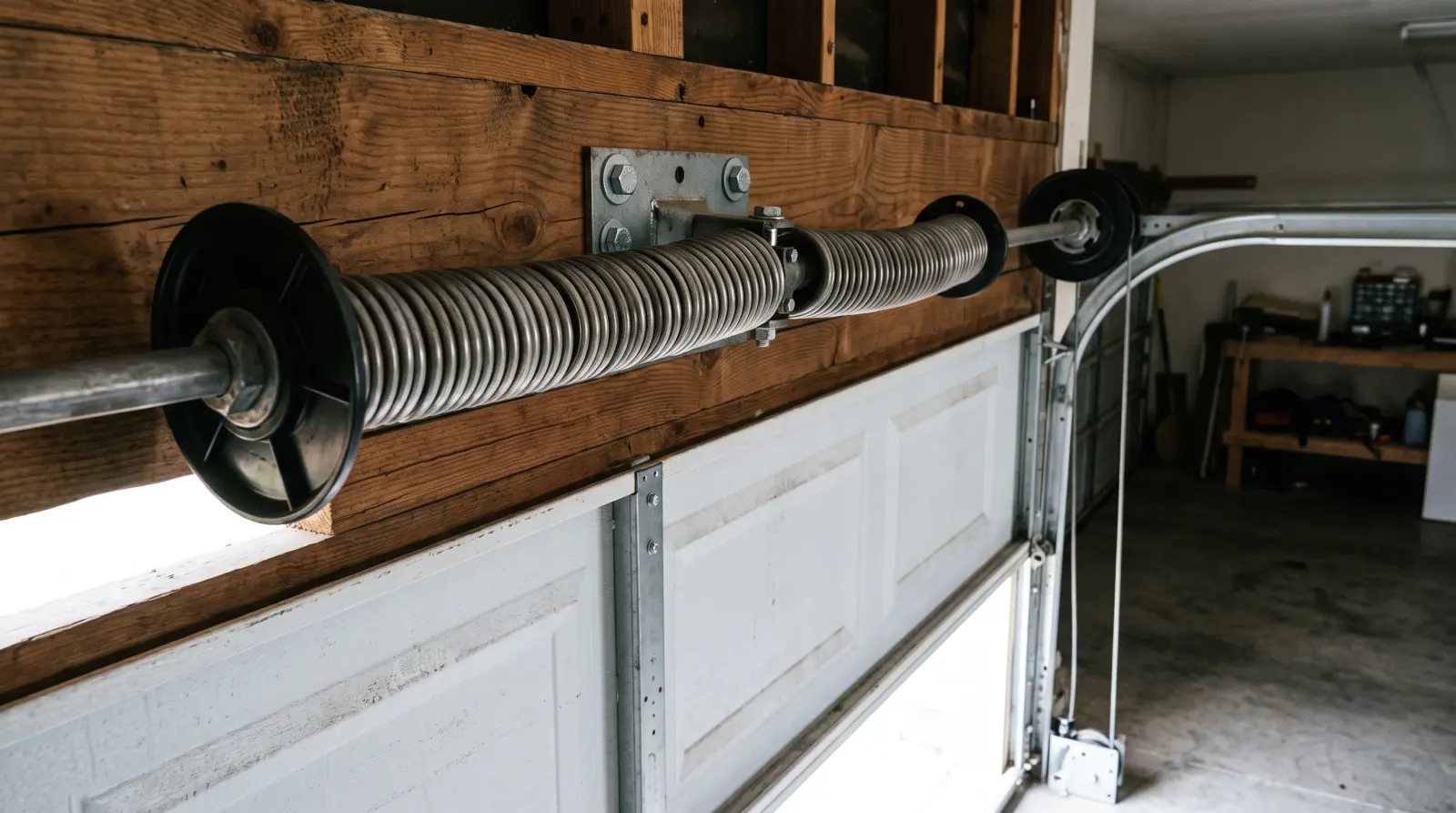
A working garage door feels light because the springs are doing almost all of the lifting. That feeling is the spring system, not the door.
Remove the counterbalance and you are lifting the whole assembly. On a single door that is awkward. On an insulated double door it is a genuine two person job, and one where a slip means the door coming down on whatever is beneath it.
Our page on a broken garage door spring covers how to confirm that is what you are dealing with before you try.
Getting in from outside, honestly
Can you open a garage door manually from outside?
Only with an exterior emergency release kit fitted, which is a keyed lock on the door face connected by cable to the internal release. Most residential doors do not have one, and without it there is no safe way in from outside.
The related searches for how to open garage door manually are dominated by the outside case, and the ranking pages mostly answer as though every door has a kit. Most do not.
If yours does not, the route in is a side door into the garage, or the internal door from the house. That is the honest answer, and it is worth knowing before you spend twenty minutes on a YouTube video that assumes hardware you do not have.
The security trade-off of an outside release
An exterior release is a deliberate weak point in the building envelope, and that is the whole discussion.
Kits vary considerably in how well they resist tampering, and a garage that connects directly into the house is a different risk calculation from a detached one. Weigh the convenience of getting in during a power cut against how the garage relates to the rest of the property.
A battery backup opener is the alternative that solves the power cut case without creating an external access point.
Re-engaging the opener afterwards
Most guides say to run the opener and leave it there. The detail is worth having.
Move the door back to fully closed, then run the opener. The carriage travels along the rail and re-latches onto the trolley as it passes, and you will usually hear it. On some models you pull the same cord back toward the motor unit first to reset the latch mechanism.
Test a full cycle afterwards before you rely on it.
If the door will not stay up
A door that slides back down when you let go is unbalanced or spring-failed, and it should not be left raised.
Lower it fully and leave it closed until a technician has been.
Do not prop it with a ladder, a broom or a car jack. Anything that can shift will.
Do not park under it while it is in that state.
Do not re-engage the opener and keep using it, because the gear set pays for that.
Only pull the release with the door fully closed. Releasing a partly open door lets it fall, and a sectional door is heavy enough to injure.
What the underlying fault costs
Indicative US ranges. Always get a written quote.
Job
Typical range
Notes
Using the emergency release
no cost
Standard equipment on every opener
Exterior release kit, fitted
low-cost hardware
Only useful if fitted before you need it
Battery backup opener
part of a new opener
The real answer to power cuts
Torsion spring replacement
$300–$540 installed
Average around $420, pair recommended
Opener replacement
$300–$900 installed
Chain $250–$400, belt $270–$550
Source: This Old House 2026 garage door spring cost data and HomeGuide garage door opener installation cost data (retrieved August 2026). Figures vary by region, severity and after-hours timing.
Figures last checked
Manual operation is a workaround rather than a fix. The rows below the first two are what actually resolves the situation that sent you looking for the cord.
How the matching works, and what we do not do
Emergency Services 24H is a referral service. We do not employ garage door technicians and we do not sell openers or release kits.
Your request routes by ZIP code to licensed, insured technicians covering your area, and they contact you directly. If the door is stuck part way up, say so when you submit, because that changes the urgency.
What homeowners actually ask
What people are actually asking
Drawn from real public forum threads and reported prices, summarised and attributed as patterns.
These are not reviews of this site, and no names or ratings have been invented.
“How to open a garage door from the outside when there is no power?”
SourceA People Also Ask question on this SERP, alongside several related searches on the same theme. The honest answer, which the ranking pages avoid, is that most doors have no way in from outside.
“How do I get my garage door out of manual mode?”
SourceA People Also Ask question that follows directly from the first. Re-engaging is a step most guides describe in one vague sentence.
“Garage door spring snapped in half. Seeking advice”
SourceThread title, r/HomeImprovement. Relevant here because a manual lift with a broken spring is exactly the situation this page exists to talk people out of.
1 / 3
The outside-access questions dominate this search, and answering them honestly means saying that most doors cannot be opened from outside without hardware that was fitted in advance.
Know the line
Safe to do yourself, or call a technician?
Safe to check yourself
Pulling the release on a fully closed door
Lifting a balanced door by hand
Re-engaging the trolley afterwards
Using an exterior release kit that is already fitted
Lowering a door back to closed
Call a pro now
A door stuck part way up
Any door with a broken or damaged spring
A door that will not stay up when lifted
A door that rises crooked or binds
Fitting an exterior release kit
24/7 dispatch network
Get a licensed garage door technician
Tell us where the door is stuck and give us your ZIP code. Licensed, insured technicians covering your area will contact you directly. No obligation to hire.
Fire, a gas smell, or an injury? Leave the building and call 911 first, then your gas
utility or power company. Use this form once you are safe.
Straight answers
Frequently asked questions
The questions homeowners actually search for on this problem, answered in plain language.
Make sure the door is fully closed, then pull the red emergency release cord down and toward the door to disconnect the trolley. Lift evenly from the bottom with both hands. If it feels heavy or rises unevenly, stop and lower it, because that usually means a spring has failed.
Can I open a garage door manually from outside?
Only if an exterior emergency release kit is fitted, which uses a keyed lock on the door face connected by cable to the release. Most residential doors do not have one. Without it there is no safe way in from outside, and a side door or the house is the route.
Why should the door be fully closed before pulling the release?
Because the opener is the only thing holding a partly open door once the spring system has failed. Disconnecting the trolley at that moment can let the door drop. If the opener still works, close the door with it first, then pull the cord.
How do I get the door out of manual mode?
Move it back to the fully closed position and run the opener. The carriage travels along the rail and re-latches onto the trolley automatically on most systems. On some models you pull the same cord toward the opener motor to reset the latch first.
Is it safe to open a door manually with a broken spring?
It is a real injury risk. The springs carry the weight of the door, so with one broken you are lifting the full weight with no assistance. That is a two person job at minimum on a double door, and frequently not worth attempting at all.
Can someone else open my garage door with the release?
That is the trade-off an exterior release kit creates, and it is why they vary so much in tamper resistance. Interior releases are not reachable from outside. If the garage connects directly into the house, that connection is worth weighing when deciding whether to fit one.
Pulling the release with the door down
Lifting a disengaged door
If the door is very heavy to lift by hand, the springs are the problem. Stop and call rather than forcing it.
Sources for this page
U.S. Federal Register: Safety Standard for Automatic Residential Garage Door Operators, 16 CFR 1211 (UL 325, 7th ed.)
Tell us what has failed and where you are. We route your request to licensed, insured contractors covering your ZIP code, and they contact you directly.
Fire, a gas smell, or an injury? Leave the building and call 911 first, then your gas
utility or power company. Use this form once you are safe.