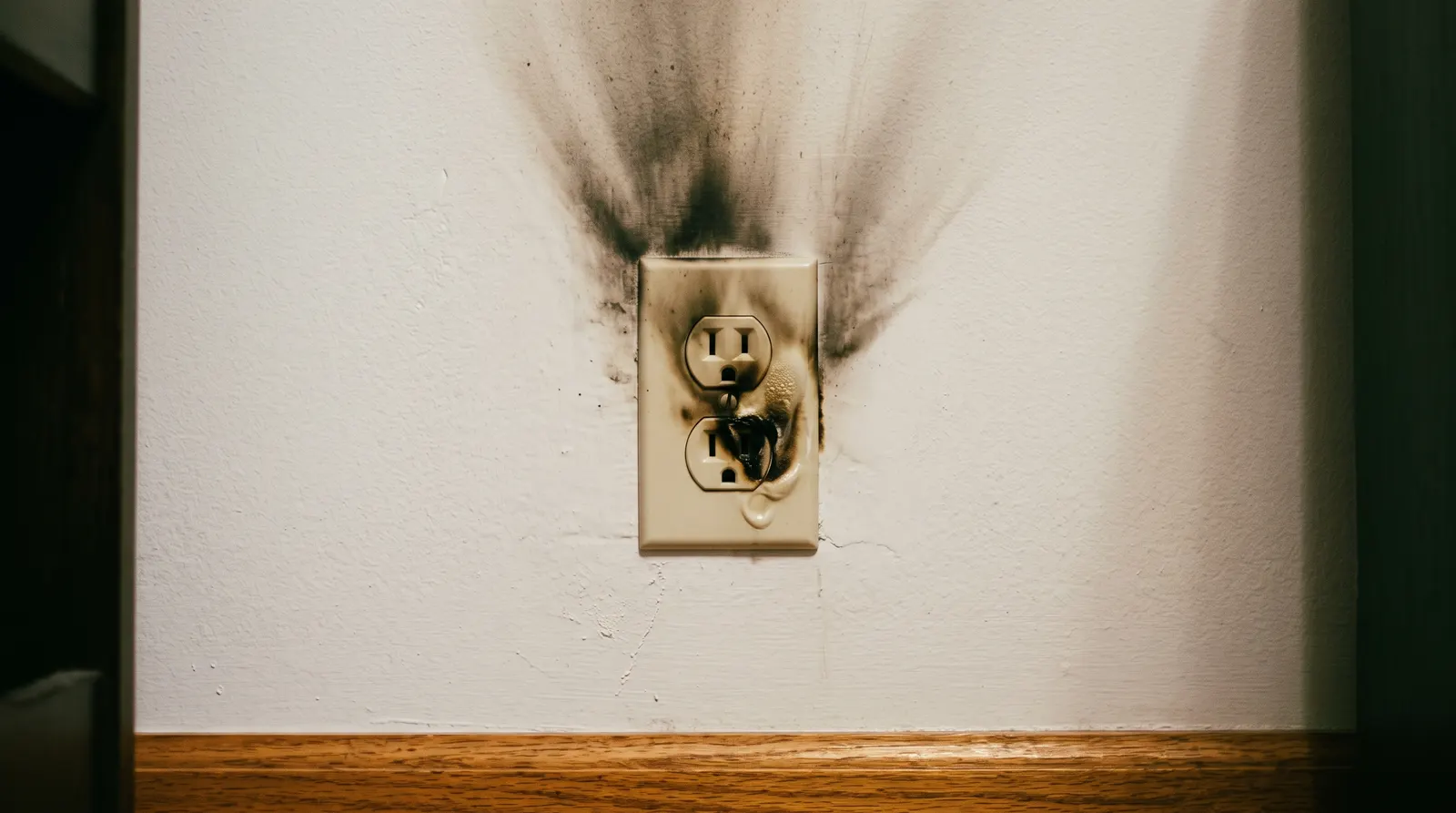
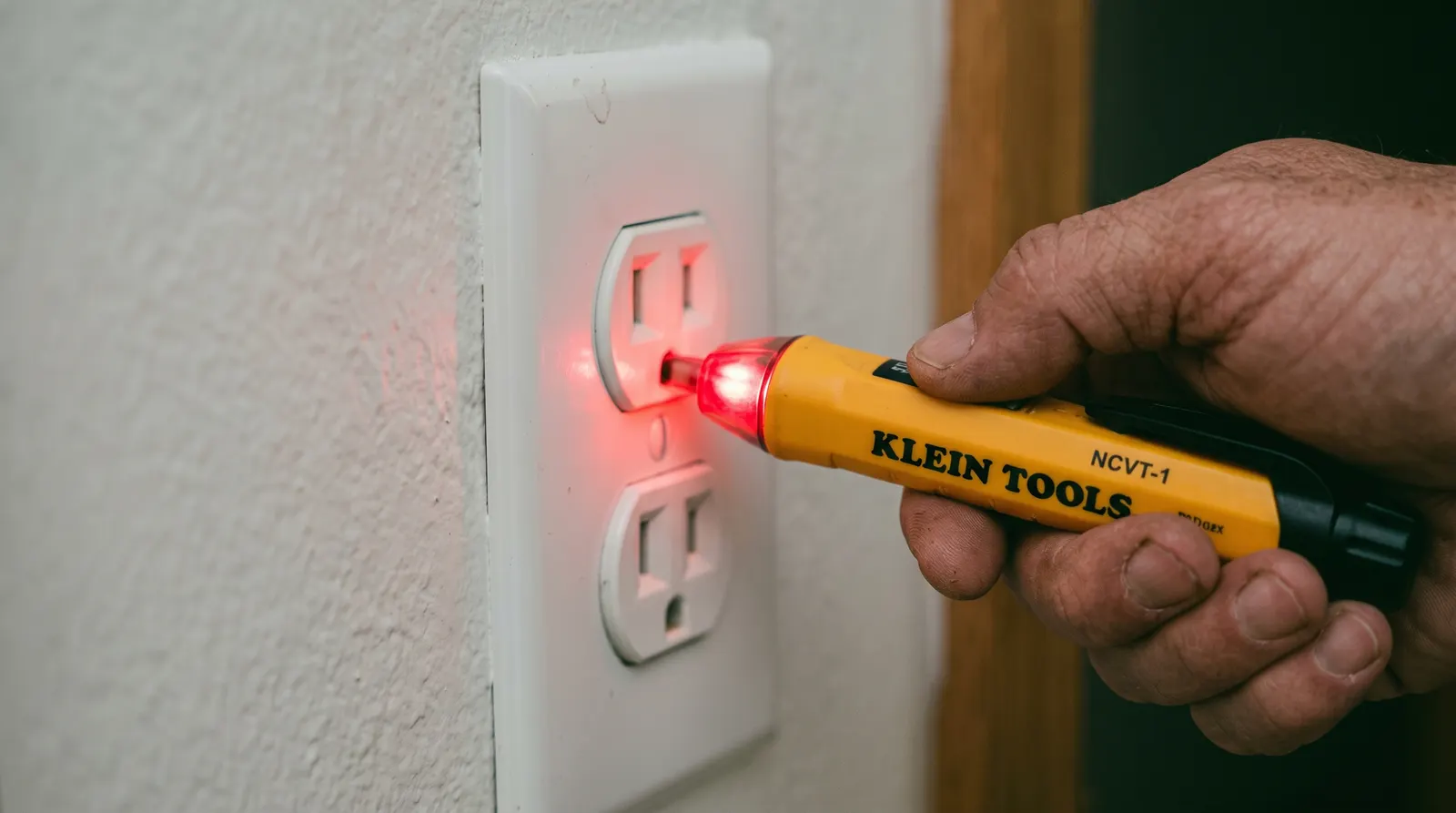
An outlet sparking with a single brief blue-white flash as a plug goes in is normal physics. An outlet sparking yellow, repeatedly, audibly, or leaving scorch marks is a loose connection arcing, and the CPSC records receptacles as being involved in around 5,300 fires a year in the US.
Every competing page gives you that distinction as a list to memorise. This one explains why the normal spark happens, which makes the difference obvious rather than arbitrary.
The normal spark, and why it happens
Why does an outlet spark when I plug something in?
Because current jumps the last fraction of a millimetre before the plug pins actually touch the contacts. The gap is tiny, the voltage is enough to bridge it, and you see a brief blue-white flash. High-draw devices do it more visibly.
That is why the normal spark happens on insertion rather than during use, why it is over instantly, and why it is silent. It also explains why a vacuum cleaner or a space heater flashes more than a phone charger: more current is waiting on the other side of that gap.
Once you understand the mechanism, the dangerous version becomes obvious. A spark that happens while the plug is already seated, or that continues, is not bridging an air gap on the way in. It is arcing across a connection that has come loose.
The dangerous spark: five signs
- Colour. Blue-white is normal. Yellow or orange means something is burning in the arc path, usually the contact metal or the plastic around it.
- Duration. Normal is instantaneous. Anything you have time to register as ongoing is not.
- Sound. A crack, a buzz or a sizzle means a sustained arc rather than a clean contact.
- Heat. A faceplate or plug that is warm to the touch, with nothing high-draw connected.
- Marks. Blackening at the slots, melted plastic, or discolouration on the faceplate.
Repeated arcing is how receptacle fires start
An arcing connection generates heat inside the wall box where nothing can carry it away, and it does so quietly. ESFI attributes more than 28,000 home fires a year and over $700 million in property damage to arcing faults. That is why the correct response to a yellow spark is to isolate the circuit rather than to keep using the socket carefully.