How to tell if a pipe burst, and where to look for it
Every guide lists the same symptoms. None of them gives you a test. This one starts with a thirty-minute meter procedure that answers the question definitively, then narrows the location.
How to tell if a pipe burst comes down to one measurement: with every fixture closed, a water meter that keeps turning means water is escaping. Everything else on this page narrows down where.
Knowing how to tell if a pipe burst matters because hidden leaks are the expensive ones. The EPA puts the window before mold can begin in wet building materials at 24 to 48 hours, and a cavity leak can run for weeks before anything shows on a wall.
The definitive test
The water-meter test, done properly
01
Close everything
Every tap, the dishwasher, the washing machine, the ice maker and any irrigation timer. Nothing may draw water for the next half hour.
02
Read and mark
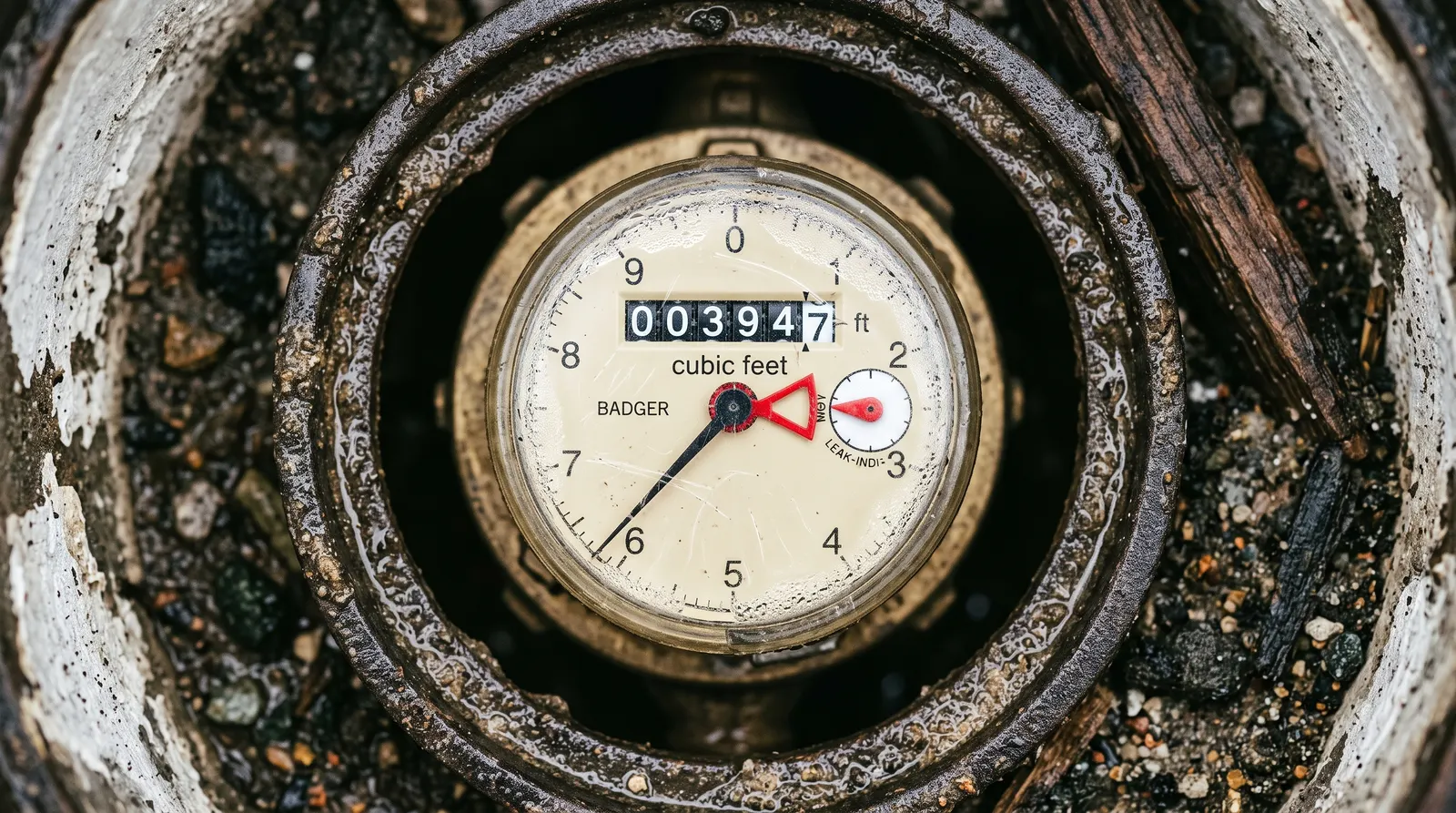
Photograph the meter face, including the small low-flow triangle or star. That dial moves on flows too small to register on the main digits.
03
Wait thirty minutes
Leave the house alone. A short wait produces ambiguous results because thermal expansion can nudge the dial on its own.
04
Read again
Any movement means water is escaping on your side of the meter. No movement effectively rules out a burst supply line.
How to tell if a pipe burst: the four signals
What are the signs of a burst pipe?
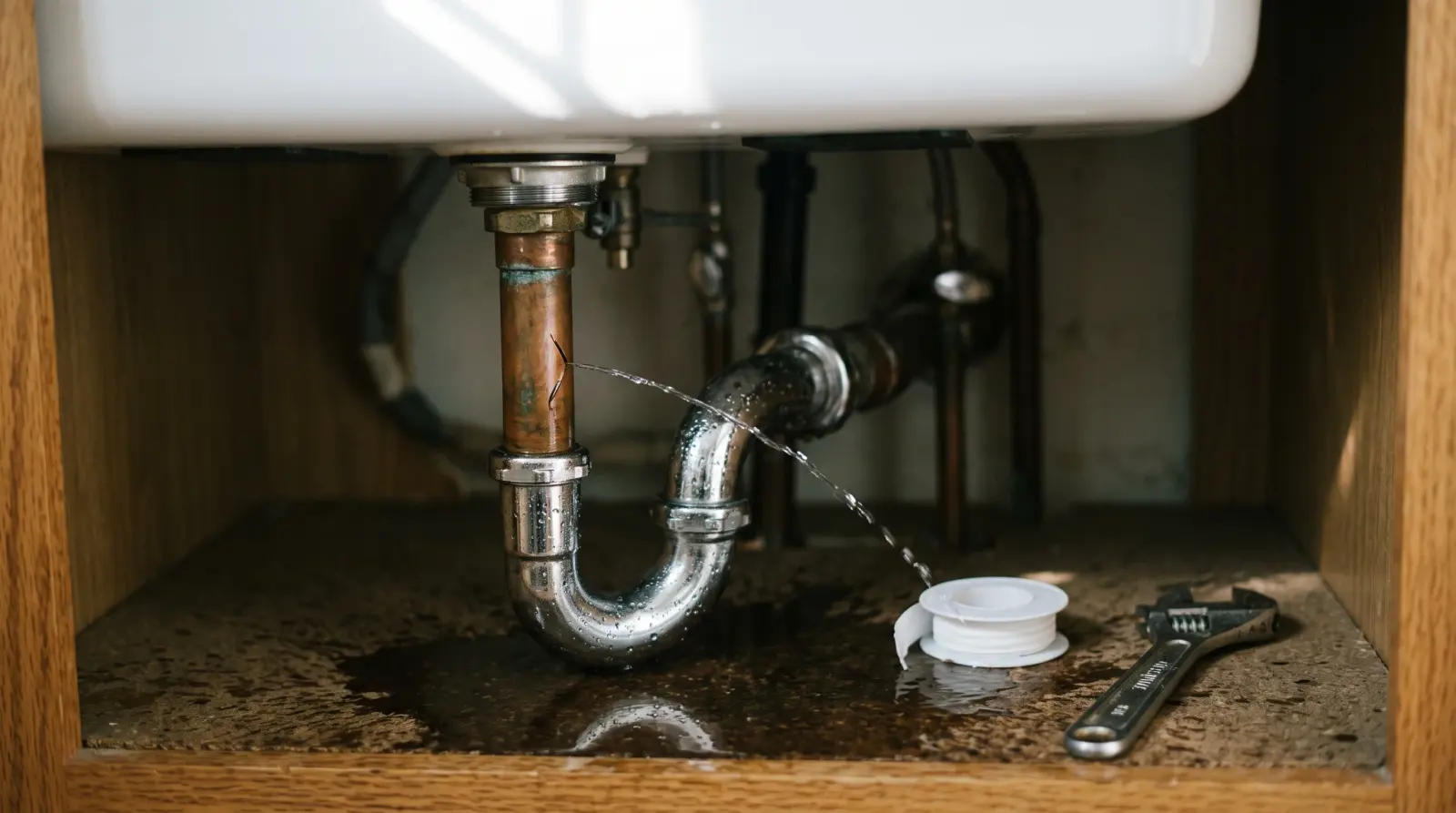
A water meter that turns with everything closed, pressure that has dropped at some fixtures but not others, running or hissing sounds with nothing switched on, and staining, bubbling paint or a musty smell downstream of the break.
Take them in that order. The meter is objective; the other three are corroborating evidence that helps locate it.
Meter movement. The only signal that proves water is leaving the system rather than that something feels wrong.
Uneven pressure. A break bleeds pressure from everything downstream of it, so the pattern across fixtures is a map.
Sound. A hiss is pressurised water escaping through a small opening. A rush is a larger one.
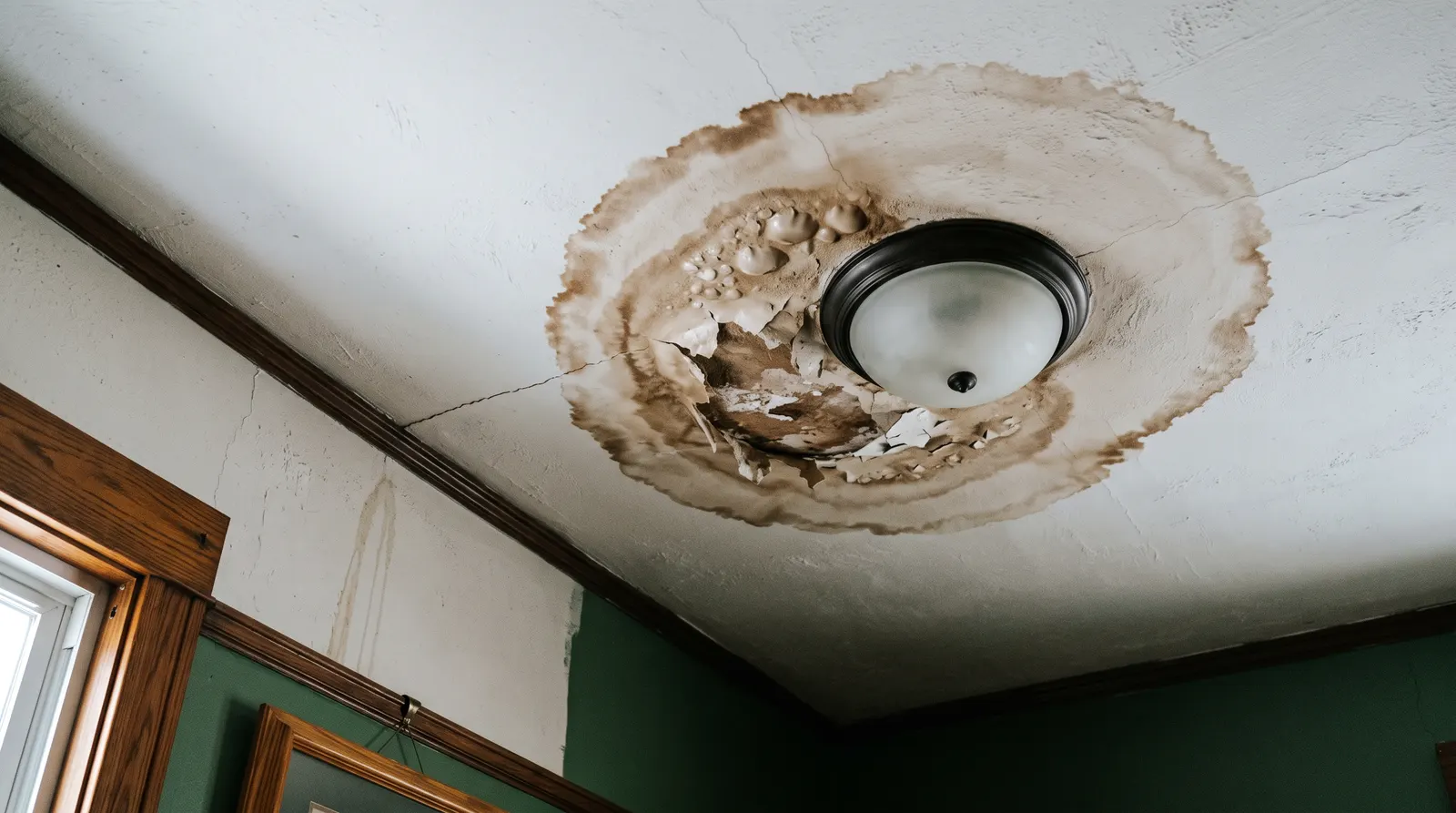
Staining and smell. The slowest signals, and the ones that mean the water has already been there a while.
Supply leak or drain leak? Listen for when it happens
This distinction decides who you call and what it costs, and no ranking page makes it. A supply line is pressurised all the time, so a supply leak runs constantly whether you are using water or not.
A drain leak only wets when something is draining. If the damp patch appears after a shower and dries between uses, you are looking at waste pipework, not a burst.
The meter test only catches supply leaks, which is exactly why a negative meter test plus an intermittent damp patch points at the drain side.
Mapping the break by fixture pressure
Start at the fixture nearest the meter and work outward, noting flow at each. Full pressure at the front of the house and weak flow at the back places the break between them.
Check hot and cold separately at each fixture. A pressure loss on the hot side only puts the break on the run out of the water heater, which on a slab-built home is the classic slab-leak signature.
Stop mapping if water is near electrics
A ceiling that is holding water above light fittings, or any staining tracking toward the electrical panel, changes the priority. Cut that circuit from a dry position, or call the power company if you cannot reach the panel without standing in water. Diagnosis can wait; a live circuit in a wet ceiling cannot.
Wall, ceiling, slab or underground
How to tell if a pipe burst is only half the job. Where it burst is four different jobs at four different prices, and the search results treat them as one.
Wall. Staining travels down framing and surfaces below and to one side of the break. Tapping reveals a dull, saturated patch of drywall.
Ceiling. Water runs along joists before it drops, so the wet spot is often several feet from the actual split. A sagging or bulging ceiling is holding weight and should be cleared beneath.
Slab. A warm patch of floor over a hot line, the sound of running water underfoot, and a bill increase with nothing visible anywhere.
Underground. A permanently soggy area of lawn, a stripe of unusually green grass over the service line, or water surfacing at the kerb.
Underground and kerbside cases raise the ownership question. Anything on the street side of the meter is the utility's asset, so report it rather than dig it up. If water is already inside the house, our guide to the first ten minutes after a pipe bursts covers the shut-off sequence.
Why a burst pipe can go unnoticed for weeks
Building materials are good at hiding water. Fibreglass insulation, subfloor and plaster absorb a large volume before any of it appears as a stain, and cavities have no airflow to carry moisture away.
The consequence is not just a bigger repair. The EPA's 24 to 48 hour drying window has usually passed several times over by the time a hidden leak becomes visible, which is why concealed leaks so often end as a mold remediation job rather than a pipe repair.
The water bill is often the first honest signal. A jump with no change in household use is worth a meter test the same day.
Know the line
Safe to check yourself, or call a pro now?
Safe to check yourself
Running the timed water-meter test
Comparing pressure fixture by fixture, hot and cold separately
Feeling floors for warm patches and walls for saturated drywall
Photographing stains with a date, and checking the bill history
Closing the main valve if water is reaching cavities or ceilings
Call a pro now
Cutting into walls, ceilings or slab to chase a leak
Any leak on the hot line under a slab
A moving meter with nothing visible anywhere in the house
Water above light fittings or tracking toward the panel
Anything on the street side of the meter, which is the utility asset
24/7 dispatch network
Get a licensed plumber moving on this
If the meter is moving and you cannot find the water, that is a leak-detection job. Send the symptoms and your ZIP code and licensed, insured plumbers covering your area will contact you directly. No obligation.
Fire, a gas smell, or an injury? Leave the building and call 911 first, then your gas
utility or power company. Use this form once you are safe.
At what temperature pipes actually burst
At what temperature do pipes burst?
Water freezes below 32F, but the burst comes later and is caused by pressure, not by ice touching the pipe. An ice plug grows until the water trapped between it and a closed tap has nowhere to go, and the pipe splits at its weakest point.
This is why the split usually appears between the ice and the tap rather than at the frozen section itself, and why leaving a faucet open through a cold snap is such an effective preventative.
Exposure matters more than the outside temperature. An exterior-wall run, an uninsulated crawlspace or an unheated garage will freeze in conditions that leave the rest of the house untouched.
The meter test is the cheapest diagnostic you have. Shut every fixture, then watch the low-flow triangle for fifteen minutes.
What finding and fixing it costs
Indicative US ranges. Always get a written quote.
Job
Typical range
Notes
Emergency trip fee
$75–$500
Charged to attend and diagnose
Labor, standard hours
$100–$200 / hr
Includes locating the leak
Labor, after hours
up to $350 / hr
1.5×–2× the base rate
Burst repair, accessible run
$150–$2,000
Reported average near $500
Burst repair, under slab
$500–$4,000+
Locating and breaking concrete dominates
Main water line repair
from ~$225
Reported where the homeowner digs the trench
Source: HomeGuide 2026 emergency plumber cost guide; Angi burst-pipe repair cost data; homeowner-reported figures from public forum threads, marked as reported (retrieved August 2026). Figures vary by region, severity and after-hours timing.
Figures last checked
Detection is worth paying for when the meter says there is a leak and nothing on the surface says where. Acoustic and thermal detection costs a fraction of exploratory demolition, and it is considerably cheaper than opening three walls to find the fourth one was right.
Access, not the fitting, sets the repair price. The same joint failure is an hour in an open basement and a day under a slab. Full rate detail sits in our breakdown of what emergency plumbing repair costs.
How the matching works, and what we do not do
Emergency Services 24H is a referral service. We do not employ plumbers and we do not carry out detection or repair work.
Your request routes by ZIP code to licensed, insured contractors covering your area, and they contact you directly. The rate tables here exist so you can judge the quote rather than take it on trust.
Straight answers
Frequently asked questions
The questions homeowners actually search for on this problem, answered in plain language.
Close every tap and appliance, then watch the water meter. If the low-flow indicator is still turning after thirty minutes with nothing running, water is escaping on your side of the meter. Add uneven pressure between fixtures, a hiss behind drywall, or a spreading stain, and you have a burst supply line.
Can a burst pipe go unnoticed?
Easily, when it is inside a wall, above a ceiling or under a slab. Cavity insulation and subfloor absorb a surprising volume before anything shows, and the first visible signal is often the water bill. The EPA puts the window before mold can begin in wet materials at 24 to 48 hours.
At what temperature will pipes burst?
Pipes freeze below 32F, but the burst happens later and is caused by pressure rather than ice contact. As an ice plug grows, water trapped between it and a closed tap has nowhere to go and the pipe splits at its weakest point. Exposed runs in unheated crawlspaces, garages and exterior walls fail first.
What does a pipe sound like before it bursts?
Banging when a tap closes, a persistent hiss with nothing running, or a gurgle followed by a trickle at a fixture that used to run full. A tap that slows to a dribble in cold weather is the classic pre-burst signal, because it usually means an ice plug has already formed upstream.
Is it expensive to fix a burst pipe?
Accessible repairs commonly run $150 to $2,000 with a reported average near $500. Under a slab the range moves to $500 to $4,000 or more, because locating the leak and breaking through dominates the labor. Add a $75 to $500 trip fee plus after-hours labor for an emergency call-out.
How do I tell a slab leak from a wall leak?
Slab leaks usually show as a warm patch of floor over a hot-water line, an unexplained rise in the bill, and the sound of running water underfoot with everything closed. Wall leaks show as staining that travels along framing and often surfaces well below and to one side of the break.
Staining that gives a hidden leak away
Reading the water meter for a hidden leak
Detection is worth paying for. Cutting exploratory holes to hunt a leak costs more in make-good than the survey does.
Tell us what has failed and where you are. We route your request to licensed, insured contractors covering your ZIP code, and they contact you directly.
Fire, a gas smell, or an injury? Leave the building and call 911 first, then your gas
utility or power company. Use this form once you are safe.