Dryer not heating: check the vent before the parts
A blown thermal fuse is a symptom, not a cause. The machine overheated, and the reason it overheated is almost always the same lint that starts dryer fires.
A dryer not heating is a heat circuit failure in a machine whose motor still works, which narrows it to the electrical supply, the venting, or one of three heat components. The CPSC identifies lint accumulation as the leading contributor to clothes dryer fires, and that same blockage is what produces this symptom.
The lint hazard behind this symptom
Why is a no-heat dryer a safety issue?
Because the usual cause is restricted airflow, and restricted airflow is what overheats a dryer. The thermal fuse that blew did its job. Replacing it without clearing the vent removes the protection and leaves the hazard.
That reframes the whole repair. The vent is not a maintenance afterthought here, it is the first suspect and the actual fix in a large share of cases.
Put bluntly: a dryer not heating is usually an airflow story with an electrical symptom.
The order that works
Four checks before you open the back panel
01
Flip the double breaker fully
An electric dryer needs both 240 volt legs to heat. One tripped leg leaves the drum turning on 120 volts with no heat. Switch it right off, then back on.
02
Clear the vent, not just the screen
Pull the machine out, disconnect the flexible duct and clear it end to end. Check the exterior flap actually opens when the dryer runs.
03
Check the settings
Air fluff and similar no-heat cycles produce exactly this complaint. So does a machine set to a sensor cycle with a load that never registers as wet.
04
Then test the heat circuit
Thermal fuse, cycling thermostat and heating element, in that order, with the machine unplugged and a multimeter set to continuity.
Electric dryers: the 240 volt two-leg problem
This explains the exact symptom better than any part does, and it costs nothing to rule out.
An electric dryer runs its motor and controls on 120 volts and its heating element on 240. The supply comes as two legs through a double breaker. When one leg trips, the drum still turns and the element cannot fire, which produces a machine that appears to work perfectly and dries nothing.
Flip the breaker fully off and then back on. A half-tripped leg frequently looks closed at a glance.
Dryer not heating? Clear the vent, not just the screen
Cleaning the lint screen is not clearing the vent, and the distinction matters.
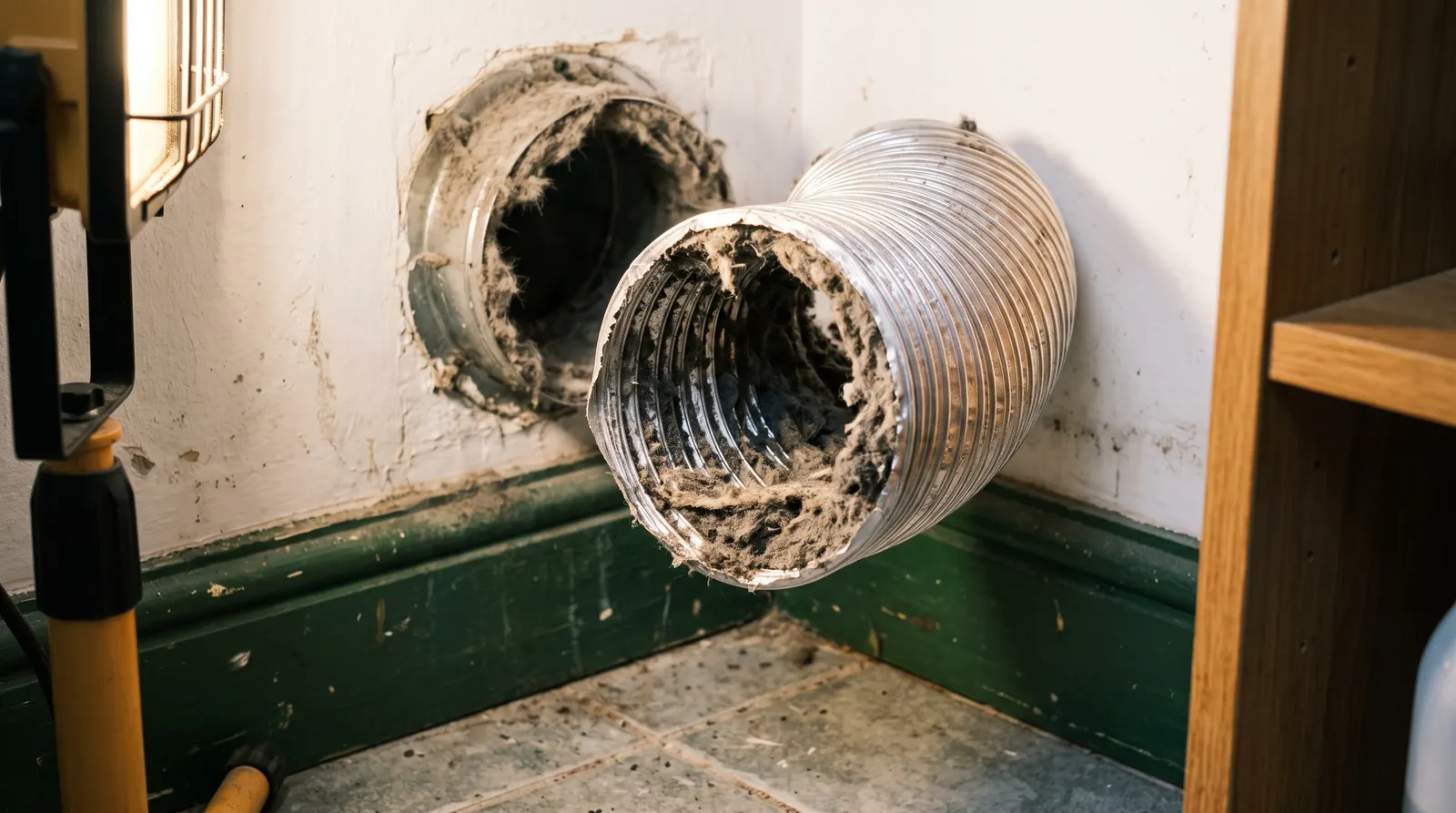
Pull the machine out, disconnect the flexible duct at the back, and clear it end to end along with the wall port. Then run the dryer and go outside to check the exterior flap actually opens. A flap held shut by lint, a bird nest or paint produces the same restriction as a blocked duct.
Duct material: rigid metal beats flexible foil on airflow, lint retention and fire resistance.
Run length: long runs with multiple bends need clearing more often.
Exterior flap: should open visibly when the dryer runs and close when it stops.
Behind the machine: a crushed duct where the dryer was pushed back is extremely common.
The thermal fuse is a symptom, not a cause
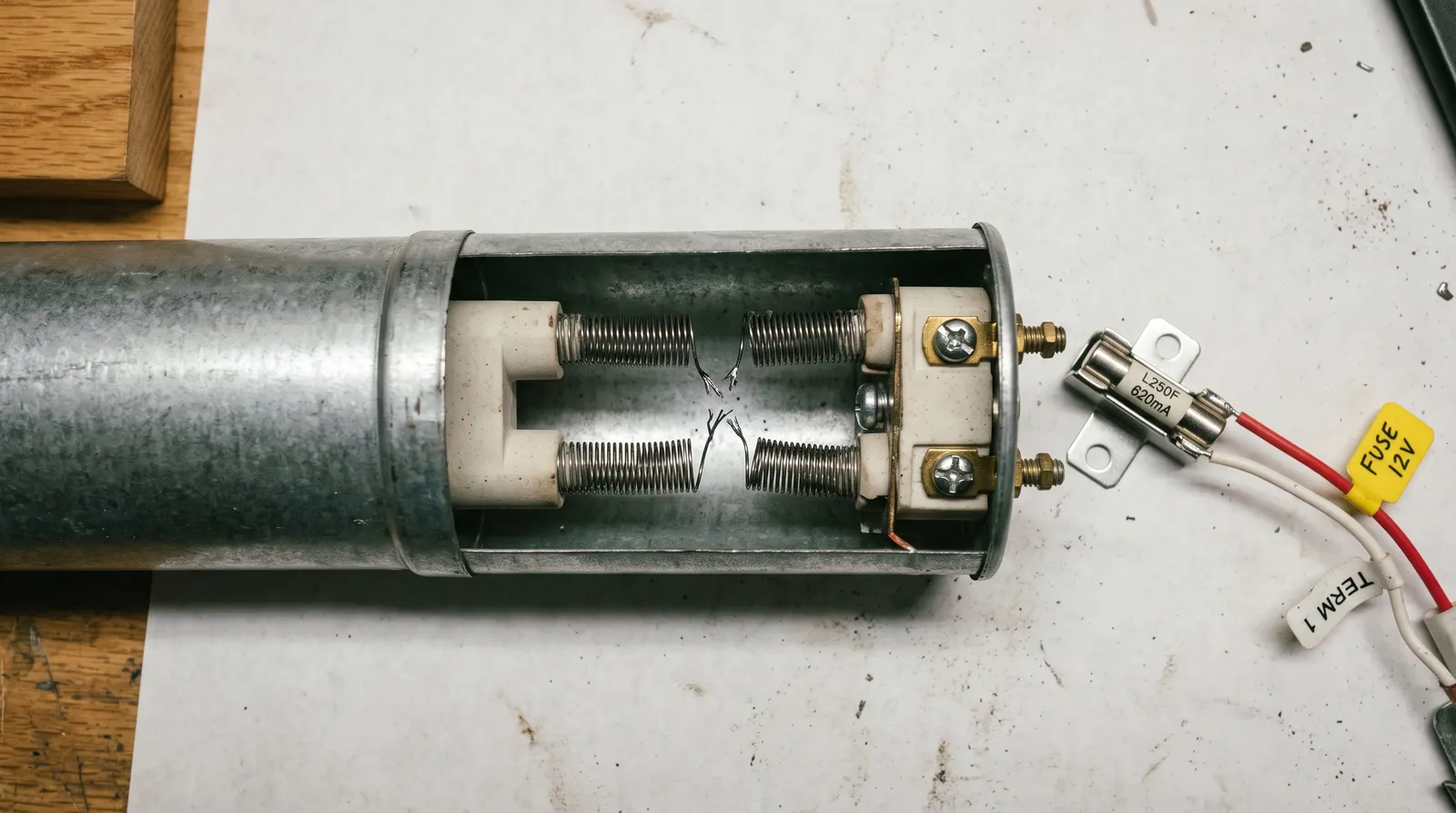
The thermal fuse is a one-time safety device that opens permanently when the machine gets too hot.
It does not wear out and it does not fail randomly. It blows because something made the dryer overheat, and that something is nearly always restricted airflow. Fitting a new fuse restores heat and resets the clock on the same failure.
Never bypass a thermal fuse
Jumping across a thermal fuse to get a dryer working is advice that circulates online and it removes the protection that stopped the machine overheating. The fuse is the last line between a restricted vent and a fire. Clear the vent, replace the fuse, and never bridge it.
Heating element, thermostat and cycling switch
These are the parts to test once power and airflow are ruled out, and they need the machine unplugged and a multimeter.
An open heating element shows no continuity across its terminals. A failed cycling thermostat produces intermittent heat rather than none. Both parts are inexpensive relative to the labour of getting to them, which is worth knowing when a quote arrives itemised.
Gas dryers are a different machine
Does a gas dryer fail the same way?
No. It has no heating element. Heat comes from a burner lit by an igniter and controlled by gas valve coils and a flame sensor, so the failure list is entirely different and most of it is licensed work.
The vent logic still applies: a gas dryer with a blocked vent overheats and trips its safety devices exactly like an electric one.
What changes is the escalation. If you smell gas at any point, leave the building without operating switches and call your gas utility or 911 from outside. Our page on gas appliance safety and carbon monoxide covers why that is not an over-reaction.
The USFA attributes thousands of home fires a year to dryers, and failure to clean them is the leading cause. A blocked vent is a fire risk, not an efficiency issue.
What this repair costs, and when to replace
Indicative US ranges. Always get a written quote.
Job
Typical range
Notes
Vent and duct clearing
no part cost
Often the whole fix, and a safety task regardless
Thermal fuse
low-cost part
Replace only after clearing the vent
Cycling thermostat
low-cost part
Intermittent heat is the usual signature
Heating element, electric dryer
moderate part plus labour
Labour is the larger share of the bill
Igniter or gas valve coils, gas dryer
technician work
Burner assembly work is licensed work
Source: Fixr 2026 appliance repair cost data, with part-level costs stated qualitatively where no published figure exists (retrieved August 2026). Figures vary by region, severity and after-hours timing.
Figures last checked
The first row is free and it is the whole repair more often than the SERP suggests. The rest are inexpensive parts attached to a labour charge, which is why the 50 percent rule tends to favour repair on any dryer under about ten years old.
Drawn from real public forum threads and reported prices, summarised and attributed as patterns.
These are not reviews of this site, and no names or ratings have been invented.
“Dryer works but does not heat. Do I have a bad plug or...”
SourceThread title, r/appliancerepair, ranking above every manufacturer page for this query. The first answers point at the 240 volt supply and the breaker rather than at any part.
“Why is my dryer not heating up, and should I call a home...”
SourceThread title from a community Q and A on this SERP. The recurring advice is to clear the vent before buying a thermal fuse, because the fuse blew for a reason.
“CPSC identifies lint accumulation in the screen and vent as the predominant contributor to clothes dryer fires”
SourceU.S. Consumer Product Safety Commission safety guidance on overheated clothes dryers. Cited here because it is the same blockage that produces a no-heat symptom.
1 / 3
The forum pattern and the safety guidance point at the same component. The vent is both the most common cause of a no-heat dryer and the documented cause of dryer fires, which makes clearing it the highest-value thing on this page.
How the matching works, and what we do not do
Emergency Services 24H is a referral service. We do not employ appliance technicians, we do not clean vents, and we do not sell parts.
Your request routes by ZIP code to licensed, insured technicians covering your area, and they contact you directly. Vent cleaning is often a separate trade and worth asking about when you book.
Know the line
Safe to check yourself, or call a technician?
Safe to check yourself
Resetting both legs of the double breaker
Clearing the lint screen, duct and exterior flap
Checking the cycle setting and load size
Replacing flexible foil duct with rigid metal
Continuity testing with the machine unplugged, if you are confident
Call a pro now
Any gas dryer burner, igniter or valve work
A dryer that keeps blowing thermal fuses
Heating element replacement if you are unsure
240 volt supply or cord and outlet faults
Any smell of burning from the machine
24/7 dispatch network
Get a licensed technician to diagnose it
Tell us whether it is gas or electric and what you have already checked, plus your ZIP code. Licensed, insured technicians covering your area will contact you directly. No obligation to hire.
Fire, a gas smell, or an injury? Leave the building and call 911 first, then your gas
utility or power company. Use this form once you are safe.
Straight answers
Frequently asked questions
The questions homeowners actually search for on this problem, answered in plain language.
Because the motor circuit works and the heat circuit does not. On an electric dryer that usually means one of the two 240 volt breaker legs has tripped, the vent is blocked, or the thermal fuse, thermostat or heating element has failed. On a gas dryer it usually means the igniter or the gas valve coils.
How do I reset a dryer that will not heat?
Flip the double breaker fully off and back on rather than just nudging it, because a half-tripped leg often looks closed. Some models also have a reset button on the back panel. If heat returns and then goes again, the underlying cause is still there and it is usually the vent.
Will replacing the thermal fuse fix it?
It will restore heat and it will not fix the cause. A thermal fuse is a one-time safety device that blows when the machine overheats, and overheating is almost always restricted airflow. Clear the vent thoroughly at the same time or you will be buying another fuse shortly.
How often should a dryer vent be cleaned?
At least annually for most households, and more often with a long duct run, a large family or a pet that sheds. The CPSC identifies lint accumulation as the leading contributor to dryer fires, which makes vent cleaning a safety task rather than a performance one.
Is it worth replacing a heating element?
Usually yes on a machine under about ten years old, because the part itself is inexpensive relative to a new dryer. The labour and diagnostic fee are the larger share of the bill. On an older machine, apply the 50 percent rule against the price of a comparable new unit.
My gas dryer will not heat. Is it the same fix?
No. A gas dryer has no heating element. The usual causes are a failed igniter, a flame sensor or the gas valve coils. If you smell gas at any point, stop, leave the building and call your gas utility from outside. Burner assembly work is licensed work.
The lint path beyond the screen
Heating element and thermal fuse
A blown thermal fuse is usually a symptom of restricted airflow. Replacing it without clearing the vent just blows the next one.
Tell us what has failed and where you are. We route your request to licensed, insured contractors covering your ZIP code, and they contact you directly.
Fire, a gas smell, or an injury? Leave the building and call 911 first, then your gas
utility or power company. Use this form once you are safe.