Outlet sparking: the normal flash, and the dangerous one
One kind of outlet sparking is physics doing what physics does. The other is a loose connection heating inside the wall, the category ESFI ties to more than 28,000 home fires a year (ESFI, read 2026-07-22).
The normal flash is physics
An outlet sparking with a single brief blue-white flash as a plug goes in is normal physics. The Electrical Safety Foundation ties arcing faults to more than 28,000 home fires a year.
Every competing page gives you that distinction as a list to memorize.
Yes, a brief blue flash on insertion is normal. That is why the normal spark happens on insertion rather than during use, why it is over instantly, and why it is silent.
Once you understand the mechanism, the dangerous version becomes obvious.
The dangerous spark: five signs
Color. Blue-white is normal.
Duration. Normal is instantaneous. Anything you have time to register as ongoing is not.
Sound. A crack, a buzz or a sizzle means a sustained arc rather than a clean contact.
Heat. A faceplate or plug that is warm to the touch, with nothing high-draw connected.
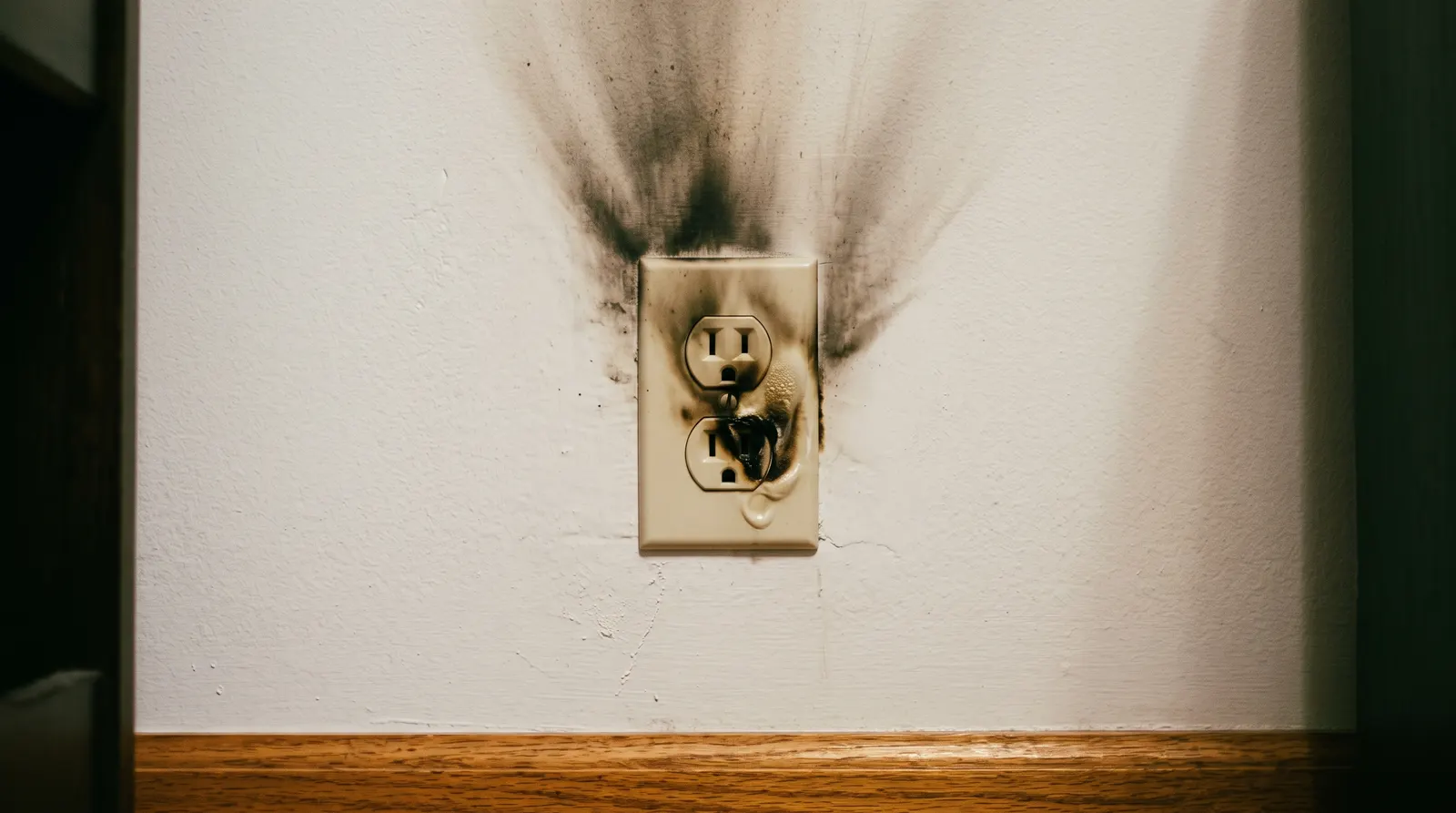
Marks. Blackening at the slots, melted plastic, or discoloration on the faceplate.
The stakes, in real numbers
Why the first ten minutes matter
Every figure is sourced
51,000
home electrical fires a year in the US
Source: ESFI
Cited source~12:34
“If your GFCI resets, well you don't need me because the GFI is doing exactly what it's supposed to do.”
TA
Thomas Adams
Oregon master electrician and business owner
Classic Electric, 2026
An independent source we cite. Not affiliated with Emergency Services 24H, and not a network contractor.
Four causes account for almost every genuinely sparking receptacle, and only one of them is about the outlet being old.
Backstab terminations. Cheaper receptacles let the installer push the conductor into a hole at the back instead of wrapping it under a screw.
Worn contacts. A socket that no longer grips a plug firmly is making intermittent contact under load, which is arcing by another name.
Moisture. A bathroom, kitchen, garage or outdoor receptacle with condensation or splash bridging the terminals. GFCI protection exists for exactly this case.
Aluminum branch wiring. Houses wired in the 1960s and 70s often used aluminum conductors, which creep and oxidize at terminations in a way copper does not.
None of those is diagnosable from the front of the faceplate, which is why the answer is always the same: isolate it, and let someone open it who is allowed to.
Oregon master electrician Thomas Adams' summary of what is behind the first and second of those is worth carrying: in his experience, the cause of most house fires is loose connections.
An unplugged outlet can still cause a fire
He also addresses the belief that buys people time they do not have. Plenty of homeowners assume an outlet with nothing plugged in cannot cause a fire.
There is one case where a spark is genuinely good news rather than bad.
Can I use the outlet again after one spark?
The reason for the hard line is that arcing is progressive.
If you are unsure which category you saw, treat it as the dangerous one and switch the circuit off.
What a scorch mark tells you
A scorch mark tells you which contact arced and how long it ran hot, because an outlet sparking leaves evidence that is readable.
Blackening at one slot. Arcing at that specific contact. The receptacle is done, and the conductor behind it needs checking.
Melted or deformed plastic. Sustained heat rather than a momentary arc. This one has been running hot for a while.
Browning across the whole faceplate. The outlet has been overloaded repeatedly, which points at the circuit rather than just the device.
Marks on the plug rather than the socket. The appliance lead or its plug is the fault, and it is not going into another socket until it is replaced.
Photograph any marks before you switch things off.
Isolating the circuit until it is fixed
Switch the circuit off at the panel and leave it off until an electrician has opened the box. "Stop using the outlet" is the standard advice and it is not enough, because the fault is behind the faceplate rather than in the socket you can see.
A loose termination arcs whenever anything downstream on that circuit draws current, not only when something is plugged into that particular outlet.
Label the breaker, do not just cover it
Label the breaker with tape so nobody restores it out of habit, and do not simply fit a blanking cover and forget about it. If the outlet came with a smell as well as a spark, treat it as a burning electrical smell rather than as an outlet problem.
Know the line
Safe to check yourself, or call a pro now?
Safe to check yourself
Judging the spark by color, duration and sound
Feeling the faceplate and plug with the back of a hand
Unplugging the device and trying it in a different socket
Switching the circuit off at the panel and labeling the breaker
Photographing any scorching before isolating
Call a pro now
Removing the receptacle or opening the wall box
Any yellow spark, sustained arcing, heat or scorch mark
Suspected aluminum branch wiring in an older home
Repeated sparking at more than one outlet on the same circuit
Anything accompanied by a burning smell or a warm faceplate
24/7 dispatch network
Get a local electrician moving on this
A sparking or scorched outlet, or arcing at more than one socket. Send the details and local electricians covering your area will contact you directly. No obligation to hire.
Fire, a gas smell, or an injury? Leave the building and call 911 first, then your gas
utility or power company. Use this form once you are safe.
A brief spark as a plug makes contact is normal inrush. Sustained arcing, scorching or heat is not, and it is a fire precursor.
What replacing a sparking outlet costs
Indicative US ranges. Always get a written quote.
Job
Typical range
Notes
Service-call fee
$100–$200
Usually covers the first hour on site
Standard labor
$50–$130 / hr
An outlet swap is well inside an hour
Emergency / after-hours labor
$100–$250 / hr
Typically 1.5× to 2× standard
Receptacle part cost
a few dollars
The labor and the diagnosis are the bill
Circuit inspection after arcing
often a second hour
Scorching means the conductor is checked too
Source: HomeGuide 2026 electrician cost per hour; Angi 2026 electrician cost data (retrieved August 2026). Figures vary by region and timing.
Figures last checked
The part is trivially cheap and the labor is short, which makes this one of the better-value electrical call-outs there is.
If more than one outlet on the circuit is affected, expect the diagnosis to take longer than the repair. What that visit costs is broken down in our guide to emergency electrician rates.
How the matching works, and what we do not do
Emergency Services 24H is a referral service. We do not employ electricians and we do not carry out electrical work.
How your request routes
The request is handed to local contractors who work your area, and one of them calls you back.
Straight answers
Frequently asked questions
Short, plain answers to the questions people ask us most about this page.
A single brief blue-white flash as a plug goes in is normal. Current jumps the last fraction of a millimeter before the metal actually touches, and high-draw devices do it more visibly.
Is it safe to use an outlet that sparked?
If it was one brief blue flash on insertion with no noise, heat or mark, yes. If the spark was yellow or white, lasted more than an instant, made a noise, or left any scorching, stop using it and switch the circuit off at the panel.
How do you fix a sparking outlet?
You do not, not as a homeowner. The repair means isolating the circuit, removing the receptacle and inspecting the terminations, which is licensed work in most states and the point at which a loose backstab or a scorched conductor is found. Your part is to stop using it and isolate the circuit.
Is a sparking outlet an emergency?
It is if there is heat, a burning smell, scorching or repeated arcing, because those mean a connection is running hot inside the wall. The CPSC records receptacles as being involved in around 5,300 fires a year in the US. A single blue flash on plug insertion is not an emergency.
What causes an outlet to spark?
Most often a loose termination, particularly the push-in backstab connections used on cheaper receptacles, which relax over time. Worn contacts that no longer grip a plug, moisture bridging the terminals, an overloaded circuit, and aluminum branch wiring in 1960s and 70s homes account for the rest.
What are the common causes of sparking outlets?
Loose terminations, worn contacts, moisture, and overloaded circuits are the common causes. A power outlet on an extension cord that sparks under load is usually the cord rather than the socket, and a GFCI outlet that sparks and trips is doing its job.
What does a spark from an electrical outlet mean?
A brief blue spark as a plug seats means a small current jumped the last millimeter. An orange spark, repeated sparks, or sparking electrical noise means the contact is failing, and outlet replacement rather than reuse is the fix.
Can I keep using an outlet that sparks every time?
No. When an outlet keeps sparking, the contact is already degraded and each plug-in makes it worse. Isolate that circuit and book an electrical repair before the box gets hot.
What should I do if an outlet starts sparking?
Unplug whatever is in it if you can do so safely, then switch that circuit off at the panel and label the breaker. Do not simply put a cover over it and carry on. If there is smoke, flame or an active burning smell, leave the building and call 911 rather than investigating.
Damage that means stop
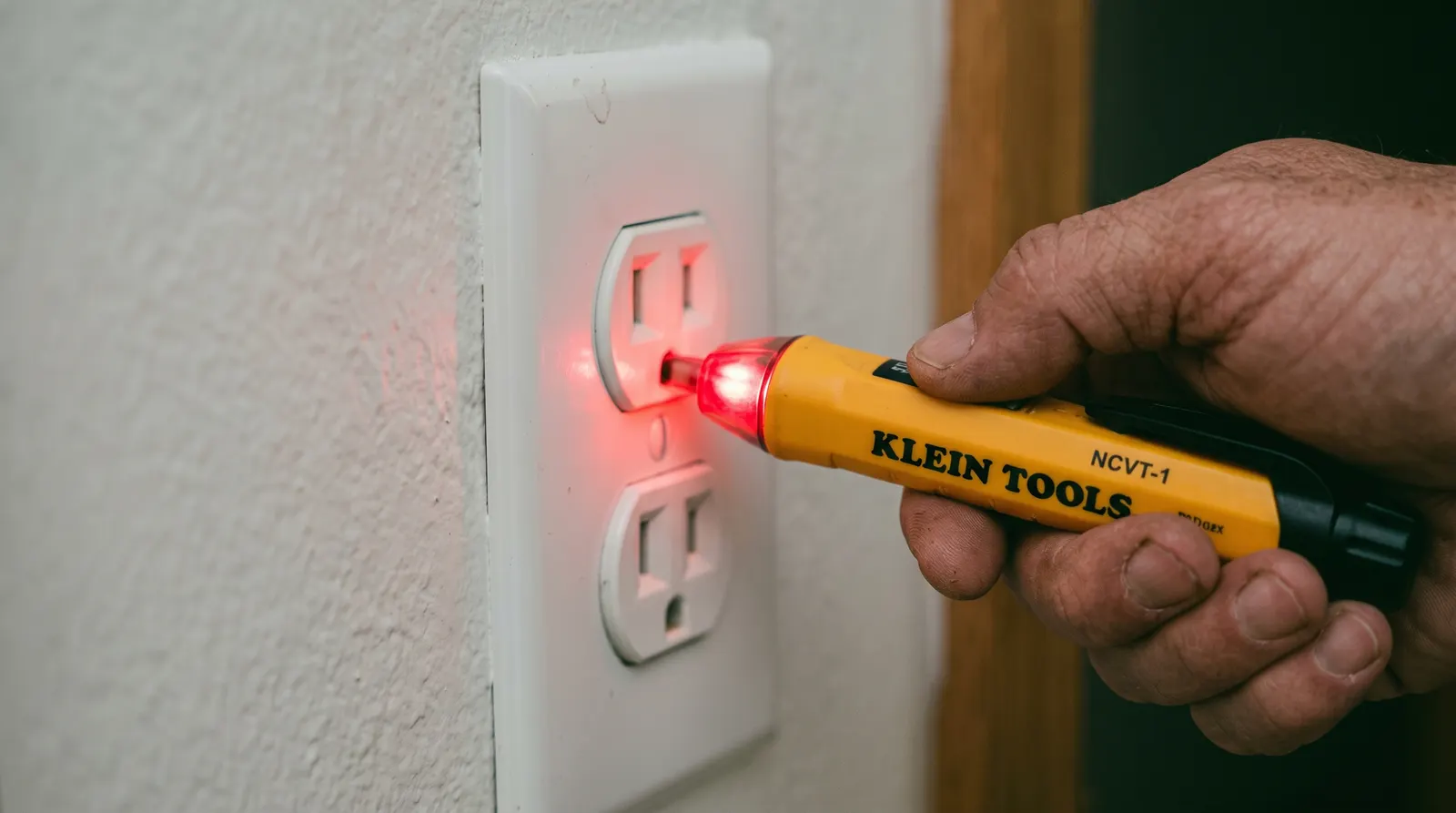
Testing before touching
AFCI protection exists specifically to catch arcing faults before they ignite. On older panels it is the highest-value upgrade available.
Independent, publicly published sources, quoted with attribution and linked in full.
None is affiliated with Emergency Services 24H, reviewed this page, or works in the referral network.
Thomas Adams: Oregon master electrician and business owner, Classic Electric - “If You Want To Know Why Your Breaker Trips, Watch THIS!” (2026)