Emergency Electrical
Electrical Emergency What Is Safe to Touch
An electrical emergency is any fault that can start a fire or deliver a shock if it waits. ESFI counts about 51,000 home electrical fires a year (ESFI, read 2026-07-22), so this page sorts what waits from what does not.
24/7 dispatch network
Request a local contractor now
Fire, a gas smell, or an injury? Leave the building and call 911 first, then your gas utility or power company. Use this form once you are safe.
The stakes, in real numbers
Why the first ten minutes matter
Every figure is sourced
- 51,000
- home electrical fires a year in the US
Source: ESFI
Why an electrical fault is an emergency
A household electrical fault is an emergency when it can start a fire or deliver a shock while you wait, and in the US the Electrical Safety Foundation International puts home electrical fires at roughly 51,000 a year, causing nearly 500 deaths and $1.3 billion in property damage (ESFI, read 2026-07-22).
That is why electrical triage runs differently to plumbing triage. Water damages things. Electricity kills people and burns houses down, and the interval between a warning sign and a fire can be very short.
What counts as an electrical emergency
Everything else on the electrical side, a dead outlet, one flickering lamp, a dimmer that hums, is a normal weekday appointment. The Electrical Safety Foundation counts about 51,000 home electrical fires a year in the US.
- Smell or smoke. Burning plastic, a fishy or urine-like odor, or visible smoke from any electrical fitting.
- Arcing and sparking. Large yellow or white sparks, sustained sparking, scorch marks, or an outlet that is warm to the touch.
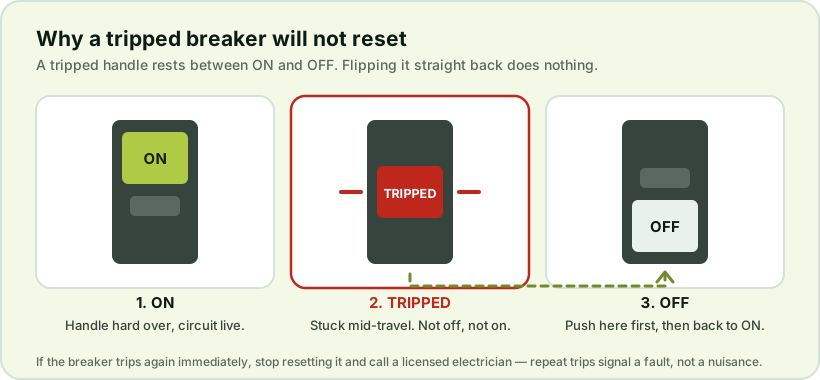
- Protection refusing to hold. A breaker that trips immediately with nothing plugged in, or one that will not stay in at all.
- Water and power together. A leak above a panel, a flooded basement with live outlets, or a soaked appliance.
In this guide
Everything in the emergency-electrical guide
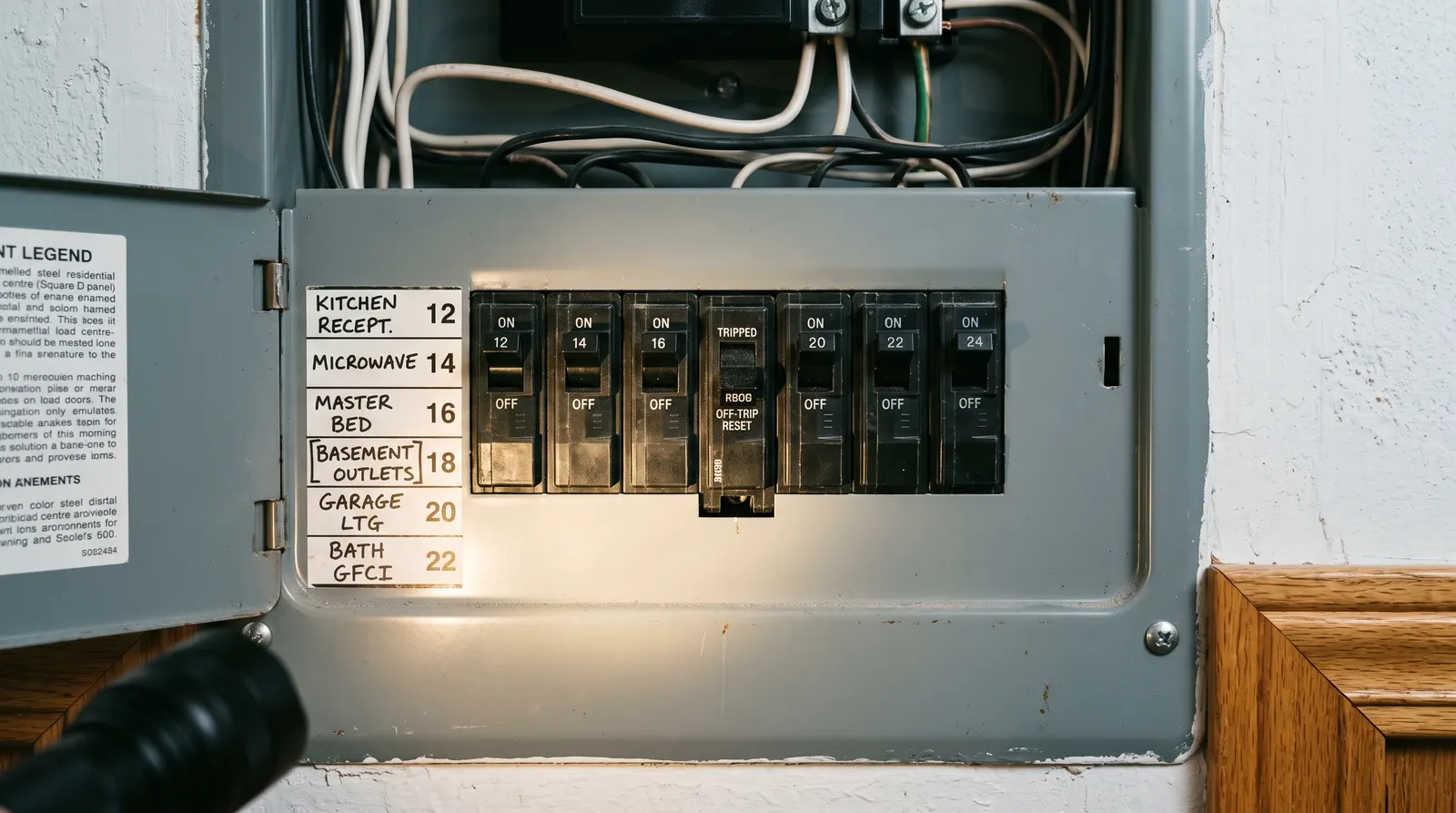
Circuit breaker keeps tripping
The four causes, the amp maths behind an overload, and the point at which you stop resetting.
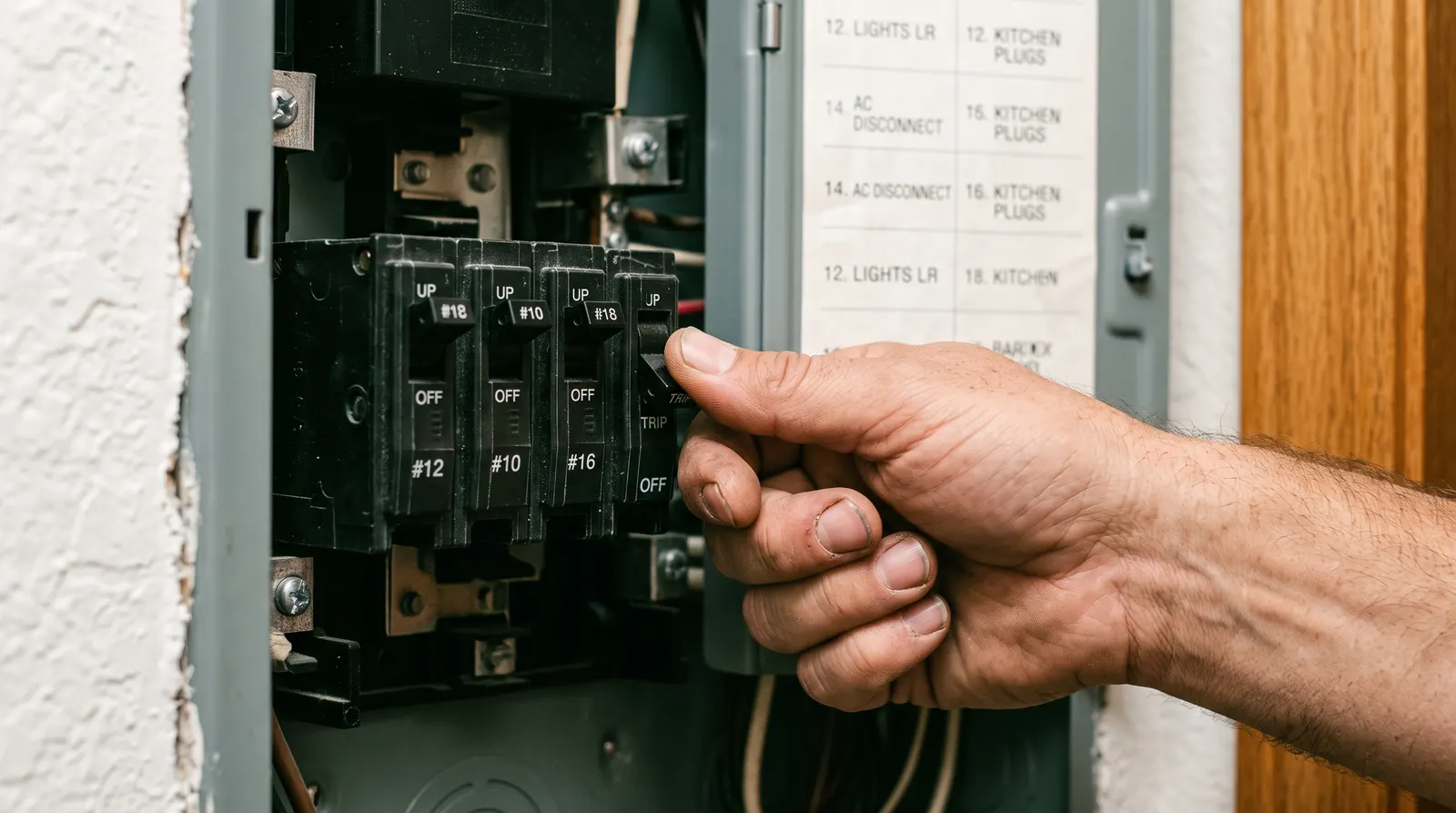
Breaker will not reset at all
What a breaker that refuses to stay in is telling you, and why it is a different problem.
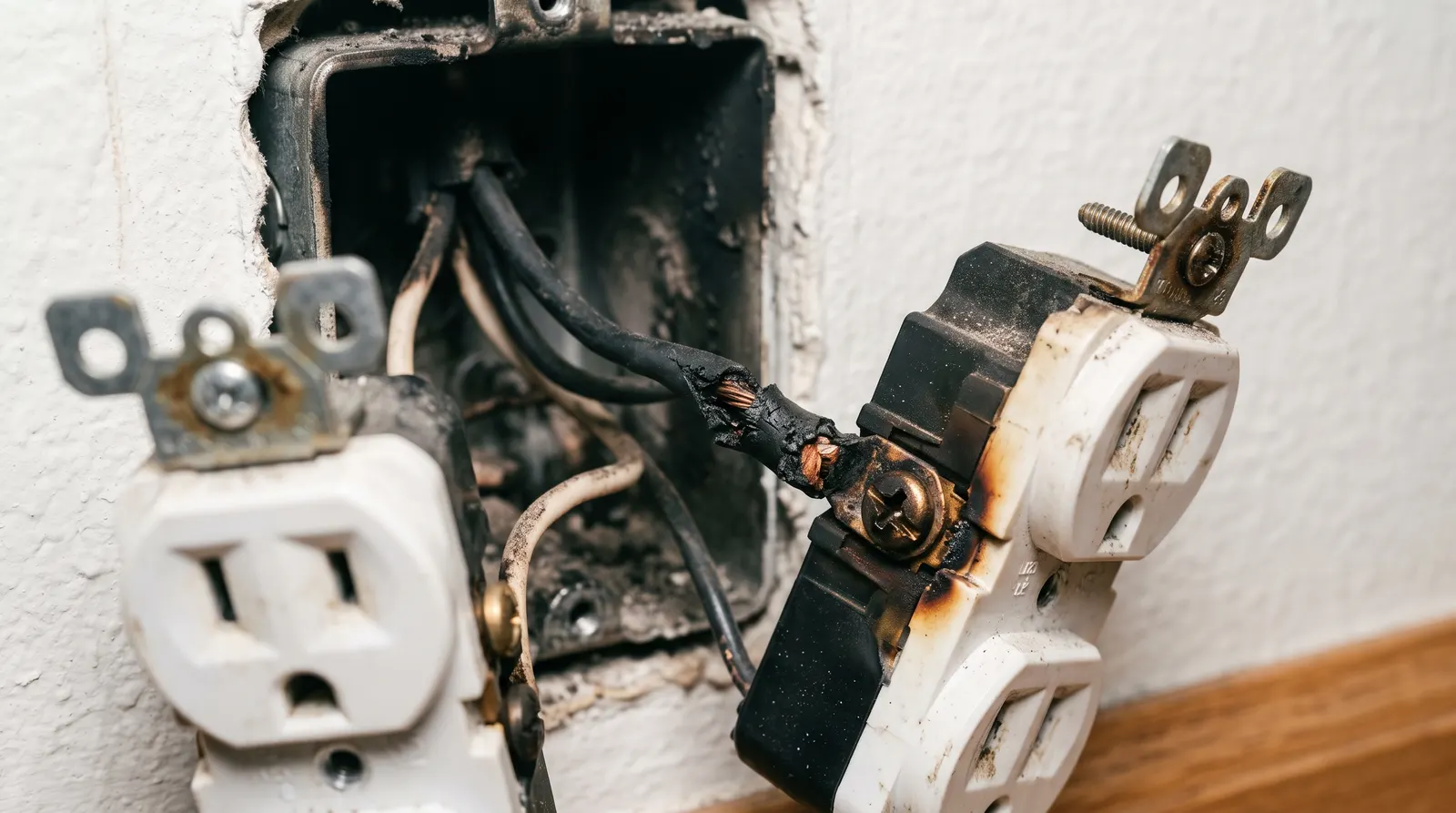
Burning electrical smell
The fastest-moving fault on this list. What to switch off, and when to leave the house.
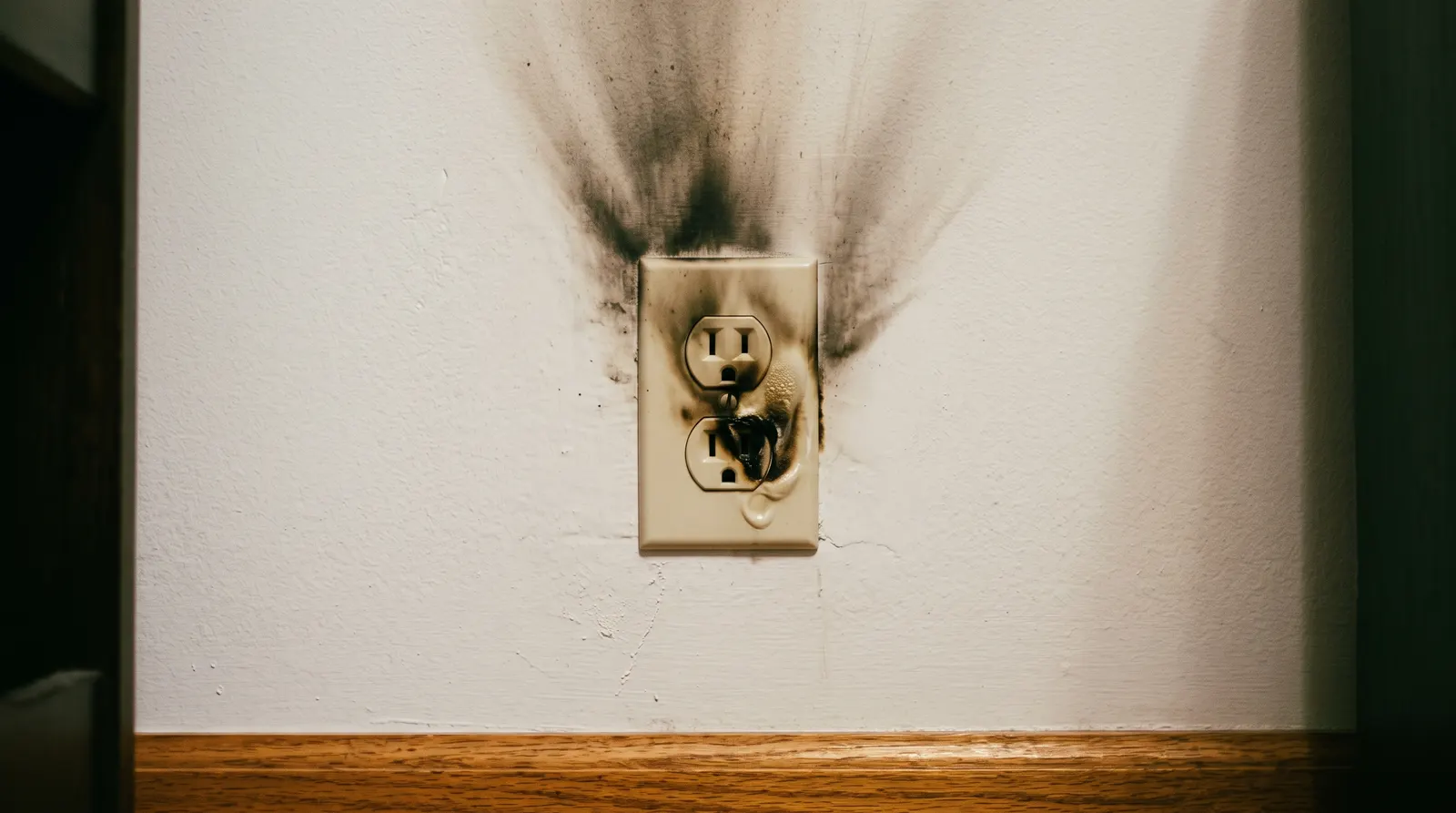
Outlet sparking
The small blue spark that is normal, and the yellow one that means stop using it.
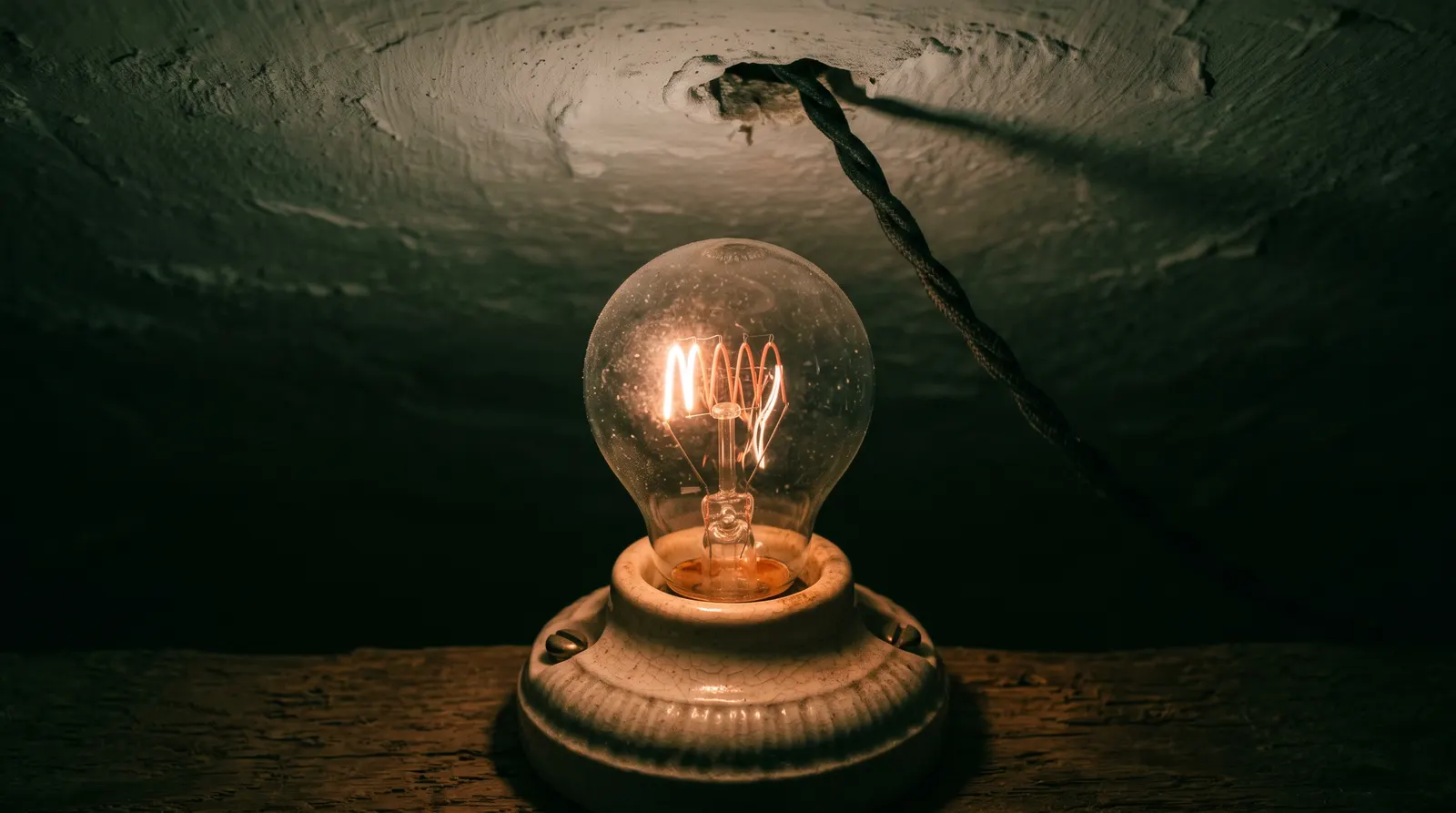
Flickering lights
One lamp, one room or the whole house. Each points somewhere different, including the utility.
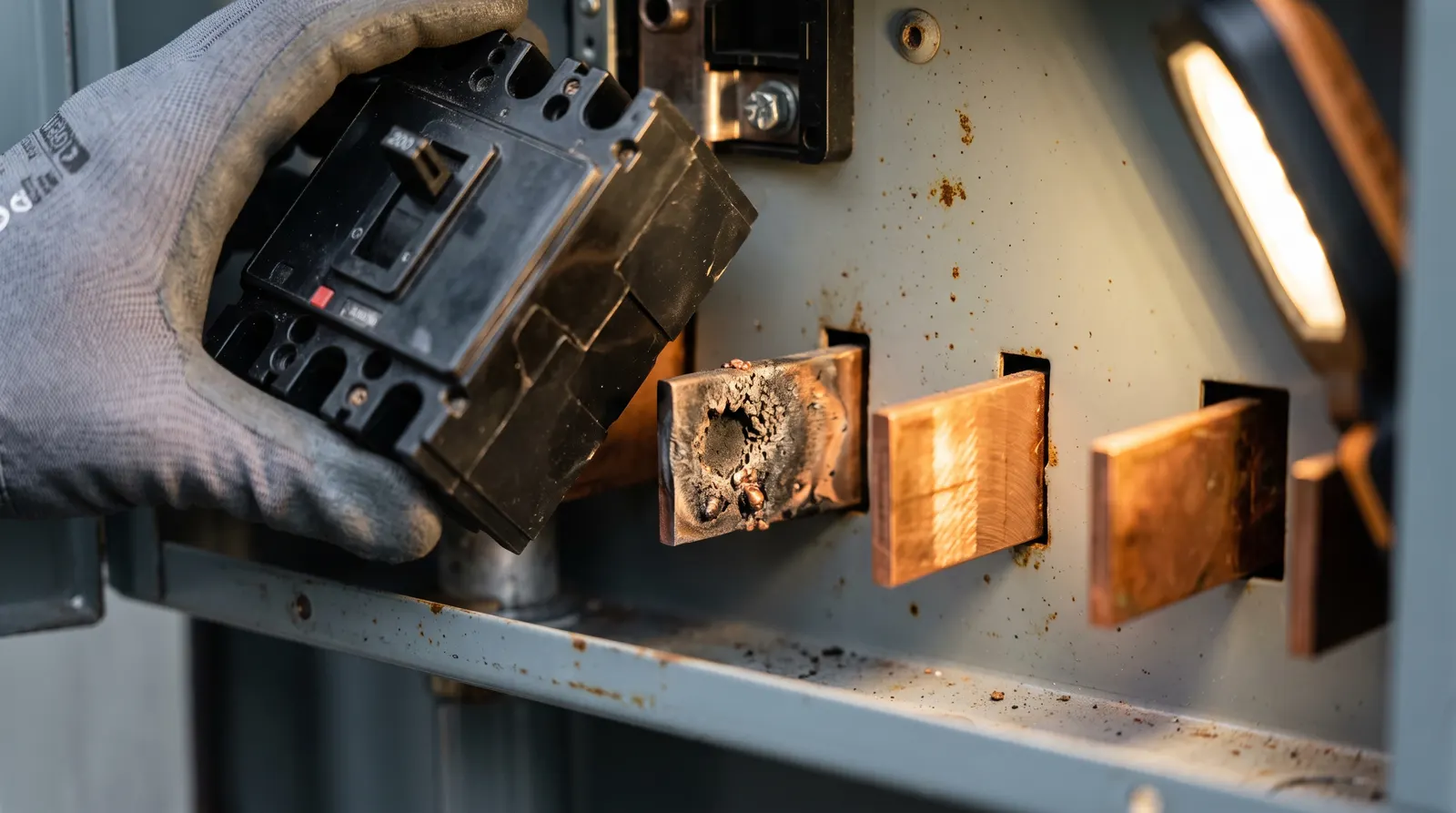
Electrical panel buzzing
A faint hum can be normal. Buzzing, crackling or heat at the panel is not.
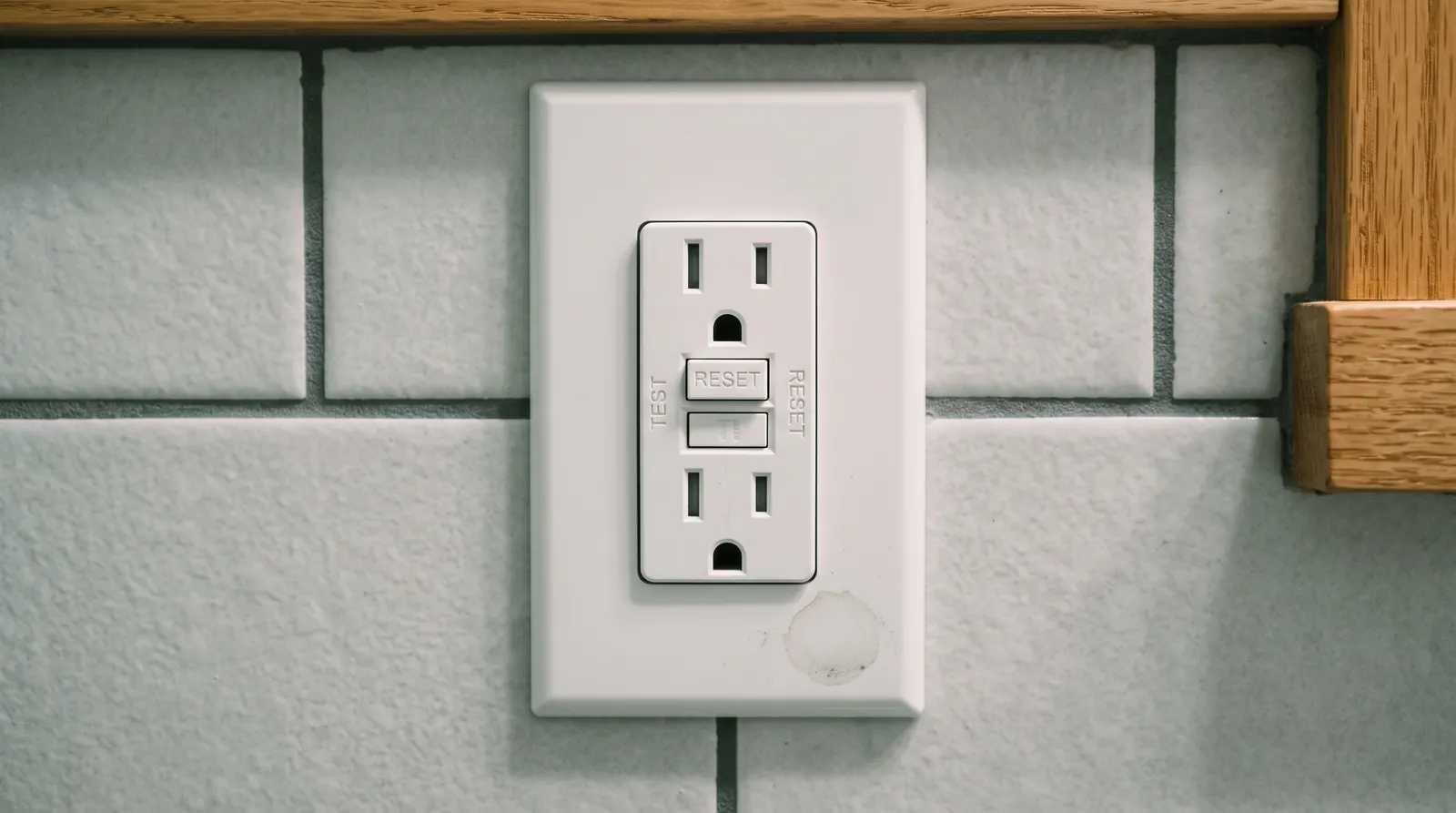
No power to one room
Dead outlets with nothing tripped. Where the hidden GFCI usually is.
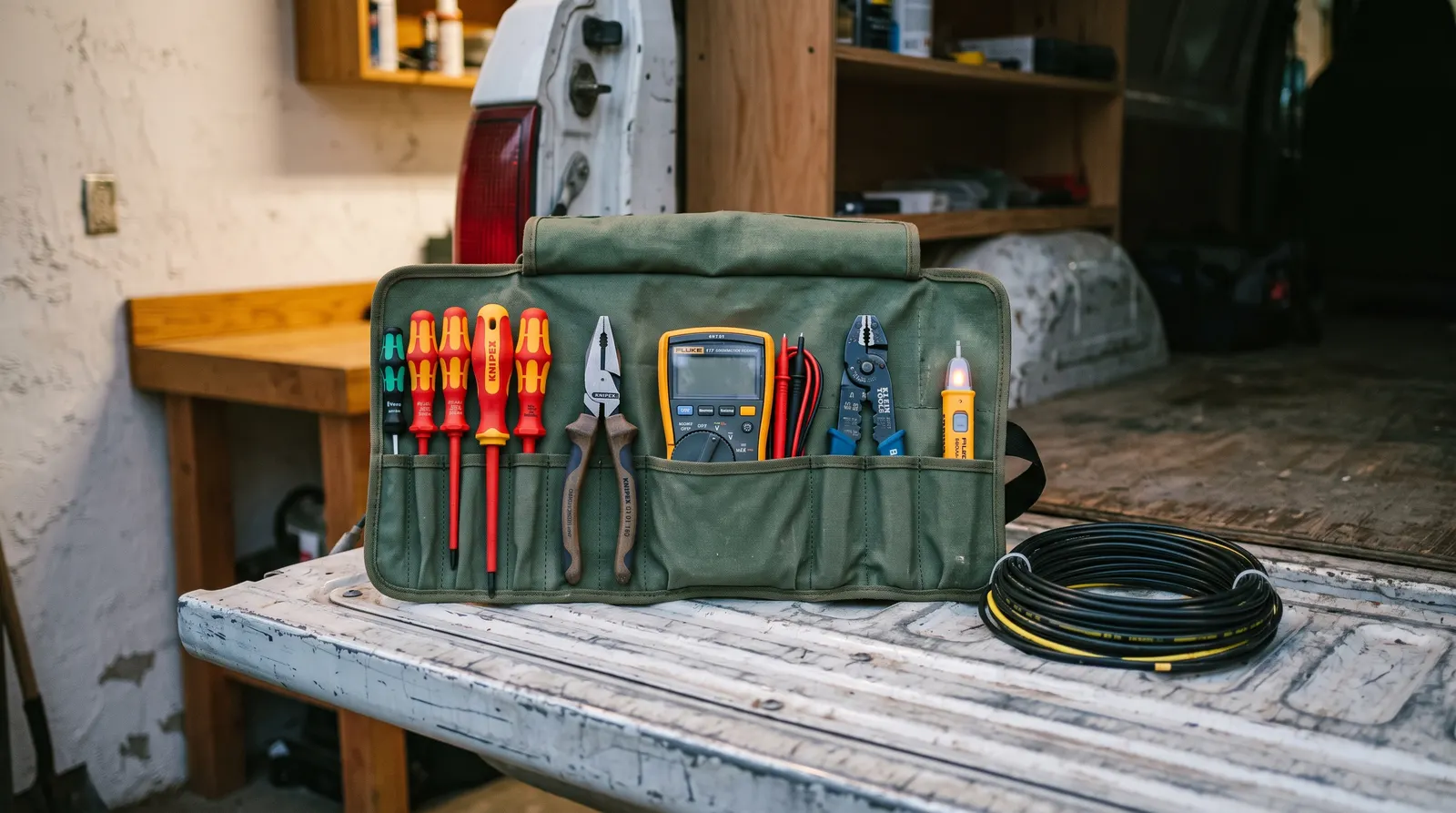
What an emergency electrician costs
Service-call fees, hourly rates and the real after-hours multiplier, in plain numbers.
“GFCIs with the test buttons were to protect people, period. Arc fault breakers are to protect the structure.”
The first two minutes
How to kill power safely, and when not to
- 01
Check for fire or injury first
Flames, smoke, or anyone in contact with a live source means 911 before anything else. Do not touch a person who is being shocked until the power is off.
- 02
Get to a dry position
Dry floor, dry hands, dry shoes. Never reach a panel across standing water.
- 03
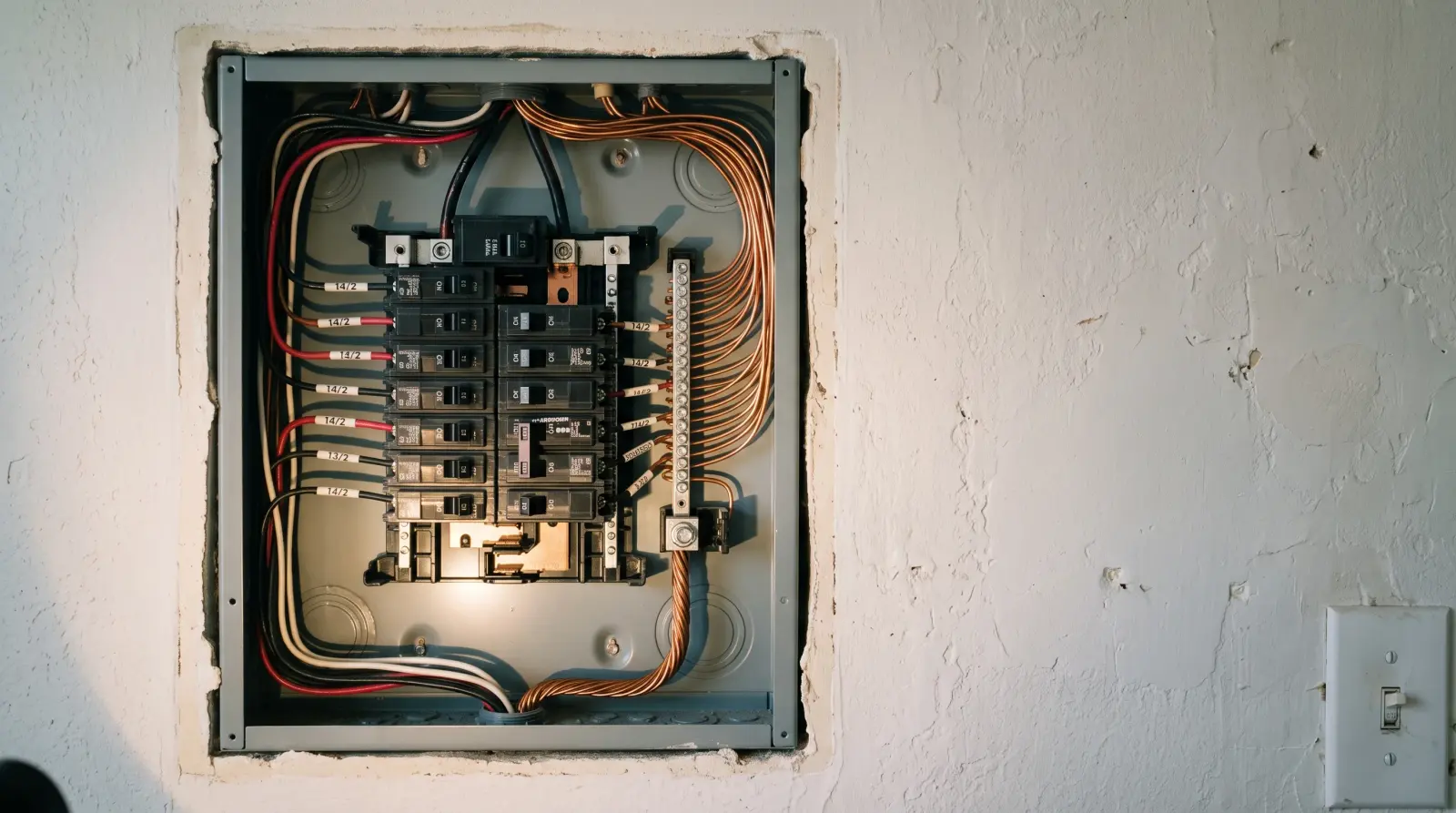
Kill the circuit, then the main
Switch off the individual breaker for the affected circuit. If you cannot identify it or the panel itself is the problem, switch off the main.
- 04
Isolate, label, call
Tape a note over the breaker so nobody resets it, photograph anything scorched, and call a licensed electrician with the circuit already dead.
The instruction every competitor gives is "turn off the main breaker if it is safe". None of them define safe, which is the only part that matters.
What counts as safe
Safe means a dry floor, dry hands and dry footwear, with nothing conductive between you and the panel.
Emergency Services 24H routes an urgent electrical fault to local electricians covering your area, and it routes the other trades that fail at night the same way, including a lockout or locksmith call. Start from the emergency home page when the trade is not obvious.
The stakes, in cited numbers
Three numbers: 911, the power company, or an electrician
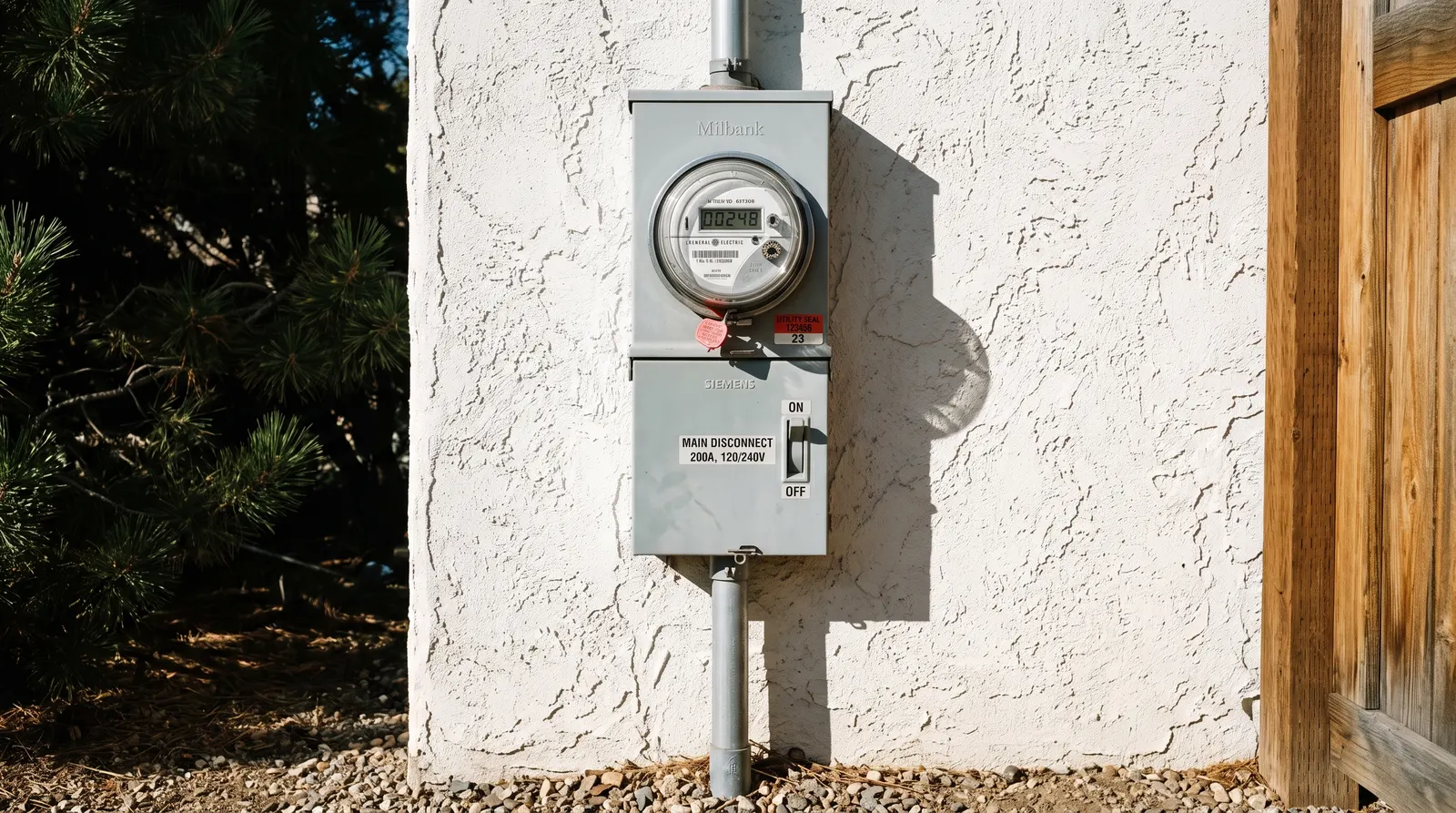
Call 911 for fire, smoke, a shock or a downed line, the power company for anything up to and including the meter, and a licensed electrician for anything from the panel inward. This is the routing question homeowners ask constantly and most guides answer badly, because three different organizations own three different parts of the problem.
- 911. Any fire or smoke, anyone shocked or unconscious, and any downed power line.
- Your power company. Everything on the supply side: the drop from the pole, the service head, the meter, and a whole-street outage.
- A licensed electrician. Everything from the panel inward. Tripping, arcing, buzzing, dead circuits, scorched outlets and anything inside a wall.
Getting this wrong costs the hour that matters. People call electricians about downed lines and utilities about tripping breakers, and both get told to call someone else.
Treat the split as a working rule rather than a legal boundary: utilities draw the line at the meter differently, so when you cannot tell which side a fault is on and there is any heat or smoke, call 911 first.
What an emergency electrician costs
Indicative US ranges. Always get a written quote.
| Job | Typical range | Notes |
|---|---|---|
| Service-call fee | $100–$200 | Usually covers the first hour on site |
| Standard labor | $50–$130 / hr | Weekday business hours |
| Emergency / after-hours labor | $100–$250 / hr | Typically 1.5× to 2× standard |
| Separate trip fee, where charged | $40–$100 | Sometimes a flat $150–$300 emergency fee instead |
| Typical after-hours call-out total | $150–$500 | Labor plus parts, straightforward fault |
| Night, weekend or holiday urgent call | $200–$800 | Top of the band, holidays included |
Two things separate an honest quote from a bad one.
Ask for all three figures before dispatch: call-out fee, hourly rate right now, and whether there is a minimum. Full breakdown sits in our emergency electrician rates.
The faults that account for most emergency call-outs
Is it safe to sleep in the house tonight?
The smoke alarm part is not a throwaway: ESFI reports that 65 percent of home fire deaths happen where no smoke alarm was working.
Test them before bed. If the fault involved smell or heat, and you have no working alarm on that floor, treat the house as unsafe until an electrician has seen it.
Can I just leave that breaker off?
Yes, and it is often the right call. Isolating a faulty circuit at the panel is a legitimate holding action that lets a genuinely urgent fault wait for a daytime rate.
Two conditions apply. Label it, because a household member resetting an isolated fault is exactly how this goes wrong.
When isolation is not enough
Where a burning electrical smell is involved, isolation is not enough on its own, because the source may already be smoldering inside a wall.
24/7 dispatch network
Get a local electrician moving on this
Tell us what has failed and where you are. Local electricians covering your area will contact you directly. Submitting costs nothing and there is no obligation to hire.
Fire, a gas smell, or an injury? Leave the building and call 911 first, then your gas utility or power company. Use this form once you are safe.
Know the line
Safe to check yourself, or call a pro now?
Safe to check yourself
- Switching a breaker off from a dry position
- Unplugging appliances on a suspect circuit
- Resetting a GFCI outlet with the test and reset buttons
- Checking whether neighbors have the same outage
- Testing smoke alarms and labeling an isolated breaker
Call a pro now
- Opening the panel cover, ever
- Replacing a breaker, an outlet or a switch
- Anything still sparking, buzzing, hot or smelling of burning
- A breaker that trips with nothing plugged in
- Any fault where water has reached live equipment
What an electrician will actually do when they arrive
Knowing the sequence makes the bill easier to read and the call easier to justify.
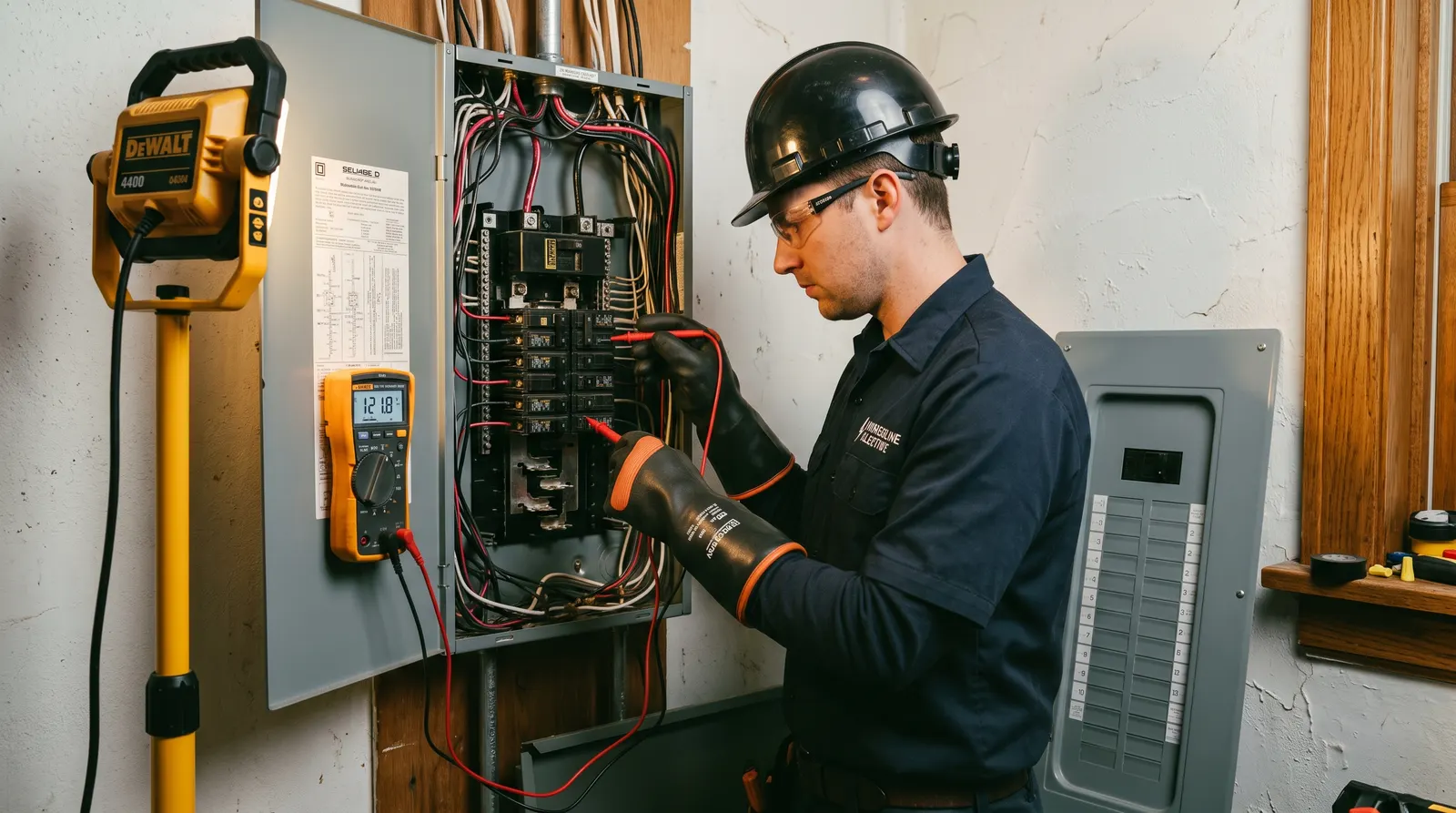
They start by making it safe rather than by fixing it. That usually means isolating the circuit, opening the panel to look for heat discoloration and loose terminations, and taking a load reading.
How diagnosis narrows it
Diagnosis then narrows the fault to a circuit, a device or a section of cable, usually by isolating and testing continuity.
A working service electrician from United Tradesman Academy documents that middle stage as a divide-and-conquer routine.
How the hour is billed
Ben Carpenter, a master electrician with three decades in the trade, describes how that hour tends to be billed now: the industry has largely moved to flat-rate or upfront pricing, where the job is quoted before the work starts rather than metered as it goes.
What homeowners actually ask
What electricians report charging for emergency work
Drawn from real public forum threads and reported prices, summarized and attributed as patterns. These are not reviews of this site, and no names or ratings have been invented.
“$200 plus materials for the first hour on an emergency call, including a twenty-minute drive”
“$250 for a Saturday-morning service call to replace a breaker”
“About $90 an hour plus the cost of the breaker, roughly two hours for a main-breaker replacement”
“Breaker keeps tripping”
1 / 4
Making the next electrical emergency less likely
Three things move the odds materially, and none of them is expensive.
Before the list, one calculation is worth doing on a phone.
Breakers do not trip exactly at their number
Adams also notes that breakers do not trip exactly at their number - a 15 will typically go at 16, 17 or 18 amps, and a 20 at 21 to 23, drifting with how cold or warm it is that day.
- Working smoke alarms on every floor. The single highest-value item in the house, given 65 percent of home fire deaths happen where none was working (ESFI, read 2026-07-22).
- GFCI and AFCI protection where code expects it. Kitchens, bathrooms, garages and outdoors for GFCI; bedrooms and living areas for AFCI.
- Load spread rather than stacked. Two heat-producing appliances on one 15 amp circuit is the most common overload in American homes, and an extension lead does not add capacity.
How the matching works, and what we do not do
Emergency Services 24H is a referral service. We do not employ electricians and we do not perform electrical work.
How your request routes
Your request routes to local contractors covering your area, and they contact you directly to quote and schedule. The rates published here exist so you can judge that quote instead of accepting it blind.
Straight answers
Frequently asked questions
Short, plain answers to the questions people ask us most about this page.
Browse all guidesWhat is considered an electrical emergency?
Anything that can start a fire or deliver a shock if left running: burning smells or smoke from outlets, switches or the panel, sparking or scorched receptacles, a breaker that will not stay reset, buzzing or crackling at the panel, and any water in contact with live equipment.
Who do I call for an electrical emergency?
Three different numbers cover three different faults. Fire, smoke or a shock injury is 911. Downed lines, damage to the service head or the meter, and a whole-street outage are your power company.
How much does an emergency electrician cost?
Standard labor runs about $50 to $130 an hour with a service call of $100 to $200 that usually covers the first hour. After hours the rate moves to roughly $100 to $250 an hour, typically 1.5 to 2 times standard, and a night, weekend or holiday call-out commonly totals $200 to $800 including parts.
Is it safe to flip a tripped breaker back on?
Once, after unplugging everything on that circuit. If it holds, reintroduce devices one at a time to find the fault. If it trips again immediately, or will not stay in at all, stop.
How much does an emergency electrician cost?
Expect a call-out of $100 to $200 covering the first hour, $50 to $130 an hour in normal hours, and $100 to $250 an hour after hours. A repair that needs parts is quoted on top of that.
Should I call the power company or an electrician?
Call the utility when the whole street is dark, when the service cable to the house is damaged, or when the meter itself is involved. Everything inside the panel and beyond it is an electrician’s work.
Can I turn the main breaker off myself?
Yes. Switching the main off is a homeowner action and it is the right one when there is heat, smoke or water at the panel. Opening the panel cover is not: the busbars stay live with the main off.
Does homeowners insurance cover electrical faults?
Fire damage is usually covered; the failed component itself usually is not. Keep the invoice and photographs, because an insurer will ask what failed and who diagnosed it.
Is it safe to sleep in the house with an electrical fault?
If you have isolated the affected circuit at the panel, there is no burning smell anywhere, and your smoke alarms work, usually yes. If anything smells of burning plastic, if the panel is warm or buzzing, or if you cannot isolate the fault, do not wait until morning.
What should I never do in an electrical emergency?
Never put water on an electrical fire, never touch someone who is being shocked before the power is off, never reach a panel while standing on a wet floor, and never keep resetting a breaker that keeps tripping. Each of those turns a contained fault into an injury or a fire.
Sources for this page
- Electrical Safety Foundation International
- National Fire Protection Association: Home Fires Caused by Electrical Distribution and Lighting Equipment, 2014-2018 averages
- U.S. Consumer Product Safety Commission: Carbon Monoxide Information Center
- U.S. Fire Administration (FEMA): Clothes dryer fire safety
- HomeGuide
- Angi
Experts quoted on this page
Independent, publicly published sources, quoted with attribution and linked in full. None is affiliated with Emergency Services 24H, reviewed this page, or works in the referral network.
- Thomas Adams: Oregon master electrician and business owner, Classic Electric - “If You Want To Know Why Your Breaker Trips, Watch THIS!” (2026)
Reviewed on . If a figure here no longer matches its source, that is a bug, so tell us and we will correct it.
24/7 dispatch network
Tell us what has failed and where you are
Tell us what has failed and how soon you need someone. We route your request to local contractors covering your area, and they contact you directly.
Fire, a gas smell, or an injury? Leave the building and call 911 first, then your gas utility or power company. Use this form once you are safe.