Rekeying is worth an afternoon
Learning how to rekey locks is worth an afternoon, because rekeying costs $50 to $130 plus $10 to $25 per cylinder professionally and keeps your existing hardware, finish and door prep. Replacement adds the price of a lock set for every door on top of that.
What rekeying actually changes
That is the entire appeal. You get the security outcome of a new lock, which is that nobody holding an old key can get in, without paying for new hardware or living with a mismatched handle. The FTC locksmith guidance names a low phone quote that grows at the door as the classic bait-and-switch.
The lockout and locksmith guide covers the trade, a house lockout is the emergency version, and Emergency Services 24H routes either.
What the trade does
The trade treats the choice the same way. PJ Slauson, who runs a US locksmith supply business, works a residential rekey as a hundred-dollar-class job against replacing the lock outright.
Wherever the hardware is sound, rekeying is the cheaper answer. Replacement earns its price when the lock is damaged, worn or being upgraded, not because the keys changed hands.
When neither is a saving
A rekey that leaves you with a lock you do not trust is not a saving, and a replacement you did not need is not security.
Rekey kits only fit one keyway
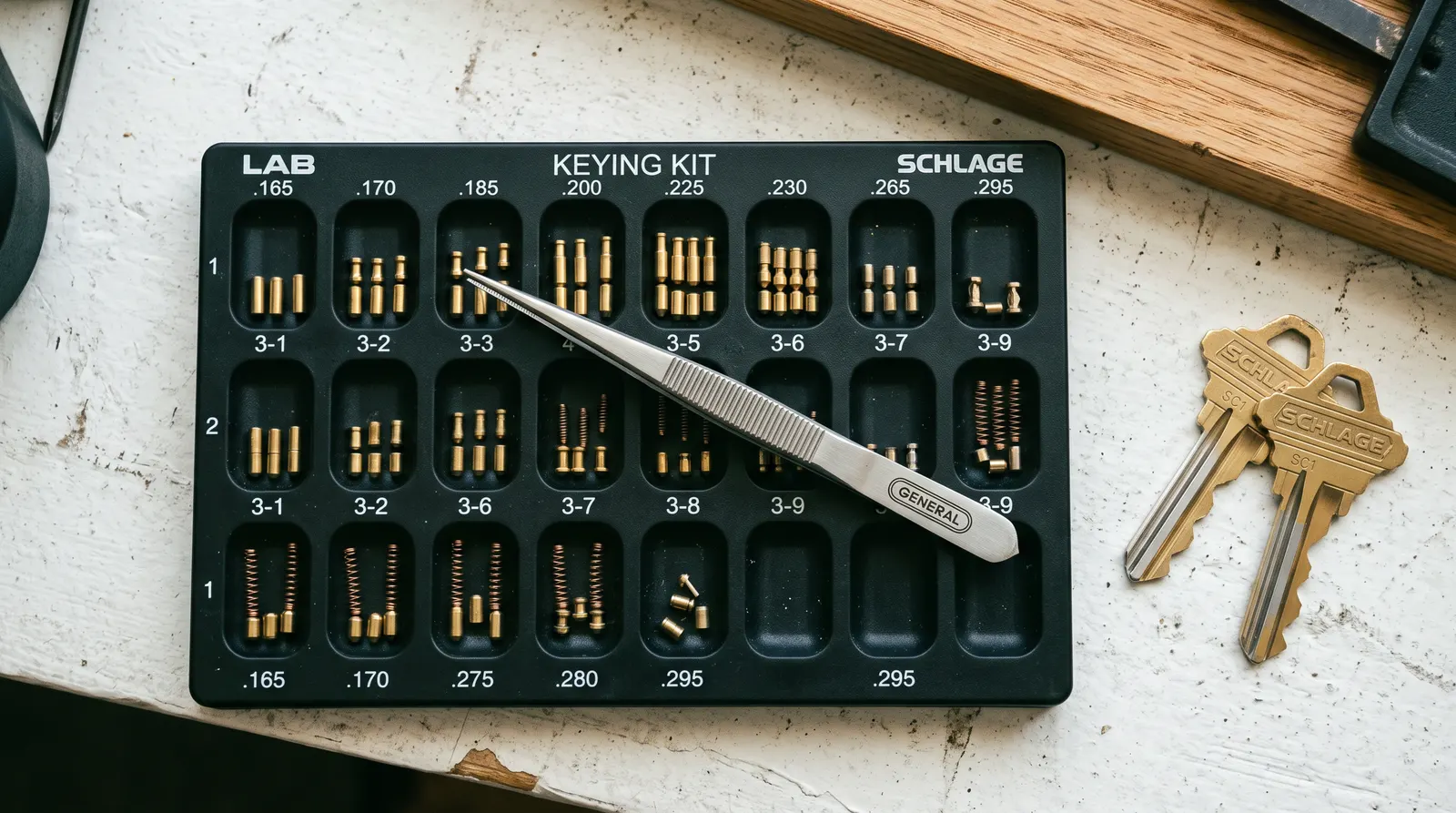
A rekey kit only fits the brand it was made for, and this is the single most common reason a DIY rekey fails. Few pages in the results state it plainly.
A rekey kit is manufacturer-specific.
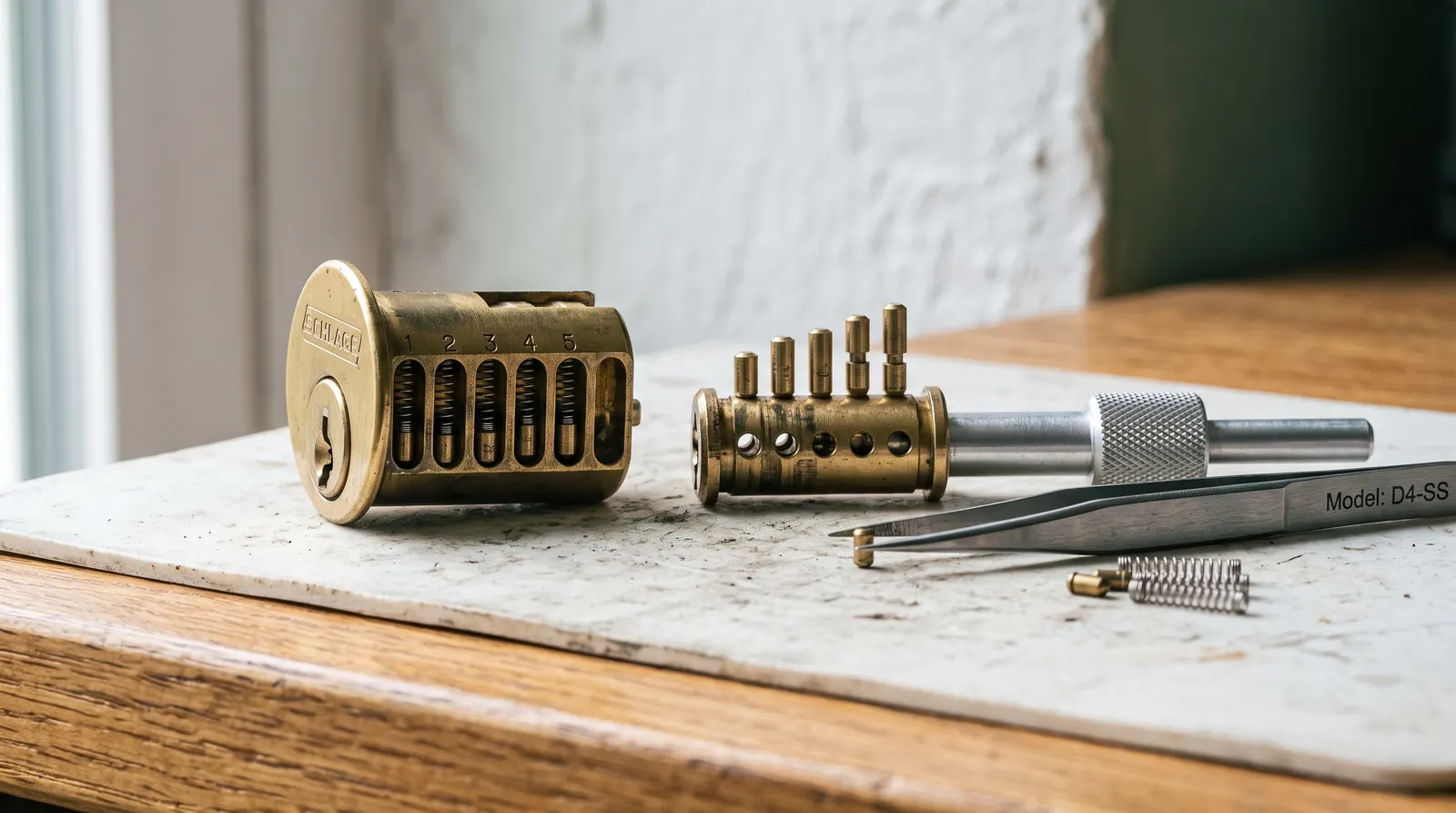
- Kwikset pins do not fit a Schlage plug.
- Schlage pins do not fit a Baldwin.
- The follower supplied with one brand’s kit is the wrong diameter for another.
If your house has a mix of brands, which most do after a few years of replacements, one kit will not do the whole house. This comes from how kits are made and sold, not from a measured failure rate.
Read the brand first
Read the brand off the face of the cylinder before you buy anything. It is usually cast into the metal around the keyway.