A garage door won’t close for one of four reasons, and the safety sensors are first by a distance. Alignment costs nothing; an opener replacement runs $300 to $900 installed.
Why it refuses to close
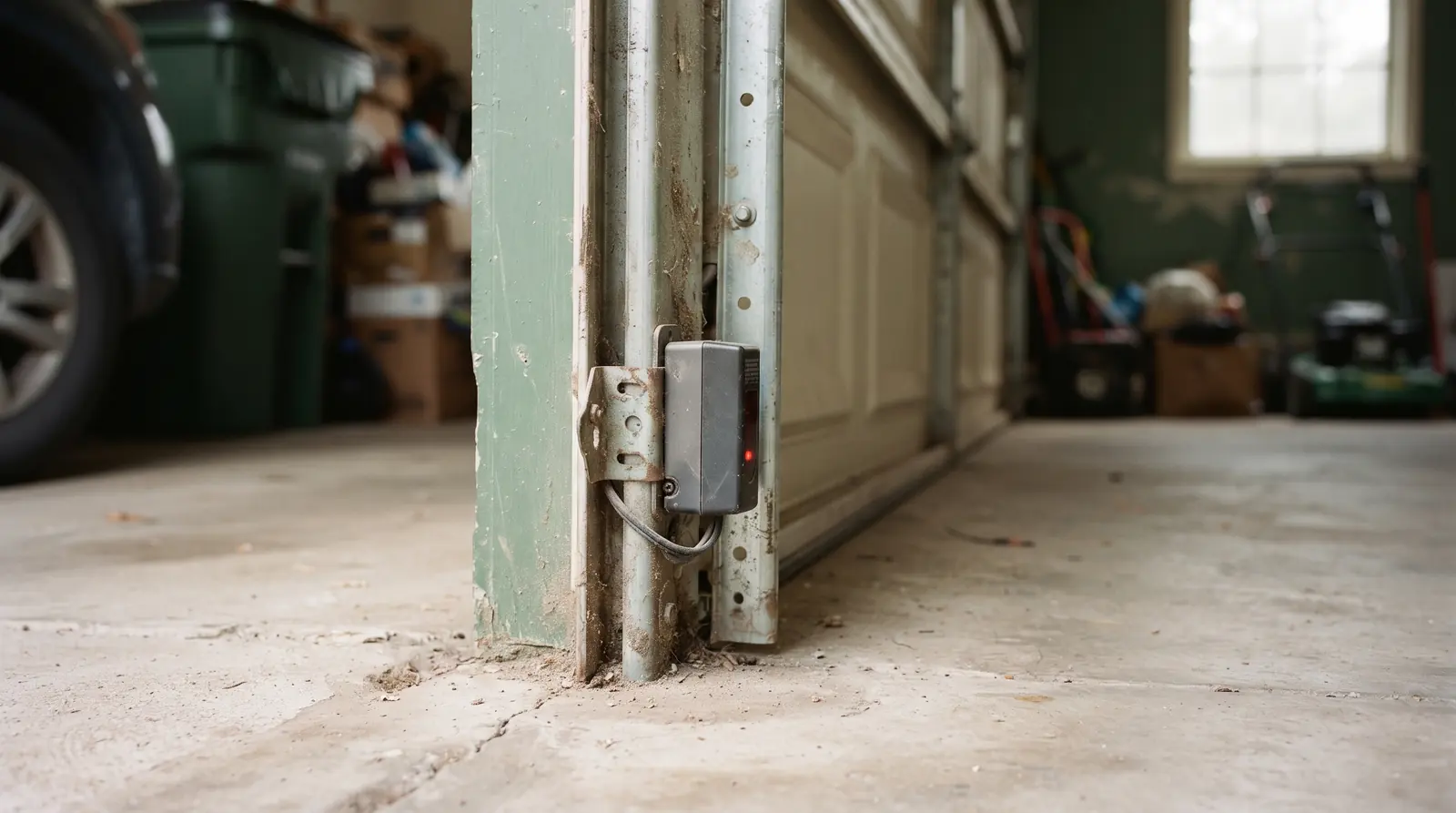
A garage door won’t close in almost every case because the photoelectric safety sensors, mounted within six inches of the floor on both sides of the opening, are reporting a broken beam.
When the garage door won’t close and the light blinks, the opener is telling you the beam is broken. The garage door guide covers the rest of the system, sensor alignment is the two-minute fix behind most of these calls, and Emergency Services 24H routes a repair to local technicians nearby.
Work the steps in order
Work the troubleshooting steps in order: the wall control or wall switch first, because a door that closes from the wall control but not the remote is a remote fault; then the sensors, where the close light flashes; then the release cord, if you need to close the door manually tonight.
If the door keeps closing even though nothing is in the way, press the button and hold the button down on the wall control: most openers close on a held button even though the beam is broken.
The photo eyes, and why they win every argument
They sit low deliberately, at a height that catches a child rather than a car bumper.
When nothing is in the way
So when a garage door won’t close and nothing is visibly in the way, the beam is the first place to look and usually the last.
Four checks, in order
How to fix it in the next five minutes
01
Look at the sensor LEDs
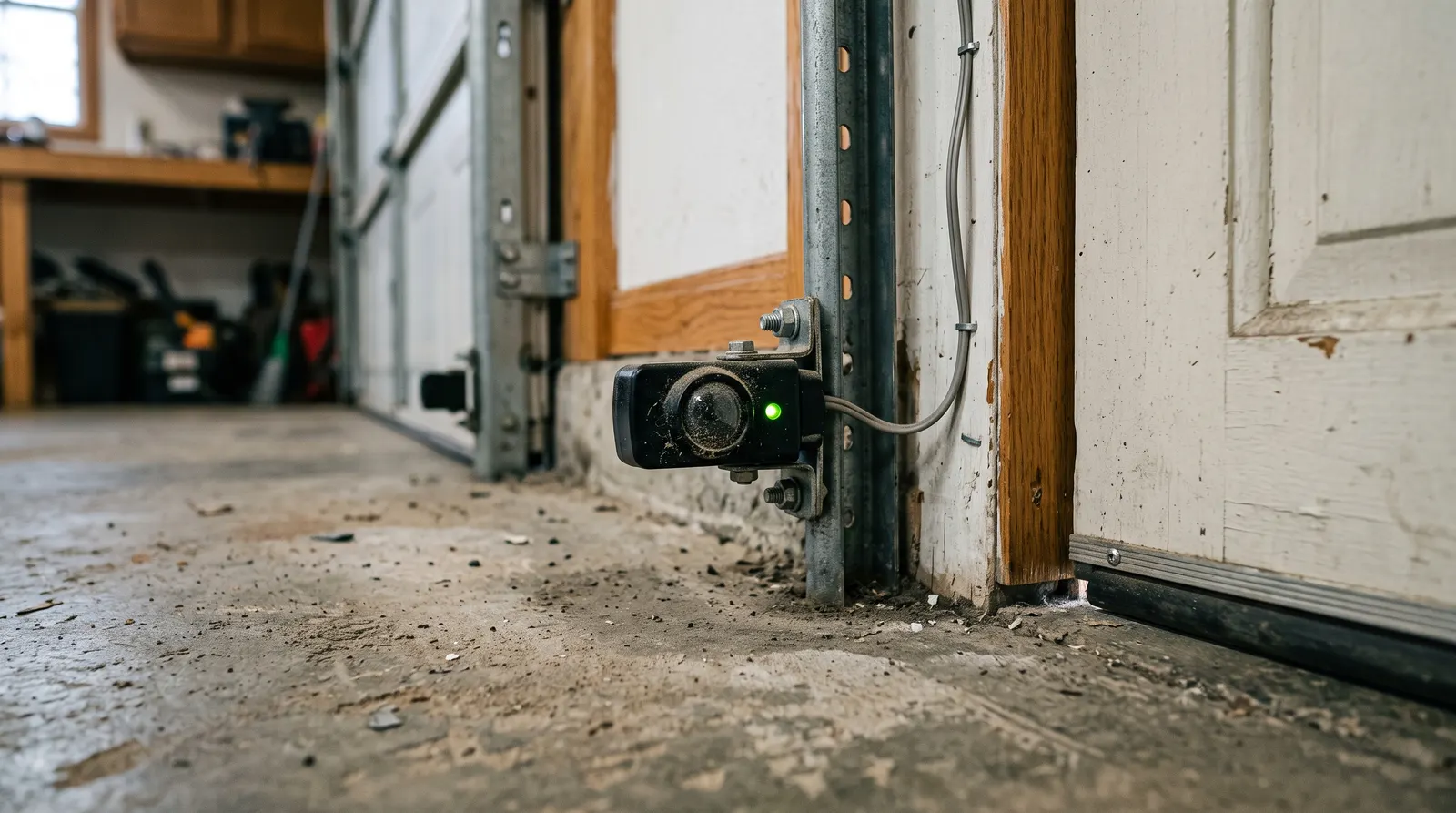
Both units carry an indicator light. One steady light and one that is off or flickering means the beam is not landing, and that is your answer.
02
Clean both lenses
A fogged, dusty or cobwebbed lens produces exactly the same symptom as a misaligned bracket, and it costs nothing to rule out first.
03
Realign the bracket
Loosen the wing nut, move the sensor in very small increments until the LED goes solid, then retighten while holding it still.
04
Read the opener blink code
Most motor units blink a repeated pattern that specifically reports a sensor circuit fault. Count the blinks and check them against the manual.
Cited source~7:10
On tracing an intermittent safety-sensor wiring fault rather than replacing the sensors.
“if your light is flashing, say on the sender unit, and it's on half the time, sometimes it turns off, it's kind of an intermittent failure: you can keep the power on to the garage door opener and you can do a wiggle test”
EH
Everyday Home Repairs
Home-repair channel; garage door photo-eye diagnostics
Everyday Home Repairs, 2020
An independent source we cite. Not affiliated with Emergency Services 24H, and not a network contractor.
Most people read a flashing opener light as the machine complaining. It is actually reporting.
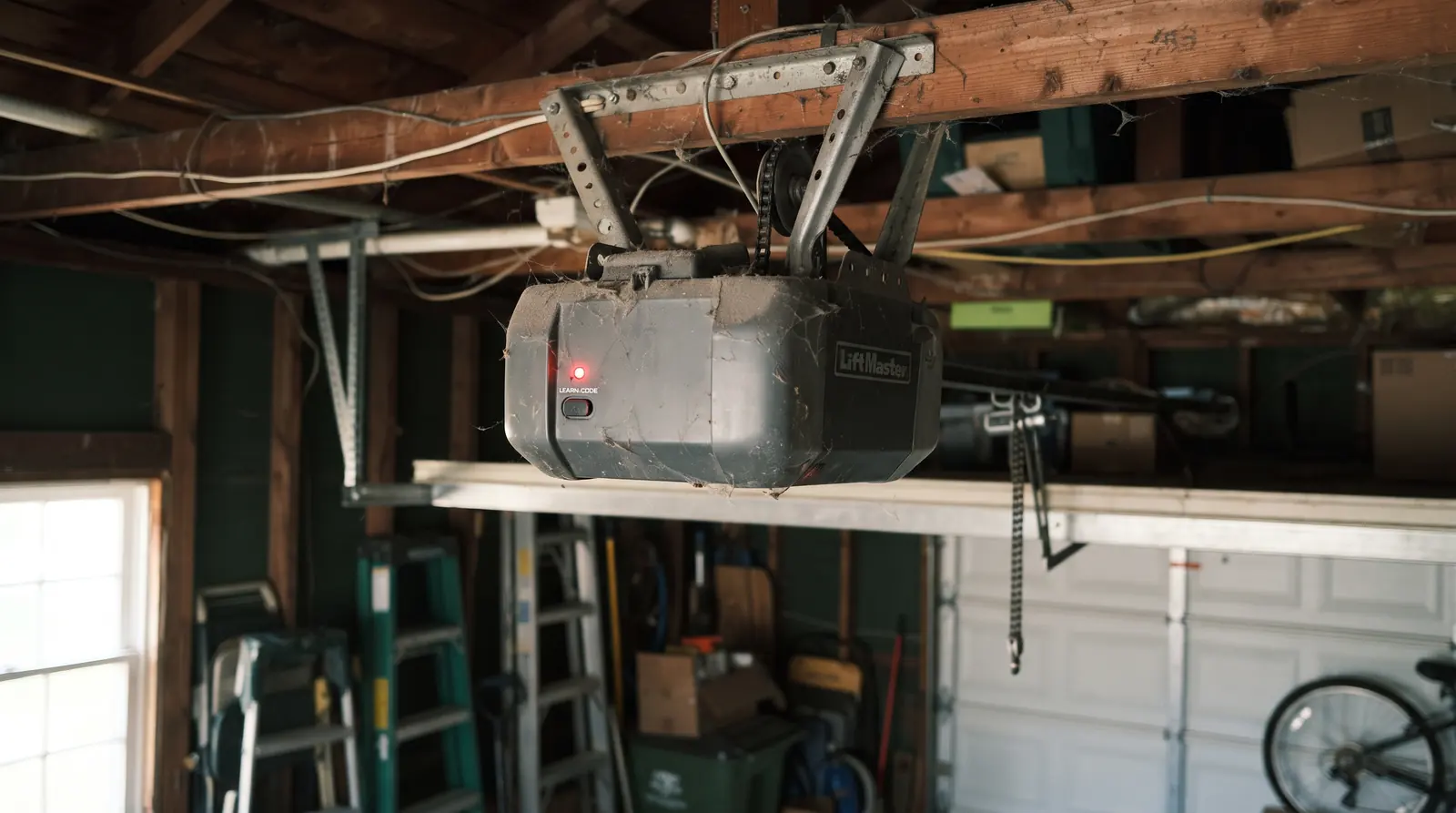
Openers blink a repeated pattern on the motor unit light when the sensor circuit is interrupted or faulty, and the pattern differs from the one used for other faults.
Which sensor is which
On the sensors themselves, one unit sends and one receives.
The pattern to look for on the most common openers is specific.
The ten-flash code
The technician behind Everyday Home Repairs reports the sensor fault as ten flashes of the garage door light with the door refusing to close - or ten audible clicks, if the bulbs in the head have burnt out and there is no light to flash.
The two LEDs are not interchangeable, and knowing which is which turns guesswork into a decision.
Alignment is the likeliest cause
Alignment is also where the odds sit.
Aligning the photo-eye sensors
Loosen the wing nut on the receiving bracket, just enough to move it.
Move slowly in tiny increments and watch the LED rather than sighting down the sensor.
Hold and tighten so the sensor does not shift as the nut goes back on.
Test twice, because a beam that only holds when nothing moves will drop out again.
This one is missing from most guides online and it explains a symptom people find maddening.
How low sun breaks the beam
Direct low sunlight falling on the receiving sensor can saturate it so it cannot distinguish the infrared beam from the ambient light.
A small shade or visor above the sensor solves it permanently.
Cold weather, grease and close force
A door that only misbehaves in winter is usually not broken either.
Why cold stiffens the door
Cold thickens the lubricant on rollers and hinges and increases the resistance the opener meets on the way down.
Lubricating before the season is the fix.
Travel limits and what happens if you overdo it
If the door touches down and immediately reverses, the down travel limit is usually set slightly too far.
The door meets the floor, the opener keeps driving, and the resistance registers as an obstruction.
The wall button override, and its limits
Use it to lock up, then fix the sensors in daylight.
Garage door won’t close and the sensors are fine
Solid LEDs on both units genuinely does rule the sensor circuit out.
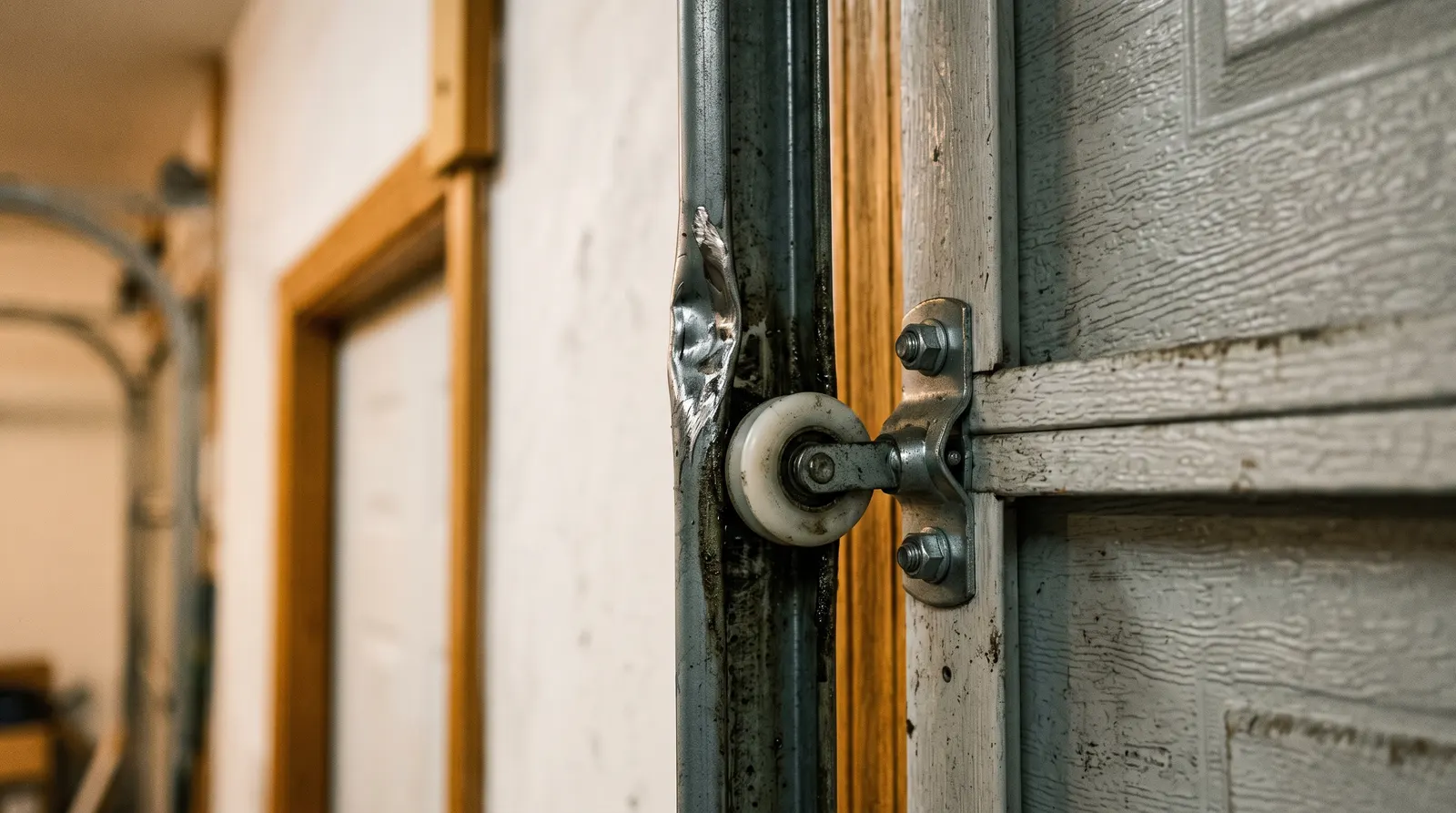
Track obstruction: a bolt, a bent section, or something wedged where the door binds.
A damaged roller: binding at one specific point in the travel.
Travel limits: the down limit set past the floor.
Logic board: a fault the opener cannot report, which is a technician call.
Blinking photo-eye LEDs almost always mean alignment or an obstruction, not a failed sensor. Check the beam path before buying parts.
What this repair costs
Indicative US ranges. Always get a written quote.
Job
Typical range
Notes
Sensor realignment
no part cost
Resolves most of these in minutes
Lens cleaning
no part cost
Fogged lenses mimic misalignment exactly
Replacement sensor pair
inexpensive part
Sold as a matched set, not singly
Travel limit and force adjustment
no part cost
Small increments, tested between each
Opener replacement
$300–$900 installed
Chain $250–$400, belt $270–$550
Source: HomeGuide 2026 garage door opener installation cost data, with part-level costs stated qualitatively where no published figure exists (retrieved August 2026). Figures vary by region and timing.
Figures last checked
The first four rows cost nothing, which is the argument for working through them before anyone quotes for a new opener.
How the matching works, and what we do not do
Emergency Services 24H is a referral service.
What happens after you submit
Your request routes to local technicians covering your area, and they contact you directly.
What homeowners actually ask
What owners report
Drawn from real public forum threads and reported prices, summarized and attributed as patterns.
These are not reviews of this site, and no names or ratings have been invented.
“My garage door does not close by itself anymore. Is...”
SourceThread title, r/HomeImprovement, a popular forum thread with fifty-plus comments. The consensus, and the AI Overview citing it, points at safety sensor misalignment or obstruction.
“Hates closing when it is hot”
SourceA recurring complaint pattern across home repair forums, describing a door that closes reliably in the morning and refuses later in the day. The usual cause is direct sun on the receiving sensor.
“CPSC has required entrapment protection devices on residential openers since 1992”
SourceU.S. Consumer Product Safety Commission. The sensors sit no higher than six inches off the floor by design, which is also why they are so easy to knock.
1 / 3
The time-of-day pattern in those threads is the giveaway
Know the line
Safe to check yourself, or call a pro now
Safe to check yourself
Cleaning both sensor lenses
Realigning a sensor bracket
Fitting a small shade above a sun-struck sensor
Lubricating rollers, hinges and the rail
Small travel limit adjustments, tested between each
Call a pro now
A door that reverses with solid sensor LEDs
A bent track section or a binding roller
Sensor wiring damaged inside a wall or conduit
Opener logic board faults
Anything that has started involving the springs
24/7 dispatch network
Get a local garage door technician moving on this
Tell us what the sensor lights are doing. Local technicians covering your area will contact you directly. No obligation to hire.
Fire, a gas smell, or an injury? Leave the building and call 911 first, then your gas
utility or power company. Use this form once you are safe.
Straight answers
Frequently asked questions
Short, plain answers to the questions people ask us most about this page.
A garage door reverses when closing because something interrupts the beam or the door meets resistance before it reaches the floor. Check the sensors first, then the track for a roller pinch, then the close-force setting.
The door will not stay closed. What now?
A door that closes and then opens again is reading an obstruction at the floor. Clear the threshold, check that both sensor brackets are tight, and watch whether the opener light flashes as it reverses.
The remote won’t close the door but the wall switch will. Why?
That points at the remote rather than the opener: on many units the wall control bypasses the safety circuit test the remote triggers. Replace the battery, then re-pair the remote before assuming the automatic garage opener has failed.
Why will my garage door not close when there is nothing in the way?
Because the safety sensors think there is. The photo eyes sit within six inches of the floor on both sides, and a knocked bracket, a dirty lens, a cobweb or direct low sunlight all break the beam as effectively as a bicycle would.
What does the blinking opener light mean?
It is a diagnostic code, and on most openers a repeated blink pattern specifically reports a sensor circuit fault. Count the blinks and check them against your opener manual.
How do I reset a garage door sensor?
Sensors do not have a reset in the usual sense. You realign them: loosen the wing nut on one bracket, move it slowly until the indicator LED goes solid, then retighten without nudging it.
How do I force close a garage door?
Hold the wall button down continuously. Most openers close on constant pressure with the sensors reporting a fault, which exists so you can secure a building rather than as a repair.
Why does it only fail at certain times of day?
Low direct sunlight falling on the receiving sensor can saturate it so it cannot see the beam. A door that closes fine in the morning and refuses in late afternoon is the classic signature.
Why does it reverse just before it touches the floor?
Usually the down travel limit is set slightly too far, so the door hits the floor and the opener reads the resistance as an obstruction. Small adjustments and a test between each is the method.
The photo-eye sensors
Track obstruction
Never disable the safety sensors to force a door closed. They exist because doors have killed children.
Independent, publicly published sources, quoted with attribution and linked in full.
None is affiliated with Emergency Services 24H, reviewed this page, or works in the referral network.
Everyday Home Repairs: Home-repair channel; garage door photo-eye diagnostics - “Garage Door Safety Sensors Troubleshooting – Complete 3 Step Guide” (2020)