No water in house? The main water shut-off valve location is the first thing to find: street side, within a few feet of the meter, at or below the lowest fixture. Exercising it twice a year is the five minutes that decides whether January is a wet floor or a wet house.
Three causes of no water
No water in house plumbing has three causes: the street supply is interrupted, the main shut-off valve is closed or failed, or a well pump has stopped.
Why this page covers all three
Advice online splits along those causes. This page covers all three, because you cannot know which you have until you check.
Diagnose in this order
No water at all? Work the tree first
01
Test several fixtures
Hot and cold, upstairs and down. One dry tap is a local fault; every tap dry means the supply is interrupted upstream.
02
Check the street
Ask a neighbor or open your utility outage page. A whole street with no water is a main break, and no amount of valve-hunting will help.
03
Check the main valve
Find it, then confirm it is fully open. Partly closed valves cause weak flow that people misread as a pressure problem.
04
Well systems: breaker first
On a private well, check the pump breaker and then the pressure switch. A pump running with no pressure should be switched off before it damages itself.
Cited source1:22
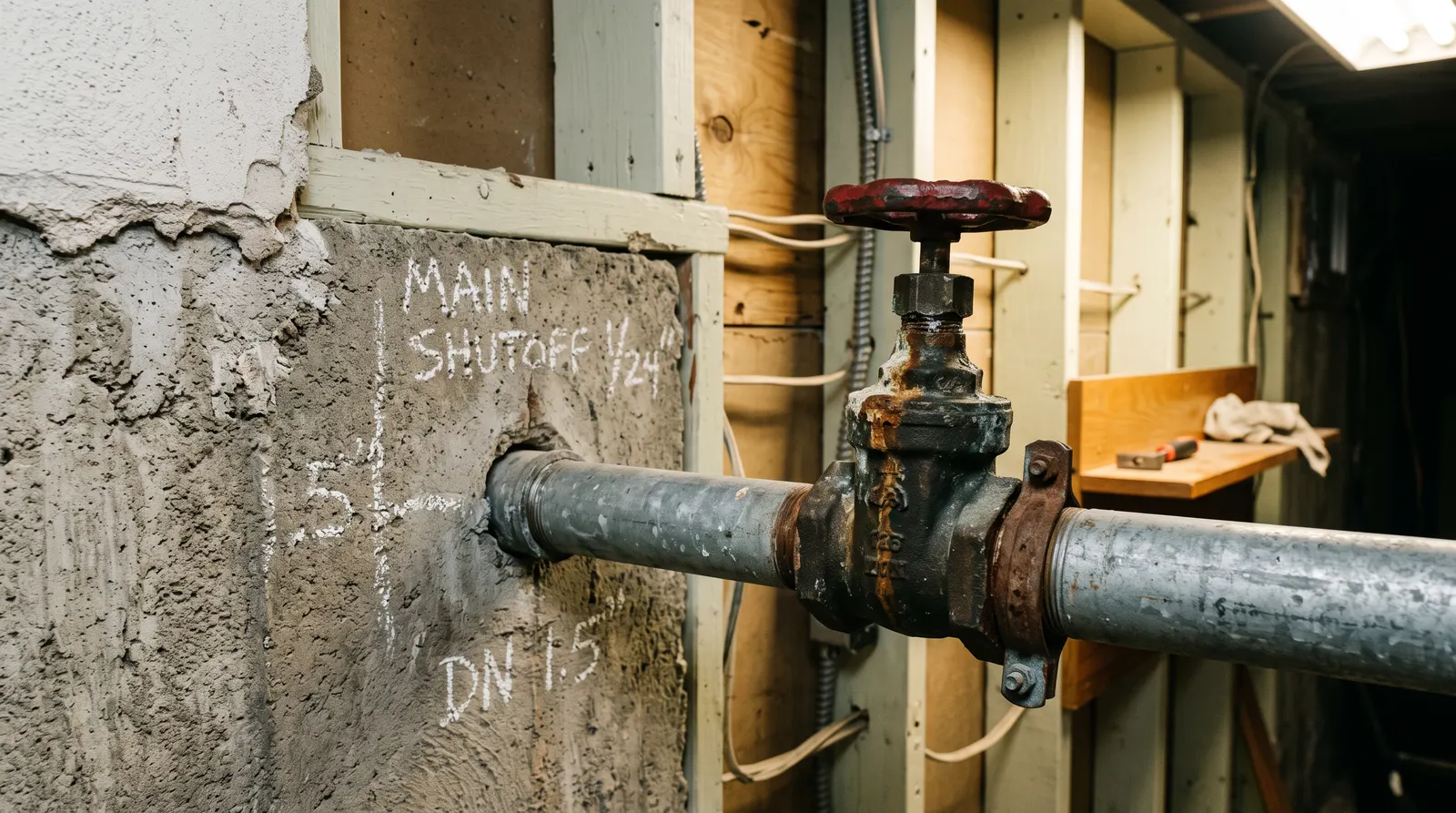
On an old main valve that does not look like it will turn cleanly.
“Honestly, my opinion, if it looks like it's going to be an issue, don't touch it.”
SS
Service Stars field technicians
Licensed plumbing and HVAC contractor, Connecticut
Service Stars, 2023
An independent source we cite. Not affiliated with Emergency Services 24H, and not a network contractor.
No water in house: where the main shut-off valve actually is
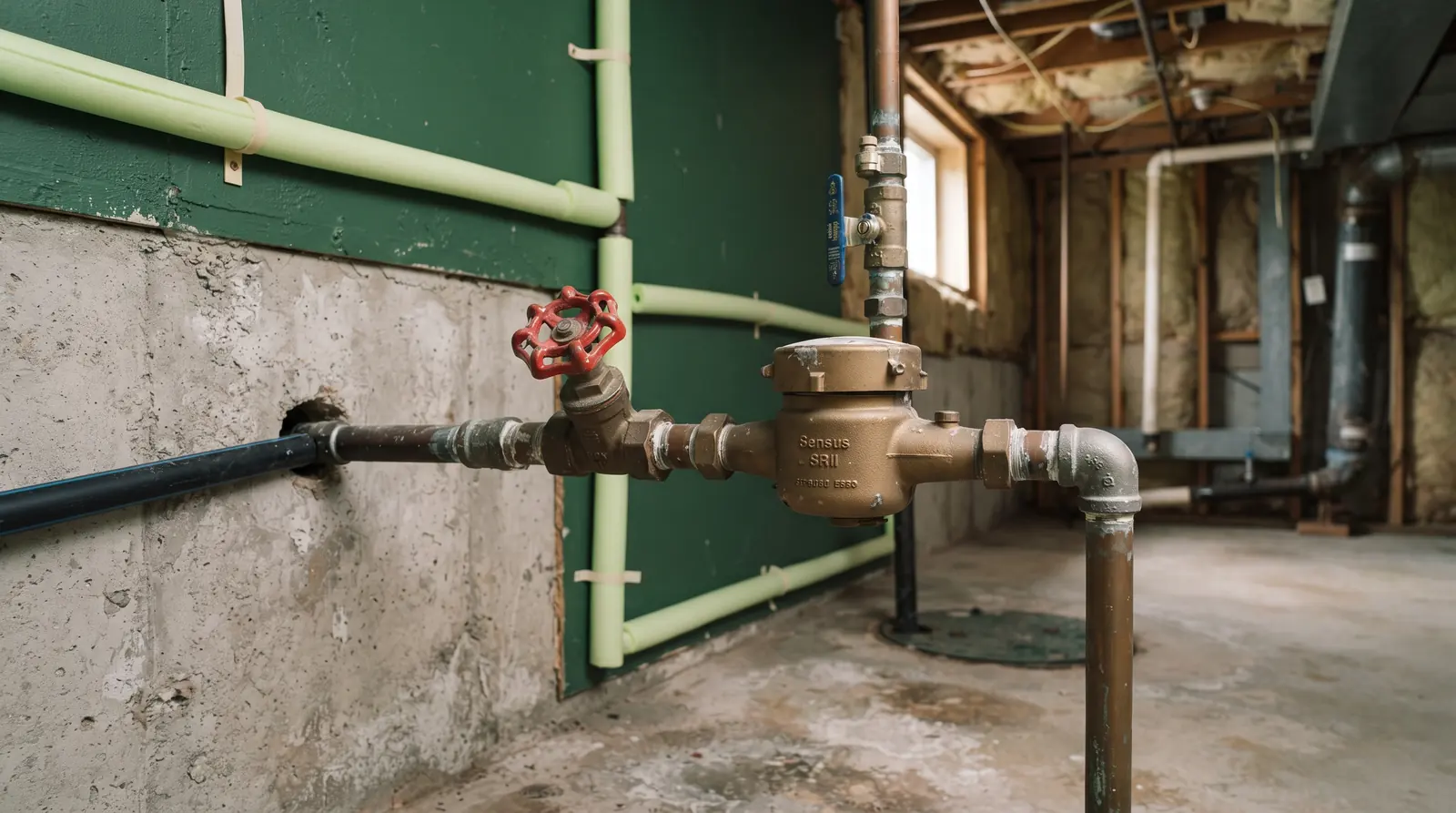
The main water shut off valve location follows three rules: street side, within a few feet of the meter, at or below the lowest fixture.
Basement or crawlspace homes: the wall facing the street, often behind stored boxes, with the meter beside it.
Slab-built and southern homes: the garage, a utility closet, or an exterior wall near the hose bib.
Apartments and condos: a service riser cupboard, with individual unit isolation rather than a whole-building main.
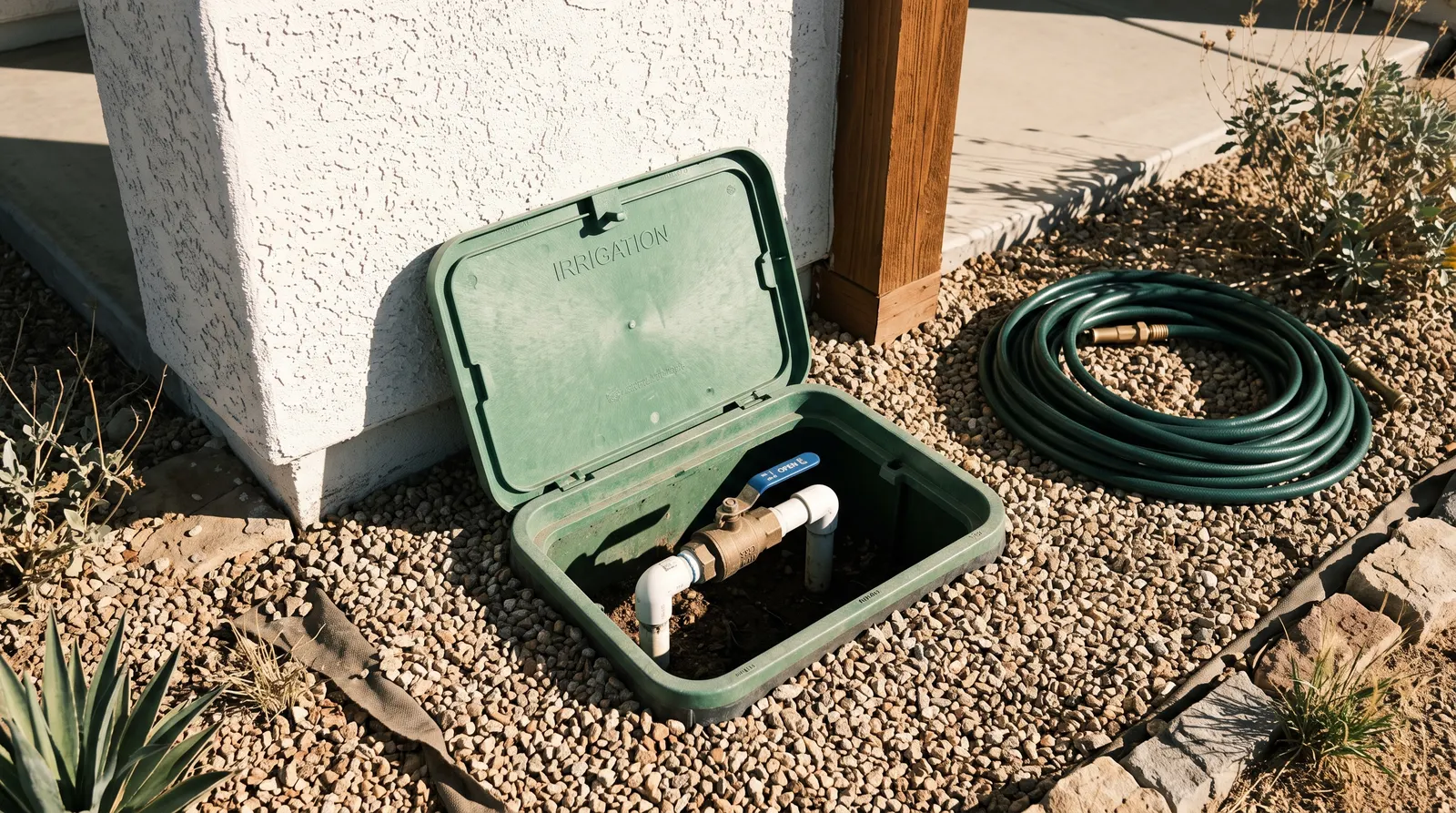
Everywhere: a curbside ground box marked with a water lid, containing the meter and the utility stop.
The three valve types, and what closed looks like on each
Knowing which valve you have matters at 2am, because two of the three give no obvious feedback that they have actually closed.
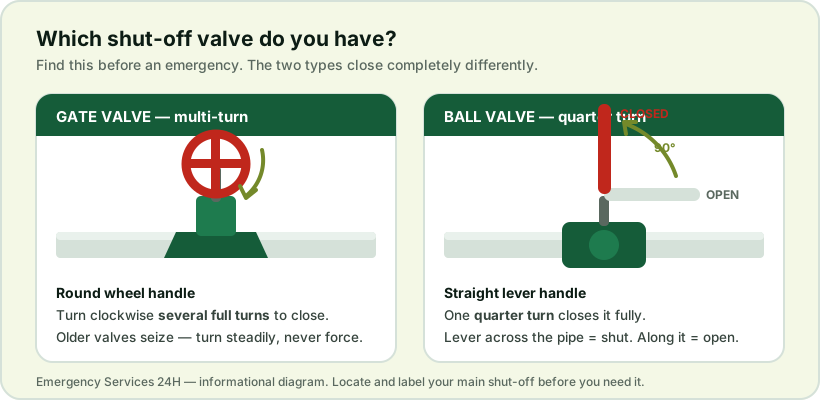
Gate, ball and stop-and-waste valves, with the closed position marked. A ball valve closes in a quarter turn to crosswise; a gate valve can take several full turns and gives no positive stop.Source: Emergency Services 24H original diagram
Gate valves have a round wheel handle and close over several full turns. They seize when never used, and break under force.
Ball valves have a lever: a quarter turn to crosswise is fully closed. Stop-and-waste valves add a drain port so a line can be emptied for winter.
If the valve will not turn
Old gate valves seize. Forcing one snaps the stem or shears the gate inside the body, and a contained leak becomes an open main.
Use steady even pressure and nothing else. No breaker bars, no pipe extensions, no hammering. If it will not move under hand pressure, it is not going to move safely.
Do not touch a doubtful valve
A technician from the licensed Connecticut contractor Service Stars puts it plainly in its water main shut-off guide: if the valve looks like it will be an issue, don’t touch it. A snapped gate leaves an open main.
The utility stop is the fallback
Go outside to the meter box. That stop belongs to the utility, who will close it if you call. The sequence in the first ten minutes of a burst applies while you wait.
Know the line
Safe to check yourself, or call a pro now
Safe to check yourself
Everything from the meter into the house is the homeowner responsibility
The interior main shut-off valve is yours to maintain and replace
Internal leaks, pressure problems and fixture isolation are yours
Labeling and exercising the valve twice a year is yours
Call a pro now
The service main in the street is the utility asset
The curbside stop and the meter belong to the utility
A leak on the street side of the meter is reported, not repaired by you
A whole-street outage is a utility fault and nothing you do will fix it
The line at the meter decides who pays. Water surfacing at the curb is almost always their side.
Turning the water back on without causing a second problem
Restoration is where people create the leak they were avoiding. A valve opened fast sends a surge through a drained system, and it finds every marginal joint at once.
Open a quarter turn. Let the system fill slowly. You will hear it filling; that is the point.
Bleed from the top down. Open the highest fixture first and let it spit air until it runs clean, then work downward through the house.
Open the valve fully. Only once flow is steady and the air is out.
Walk the run. Check every visible joint on the affected line, and check under sinks and behind the water heater half an hour later.
Brown water for a few minutes after restoration is normal, because the surge lifts sediment. Run a cold tap until it clears, then check walls for leaks before mold sets in (the EPA puts that window at 24 to 48 hours); hot first pulls sediment into the tank.
Why there is no hot water when the cold works
Check the simplest things first: the breaker for an electric unit, the gas control knob for a gas one, and the two isolation valves at the top of the tank. On a well system, listen for whether the pump runs.
Stop immediately if there is any sulfur smell near a gas water heater. That is a gas utility call from outside the building, not a plumbing diagnosis.
Label it tonight, find it in the dark next time
The best five minutes anyone spends on home plumbing is finding the main valve while nothing is wrong. Tag it and photograph it.
Two purchases make the outside stop usable: a meter key, which unlocks the lid and fits side-mounted valves, and a meter wrench.
Label it and keep the path clear
Service Stars add two details: label the valve and keep a clear path to it. If you rent, contact the landlord.
Exercise it twice a year. Closing and reopening a gate valve stops it seizing, and one that turns freely in June is the difference in January.
Your request routes to local contractors nearby. If the answer is a call to your water company instead, that is what this page says.
24/7 dispatch network
Get a local plumber moving on this
A failed main valve, a leak you cannot isolate, or no water with the street still supplied. Send the symptoms and local plumbers covering your area will contact you directly. No obligation.
Fire, a gas smell, or an injury? Leave the building and call 911 first, then your gas
utility or power company. Use this form once you are safe.
The five minutes that decide how bad a burst pipe gets
A documented first-hand account, not a market pattern.
A named Texas master plumber, in a 2020 published video, describing homeowners searching for the main shut-off while water was already escaping, and the additional damage that search cost them.
The failure a licensed Texas master plumber sees repeatedly is people hunting for the main shut off while water comes through the ceiling.
The limits of one account
What this does not say: A single master plumber's account, published on his own teaching channel in 2020; the cost claim is professional judgement from jobs he has attended, not a measured figure.
His fix takes one dry afternoon: find the valve, close the whole house down and open it again, and make sure everyone else has watched. Run a warm water tap afterwards to clear the line. A valve that has not moved in a decade sometimes will not.
Straight answers
Frequently asked questions
Short, plain answers to the questions people ask us most about this page.
What is the usual main water shut off valve location in a slab home?
An exterior box at the property line, or a valve on the street side of the garage. Slab-on-grade houses often have no interior stop, which is why the meter key matters there.
Should I close the main valve when I go away?
Yes, for anything longer than a weekend. Close it, open a low tap to drop the pressure, and leave the heating on if freezing is likely.
Why would a house suddenly have no water?
Three causes cover almost every case: a street outage, a main shut-off valve closed or failed, or on a well a tripped pump breaker. Test several fixtures, ask a neighbor, then check the valve.
Where is my main water shut-off valve?
Where the service line enters the building: the street-facing wall near the meter in basement homes, the garage or outside in slab-built ones. There is also a utility stop in a ground box near the curb.
What if the main shut-off valve will not turn?
Stop. Old gate valves seize, and forcing one snaps the stem or shears the gate inside the body, which turns a contained leak into an open main. If it will not move under steady pressure, ask your water company to close the curbside stop.
Why is there no water even if I open the faucet?
Every fixture dry means the supply is interrupted upstream, so check the main valve and the street. One fixture dry is local: a closed isolation valve, a blocked aerator, or a frozen run. Hot-only points at the water heater.
Why is my well pump running but there is no water?
Usually a loss of prime, a failed foot valve, a waterlogged pressure tank, or a well drawn down faster than it recovers. A pump running without building pressure should be switched off at the breaker. That is a well contractor call.
How do I turn the water back on safely?
Slowly. Open the valve a quarter turn at a time, then bleed air from the highest fixture down. Once flow is steady, walk every joint, because the surge on restoration finds the next weak point.
Where the main enters a slab-on-grade home
Gate valve versus ball valve
Find and exercise your main valve now, while nothing is wrong. A seized valve discovered mid-burst is the worst possible time to learn where it is.
Curb stop and meter valve work often belongs to the utility rather than to you. Ask before you pay a private contractor for it.
Independent, publicly published sources, quoted with attribution and linked in full.
None is affiliated with Emergency Services 24H, reviewed this page, or works in the referral network.
Service Stars field technicians: Licensed plumbing and HVAC contractor, Connecticut, Service Stars - “Water Main Shut-Off: The Ultimate Guide for Homeowners” (2023)