Furnace blowing cold air: when it is normal and when it is not
A flame-sensor clean is often one labor hour, and after-hours HVAC labor runs $275 to $600 (2026 rate aggregator data, read 2026-08-16). A furnace blowing cold air has usually lost the flame rather than the fan: incorrect thermostat settings, a dirty air filter, a dirty sensor or ignition failure.
Normal start, or a flame that never lit
Cold air at a vent is either the system behaving as designed at the start of a heating cycle, or it has failed to light and hold a flame. Those two situations are told apart by timing a single cycle, which takes about five minutes and costs nothing.
First: cold air at the start of a cycle is normal
Five-minute diagnosis
Time one cycle and read the pattern
01
Time one full cycle
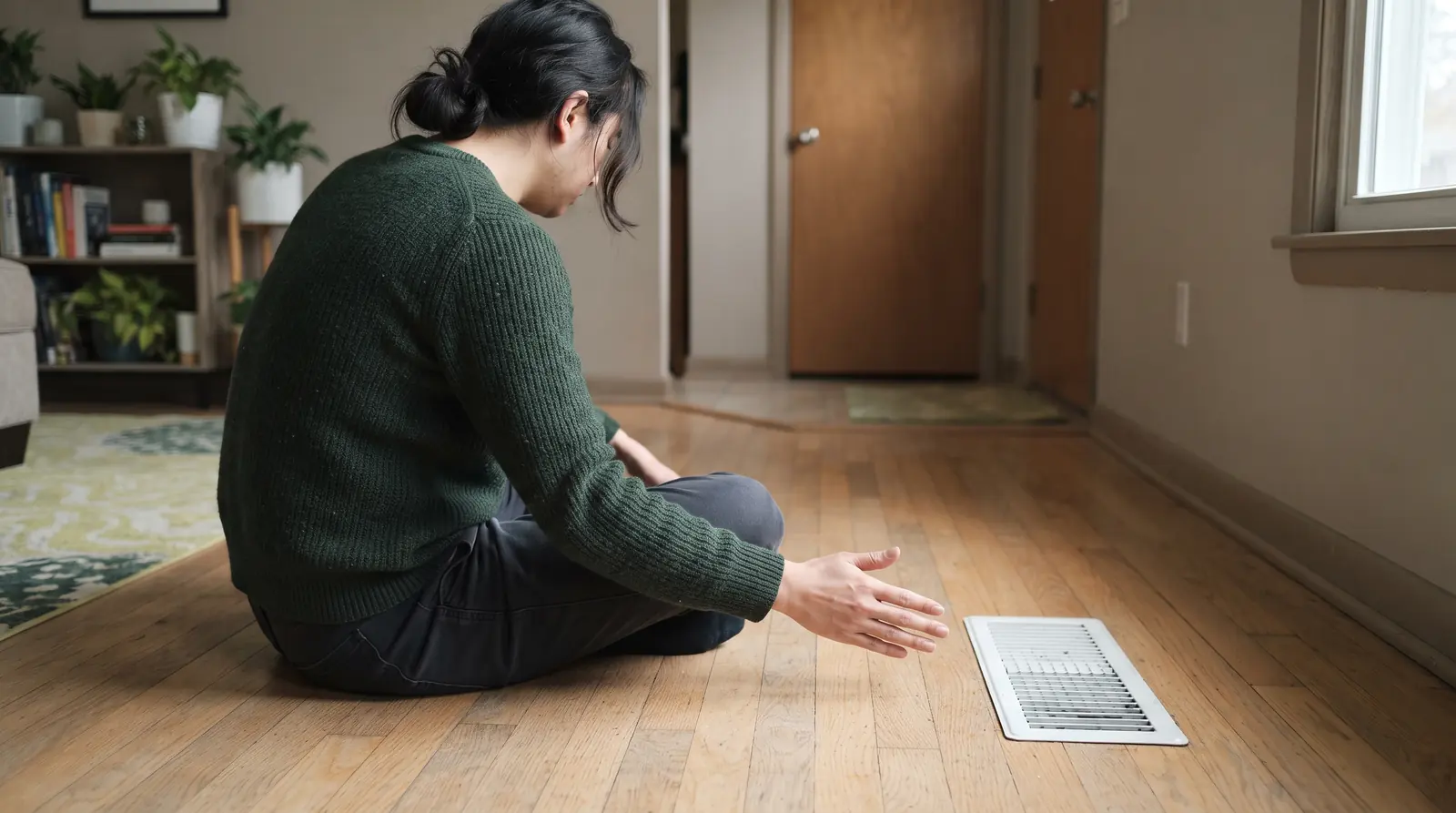
Stand at a vent as the thermostat calls for heat. Cold for a minute then warm is normal.
02
Check the fan setting
Fan on runs the blower continuously between cycles, so room-temperature air comes out of every vent. Fan auto runs it only during heat.
03
Warm then cold, every cycle
The burner is lighting and dropping out, usually because the flame sensor is dirty. The pattern repeats identically every time, which is the giveaway.
04
Cold for the whole cycle
The burner never lit: either the board locked out, or a limit switch cut the burner while leaving the blower running.
Cited source3:00
“If the flames light and then it only lasts for about three seconds, that is almost guaranteed to be a flame sensor issue.”
Lightly de-stuttered from the spoken “If fl the flames light”.
WO
Word of Advice TV
Working HVAC service technician
Word of Advice TV, 2020
An independent source we cite. Not affiliated with Emergency Services 24H, and not a network contractor.
Furnace blowing cold air? Check the fan setting first
Thermostats have a fan control with two positions, and most people never touch it.
Set to auto, the blower runs only while the furnace is producing heat. Set to on, it runs continuously, circulating room-temperature air instead of heat for most of the hour.
The giveaway
The giveaway is a heater blowing cold from every register while the unit is not running, alternating with warm air when it is.
Cold for the whole cycle: lockout
Cold air for a full cycle, with the blower running throughout, means the burner never lit.
A modern furnace tries to light three or four times, looks for a flame with a sensor each time, and stops trying if it never finds one. That state is called lockout, and it is deliberate: it prevents unburnt gas accumulating in the heat exchanger.
Clear it once. Switch the furnace off at its own power switch, wait a minute, and switch it back on.
Watch a full cycle. If it lights and runs, something transient caused it.
Do not keep resetting. Repeated cycling of a furnace that cannot prove a flame is the one homeowner action that adds real risk.
Usual causes: a dirty flame sensor, a failed igniter, a blocked condensate drain on a high-efficiency unit, or a restricted flue.
This has a signature you can time: warm air arrives, lasts thirty to ninety seconds, then goes cold while the blower keeps running.
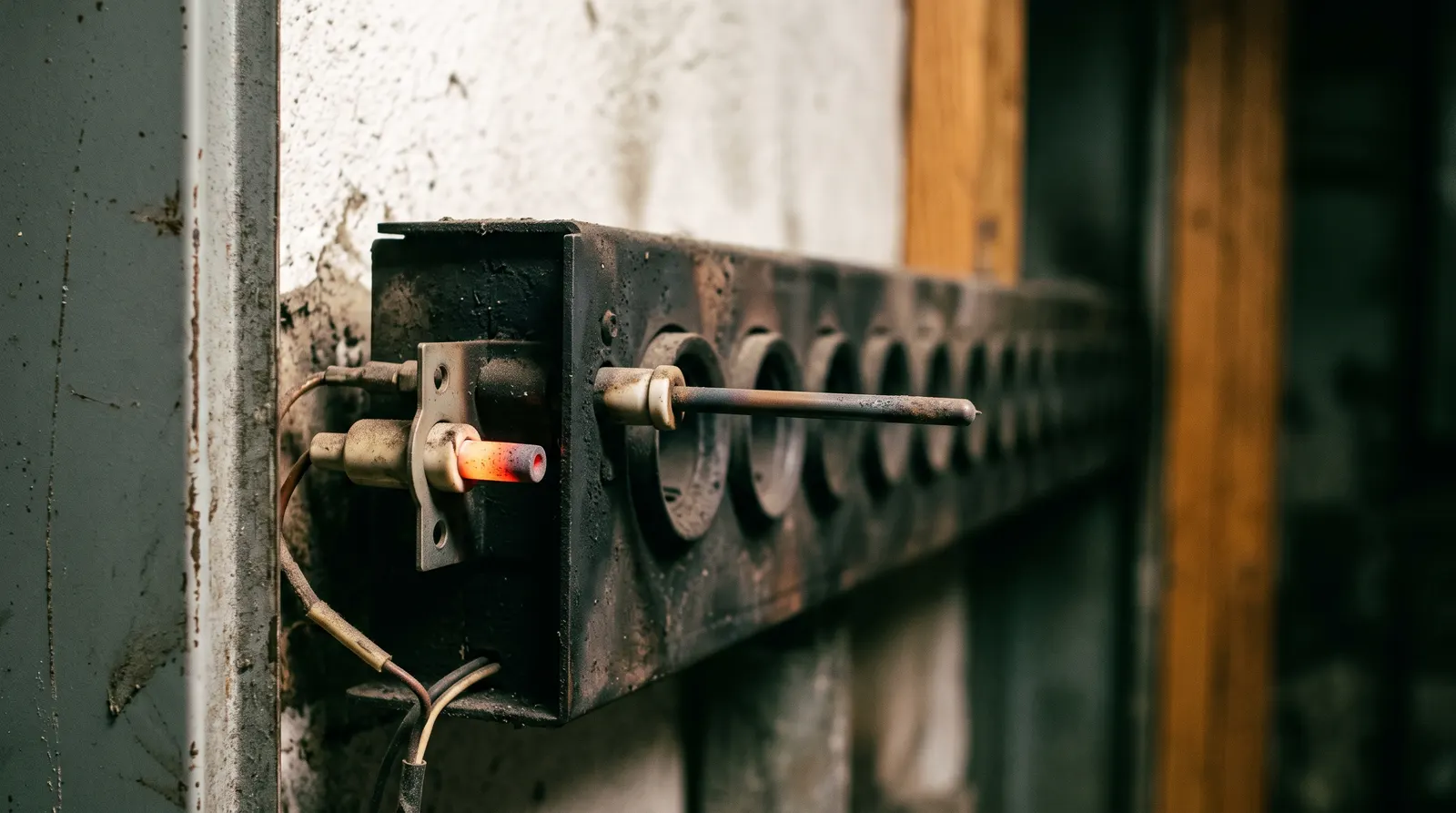
The cause is almost always the flame sensor, a rod in the burner flame that confirms combustion by conducting a tiny current. Oxide builds up, the current drops, and the board shuts the gas valve.
The flame sensor is the usual culprit
The working technician behind Word of Advice TV calls the dirty flame sensor the champion of all furnace problems: burners that light and die after three or four seconds almost always point to flame sense.
Longer than that points at the limit-switch pattern further down this page.
One of the cheapest repairs in the trade
It is one of the cheapest repairs in the trade, often inside a labor hour, and usually a cleaning rather than a part: the rod is scrubbed and refitted.
The flame sensor and igniter
A filter choking the return
Overheating and the limit switch
The third pattern is the one that matters most, and most guides name the part without explaining the cycle.
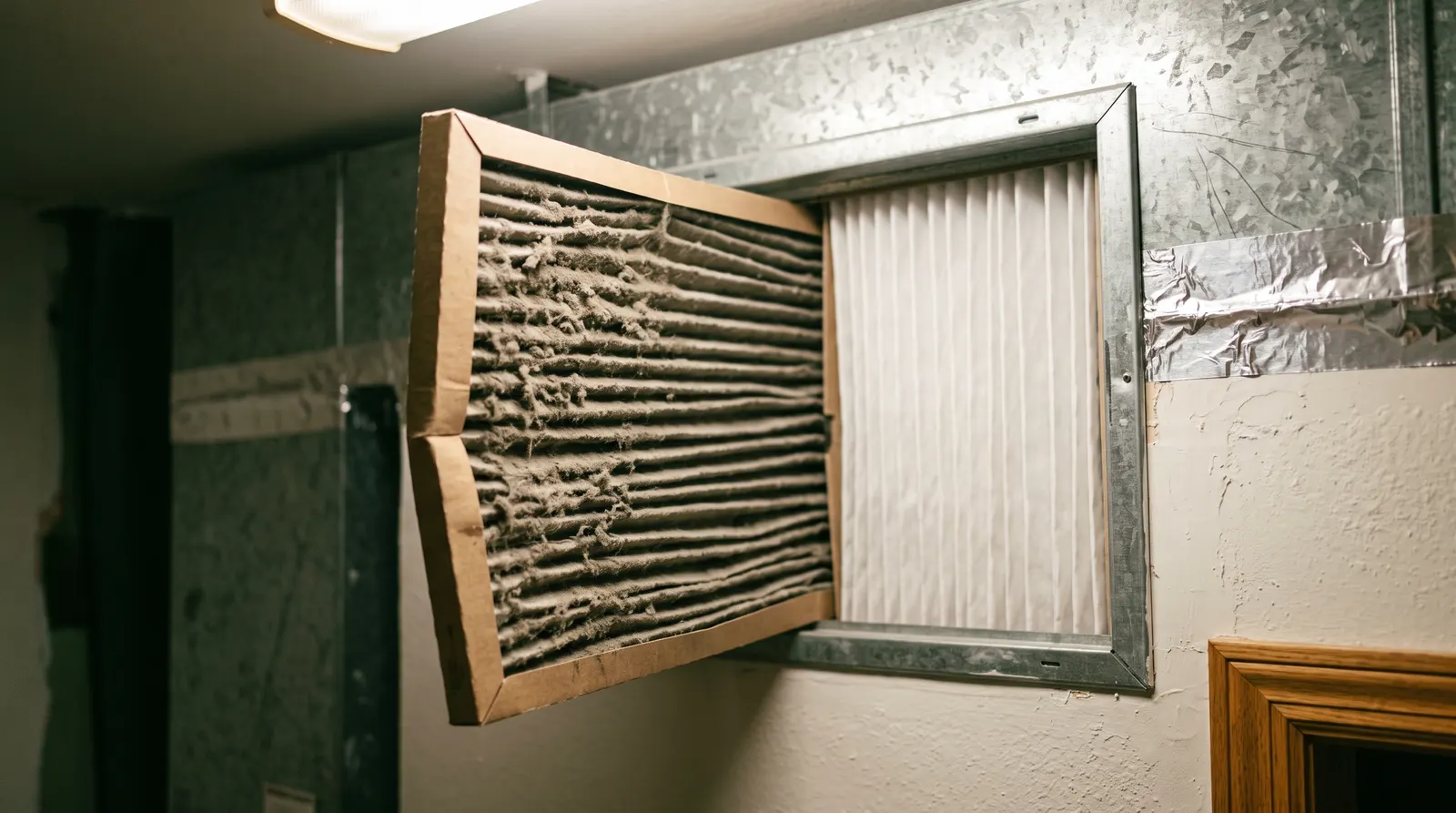
If airflow across the exchanger is restricted by a dirty air filter or closed vents, it runs hotter than design. The high-limit switch cuts the burner and leaves the blower running, which is why cold air comes out.
Why it repeats all evening
Once things cool the burner relights and it repeats, which is the furnace that heats a bit then blows cold all evening.
The loop is self-terminating. Word of Advice TV puts the threshold at three to five limit trips inside a cycle, after which the board drops into a multi-hour lockout.
One restriction escalating, not two faults
An evening that starts as intermittent cold air and ends with a dead furnace is one restriction escalating, not two faults.
His most common cause is the dullest: a dirty air filter. The giveaway is a furnace that never quite keeps up, set to 72 with the house at 70, before it trips out.
Should I turn the furnace off?
A locked-out unit is already producing no heat, one cycling on the limit switch is fatiguing its exchanger, and a flame-sense dropout is the least harmful.
Electric furnaces fail differently
Plenty of people ask about electric furnaces specifically, yet almost nothing online is written for them.
An electric furnace has no burner or flame sensor. Heat comes from a resistance heating element brought in by sequencers, so cold air means a failed sequencer, a tripped high-limit, or elements failed open.
No combustion, no carbon monoxide risk
A gas furnace can vent combustion products; an electric one cannot, so cold air there is no carbon monoxide risk. Everything about airflow and limit switches still applies.
Know the line
Safe to check yourself, or call a pro now?
Safe to check yourself
Switching the thermostat fan from on to auto
Timing a full heating cycle to establish the pattern
Replacing the air filter and opening closed vents
One lockout reset via a one-minute power cycle
Reporting the timing pattern when you call
Call a pro now
Cleaning or replacing a flame sensor
Anything involving the burner, gas valve or heat exchanger
A furnace repeatedly tripping its high-limit switch
Repeated lockouts after a reset
Any suspicion of a cracked heat exchanger
24/7 dispatch network
Get a local HVAC technician moving on this
Tell us the timing pattern, warm then cold or cold throughout. Local HVAC contractors covering your area will contact you directly. No obligation to hire.
Fire, a gas smell, or an injury? Leave the building and call 911 first, then your gas
utility or power company. Use this form once you are safe.
Check the thermostat fan setting before calling anyone. A fan left on ON blows unheated air between burns and mimics a fault exactly.
What each fault costs to fix
Indicative US ranges. Always get a written quote.
Job
Typical range
Notes
After-hours diagnostic fee, weeknight
$150–$250
Before any repair work
After-hours diagnostic fee, holiday
$225–$500
Top of the band on major holidays
Emergency labor multiplier
1.5×–3×
Applied to the standard hourly rate
Furnace igniter, standard hours
$150–$350
$275–$600 after hours
Flame sensor clean or replace
usually inside one labor hour
Often the cheapest fix on this page
Blower motor
$400–$900
Standard hours
Source: 2026 emergency HVAC rate aggregator data; HomeGuide 2026 HVAC repair cost guide (retrieved August 2026). Figures vary by region and timing.
Figures last checked
The flame sensor is the good-news case, often one labor hour and a cleaning. Ignition failure at the igniter is the common one, and the limit-switch loop is where diagnosis matters more than the part.
Full rate structure sits in our emergency HVAC rates, including whether the diagnostic fee is credited.
How the matching works, and what we do not do
Emergency Services 24H is a referral service. We do not employ HVAC technicians and we do not perform gas work.
How your request routes
Your request routes to local contractors nearby. Describe the timing pattern rather than just saying cold air, because it covers three faults at three prices.
Straight answers
Frequently asked questions
Short, plain answers to the questions people ask us most about this page.
The heater is blowing cold air sometimes and hot air other times. What is that?
Intermittent heat is the limit-switch pattern: the burner lights, the unit overheats behind a restriction, and the switch cuts the burner. Furnace heating that comes and goes in winter is an airflow fault.
Why is the furnace blowing cold air but not heating at all?
A furnace blowing cold air but not heating has lost the flame rather than the fan: ignition failure, a dirty flame sensor, or a pilot light that has gone out. An oil furnace follows the same logic at a different burner.
Does this apply to an RV furnace or a car heater?
No. An RV furnace and a car heater share the symptom and none of the parts. This page covers a house furnace: gas, propane or oil, with a blower and a heating element or burner behind it.
Why is my furnace blowing cold air?
Either it is early in a cycle, when the blower starts before the exchanger is warm, or it failed to establish a flame. Check the thermostat settings first: fan on runs the blower continuously.
Should I turn my furnace off if it is blowing cold air?
Yes if it locks out repeatedly, lights and drops out every cycle, or trips the limit switch. No if the cold air lasts thirty to sixty seconds and then turns warm.
How do you reset a furnace that blows cold air?
Switch the furnace off at its own power switch, usually a light-switch-looking control on or near the unit, wait a full minute, then switch it back on. That clears a control-board lockout. If it locks out again within a cycle or two, stop and call a technician rather than resetting repeatedly.
Why is my furnace not blowing out warm air?
The three real causes are a control-board lockout after failed ignition attempts, a flame that lights and then drops out because the flame sensor is dirty, and overheating that trips the limit switch and cuts the burner while leaving the blower running. All three produce cold air at the vent.
What are the signs of a dying furnace?
Rising run times with falling output, repeated lockouts, a burner flame that is yellow rather than blue, rust or soot around the cabinet, escalating repair frequency, and age beyond about fifteen to twenty years. None of those alone is decisive, and a combination of three usually is.
Can I shut my furnace off while it is running?
Yes, at the thermostat or at the furnace power switch. Both are safe. If you switch it off at the breaker mid-cycle the blower stops immediately, which leaves residual heat in the exchanger with no airflow, so the thermostat or the unit switch is the better choice.
A dirty flame sensor is the single most common cause of this symptom and the cheapest professional fix on the chart.
Independent, publicly published sources, quoted with attribution and linked in full.
None is affiliated with Emergency Services 24H, reviewed this page, or works in the referral network.
Word of Advice TV: Working HVAC service technician - “Top 5 Furnace Problems and How to Fix Them” (2020)