Washing machine leaking: the timing tells you the part
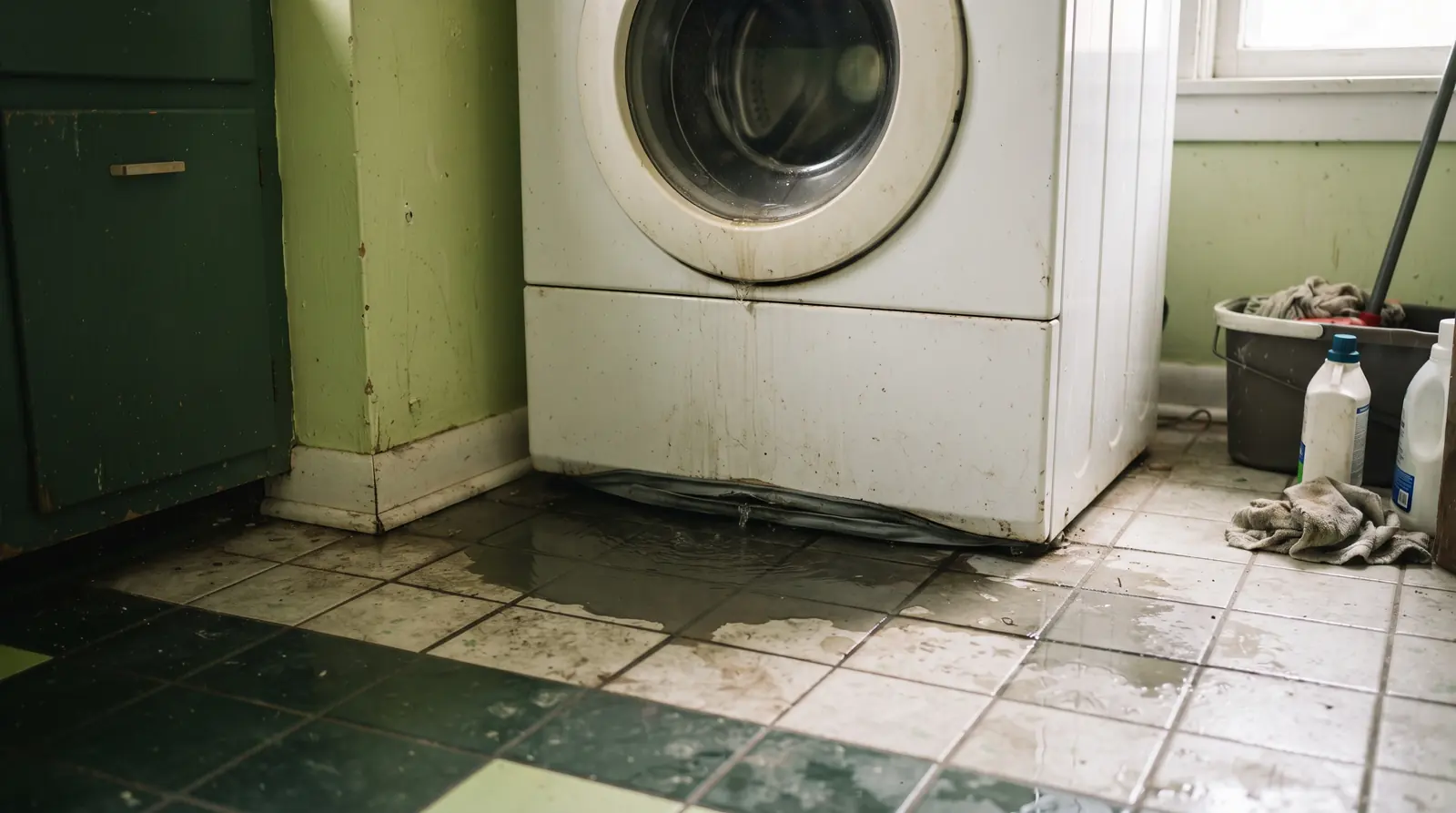
A washing machine leaking water is diagnosed by cycle phase, not by looking underneath: fill means the water hose or inlet valve, spin means the rubber gasket or tub seal, drain means the pump. Stopping a leak averages $75 to $200.
The timing names the part
A washer leaking from bottom panels almost always starts higher up and runs down the frame. Water leaking during fill points at the supply hoses, during spin at the door or tub seal, and during drain at the pump or its hose. Contractor averages put stopping a leak at $75 to $200.
Shut the water off first
Containment comes before diagnosis, because the worst version of this fault is not the one you are looking at.
Close the valves, unplug
Close both the hot and cold supply valves at the wall and unplug the machine. Whirlpool gives the same instruction in its own leak guidance, and it takes ten seconds.
Trace it properly
Four steps that find the source
01
Close both valves
Hot and cold supply valves at the wall, then unplug the machine. A perished supply hose delivers mains pressure water for as long as it takes you to notice.
02
Run a short cycle and watch
Dry the floor completely, put a towel down, and watch which phase produces water. Fill, wash, spin and drain each point at different parts.
03
Check the obvious three
Supply hose fittings, the door gasket on a front loader, and the drain hose connection. Those three account for most leaks people can see.
04
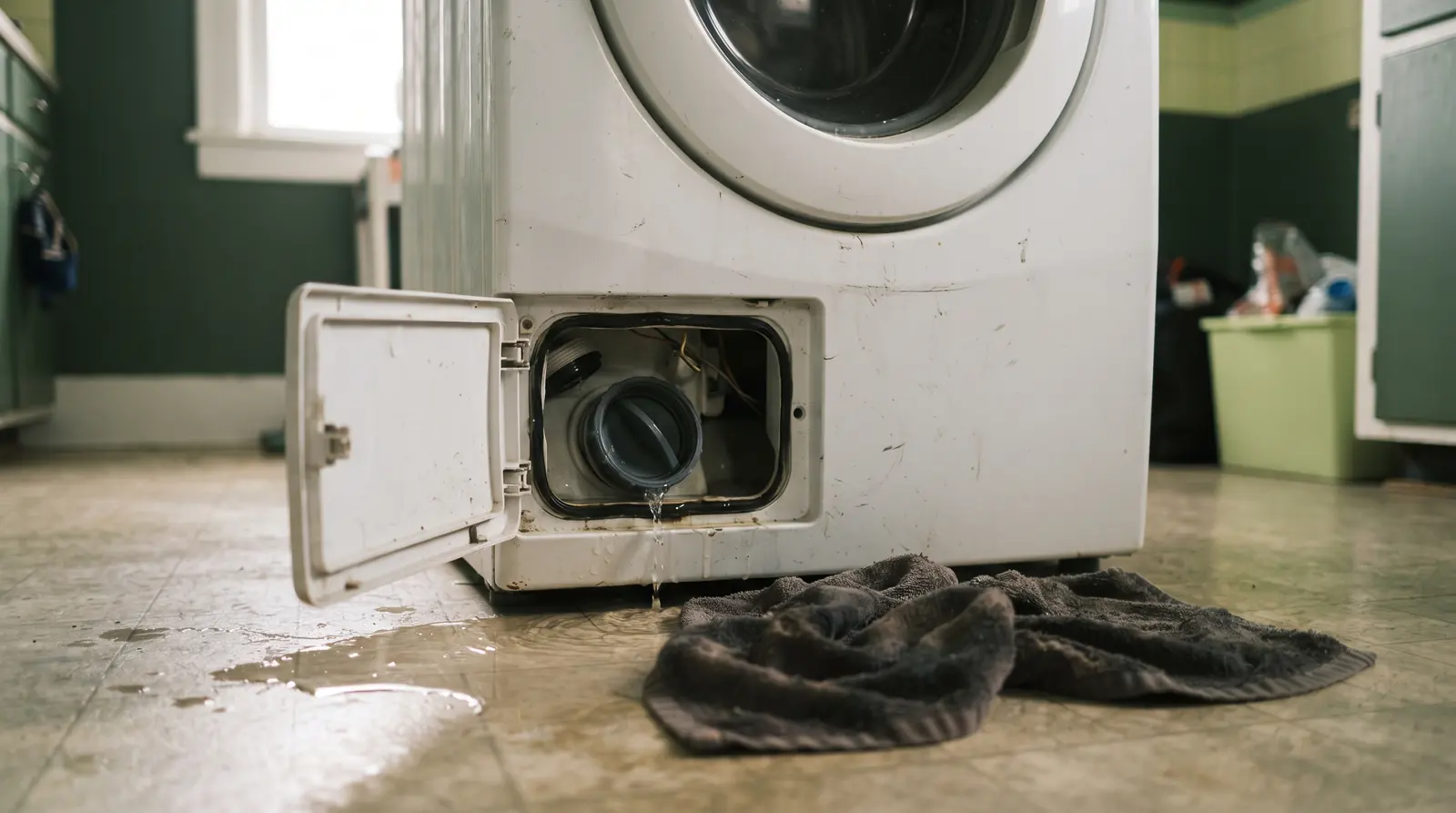
Open the pump filter
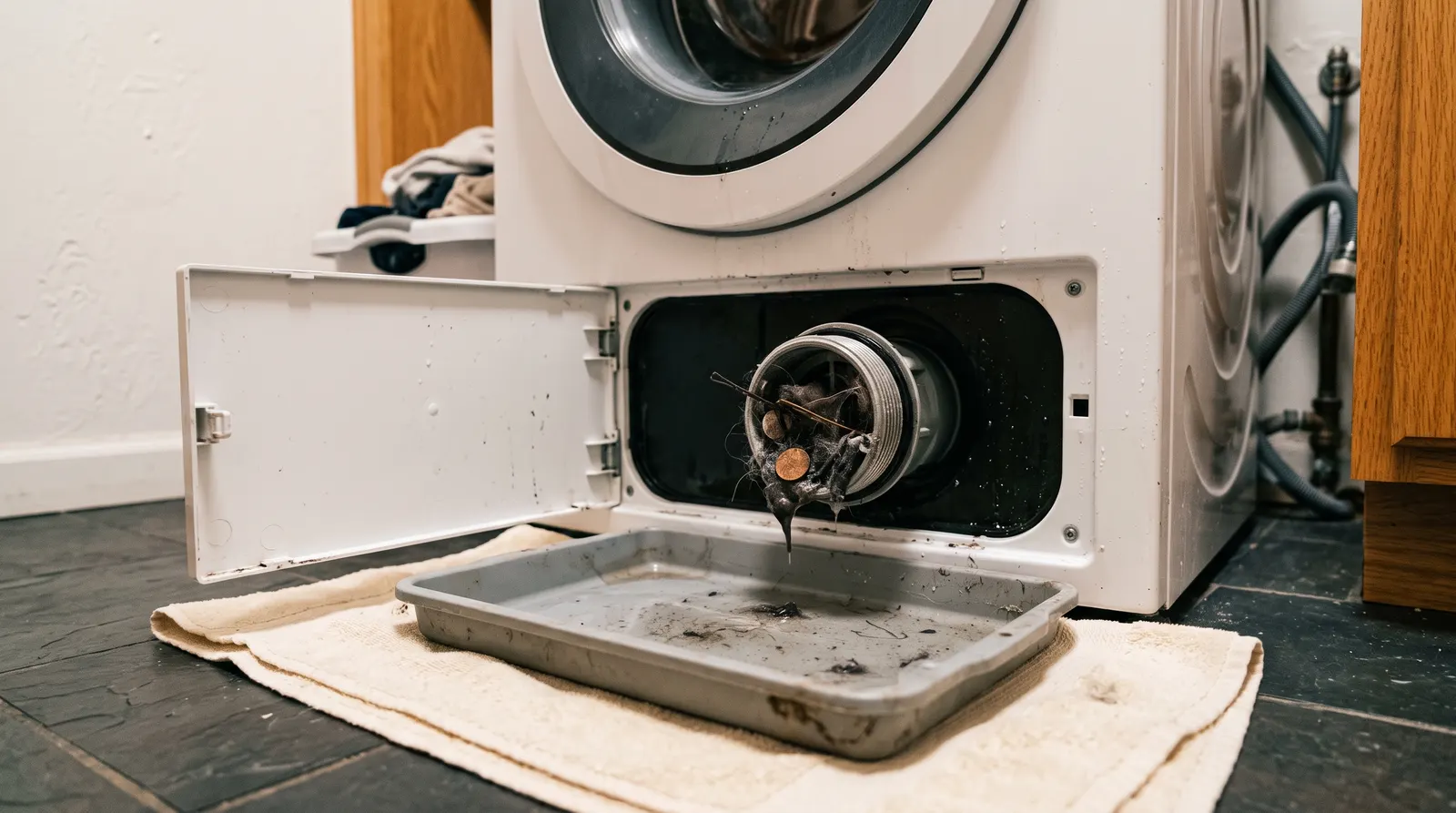
Front loaders have an access panel at the lower front. Tray and towels first, because it holds more water than you expect.
Washing machine leaking: when does it happen?
Dry the floor completely, lay a light-colored towel under the machine, and run a short cycle while you watch. The towel shows you where the first water appears as well as when.
Supply hoses: the failure that floods a room
Rubber supply hoses harden, crack and eventually split, and they do it under constant mains pressure.
Look for bulges, damp fittings, corrosion on the connectors and perished rubber at the bends. Braided stainless steel replacements are inexpensive, fit in minutes, and are the single cheapest piece of flood prevention available in a laundry room.
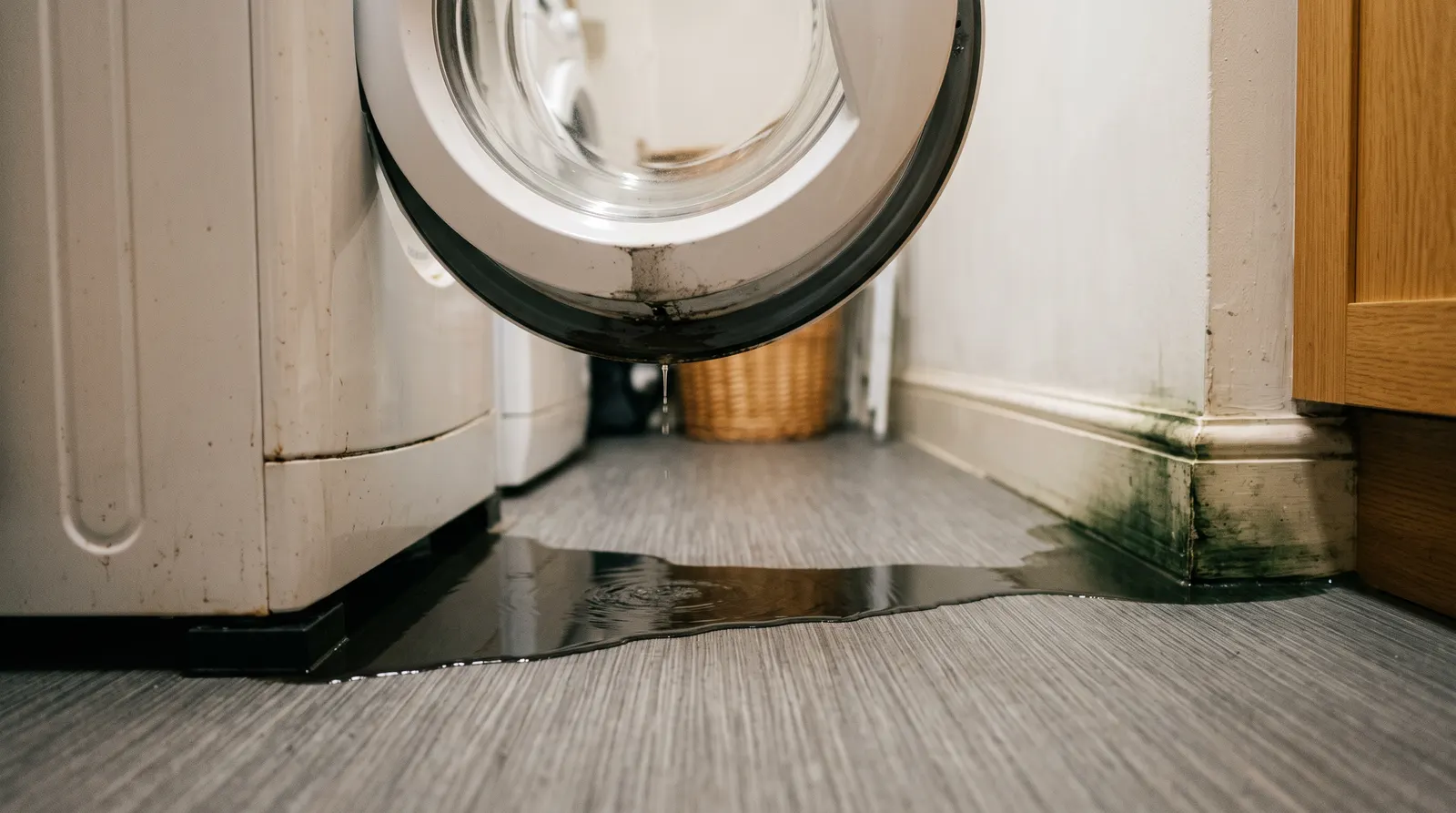
The rubber boot around a front loader door is the most common visible leak point on that design.
Pull the rubber gasket back and look inside the fold, where coins, hairpins and underwiring collect and cut it. Tears low down leak during wash and spin.
Inspect the fold: pull the lip back all the way round and feel for splits.
Clear debris: anything hard in there is actively cutting the seal.
Wipe it dry: after each wash, which slows both wear and odor.
Check the glass: a chipped door edge damages a new gasket quickly.
The pump filter almost nobody knows about
Most front loaders have a small access panel at the lower front hiding a pump filter, and most owners have never opened it.
It catches coins, buttons, hair and lint, and blocked it causes leaks and drain faults. Put a tray and towels down first: it holds water even when the machine looks empty.
Too much detergent is a real cause
It is the cheapest possible fix and it almost never appears in the top guides online.
Where this page’s information comes from
Most guides here carry a named technician’s account. This page is an exception, and it is worth saying so.
The technicians whose material informs this section work on refrigeration, dryers and gas ranges. None documents a washing machine leak, so this page rests on manufacturer service documentation and reported owner experience.
What we can and cannot say
The causes are solid: supply hoses, door seals, the pump filter and detergent dose. What we cannot give you is how often each turns up, so treat the ordering as reasonable rather than field-tested.
Oil under the machine means something else
Clear water and dark oily film are different diagnoses, and the second one is worse.
An oily residue points at the transmission or gearbox seal. That is a major internal repair on most machines, and it is normally the point where the 50 percent rule favors replacement outright.
Close both supply taps behind the machine first. Braided hoses fail suddenly and deliver mains pressure until something stops them.
What each repair costs
Indicative US ranges. Always get a written quote.
Job
Typical range
Notes
Stopping a leak, contractor average
$75–$200
The leak itself rather than a full repair
Washing machine repair, overall
$150–$400
National average around $300
Drain pump replacement
$300–$400
Common leak and no-drain fix
Door seal or gasket
$230–$300
Front loader boot leaks (Fixr 2026, read 2026-08-16)
Braided steel supply hoses
low-cost DIY part
The cheapest flood prevention in the house
Source: Fixr 2026 washing machine repair cost data (retrieved August 2026). Figures vary by region and timing.
Figures last checked
The first row answers the question homeowners keep asking and the top guides online leave unanswered.
Repair or replace this washer
Apply the 50 percent rule: replace once the quoted repair exceeds half the price of a comparable new machine, with the diagnostic fee counted on the repair side.
Drawn from real public forum threads and reported prices, summarized and attributed as patterns.
These are not reviews of this site, and no names or ratings have been invented.
“Washer leaked water all over the floor, but all fittings are dry. I am stumped”
SourceThread title from r/appliances. The replies move quickly to which cycle phase produced the water, because dry fittings rule out the supply side.
“My washing machine is leaking. Where should I start looking to...”
SourceThread title from a public homeowner Q and A forum. The consistent first answer is the door gasket on a front loader and the pump filter behind the lower panel.
“Contractor pricing to stop a washing machine leak averages $75 to $200”
SourceFixr 2026 washing machine repair cost data, against $150 to $400 for washing machine repair generally. Published ranges rather than a quote for your machine.
1 / 3
The stumped-owner thread is the useful one, because dry fittings genuinely do rule out the supply side and push the diagnosis toward the seal, the pump or the detergent dose.
How the matching works, and what we do not do
Emergency Services 24H is a referral service. We do not employ appliance technicians and we do not sell parts.
Your request routes to local technicians covering your area, and they contact you directly. If a smaller detergent dose fixes it, that is a good outcome and it costs you nothing.
Cited source1:56
On what separates repair quotes once the leak is fixed: the warranty on the installed part, which is the variable homeowners rarely ask about.
“We also warranty that part for five years, not 90 days, like most of the companies.”
YA
Yale Appliance
Appliance dealer with an in-house service department
Yale Appliance, Boston, 2023
Bias to weigh: Sells appliances and service; the 35% rule is their own published guideline.
An independent source we cite. Not affiliated with Emergency Services 24H, and not a network contractor.
Why is my washer leaking from the bottom during the spin cycle?
Water dripping during spin points at the door boot or the tub seal, because that is when the drum is loaded and turning hardest. Water underneath during drain points at the pump instead.
Does a top loading washer leak differently from a front loader?
Yes. A top loading machine has no door boot, so the usual sources are the water hose connections, the tub seal and the drain hose.
Why is my washing machine leaking underneath?
Water leaking from underneath usually reaches the floor from higher up and runs down the frame: the drain pump and its filter, the tub seal, or the machine hose connection. Watch the cycle phase instead.
Is it worth fixing a leaking washing machine?
Usually yes: stopping a leak averages $75 to $200 against $150 to $400 for washing machine repair generally. The exception is a tub seal or gearbox on an older washer, where the 50 percent rule (per our repair-or-replace guide) favors replacement.
What is the most common cause of a washing machine leaking?
The water hose and the door seal, and the two carry different risks. A perished machine pipe can deliver mains water for as long as it takes you to notice, which is why braided stainless replacements are standard advice.
How much does it cost to fix a washer leak?
Contractor pricing to stop a leak averages $75 to $200 (Fixr 2026, read 2026-08-16). A drain pump replacement runs $300 to $400 and a door seal about $230 to $300.
Can too much detergent make a washer leak?
Yes, and it is one of the most missed causes. High efficiency machines need a fraction of the traditional dose, and excess suds climb past seals designed for liquid.
There is oil under my washing machine. What is that?
A dark film rather than clear water means leaking oil from the transmission or gearbox seal. That is a major internal repair, and usually the point at which replacement beats repair.
The drain pump filter
Where a washer actually leaks
Replacing rubber supply hoses with braided stainless every five years is the cheapest insurance against a laundry flood there is.