A gas stove won’t light for one of two reasons: no spark, or no gas reaching it. A gas burner clicks but no flame means the spark is fine and the port is blocked, which costs nothing and is done well inside an hour. A technician measures a round igniter at about 2.5 to 3.0 amps.
Two reasons, and the sound tells you which
A gas stove won’t light for one of two reasons: no spark, or no gas reaching it. The sound tells you which. The appliance repair guide covers the other machines, including a fridge that stops cooling.
If you smell gas, stop and leave
This comes before every fix on this page, and it is not a formality.
Leave, then call from outside
Leave the building without operating any switch, including lights and extractor fans, and call your gas utility or 911 from outside. Do not go back in to open windows.
Safety, then diagnosis
Four steps in the right order
01
Smell gas? Leave first
Do not operate any switch or keep clicking the igniter. Leave and call the utility or 911 from outside.
02
Listen: clicking or silent?
Clicking means spark without gas. Silence means the igniter, the spark module or the power supply.
03
Lift the cap and clear the port
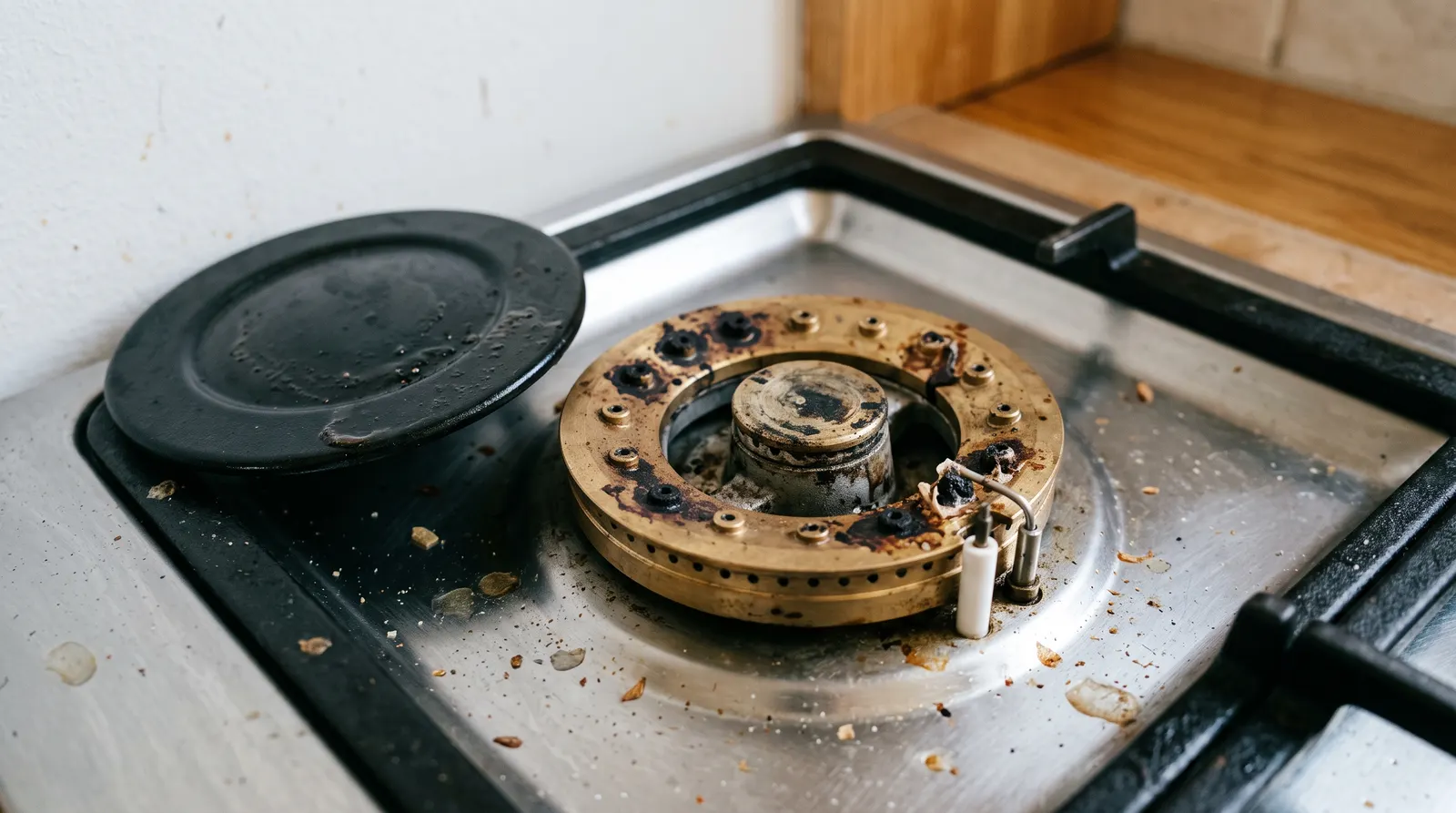
Remove the grate and burner cap, then clear the small gas port beside the igniter with a pin or a straightened paper clip. Never a toothpick.
04
Dry everything thoroughly
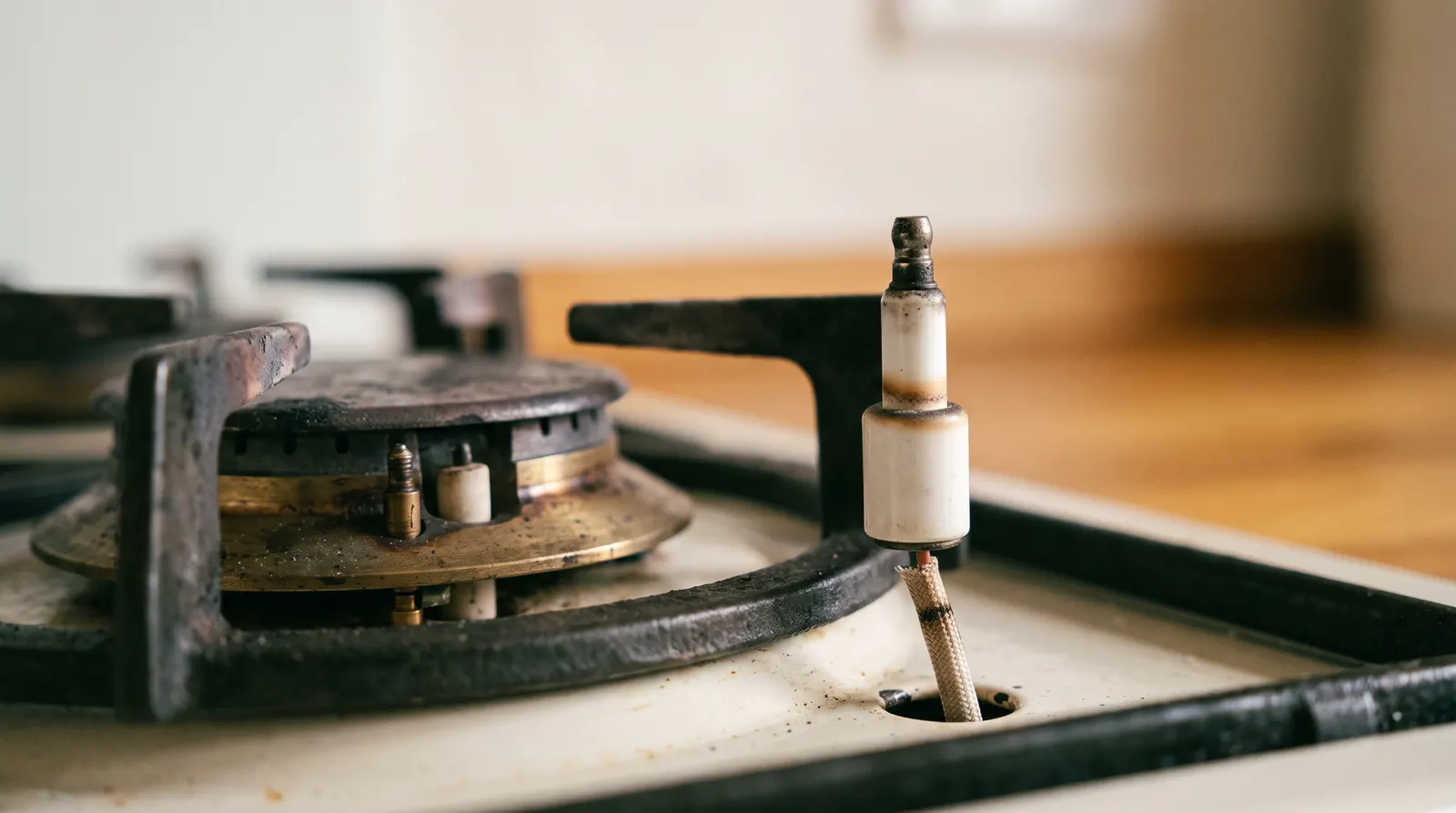
Moisture in the ceramic igniter base grounds the spark. If it started after cleaning, several hours of drying is the fix.
Cited source0:26–0:41
“Anytime you smell excessive gas you should immediately turn off the power at the circuit breaker, shut off the gas supply, don't use any electrical switches, put out any open flames and ventilate the area.”
Composite of consecutive caption lines from one continuous instruction.
M
Matt
Technical trainer, OEM appliance parts retailer
AppliancePartsPros.com, 2023
Bias to weigh: Works for a parts retailer, so the recommended fix is usually a part.
An independent source we cite. Not affiliated with Emergency Services 24H, and not a network contractor.
Silence is the opposite: no spark, so the igniter, the module, or no power.
Most pages list every cause together. Splitting them removes half the list, which is why a gas stove won’t light diagnosis starts with sound.
The blocked port: the most common cause
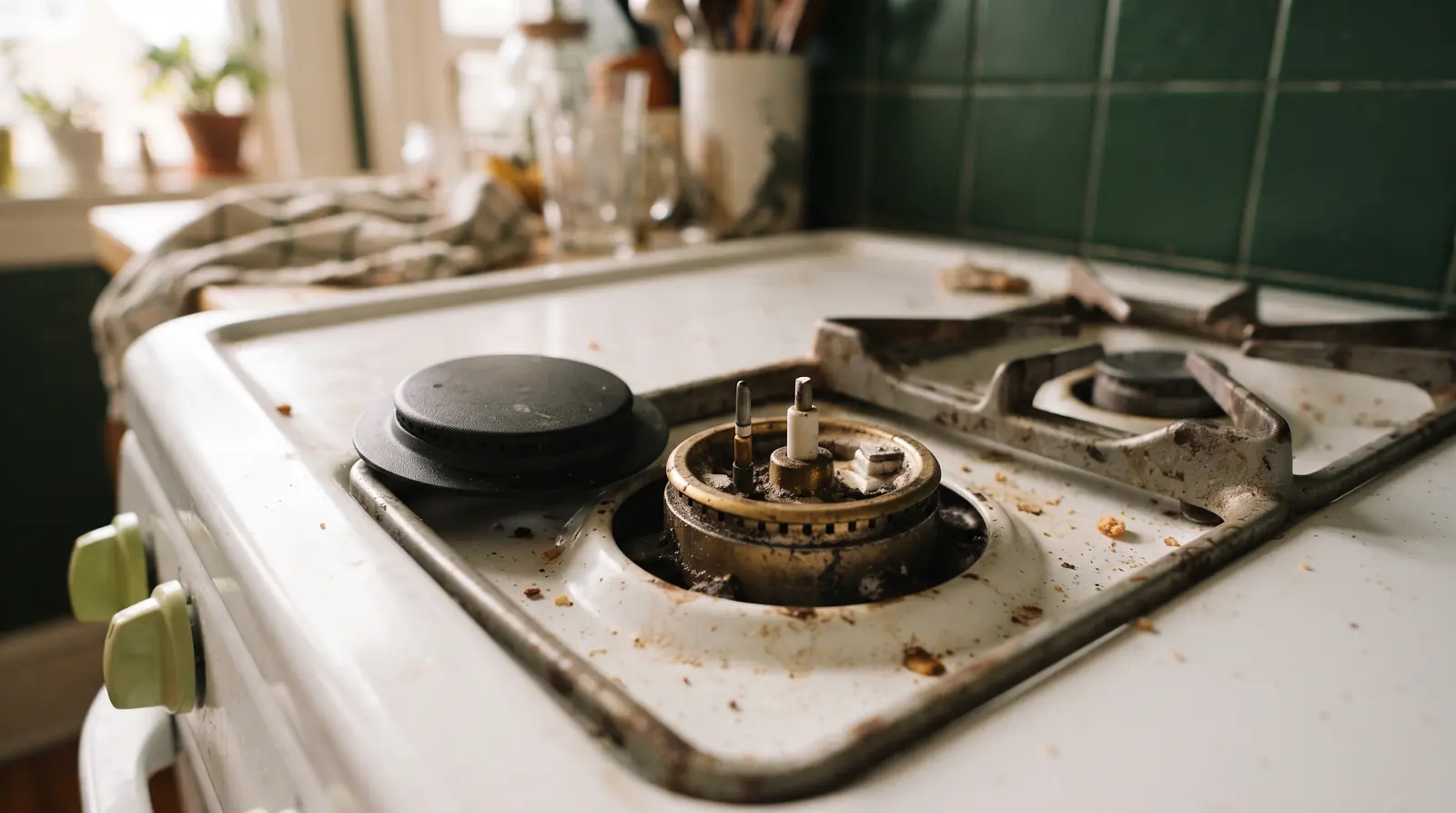
Beside each igniter is a small gas port, exactly sized and placed to collect grease and boil-over.
Lift the grate and cap off, find the port facing the igniter, and clear it with a pin. Never a toothpick: a snapped tip inside a gas port is worse than the fault.
Why cleaning the stove breaks the ignition
The most searched version is a stove that worked yesterday and stopped after a clean.
Water in the ceramic base grounds the spark; water under the cap blocks the gas path. Neither is damage.
Drying is the whole repair
Dry everything and give it several hours. Patience is the entire repair.
The burner cap has to sit flat
Seated flat: a cap that rocks or sits proud misdirects the gas away from the spark.
Correct cap: caps for different burner sizes are frequently not interchangeable.
Clean underside: carbon on the underside changes how the cap seats.
Right way up: some caps have an orientation notch that is easy to miss.
People skip this because the cap looks fine from above. Lift it and check.
One burner or all of them?
This is the question that decides who you should be calling.
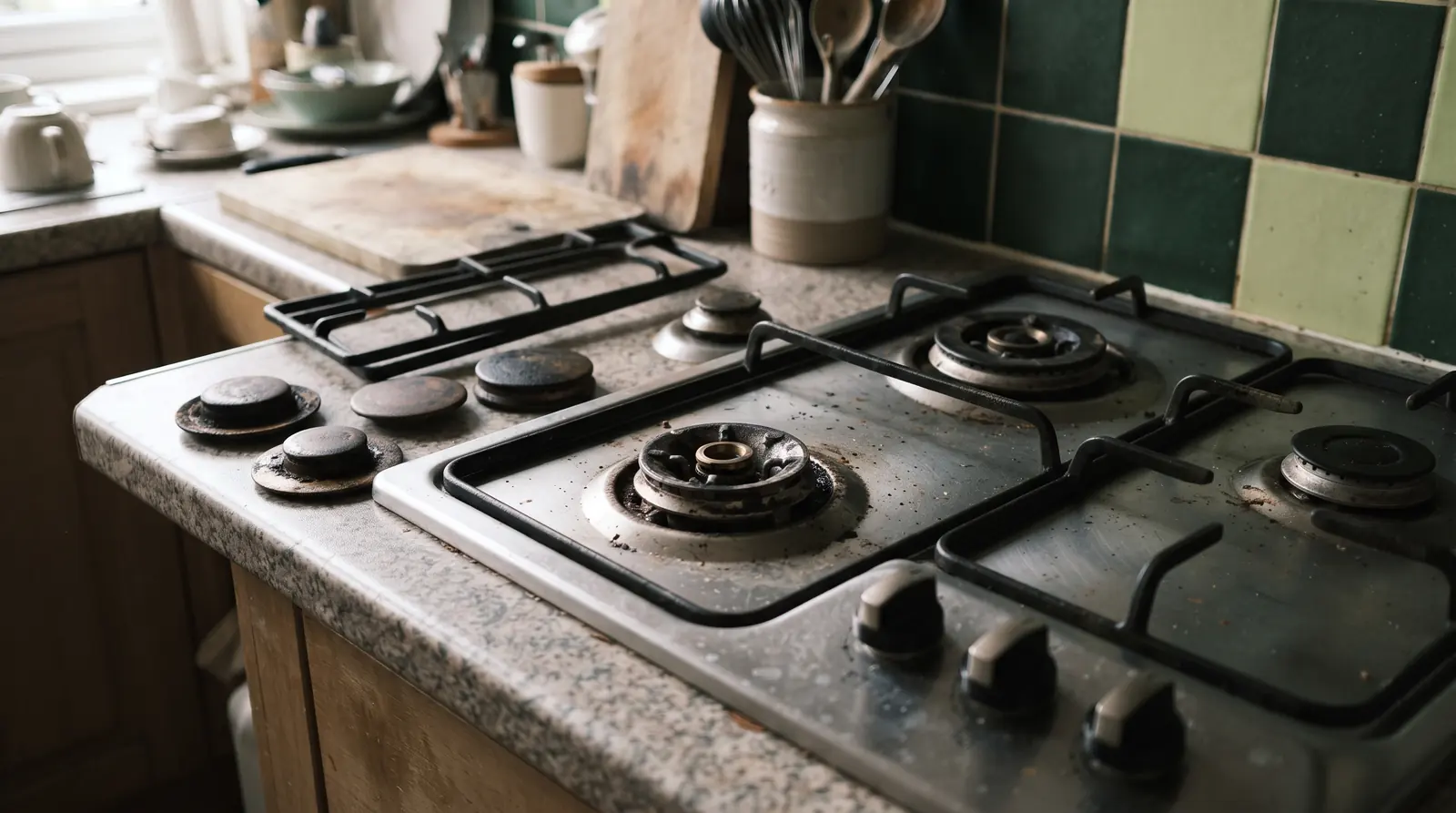
One burner misbehaving points at its cap, port or electrode. All of them at once points at the spark module or the gas supply.
The igniter that clicks and will not stop
Continuous clicking after a burner has lit is a distinct and very common complaint.
Moisture bridging the spark gap is the usual cause, especially after a clean or a boil-over.
Why a weak oven igniter is the usual smell
If the smell comes from the oven, AppliancePartsPros, whose technicians work through this on camera, name the oven igniter as the most common source.
The igniter does two jobs: it glows to light the gas, and the current it draws holds the safety valve open. As it weakens it can crack that valve without getting hot enough to ignite, which is delayed ignition.
The amp test
Their technicians measure with a clamp meter: round igniters draw about 2.5 to 3.0 amps, square ones 3.3 to 3.6. Below 3.0 on a square or 2.2 on a round, the part gets replaced.
Where the igniter checks out, suspicion runs to cracked burner tubes, leaking manifold valves and the regulator. None is homeowner territory.
Burner cap seating and port blockage
The igniter electrode
Aluminum foil is not a harmless shortcut
Lining an oven or wrapping grates in foil is common advice and a bad idea.
Why foil backfires
AppliancePartsPros set out both. Under drip pans, foil traps moisture and rusts them out. On a cooktop it blocks the air passages the burners need, and incomplete combustion makes carbon monoxide.
The same source cites kitchen-fire statistics we could not trace to an originating authority, so we do not repeat them.
If you smell gas, stop. Turn the burner off, ventilate, leave, and call the gas utility from outside. Do not test switches or use a phone indoors.
What each fix costs
Indicative US ranges. Always get a written quote.
Job
Typical range
Notes
Clearing the burner port
no part cost
The most common cause owners report
Reseating the burner cap
no part cost
Caps are often not interchangeable
Drying after a clean
no part cost
Several hours, not several minutes
Igniter replacement
appliance technician work
Cracked ceramic, or no spark at one burner
Spark module
appliance technician work
When no burner sparks at all
Source: Fixr 2026 appliance repair cost data, with part-level costs stated qualitatively where no published figure exists (retrieved August 2026). Figures vary by region and timing.
Figures last checked
Three of those five rows cost nothing, which is why the sound split comes first.
Run the numbers
If it is an igniter or a module, our repair-or-replace math sets that against a new range.
What homeowners actually ask
What owners report
Drawn from real public forum threads and reported prices, summarized and attributed as patterns.
These are not reviews of this site, and no names or ratings have been invented.
“LPT: If your gas stove fails to light despite the igniter...”
SourceThread title, the the most-read thread on this problem. The advice centers on the clogged gas port beside the igniter.
“How to fix stove burners that will not light after cleaning?”
SourceThread title from a public homeowner discussion forum. The answer is moisture rather than damage, and time rather than parts.
“Gas range clicks but does not ignite”
SourceThread title, diy.stackexchange.com. The replies separate a spark problem from a gas delivery problem immediately.
1 / 3
The after-cleaning thread is the one worth reading twice, because the natural assumption is that something broke and the actual answer is that something is wet.
How the matching works, and what we do not do
Emergency Services 24H is a referral service. We employ no technicians or gas fitters and sell no parts.
What happens when you ask
Your request routes to local technicians nearby. For a suspected gas leak, your utility comes first.
Know the line
Safe to check yourself, or call a pro now
Safe to check yourself
Clearing the gas port with a pin on a cold hob
Lifting, cleaning and reseating burner caps
Drying the igniter area thoroughly after a clean
Checking whether it is one burner or all of them
Lighting a burner with a match while you diagnose
Call a pro now
Any smell of gas, which is a utility call from outside
Igniter or electrode replacement
A spark module where no burner sparks
Anything on the gas line, valve or regulator
A burner that lights and will not stay lit
24/7 dispatch network
Get a local appliance repair technician moving on this
Tell us whether it clicks, and whether it is one burner or all of them. Local technicians covering your area will contact you directly. No obligation to hire.
Fire, a gas smell, or an injury? Leave the building and call 911 first, then your gas
utility or power company. Use this form once you are safe.
Straight answers
Frequently asked questions
Short, plain answers to the questions people ask us most about this page.
What does it mean when a gas burner clicks but no flame appears?
The spark works and the gas is not arriving: a port blocked with grease, or a cap sitting proud of its seat. Both are free to fix.
Is it safe to keep clicking the igniter?
Only briefly, and never if you can smell gas: clicking with gas flowing builds an unburnt charge. Turn the knob off and check the port.
Why is my gas stove getting gas but not lighting?
The gas is not reaching the spark: a clogged port, or a cap sitting proud. Clear the port and reseat the cap flat.
What is the most common reason a gas stove won’t ignite?
A blocked burner port, then a misaligned cap, then moisture after cleaning.
My stove stopped working right after I cleaned it. Why?
Moisture. Water in the ceramic base grounds the spark; water under the cap blocks the gas. Dry it and wait.
Why does the igniter keep clicking after the burner lights?
Usually moisture bridging the spark gap, or a cracked ceramic igniter. Dry the area and let it sit; clicking that continues when dry means replacement.
I smell gas and the burner will not light. What do I do?
Leave immediately without operating any switch and call your gas utility or 911 from outside. Do not go back in until you are told it is safe.
Do I need a gas fitter or an appliance technician?
An appliance technician handles igniters and burner assemblies; a gas fitter or your utility handles supply, regulators and valves.
Blocked ports are the most common cause and clear with a pin and a brush. Everything below that row needs a technician.
Independent, publicly published sources, quoted with attribution and linked in full.
None is affiliated with Emergency Services 24H, reviewed this page, or works in the referral network.
Matt: Technical trainer, OEM appliance parts retailer, AppliancePartsPros.com - “Gas Smell Coming From Your Range? Top 5 Reasons” (2023)Declared bias: Works for a parts retailer, so the recommended fix is usually a part.